
Taking Your Meditation Outside in Frankston
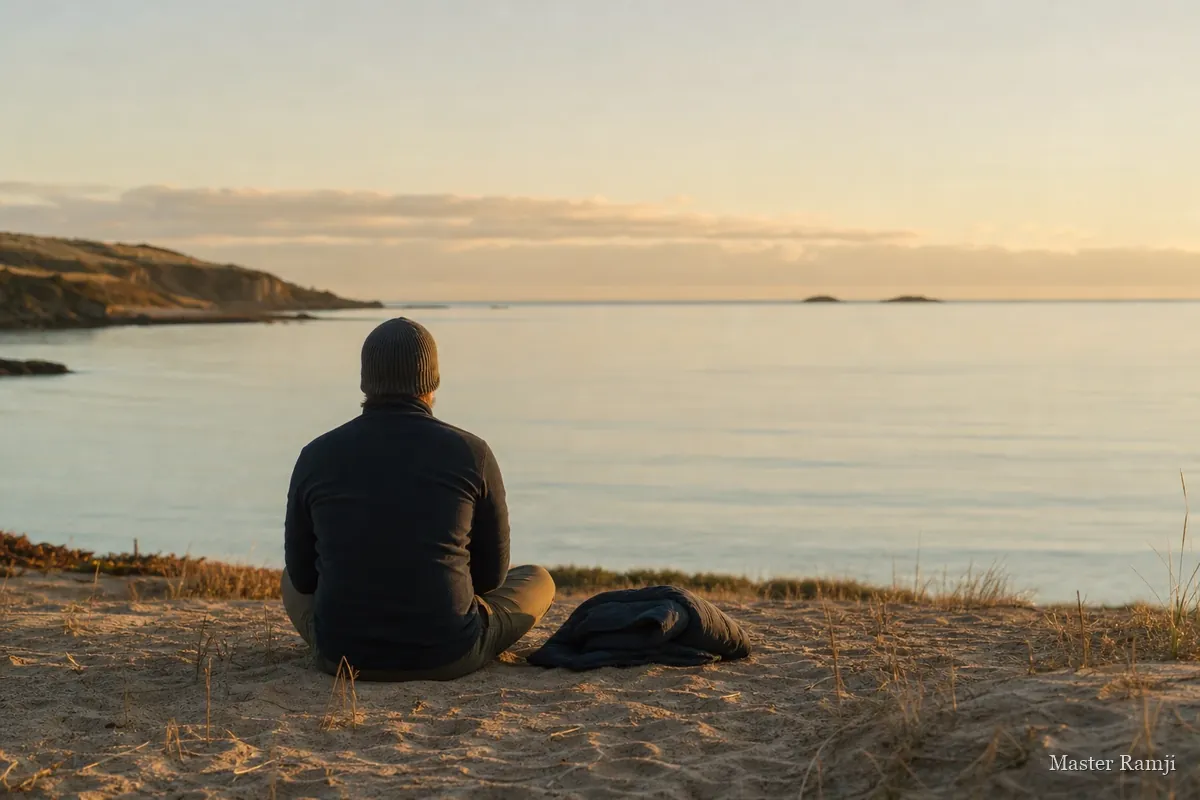
Outdoor meditation in Frankston works best when you pick a quiet stretch of sand or a bench, sit with your eyes open near water or edges, protect your skin whenever the UV is 3 or above, keep chanting soft, and take everything home. Start with a few minutes and build up gradually.
Frankston is about 40 km south-east of central Melbourne, at the top of the Mornington Peninsula, facing Port Phillip Bay. Victorian Places describes a continuous beach from Olivers Hill to Seaford, running past the pier, the yacht club and the life saving club, with Kananook Creek running behind the dunes to the bay.
That long stretch of sand makes it tempting to take your practice outside. Sitting near water can feel very different from sitting in a spare room. This guide covers how to do it safely and without getting in anyone else's way.
Key takeaways
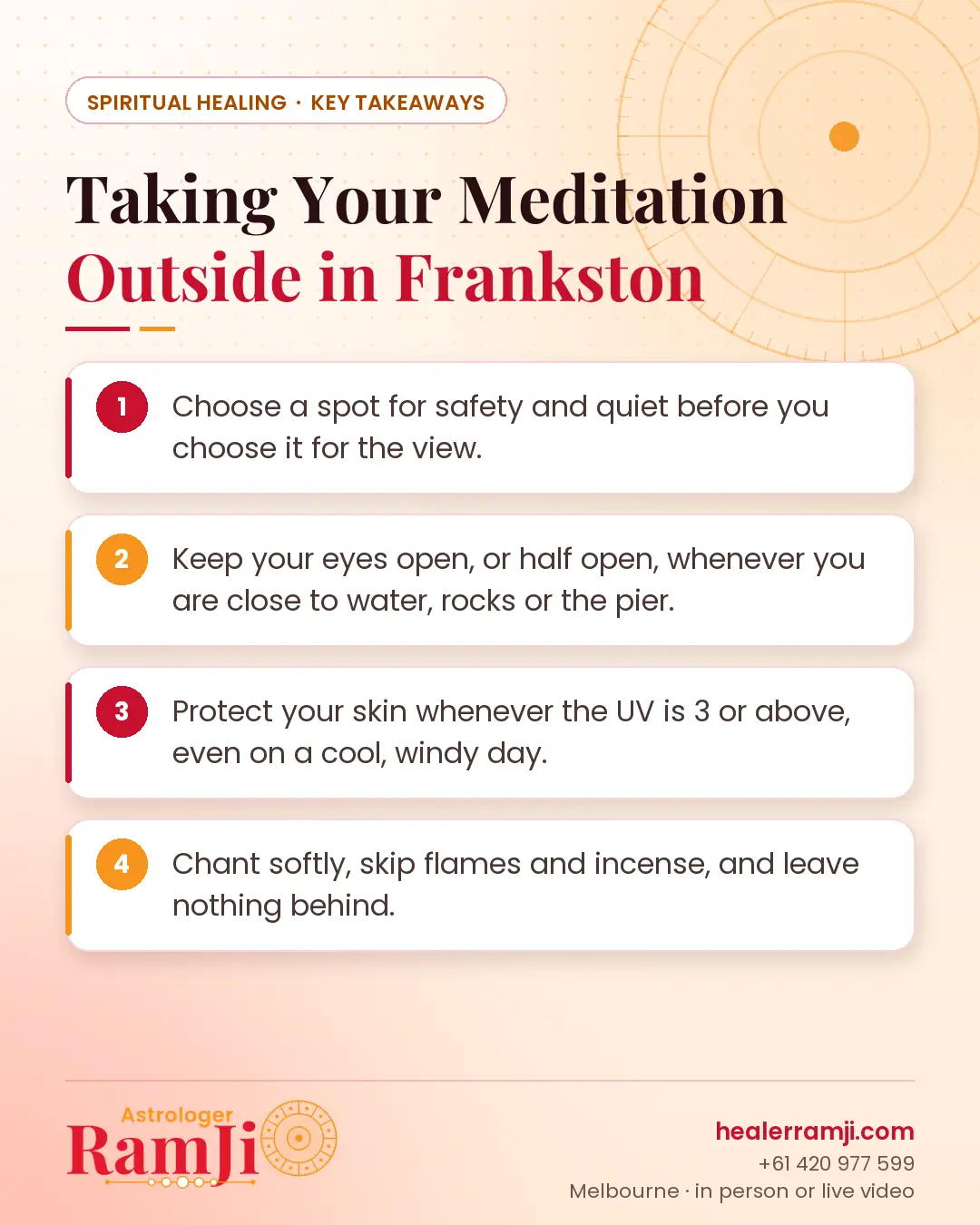
- Choose a spot for safety and quiet before you choose it for the view.
- Keep your eyes open, or half open, whenever you are close to water, rocks or the pier.
- Protect your skin whenever the UV is 3 or above, even on a cool, windy day.
- Chant softly, skip flames and incense, and leave nothing behind.
Why meditate outdoors at all?
Many traditions link practice with natural places: riverbanks, mountains and the seashore. In Hindu custom, people often pray facing the rising sun, offer water at dawn, or sit by a river or sea during festivals. You don't need a special time. A quiet early morning or a calm evening both work, so choose whatever fits your week.
The sound of small waves gives your mind a steady anchor. A wide horizon can also make a busy week feel smaller. These are personal experiences, though, not effects anyone can promise. healthdirect notes that meditation takes time, patience and practice, and suggests starting with just 1 to 2 minutes a day before building up.
Where is a good place to sit?
Look for somewhere that is quiet, stable and easy to leave. Some ideas:
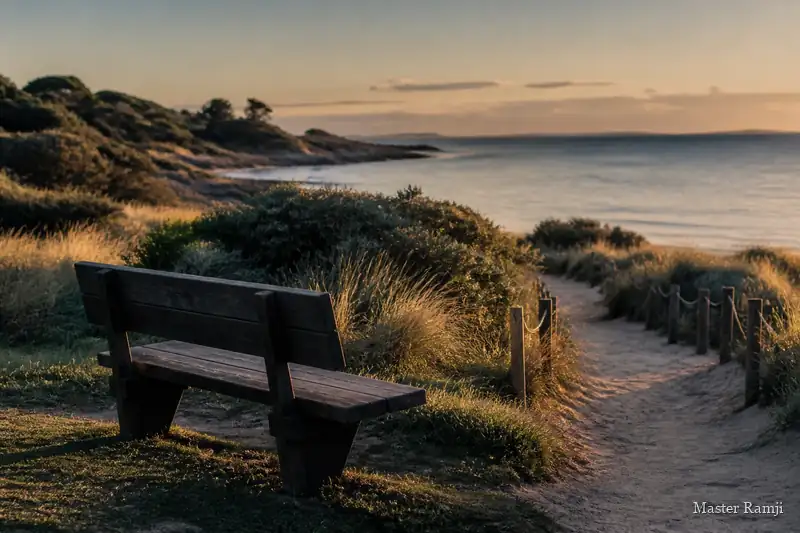
- A bench or grassy patch behind the beach. Easier on your knees and back than soft sand, and away from passing foot traffic.
- Dry sand well above the waterline. Check the tide before you sit, so you aren't surprised by wet feet halfway through.
- A quieter stretch away from the pier. Areas near the pier can be busy, especially on warm weekends.
Avoid sitting on rocks, sea walls or the pier edge with your eyes closed. A wet surface, a wave or a moment of dizziness when you stand up can lead to a fall. Stay on marked paths through dune areas, as dune plants hold the sand in place.
How do you stay sun safe?
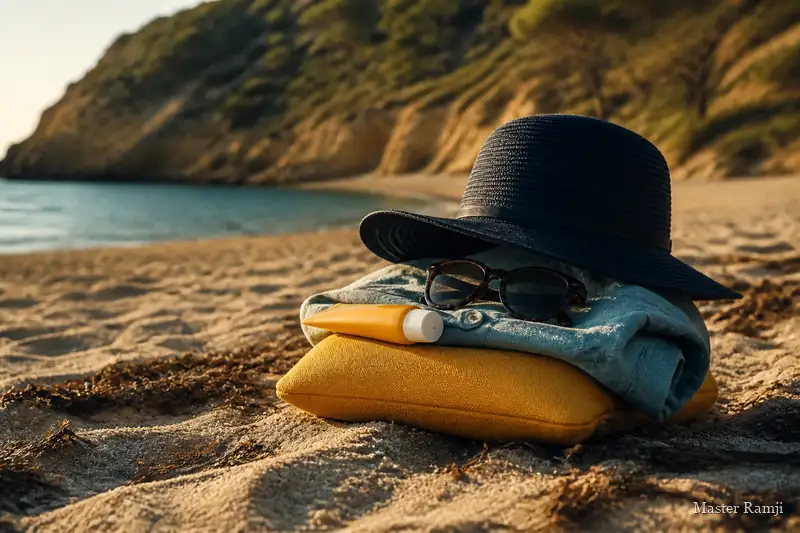
Morning and evening light can look gentle, but UV can still be strong. SunSmart advises covering up whenever the UV Index is 3 or above. That means slip on clothing, slop on SPF50 or 50+ sunscreen, slap on a broad-brimmed hat, seek shade and slide on sunglasses. Check the UV level on the day before you head out. SunSmart also offers an app that shows the day's UV levels for your area, which makes this quick.
In the cooler months, the problem is the cold rather than the sun. Wind off the bay can chill you quickly when you sit still. Bring a jacket, a wrap or a small cushion, and keep your session short if you start shivering.
Can you chant mantras in public?
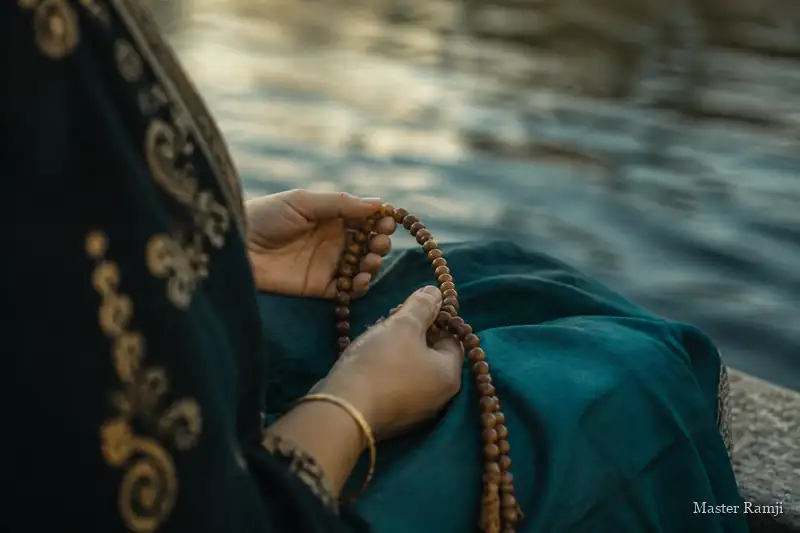
Yes, with some care. A beach is a shared space, so keep your voice low enough that people a few metres away hear the waves, not you. Many people find whispered or silent repetition works better outside anyway. Japa with a mala is quiet and easy to do on a bench.
If you're new to repeating a mantra, try one short line you already know. Our guide on starting a mantra practice that lasts has simple ways to begin, and the meaning and practice of the Gayatri mantra suits a sunrise or sunset sitting.
What should you leave at home?
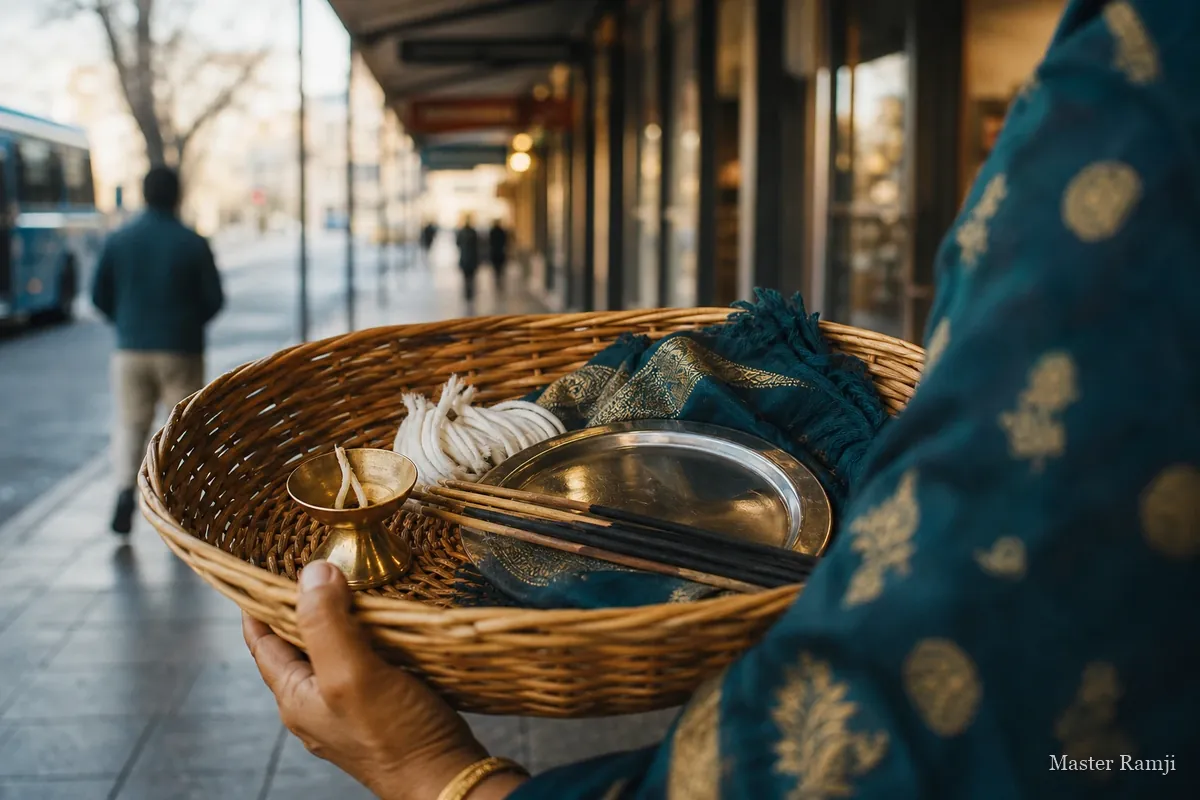
- Lamps, candles and incense. Wind blows them over, embers can travel, and fire restrictions can apply on hot days. Light them at home instead.
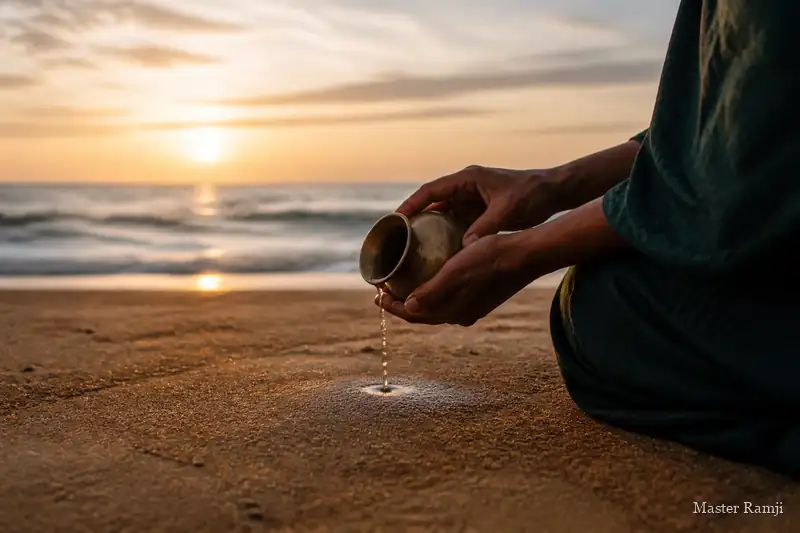
- Loose offerings. Flowers, rice and coloured powder may feel like a kind gesture, but they end up as litter. If you'd like to offer something, try a few drops of water, then take your vessel home.
- Anything you would hate to lose. Keep your phone close, zipped away and on silent.
How do you stay safe on your own?
Let someone know where you are going, especially at dawn or after dark. Choose a lit area if you sit in the evening, and trust your instincts if a spot feels uneasy. Stay out of the water if you feel light-headed after a long sitting, and drink some water before you walk back.
Practise your breathing or listen to guided recordings at home or once you've arrived, never while driving down Nepean Highway.
A simple 10-minute bayside routine
- Sit comfortably, spine tall, eyes softly open towards the horizon.
- Take five slow breaths, a little longer on the out-breath.
- Listen to the waves for a minute without naming anything.
- Repeat your mantra quietly for five minutes, letting the waves set the pace.
- Rest in silence for two minutes, then stretch before you stand.
If ten minutes feels long, start with three. For other short options, see meditation for people with no spare time.
What can meditation not do?
Meditation is a practice, not a treatment. It may help you feel calmer, but it doesn't replace care from a GP or psychologist. If you are struggling with anxiety, low mood or sleep, talk to your GP, or call healthdirect on 1800 022 222 for health advice.
Would guidance help?
If you'd like a mantra chosen to suit you, or help keeping a routine going through winter, mantra and meditation guidance offers simple, personal instruction. Sessions can be held by phone, WhatsApp or video. Read about our work in Melbourne's south-east, or get in touch.
Related service
Keep reading
Chakra Claims in Coburg Yoga Studios: A Reality Check
Chakras often come up in yoga and wellness classes. How to tell old tradition from modern marketing in Coburg, and which claims deserve a second look.
Read article →
Support for Migrant Health Workers in Gippsland
A practical guide for migrant nurses, carers and other health workers in Traralgon: coping with rosters, isolation and stress, and where to find real support.
Read article →
Meditation and Mantra on the Surf Coast
Want a steady meditation or mantra practice in Torquay without joining a studio? Simple ways to fit it around surf, seasons and work on the Surf Coast.
Read article →More from Melbourne's South-East
House Numbers and Buying in Oakleigh
Found the right house in Oakleigh but worried about the number on the letterbox? How numerology views house numbers, and why practical checks should come first.
Read article →
Planning a Hindu Wedding in Melbourne's South-East
Booking a hall in Dandenong, Casey or nearby for a Hindu wedding? The sacred fire questions to ask, the hire rules to read, and the marriage paperwork to lodge.
Read article →
Thinking of a Palm Reader in Dandenong? Read This First
Thinking of seeing a palm reader in Dandenong? Calm, simple questions to ask before you offer your hand, what palmistry can't tell you, and your rights.
Read article →Local pages
Astrologer for Dandenong
For Dandenong traders and new arrivals: shop timing, vastu for premises, and how to check any spiritual adviser. Sessions by phone, WhatsApp or video.
View area →
Astrologer for Clayton
For Clayton students and graduates dealing with family pressure, relationships and first jobs. Vedic astrology by phone, WhatsApp or video, from Ascot Vale.
View area →Quick answers
What is a mantra?
A mantra is a sacred sound, word or phrase repeated in prayer or meditation. Here is what the word means, how it is used, and how to begin simply.
Read answer →What is energy healing?
Energy healing rests on the belief in a life force that can be guided. Here is what a session involves, and what the evidence does and doesn't show.
Read answer →Talk to Vijay Ramji
Tell us what you are facing. If a reading is unlikely to help, you will be told that plainly.