
Meditation and Mantra on the Surf Coast
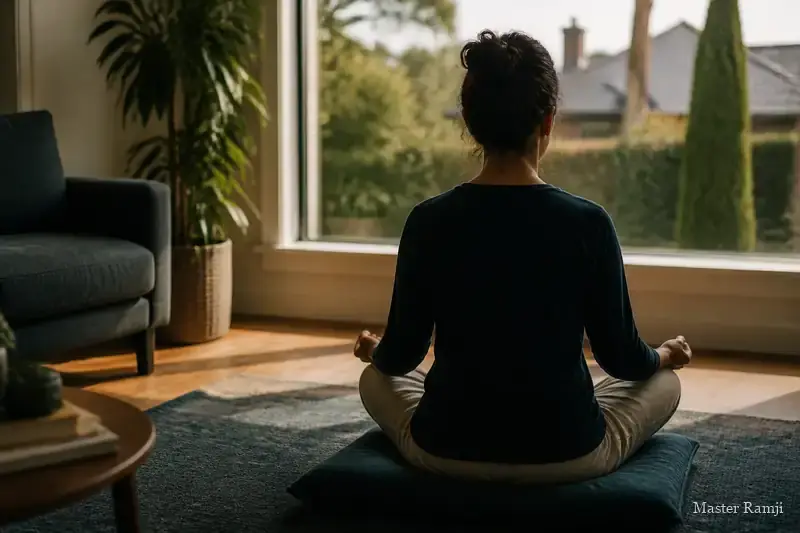
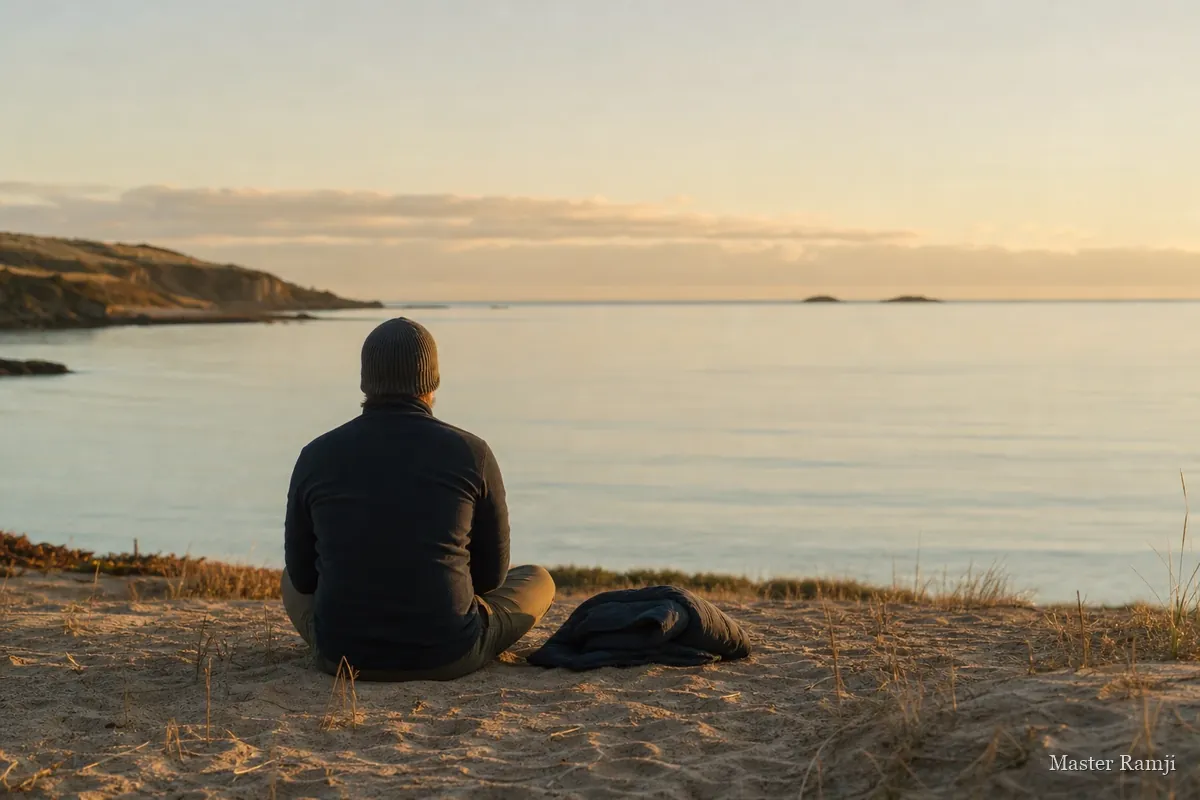
You don't need a studio to meditate in Torquay. Pick a regular time and place, such as home before work or a quiet bench away from the water's edge, start with a few minutes, and use a simple mantra if it suits your tradition. Build it up slowly, and never practise while driving.
Victorian Places calls Torquay the capital of the Surf Coast. It sits 21 km south of Geelong, Bells Beach is about 7 km to the south-west, and the Great Ocean Road begins just across Spring Creek on the town's western side. Life here tends to run on swell reports, school runs and the change between busy summers and quieter winters.
Not everyone wants a class, a membership or a studio timetable. This page is for people who would rather build a quiet meditation or mantra practice into the life they already have on the coast.
Key takeaways
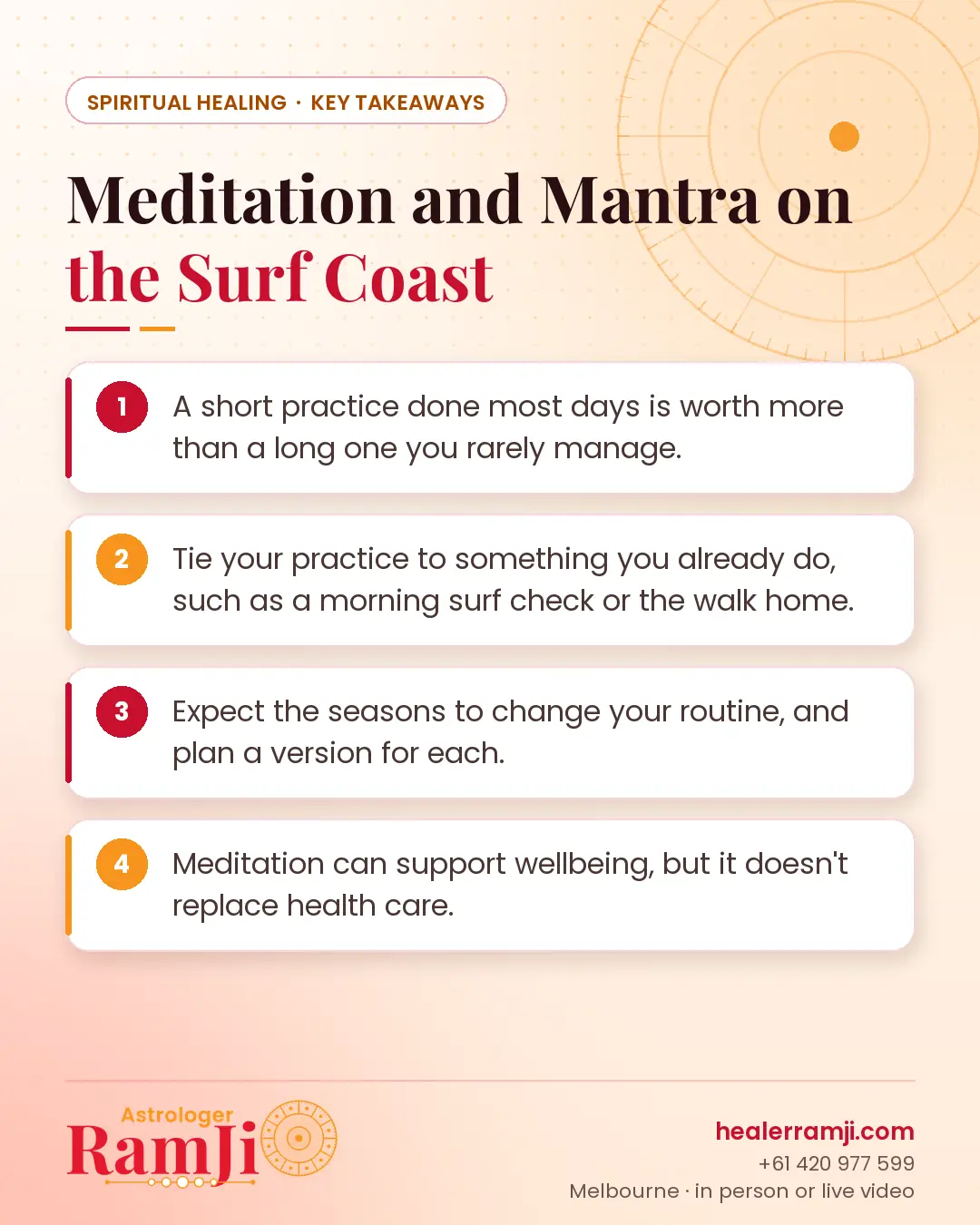
- A short practice done most days is worth more than a long one you rarely manage.
- Tie your practice to something you already do, such as a morning surf check or the walk home.
- Expect the seasons to change your routine, and plan a version for each.
- Meditation can support wellbeing, but it doesn't replace health care.
Why practise without a studio?
Classes suit some people well. Others find the schedule doesn't fit around shift work, tradie hours or a baby, or they simply prefer something private. Some come from families where meditation and mantra were part of daily prayer at home, not something you booked.
A home practice also costs nothing and goes wherever you go. The trade-off is that nobody holds you to it. That is why the plan matters more than the place.
How do you start?
healthdirect suggests finding a quiet, comfortable place, starting with one to two minutes a day, and slowly building the time over weeks or months. It also says meditation works best when practised regularly, and suggests finding a regular time for it. That advice fits a busy coastal week well.
- Pick a time you already keep. Before the first coffee, after dropping the kids at school, or when you get back from the beach.
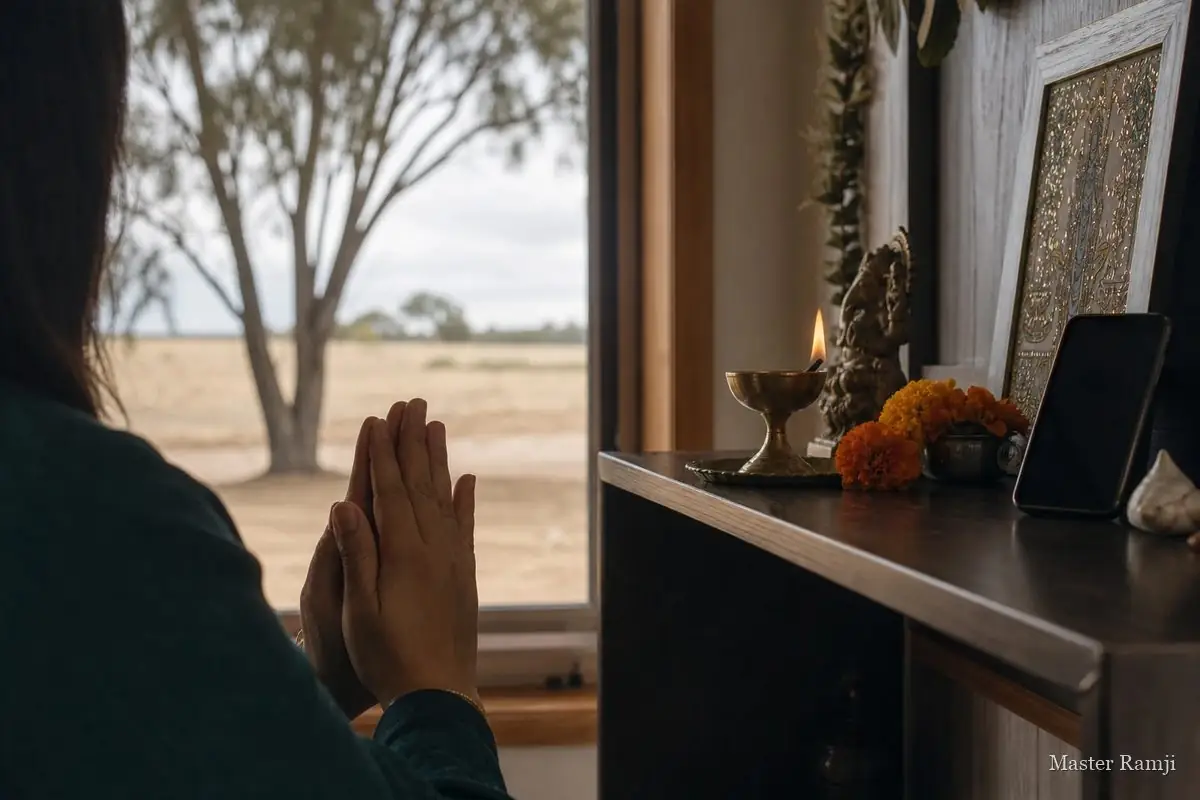
- Pick one spot. A chair by a window, the back step, or a corner of the bedroom.
- Choose one method. Following your breath, or quietly repeating a mantra.
- Start small. Two minutes is plenty for the first week.
- Notice, don't judge. Your mind will wander. Bringing it back is the practice.
Our guide to meditation for people with no spare time has more ideas for squeezing a few minutes into a full day.
Where does mantra fit in?
A mantra is a word, sound or short phrase repeated with attention. In Hindu practice it is often a sacred verse or a name of God, chosen to suit a person's family tradition. Repetition, called japa, can be spoken aloud, whispered or silent.
Silent japa works well on the coast. You can do it on a bench, in a car parked with the engine off, or on a quiet walk. Many people count on a mala of 108 beads, and our article on why mantras are often counted to 108 explains the tradition. If you'd like a structured way in, starting a mantra practice that lasts walks through the first few weeks.
Mantra is a spiritual practice. It's valued in many traditions for focus and devotion, but it isn't a proven treatment for anything, and it doesn't need to be costly or complicated.
How do you work with the seasons?
Coastal towns change with the calendar, so let your practice change too.
- Summer. The beach and the streets get busier during holidays. Practise early, at home, before the day gets going.
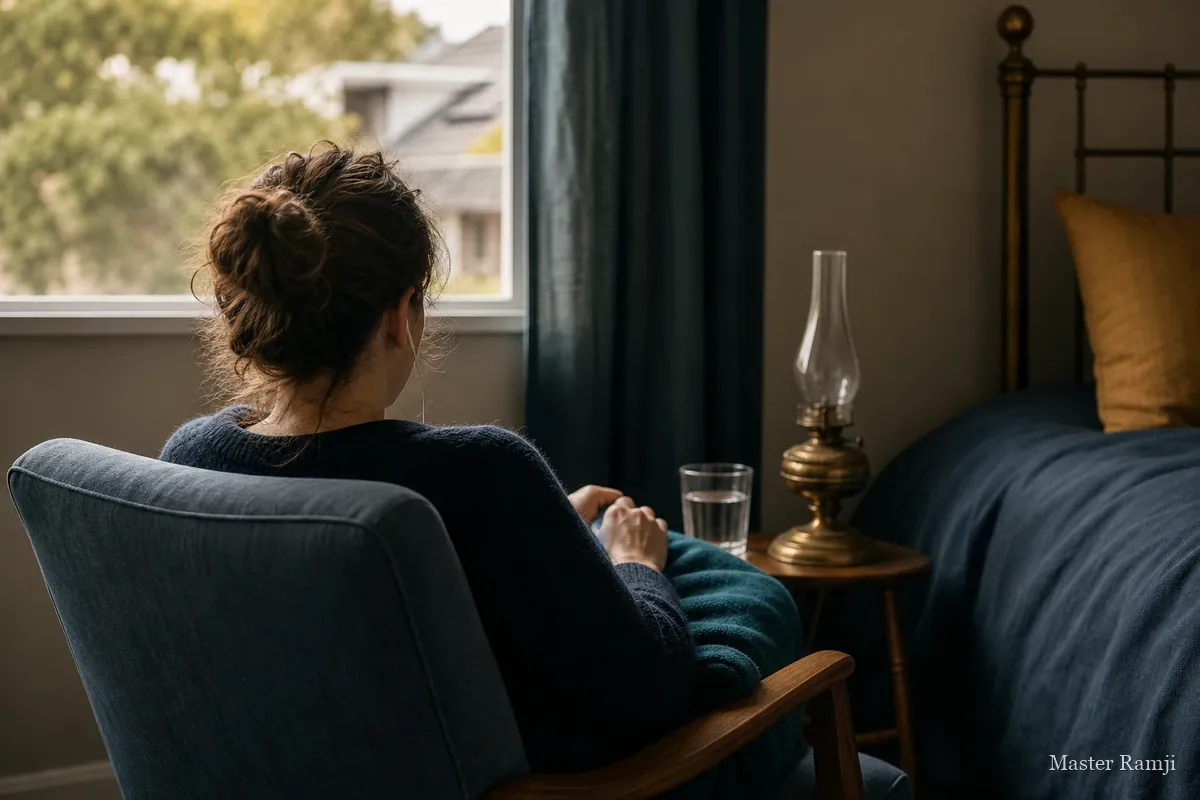
- Winter. Mornings are dark and cold. Move your practice indoors, keep a blanket nearby, and consider an evening sit instead.
- Swell days. If you surf, a few minutes of breathing on the sand afterwards can become its own small ritual. Keep it on dry ground, well back from the water.
- Visitors staying. Silent japa or a short breath practice works even in a full house.
What might a five-minute morning look like?
Here is one generic example. Sit on a chair with your feet on the floor. Take three slow breaths and let your shoulders drop. For the next three minutes, repeat your chosen mantra silently, or count your breaths from one to ten and start again. Spend the last minute sitting quietly and noticing how you feel. Then get on with your day. Keep the same order each morning, and the routine will start to carry you on the days motivation doesn't.
Is it safe to meditate outdoors on the coast?
Choose your spot with care. Sit well back from the water's edge, never on rocks that waves can reach, and keep your eyes open if you're near cliffs or water. Never meditate in the surf itself.
Most of all, don't practise anything while driving. The Great Ocean Road needs your full attention. If you'd like a quiet moment on a trip, pull over somewhere safe, turn off the engine, and then begin.
What can meditation not do?
healthdirect describes physical and mental health benefits from meditation, including help with stress and sleep. It also makes clear that its information is not a substitute for professional health care. If you're feeling low, anxious or unable to cope, please talk to a GP. Beyond Blue is on 1300 22 4636, and Lifeline is available at any hour on 13 11 14. Meditation can sit alongside that support, not take its place.
What if you want some company?
Practising alone doesn't have to mean having no guidance. Some people meditate with a partner or friend once a week. Others join a family prayer or a community group when they can, then keep the daily practice at home. A local library or community centre may know of groups, so it's worth asking.
Would one-to-one guidance help?
If you'd like help choosing a mantra that suits your tradition and learning to say and count it properly, mantra and meditation guidance is a one-to-one lesson aimed at a single practice you can keep up on your own. Sessions can be held by phone, WhatsApp or video, which suits life down the coast. Fees are stated before any paid work. You can read about our work across regional Victoria, or get in touch.
Related service
Keep reading
What to Expect at Your First Energy Healing
Your first energy healing, step by step: how to prepare, what usually happens, what you might feel, what to ask about fees, and what a session cannot do.
Read article →
Energy Healing and Evidence: An Honest View
Does energy healing work? What research reviews actually say about Reiki, touch therapies and distant healing, where the evidence stops, and why we say so.
Read article →
Using Spiritual Healing Alongside Medical Treatment
How to use spiritual healing alongside medical treatment safely: what to tell your doctor, why you never stop medication, and the warning signs in a healer.
Read article →More from Regional Victoria
How to Choose a Remote Reader From Regional Victoria
Living in regional Victoria and thinking about an online psychic or astrologer? How to check someone you can't meet, what to ask first, and when to walk away.
Read article →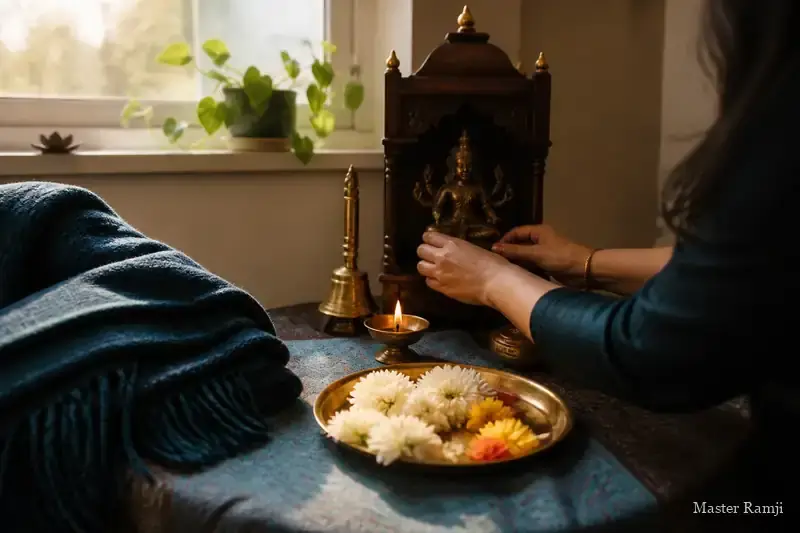
A Hindu Festival Planner for Regional Victoria
Planning festivals from regional Victoria? How Hindu festival dates are set by the lunar calendar, why they can differ from India, and how to plan temple trips.
Read article →
Where to Pray in Geelong
Looking for a Hindu temple in Geelong? Local groups to contact, what to confirm before you go, and options for prayer when you can't travel.
Read article →Local pages
Astrologer for Geelong
For Geelong residents asking about vastu in Armstrong Creek, life after Deakin or worship in a smaller community. Sessions by phone, WhatsApp or video.
View area →
Astrologer for Ballarat
For Hindu families settling in Ballarat: older homes, cold winters and keeping traditions going. Vedic astrology by phone, WhatsApp or video, from Ascot Vale.
View area →
Astrologer for Bendigo
For people in Bendigo far from Melbourne's big temples: finding a match, goldfields homes and home worship. Vedic astrology by phone, WhatsApp or video.
View area →Quick answers
What is a mantra?
A mantra is a sacred sound, word or phrase repeated in prayer or meditation. Here is what the word means, how it is used, and how to begin simply.
Read answer →What is energy healing?
Energy healing rests on the belief in a life force that can be guided. Here is what a session involves, and what the evidence does and doesn't show.
Read answer →Talk to Vijay Ramji
Tell us what you are facing. If a reading is unlikely to help, you will be told that plainly.