
Planning a Hindu Wedding in Melbourne's South-East
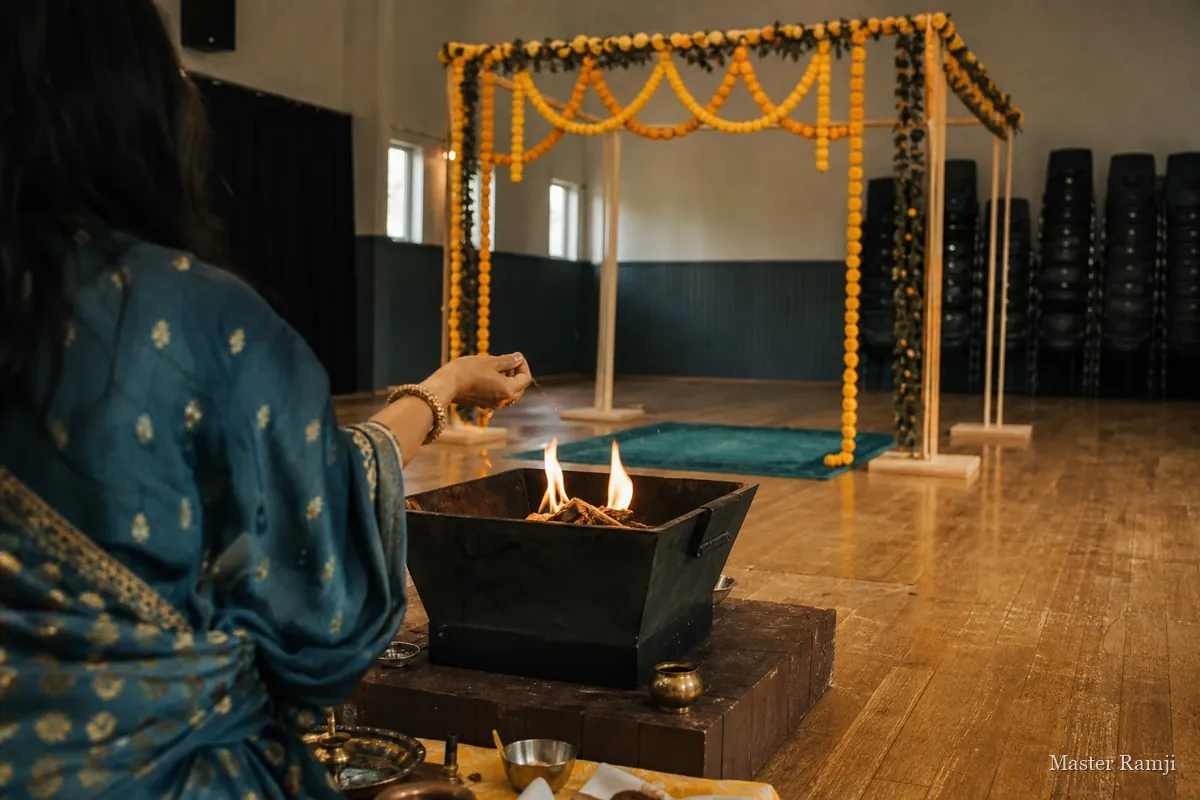
For a Hindu wedding in Melbourne's south-east, ask any hall in writing whether a sacred fire is allowed and on what conditions before you pay a deposit. Read the hire terms for rules on flames, smoke and noise. Lodge your Notice of Intended Marriage at least one month ahead with an authorised celebrant.
For many Hindu families, the heart of the wedding is the fire. The couple walk around it, make their vows before it and offer into it. That single detail decides more about your venue than the colour scheme, the menu or the size of the car park.
Melbourne's south-east has plenty of halls, from council community centres to private function rooms, and if your family lives around Dandenong, Casey or nearby, it makes sense to start the search close to home. This page doesn't recommend any venue. It gives you the questions to ask, so you can compare halls on the thing that matters most to a Hindu ceremony.
Key takeaways
- Ask about the sacred fire first, and get the answer in writing before you pay a deposit.
- Hire terms often restrict hot coals, smoke and flammable items. Read them, don't skim them.
- A smoke alarm going off can bring the fire brigade and a bill, so plan the fire with the venue.
- The ceremony and the legal marriage are separate steps. Lodge your notice at least one month ahead.
Why does the sacred fire change the venue search?
A wedding havan or agni needs a small, contained fire burning for a good part of the ceremony, often fed with ghee and samagri. That produces flame, heat and smoke indoors. Plenty of halls are set up for music, catering and dancing, but far fewer are set up for that.
Council halls are a useful example because their rules are public. The City of Greater Dandenong's conditions of hire for special events say that, except where Council grants approval, items such as hot coals, fireworks, cold sparks, and smoke and haze machines are not permitted in its venues. They also require prior written consent before inflammable substances are brought in. A havan isn't named, but it plainly touches several of those items. So the honest answer to "can we have a fire here?" is often "only if you ask and get approval".
What should you ask a hall about the fire?
Take this list to every venue, whether it is a council centre, a private function room or a temple hall:
- Is a sacred fire allowed at all? Ask the question plainly. Don't describe it vaguely as "a small candle ceremony".
- What approval do you need, and how far ahead? Ask for it in writing, attached to your booking.
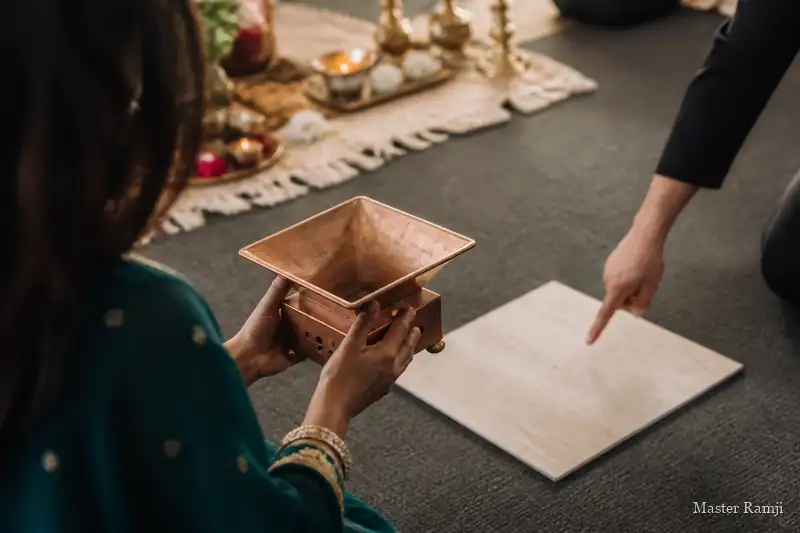
- What size and container are allowed? A metal havan kund on a heat-proof base is very different from an open tray.
- What about the smoke detectors? Ask how the venue manages alarms for ceremonies. Only the venue and its fire safety contractor should ever touch the system.
- Can the fire be outside? Some venues may allow it on a courtyard or lawn. Ask whether CFA or council rules apply on the day, especially in warmer months.
- Who pays if an alarm goes off? Find out what the hire agreement says about call-out costs and the security deposit.
What happens if the smoke sets off the alarm?
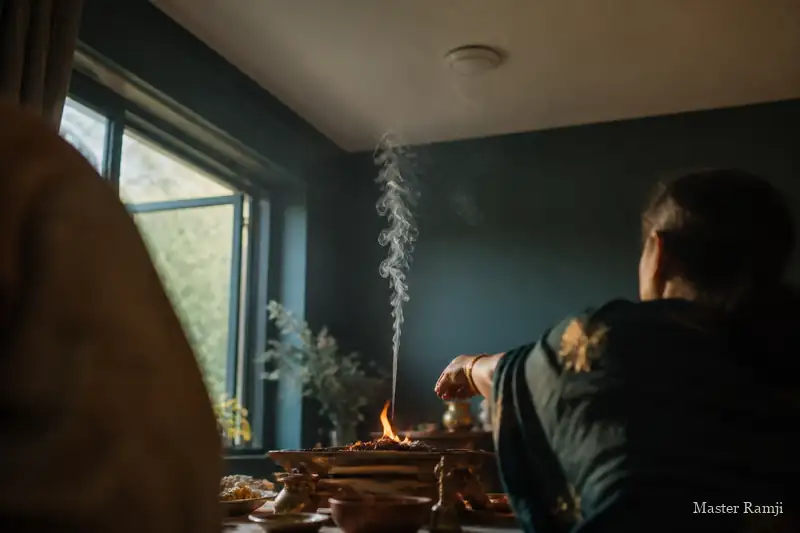
Fire Rescue Victoria lists common causes of false alarms, and they include smoke and fumes from candles and incense, as well as smoke from cooking. FRV bills the owner of the alarm system for false alarm charges. Your venue's hire terms then decide whether some or all of that cost is passed to you. The Greater Dandenong conditions, for example, allow Council to recover costs caused by a breach of the hire conditions from the security deposit.
Beyond the money, an evacuation in the middle of the pheras is not the memory anyone wants. Agree a plan with the venue: a small fire, good ventilation and less smoky offerings. Some priests can adapt the havan to a venue's limits. Ask yours early.
What other hire terms catch wedding families out?
Read the whole agreement, not just the price. In the Greater Dandenong conditions, a few clauses stand out for Hindu weddings:
- Confetti and streamers need approval, which may matter if you plan to shower the couple with rice or petals.
- Single-use plastics, including plastic plates, cups, cutlery and bottled water, are prohibited on council land and buildings.
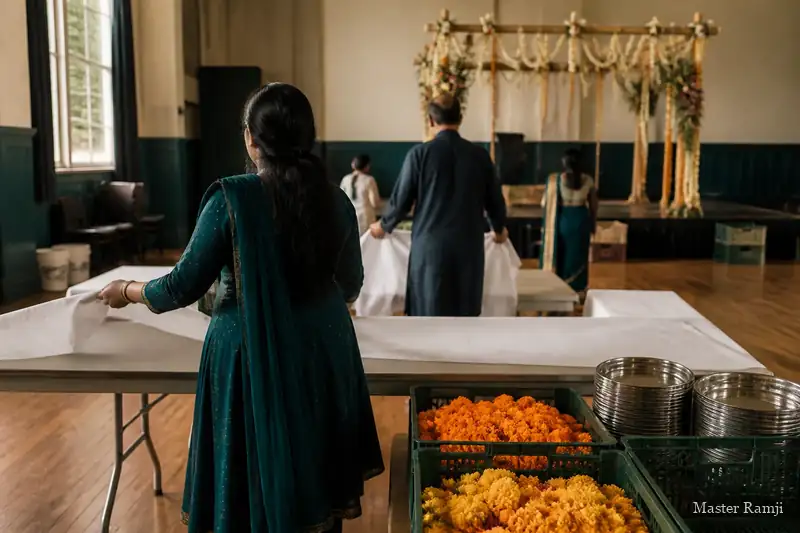
- Tablecloths must be used on council tables when food is served.
- Noise must stay within EPA limits, which matters for a dhol or DJ.
- Payment timing includes a deposit and a balance due some weeks after invoice.
Private venues have their own rules, and they can be stricter or looser. Ask about set-up and pack-down time too. A mandap, flowers and a stage take hours, and many halls charge for that time.
How does the muhurat fit with hall bookings?
Popular Saturdays go fast, and a muhurat chosen first can leave you with no hall. A better order is to ask for a short list of suitable windows, then check halls against that list. Timings should be worked out for Melbourne rather than India, and families who follow different traditions may favour different windows. Muhurat date selection can give you several workable options instead of one fixed date. For more on the method, see our guide to choosing a wedding muhurat in Australia.
Check that your hire period covers the ceremony time with room to spare. A late lagna is no use if the hall needs you out by then.
Is the Hindu ceremony enough to be legally married?
Not on its own. Births, Deaths and Marriages Victoria says you must lodge a Notice of Intended Marriage at least one month before the wedding, and that marriages must be performed by an authorised celebrant, such as a registered civil celebrant or an authorised minister of religion. You also need two witnesses aged 18 or over.
Some priests are authorised celebrants and some are not. Ask directly. If yours isn't, many couples hold a short civil ceremony on the same day or separately. For anything beyond these basics, such as overseas documents, check with BDM or a lawyer.

Can a consultation help before you book?
A pre-marriage consultation can help you and your families agree on the rites you want, which ones can be simplified, and what matters most when choosing a date. It is guidance rooted in tradition, and it can't sort out venue contracts or legal questions. If you want to understand the meaning of the fire itself, our explainer on what a havan means is a good start.
Sessions can be held by phone, WhatsApp or video, and fees are stated before any paid work. You can read more about our work across Melbourne's south-east, or get in touch to start planning.
Related service
Keep reading
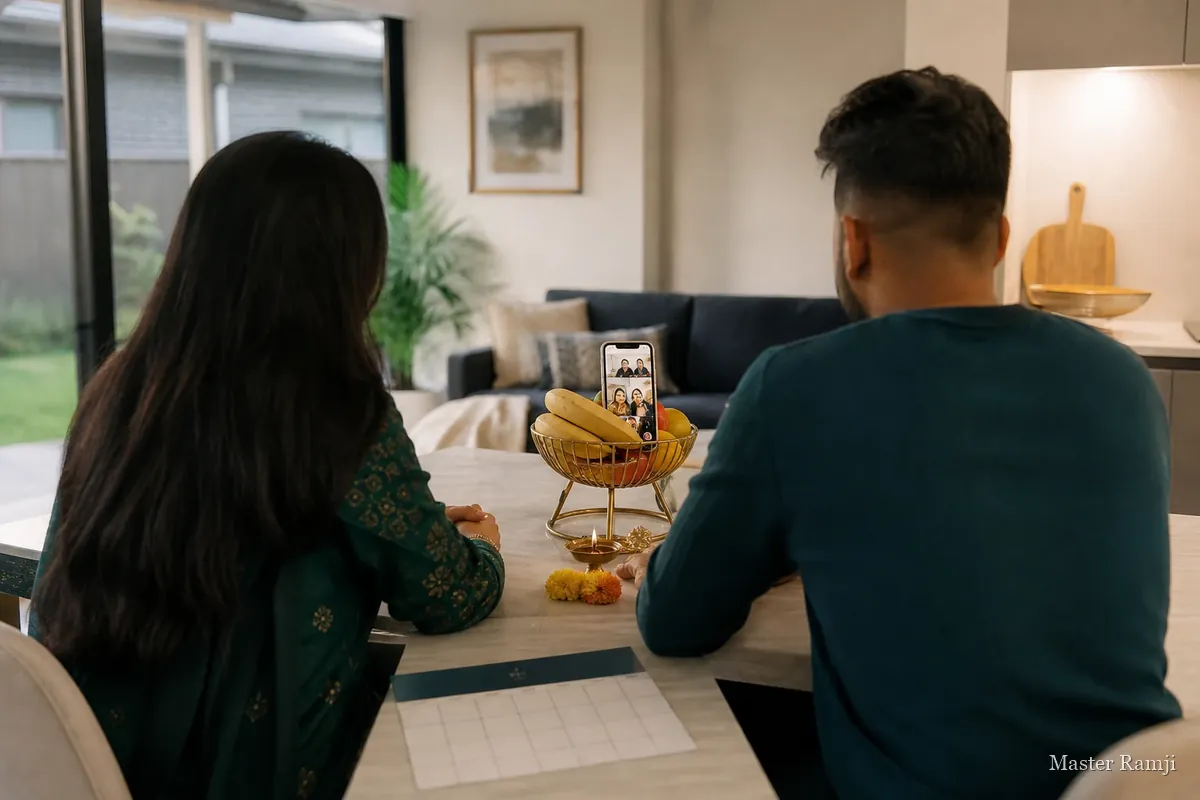
Picking a Wedding Date From Tarneit With Family in India
Marrying in Melbourne with parents and grandparents in India? How Tarneit couples can balance a muhurat with visitor visas, work leave and the long flight.
Read article →
The Money Talk for Engaged Couples in Point Cook
Engaged in Point Cook? How to have the money talk before marriage: mortgages, money sent to family overseas, wedding costs, and where to get proper advice.
Read article →
Planning a Melbourne Wedding From Wangaratta
Parents in Wangaratta helping plan a Hindu wedding in Melbourne? How to coordinate the priest, the muhurat and the paperwork when you live hours away.
Read article →More from Melbourne's South-East
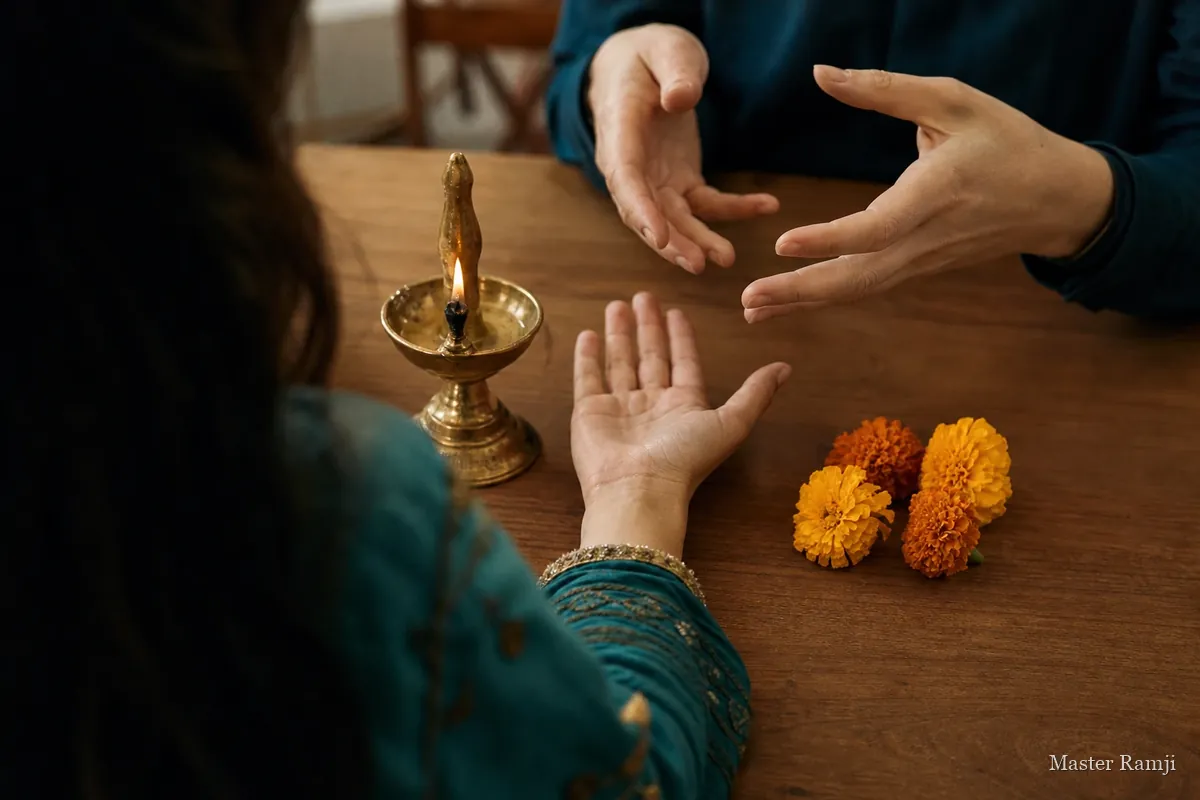
Thinking of a Palm Reader in Dandenong? Read This First
Thinking of seeing a palm reader in Dandenong? Calm, simple questions to ask before you offer your hand, what palmistry can't tell you, and your rights.
Read article →
Pitru Paksha for Families in Springvale and Nearby
How families in Springvale and Melbourne's south-east can keep Pitru Paksha simply at home, find the right days for Melbourne, and share remembrance with neighbours.
Read article →
Pressure to Marry: Setting Boundaries in Noble Park
Feeling family pressure to marry in Noble Park? Respectful ways to say not yet, where pressure ends and force begins, and free support if you need it.
Read article →Local pages
Astrologer for Dandenong
For Dandenong traders and new arrivals: shop timing, vastu for premises, and how to check any spiritual adviser. Sessions by phone, WhatsApp or video.
View area →
Astrologer for Clayton
For Clayton students and graduates dealing with family pressure, relationships and first jobs. Vedic astrology by phone, WhatsApp or video, from Ascot Vale.
View area →Quick answers
What is Mangal dosha?
Mangal dosha is a traditional marriage concern linked to the placement of Mars in a birth chart. Here is what it means and why it is rarely a reason to panic.
Read answer →What is Guna Milan?
Guna Milan is a traditional 36-point comparison of two people for marriage. See the eight factors it scores, what it leaves out, and how to read the result.
Read answer →Talk to Vijay Ramji
Tell us what you are facing. If a reading is unlikely to help, you will be told that plainly.