
Meditation for People With No Spare Time
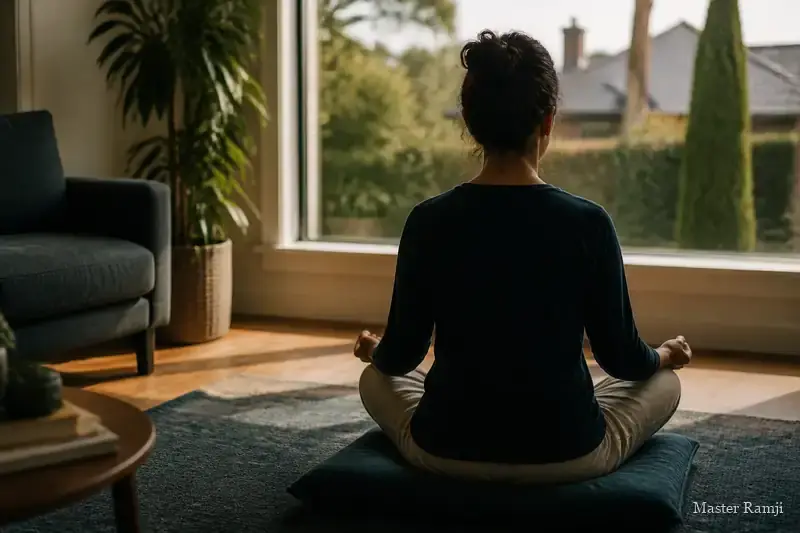
Meditation for busy people works best in short, fixed slots: one to two minutes to start, tied to something you already do, such as waking, a break or a train trip. Shift workers can anchor practice to waking time, not the clock. Never meditate while driving, and rest if you are drowsy.
Most meditation advice assumes a quiet room and a spare half hour, preferably at dawn. If you work rotating shifts, commute an hour each way or care for someone, that picture can make you feel you have failed before you start.
You haven't. A practice can be small, scattered and still real. This article is about fitting meditation into the gaps your week already has.
Key takeaways
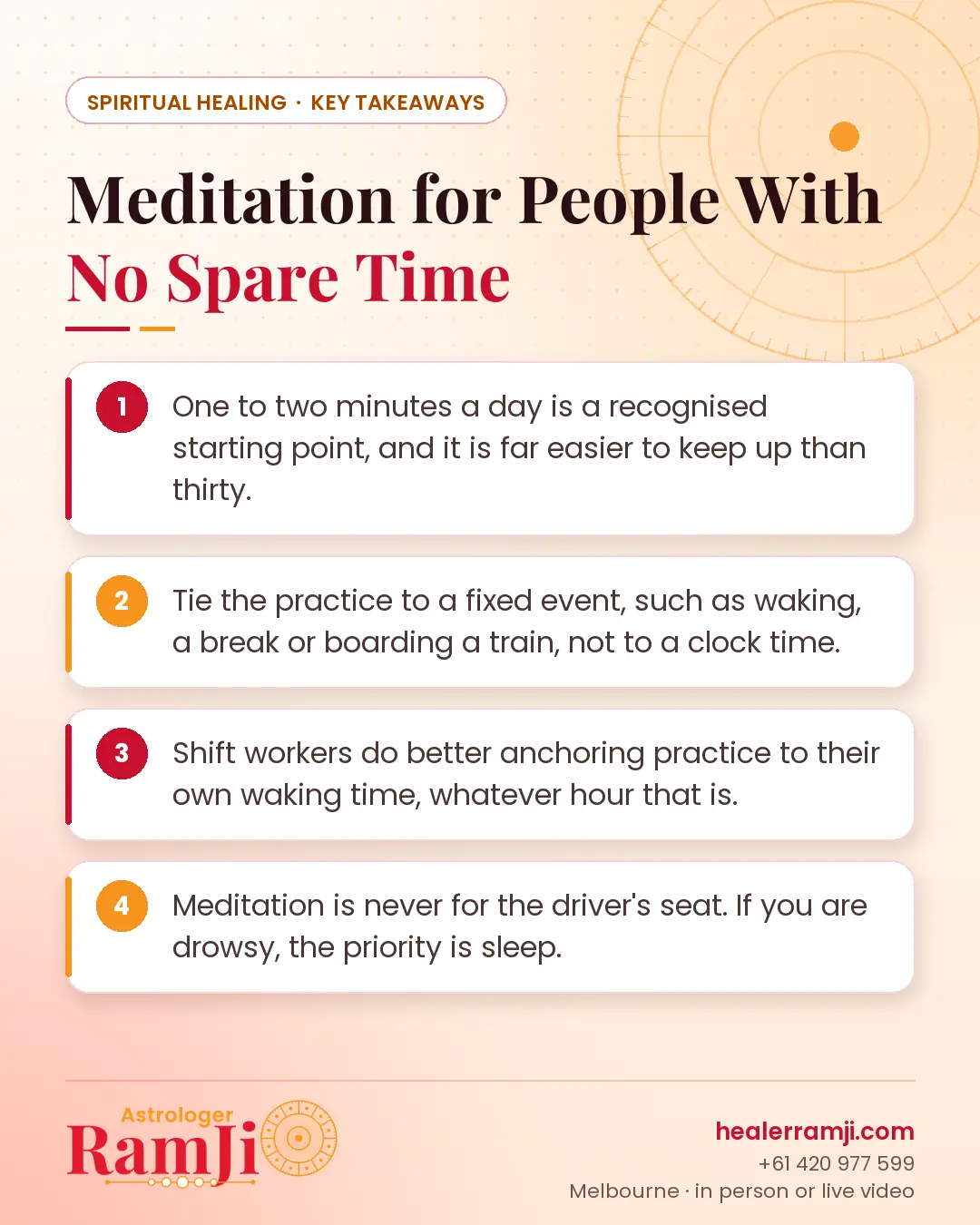
- One to two minutes a day is a recognised starting point, and it is far easier to keep up than thirty.
- Tie the practice to a fixed event, such as waking, a break or boarding a train, not to a clock time.
- Shift workers do better anchoring practice to their own waking time, whatever hour that is.
- Meditation is never for the driver's seat. If you are drowsy, the priority is sleep.
How short can meditation be?
Shorter than most people think. healthdirect suggests starting with one to two minutes each day and slowly increasing the time over weeks or months. It lists several things to focus on, including your breath, a body scan or a mantra.
Two minutes done most days builds a habit. A long session attempted once a fortnight usually doesn't. Once the short version feels automatic, you can stretch it when a day allows, without making the longer version a rule.
What can you do in one, three or ten minutes?
Keep a small menu, so you never have to decide on the spot.
- One minute. Sit or stand still. Breathe in slowly, breathe out a little more slowly, and count ten breaths. If you lose count, start again at one.
- Three minutes. A quick body scan. Move your attention from your feet to your head, noticing where you are tense, and let your shoulders drop on each out-breath.
- Five minutes. Repeat a short mantra, silently or in a whisper, letting your breath set the pace. Om, a name of God, or a phrase from your own tradition all work.
- Ten minutes. Combine them: a minute of breathing, a few minutes of mantra, then a minute of sitting quietly before you get up.
The menu matters more than the content. On a bad day, the one-minute version still counts.
How do you meditate on a rotating roster?
Clock-based advice falls apart when your shifts move. The Better Health Channel notes that shiftworkers get, on average, two to three hours less sleep than other workers, and that sleeping during the day is hard. Meditation shouldn't take time from sleep you already struggle to get.
A more workable approach is to anchor practice to your own day, not the clock:
- On waking. Whatever the hour, sit on the edge of the bed for a minute before reaching for your phone.
- Before a shift. Three minutes in the car park or locker room, once you have parked, to arrive properly.
- On a break. One minute of slow breathing before you eat.
- Before sleep. After a night shift, a short body scan in a darkened room can help mark the end of the working day.
Expect the routine to wobble when you change rosters. Pick it up from the next anchor, with no catching up. Our piece on shift work routines for spiritual practice looks at longer devotional routines.
How do you meditate on a commute?
Public transport is a gift for a busy person. A train or tram trip gives you a fixed start and end, and silent mantra repetition draws no attention. Many people count on their fingers or a small mala in a pocket. Keep an ear out for your stop, and keep your bag close.
If you walk part of the way, try walking at a steady pace and matching a few steps to each breath. Keep your eyes open and stay aware of traffic and crossings. For a longer routine built around a regular train trip, see a mantra routine for long train and freeway trips.

What about driving?
Don't meditate while driving, and don't play guided meditations that ask you to relax or close your eyes. Driving needs your full attention. If you drive to work, practise before you start the engine or after you park.
Tiredness is the bigger risk for shift workers. The Victorian Government has said tired drivers contribute to around 20 per cent of fatal crashes on Victorian roads each year. If you feel your eyes closing during a sitting, take it as a sign you need sleep, not more practice. Arrange another way home after a long night if you need to.
What if you keep falling asleep or forgetting?
Falling asleep usually means you are short of sleep. Sit upright, keep your eyes slightly open, or move the practice to a time when you are more alert. If you keep forgetting, the anchor is probably wrong. Tie it to something you never skip, like the kettle or locking the front door.
Some people also find that sitting quietly brings up anxiety or difficult memories. If that happens, open your eyes, do something ordinary, and speak with your GP before going further. Meditation can be part of looking after yourself, but it isn't a replacement for treatment.
Would guidance help?
Many busy people find it easier to keep a practice after one person has shown them how it fits their own week. Mantra and meditation guidance works through a single short practice, including pronunciation, counting and where it fits in your roster. If you'd like ideas for the end of the day, see a calming evening routine for better rest.
Sessions can be held by phone, WhatsApp or video, and any fee is stated before paid work begins. When you have a few minutes, get in touch.
Related service
Keep reading

How to Use a Mala
How to use a mala for mantra practice: holding it, counting a round, what to do at the guru bead, how traditions differ, and how to choose one without overspending.
Read article →
Hindu Rites After a Death in Melbourne
What antim sanskar, the mourning days and shraddha mean, and how Hindu families in Melbourne adapt funeral rites to Australian crematoria and customs.
Read article →
Grieving a Parent From the Other Side of the World
Grieving a parent overseas from Australia: why distance makes loss feel unreal, how to mark it here in the months after, and where to find real support.
Read article →Quick answers
What is a mantra?
A mantra is a sacred sound, word or phrase repeated in prayer or meditation. Here is what the word means, how it is used, and how to begin simply.
Read answer →What is energy healing?
Energy healing rests on the belief in a life force that can be guided. Here is what a session involves, and what the evidence does and doesn't show.
Read answer →Talk to Vijay Ramji
Tell us what you are facing. If a reading is unlikely to help, you will be told that plainly.