
Mantra and Meditation Guidance
One practice, learned carefully and small enough to keep up.

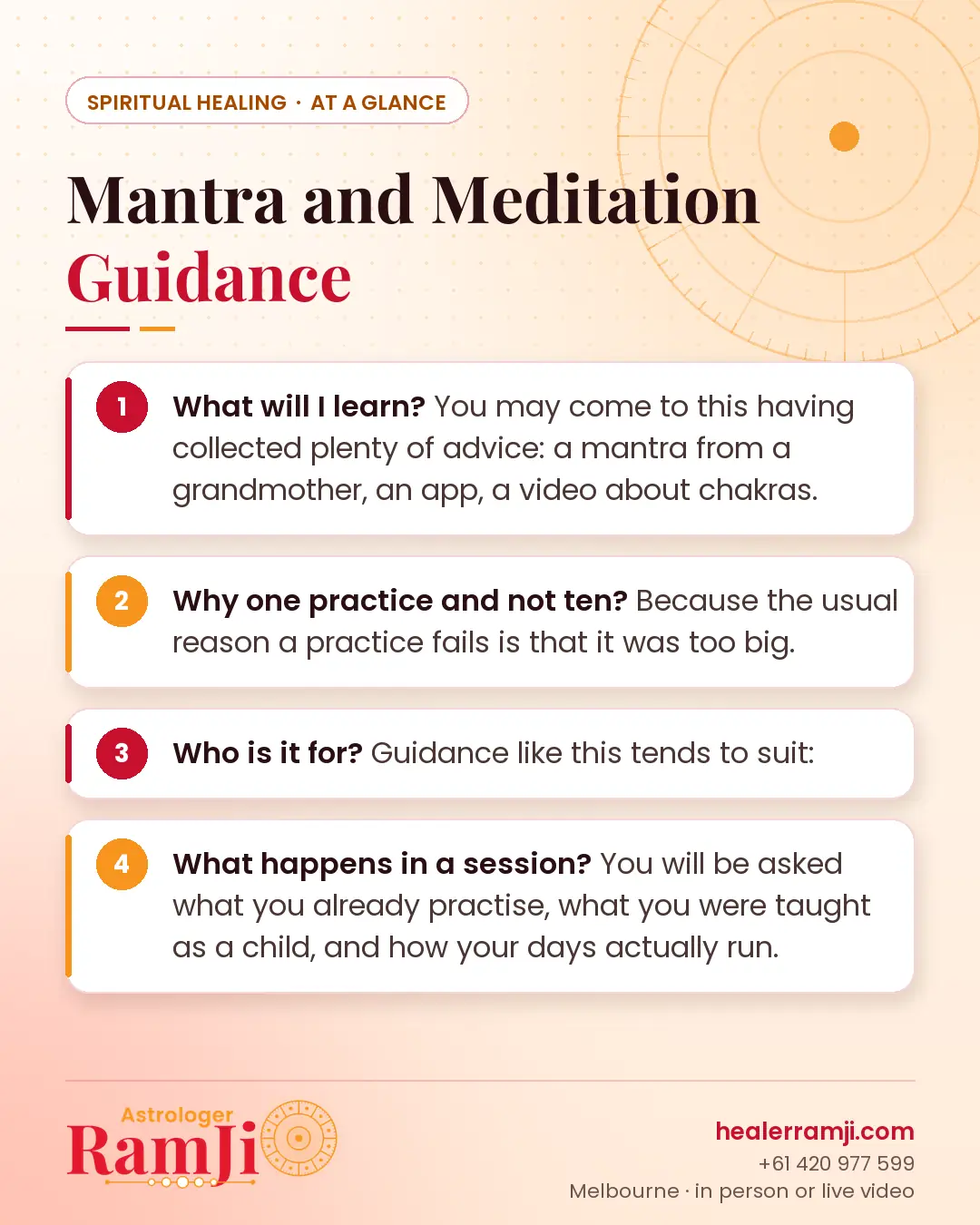
Mantra and meditation guidance teaches you one practice you can keep up: a suitable mantra, how to say it, how to count it and where it fits in your day. Sessions can be held by phone, WhatsApp or video. It is a spiritual practice and a learning session, not therapy or medical care.
What will I learn?
You may come to this having collected plenty of advice: a mantra from a grandmother, an app, a video about chakras. What may be missing is one thing you actually do. This service works as a kind of one-to-one lesson. The aim is that you finish with a single practice you understand and can keep up without help, including:
- A suitable mantra. It is chosen with your family tradition and beliefs in mind, and its meaning is explained.
- How to say it. Syllable by syllable, at a speed you can sustain.
- How to repeat it. Japa, the traditional practice of repeating a mantra, can be spoken, whispered or silent. You will work out which one your home and your life allow.
- How to count. With a mala, on your fingers, or by the clock.
- When to do it. A realistic time, tied to something you already do each day.
Why one practice and not ten?
Because the usual reason a practice fails is that it was too big. A person starts with 108 repetitions of three mantras before sunrise, manages a week, misses two days, feels guilty and stops. A short practice done most days is usually worth more than a grand one that lasts a fortnight. Healthdirect suggests beginners start with just one or two minutes a day. Our guide on starting a mantra practice that lasts explains how to build from there.

Who is it for?
Guidance like this tends to suit:
- Complete beginners who feel self-conscious and want a person to ask
- People raised overseas or in Australia who heard mantras as children but never learned their meaning
- Anyone returning to a practice after a long gap, with no wish to start again from scratch
- Shift workers, carers and parents whose days don't have a neat quiet hour
If you already follow a teacher or guru in a particular lineage, stay with them. Some families also hold that certain mantras should be received from a teacher or at a specific rite, while others chant them freely. The Gayatri is a common example, and our guide to the meaning and practice of the Gayatri mantra discusses this. Your family's view deserves respect, so raise it early.
If your question is about a period in your chart, you may want a personal mantra remedy plan, which uses your birth details. This service doesn't need them. And if you are going through a hard stretch and want more than a technique, look at spiritual support in hard times.
What happens in a session?
You will be asked what you already practise, what you were taught as a child, and how your days actually run. A mantra is then suggested and explained. You usually say it together slowly until the sounds settle, with corrections as you go, and you may try a short sitting there and then. Before you finish, you agree on what you will do tomorrow, in specific terms: where you will sit, what comes just before, and for how long.

What should I have ready?
- Any mantra your family already uses, even if you only half remember it
- An honest idea of how many minutes you have on a normal weekday
- A note about your home, such as thin walls, sleeping children or shared rooms
- A mala, if you own one
What keeps a practice going?
Attach it to something fixed, such as the kettle, the school drop-off or the train. Keep a smaller version for bad days, perhaps eleven repetitions instead of a full round. When you miss a day, resume the next day without any penalty or extra counts. If you commute, a mantra routine for long train and freeway trips can use time you already have, and silent repetition suits a train. If you drive, keep your full attention on the road and leave the practice until you park.
What can't it do?
Mantra and meditation are spiritual and contemplative practices. Healthdirect says meditation may help with symptoms such as anxiety and sleep problems, but that doesn't make it a replacement for treatment. No mantra can guarantee a job, a marriage or recovery from an illness, and it can't influence another person.
Many people find a quiet sit pleasant. A few find it stirs up anxiety or difficult memories. If that happens, stop, do something ordinary, and speak with your GP or a mental health professional before going further.
What does it cost?
Ask when you get in touch. Any fee is stated before paid work begins. Once you have learned the practice, it's yours to keep using with no further charge.
How do I get started?
Call or message +61420977599, or send a note through the contact form saying what you have tried so far. Vijay Ramji is based in Ascot Vale, with appointments arranged in advance, and sessions can be held by phone, WhatsApp or video, so you can learn from wherever your practice will actually happen.
Common questions
What is a mantra, exactly?
A mantra is a sacred sound, word or verse repeated as prayer or meditation. Our short answer on what a mantra is gives the definition and a little of the background.
Will something bad happen if I say a mantra wrongly?
Treat that claim with caution. Traditions care about careful pronunciation out of respect, and it's worth learning well. Using fear to sell lessons or rites is another matter. If you make mistakes as a beginner, just keep practising.
Do I need to be Hindu or religious?
No. Healthdirect notes that meditation is part of many religions, including Hinduism and Buddhism, and that you don't need to be religious to do it. If a devotional mantra doesn't suit your beliefs, say so. A simpler sound or the breath can be used.
Do I need a mala?
No, although a mala makes counting easier and gives your hands something to do. You can count on your fingers instead. Our guide on how to use a mala covers technique and choosing one without spending much.
I only have a few minutes. Is that worth doing?
Yes. Healthdirect suggests beginners start with one to two minutes a day and build up gradually. See our ideas for meditation when you have no spare time, including short sittings around shift work and commuting.
Related services
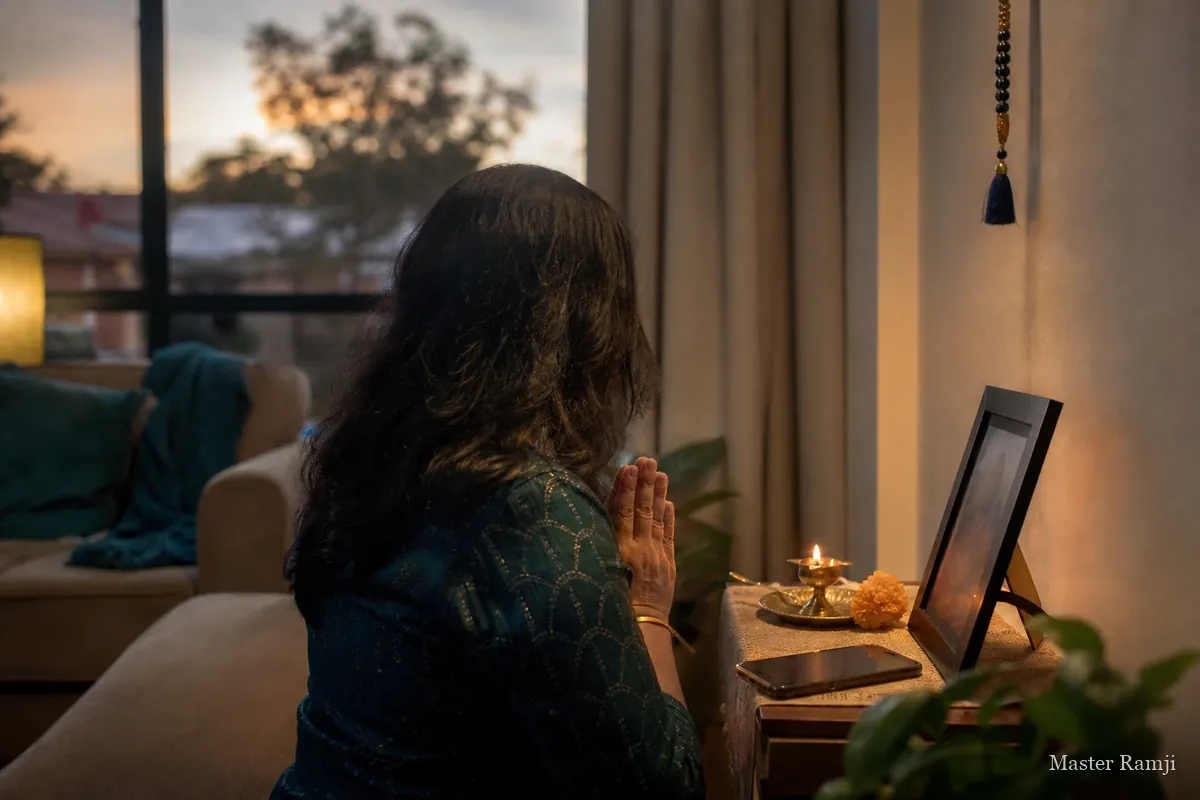
Spiritual Support Through Grief
Spiritual support through grief and loss: prayer, remembrance and simple rites that sit alongside a GP or bereavement counsellor. Calm and confidential.
View service →
Spiritual Support in Hard Times
Spiritual guidance in difficult times: a calm conversation and small steadying practices for when life feels stuck or heavy, alongside practical and medical help.
View service →Read more
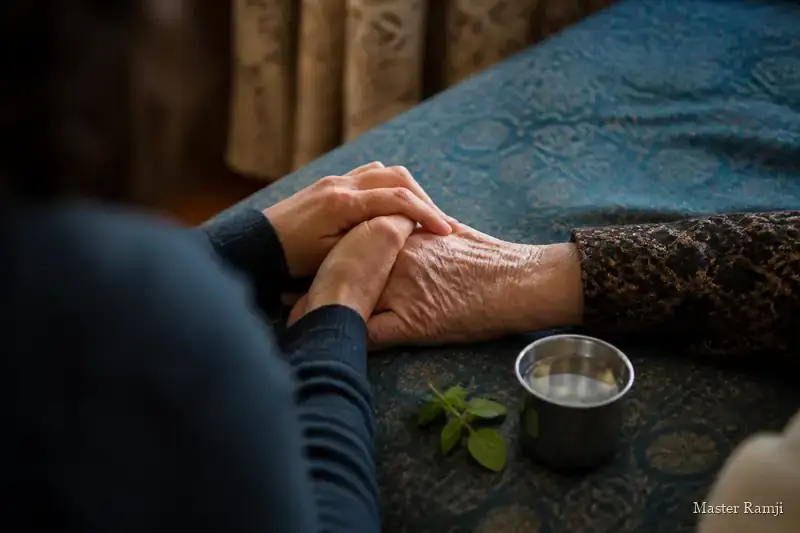
How to Start a Mantra Practice That Lasts
How to start a mantra practice you will still be doing in a year: begin with a small daily count, tie it to an existing habit, and don't panic over missed days.
Read article →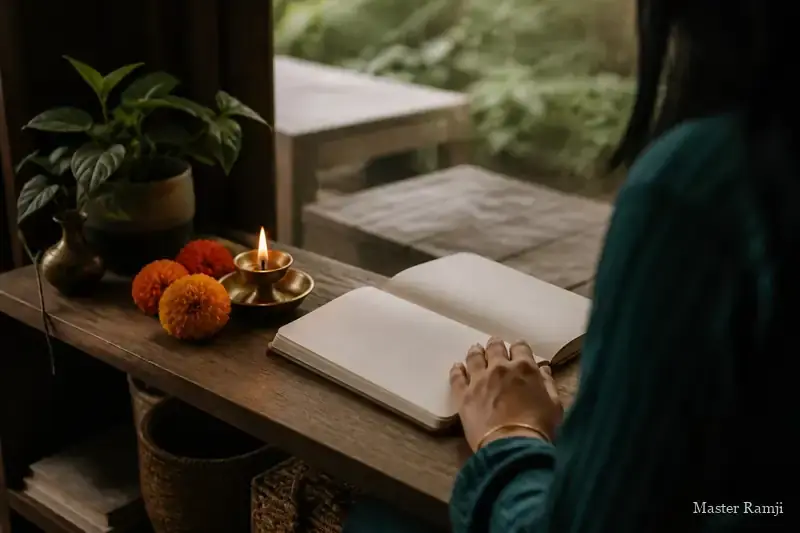
The Gayatri Mantra: Meaning and Practice
The Gayatri mantra meaning, word by word: where the verse comes from, how translators render it, and how to chant it respectfully as a beginner.
Read article →
Meditation for People With No Spare Time
Meditation for busy people, shift workers and commuters: one to ten minute practices tied to your roster or trip, plus why you should never meditate while driving.
Read article →
How to Use a Mala
How to use a mala for mantra practice: holding it, counting a round, what to do at the guru bead, how traditions differ, and how to choose one without overspending.
Read article →
Keeping a Daily Practice on the Hoppers Crossing Commute
A mantra routine for the Hoppers Crossing commute: silent repetition on the Werribee line, and a safer, parked version if you drive the Princes Freeway.
Read article →Quick answers
What is a mantra?
A mantra is a sacred sound, word or phrase repeated in prayer or meditation. Here is what the word means, how it is used, and how to begin simply.
Read answer →What is energy healing?
Energy healing rests on the belief in a life force that can be guided. Here is what a session involves, and what the evidence does and doesn't show.
Read answer →Talk to Vijay Ramji
Tell us what you are facing. If a reading is unlikely to help, you will be told that plainly.