
Holding a Namkaran in Melbourne
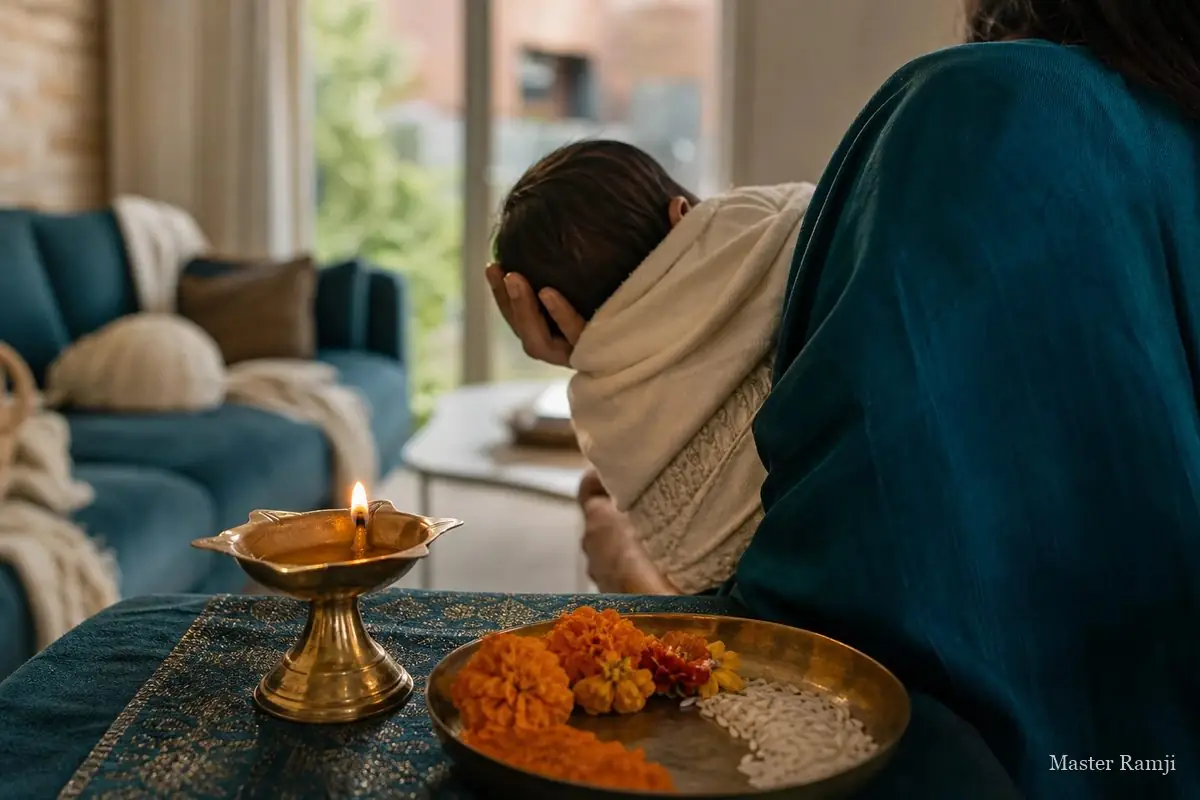
To hold a namkaran ceremony in Melbourne at home, choose a day that respects your family's custom and the mother's recovery, then build a short running order around the baby's feeds and sleep. Keep the guest list manageable, plan a video link for relatives overseas, and register the legal name separately with Births, Deaths and Marriages Victoria.
A namkaran, or namakarana, is one of the first rites in a child's life. In India it may have been run by grandparents and aunts who had done it many times before. In Melbourne, it often falls to two tired new parents, with the family's elders on the other end of a video call.
This article focuses on timing: choosing the day, shaping the ceremony around your baby, and managing guests at home. For venues and baby-safe customs, our article on planning a namkaran in Caroline Springs goes into detail that applies across Melbourne.
Key takeaways
- Traditions differ on the day. Ask your elders or priest what your family's custom allows, and put the mother's recovery first.
- Keep the rite short and plan it around a feed, not the other way round.
- Fewer guests at home usually means a calmer baby and a calmer mother.
- The ceremony gives a name in your tradition. The legal name must be registered with the state.
When is a namkaran usually held?
Older household texts often mention the tenth or twelfth day after birth. Other families wait for a later date, sometimes weeks or months. In Kerala, a naming and thread-tying rite called noolukettu is often held around the twenty-eighth day. Some communities combine the naming with a cradle ceremony.
Many Australian families adapt. They hold a small rite on the traditional day and invite wider family later, or they choose a nearby weekend. If your family wants an auspicious time within that window, muhurat date selection can compare options worked out for Melbourne, not for India.
Whatever the custom, the mother's health matters more than the calendar. Recovery from birth takes time. A later, happier ceremony is better than an early one that leaves her exhausted.
How do you choose the name?
Many families take the first sound of the name from the baby's birth star, or nakshatra. Our guide to choosing a baby name from the birth star explains how this works and where traditions differ. Some families give a private name tied to the star and a different everyday name. Others ignore the star completely. All of these are fine, and no evidence shows that a syllable shapes a child's life.
Agree on the name before the day. A ceremony is not the moment for a family debate.
What does a home running order look like?
Babies don't follow schedules, so build the day around feeds and sleep. A short, flexible plan might be:
- Before guests arrive. Feed and settle the baby. Set up the space with a clean mat, a lamp, flowers and whatever your priest has asked for.
- Welcome. Greet guests and give them time to see the baby, with clean hands.
- The rite. Prayers, the announcement of the name, and blessings from elders. In many families, the name is whispered in the baby's ear, and in some the father's sister has a special role. Aim to keep the core rite to a length the baby can manage.
- Break. Let the mother and baby step away for a feed or a nap.
- Food and celebration. Lunch or prasad for guests, with no one needing the baby to be on show.
Ask your priest in advance how long their part takes, and tell them you may need to pause. Most are well used to babies.
How many guests should you invite?
A home has natural limits: space, parking, bathrooms and a baby who may be unsettled by a crowd. A few approaches help:
- Two circles. Close family for the rite, wider friends for a later lunch or a gathering some weeks on.
- Staggered visits. Invite some guests for the ceremony and others for the afternoon.
- A clear finish time. Put it on the invitation. Tired parents will thank you.
Let neighbours know if cars will fill the street, and keep driveways clear.

How do you keep a newborn healthy with guests around?
Young babies are vulnerable to infections. The Better Health Channel says babies under six months are at greatest risk of severe whooping cough, and that older children and adults with milder symptoms can pass it to infants without knowing. It recommends vaccination for parents and carers of young infants who haven't been vaccinated in the last ten years. Talk to your GP or maternal and child health nurse about who in the household should be vaccinated.
It is also fine to ask anyone with a cough, cold or fever to join by video instead, and to ask everyone to wash their hands before holding the baby. Keep lamps and incense well away from the baby, and never leave a flame unattended.
How do you include relatives overseas?
Grandparents in India may be the people most keen to see the rite. Melbourne is four and a half hours ahead of India for part of the year and five and a half hours ahead during daylight saving. A late morning ceremony in Melbourne lands around dawn in India. Check the hour on both ends before you fix a time.
Ask one guest to run the video call so the parents aren't juggling a phone. Test the connection and the camera position the day before. If the timing is impossible, record the rite and share it afterwards.
Does the ceremony make the name legal?
No. A namkaran is a religious and family occasion. To make the name legal, the birth must be registered. Births, Deaths and Marriages Victoria sets a deadline of 60 days from the birth for registering every baby born in Victoria. If your ceremony is planned for later, register on time anyway, and make sure the spelling on the form is the one you intend to use.
Do you need an astrologer at all?
No. A priest or respected elder can lead the rite, and plenty of families never look at a chart. If you would like to look at your baby's birth star in a gentle way, a parent and child chart reading focuses on temperament and how you relate. It makes no predictions about your baby's health or future. Sessions can be held by phone, WhatsApp or video, which suits a house with a newborn. If you have a question about your plans, get in touch.
Related service
Keep reading
Setting Up a Small Home Mandir
Home mandir setup for a small apartment: where to place it, what to keep inside, daily care, and how to keep lamps, incense and camphor safe in a tight space.
Read article →
Caring for Ageing Parents From Melbourne
Caring for ageing parents overseas from Melbourne: planning before a crisis, sharing roles with siblings, the visa question, and living with the guilt of distance.
Read article →
Vastu for a New Build in Tarneit
Building in Tarneit? When to raise vastu with a volume builder, what to ask for first, and how to get changes in writing before the slab is poured.
Read article →Quick answers
Should parents get a child's chart read?
A child's chart can be read with care, as a way to reflect on temperament. Here is when it may help, what to avoid, and who to see about real concerns.
Read answer →What is vastu shastra?
Vastu shastra is a traditional Hindu system of home and building design based on direction and layout. Here is what it covers and what it can't claim.
Read answer →Talk to Vijay Ramji
Tell us what you are facing. If a reading is unlikely to help, you will be told that plainly.