
Setting Up a Small Home Mandir
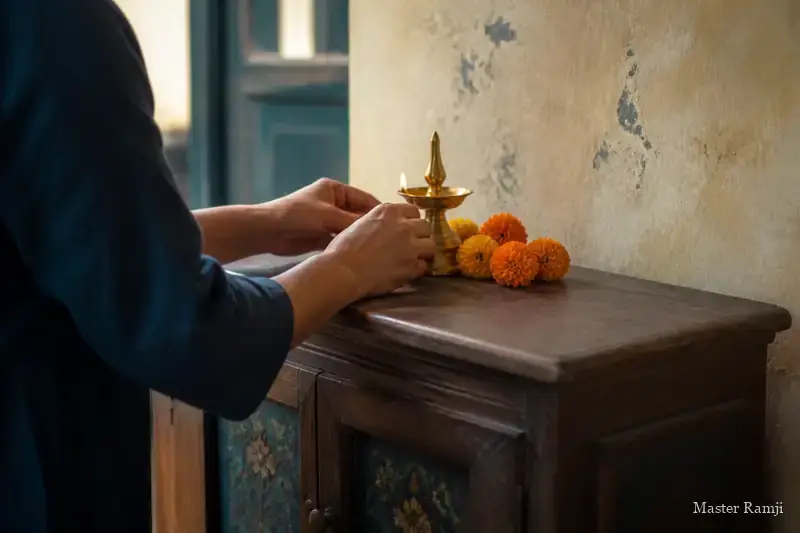
For a home mandir setup in a small apartment, choose a clean, quiet shelf or cabinet, ideally in the east or north-east if your layout allows. Keep only a few items, place it at about chest height, and treat flame with care. A battery lamp is a reasonable choice, and camphor is best kept out of the home.
In many family homes in India, the prayer space had a room or at least a corner of its own. In a one-bedroom apartment or a shared townhouse, you may be working with a single shelf. That is enough. A mandir is about where your attention goes each day, not how much space it takes.
This guide covers placement, what to keep inside, daily care and safety, with the limits of a small home in mind.
Key takeaways
- East or north-east is the traditional preference, but a clean, quiet spot you use every day matters more.
- Fewer items make a small mandir easier to keep tidy and respectful.
- Keep any flame on a hard, stable surface, well clear of curtains, and never leave it burning.
- Victoria's Poisons Information Centre advises against keeping camphor blocks at home at all.
Where should a mandir go in a small apartment?
Vastu tradition usually favours the north-east of a home for prayer, with the east as a common alternative. Many families also like to face east or north while they pray. In a small apartment, the ideal wall may be a window, a kitchen bench or the bathroom. When that happens, choose the best spot you have and don't worry about it.
Some practical preferences most families share:
- Somewhere clean and calm, where you pass every day
- Not on a wall shared with a toilet, or facing a bathroom door, where you can avoid it
- Away from the stove, heaters and anything that drips
- Out of a busy walkway, so the shelf isn't bumped
In a studio or a share house, the mandir may end up in the bedroom. Customs differ on this. Many people simply use a cabinet with doors, or a small curtain, so the shrine can be closed at night. Directions also raise particular questions in the southern hemisphere, and our vastu guide for Melbourne apartments explains how they are read in a fixed layout.
What kind of mandir suits a small home?
You have several options, depending on your space and lease:
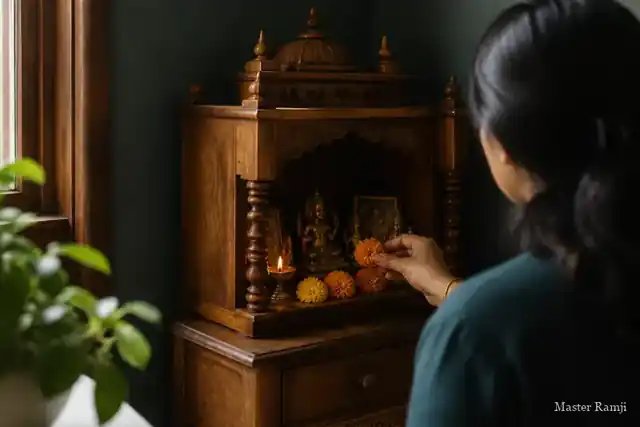
- A wall shelf at roughly chest or eye height when you stand or sit to pray.
- A cabinet mandir with doors, which keeps dust out and suits shared rooms.
- A corner unit that uses space nothing else can.
- The top of a bookcase or sideboard, cleared and kept only for this purpose.
If you rent, ask your rental provider before drilling into walls. A freestanding cabinet avoids the question altogether. Owners in apartment buildings should also check the owners corporation rules before fixing anything to a common wall.

What goes inside?
Keep it simple. A small mandir looks cluttered quickly, and clutter is harder to keep clean. Many households keep:
- One or two images or small murtis of the family deity
- A lamp, real or battery-powered
- A small pot of water
- A bell and an incense holder, if you use them
- A plate for flowers, fruit or prasad
Some families prefer not to keep chipped or damaged murtis in the shrine, and some have rules about the size of murtis kept at home. Traditions vary, so ask an elder or your priest what your family does. If you are new to home worship, our short answer on what a puja involves explains the usual offerings.
How do you care for it day to day?
A small shrine needs a small routine. Change the water daily. Take out flowers once they wilt, and put them in your food and garden waste or compost, following your council's rules, instead of leaving them to dry on the shelf. Wipe the shelf and the lamp each week. Many families also cover the mandir or close its doors when they travel.
If you chant at your shrine and worry about noise through thin walls, our guide to keeping a mantra practice in a small home has ideas for quiet practice and talking to neighbours.
How do you keep a lamp or incense safe in a tight space?
Small rooms bring flame closer to everything else. The CFA's advice on candles, oil burners and incense applies directly to a diya or incense stick:
- Keep any flame at least one metre from curtains and other things that can catch fire.
- Use a stable, hard surface and a proper holder.
- Never leave a flame burning without someone around, and put it out before you go out or go to sleep.
- Don't burn incense in cupboards or other small enclosed spaces.
- Keep hair and loose clothing back, and never leave children alone in a room with a flame.
- Don't touch or move a lit lamp, or one that has just gone out.
That point about enclosed spaces matters for cabinet mandirs. Light a real lamp only with the doors fully open and the flame at the front edge, with nothing above it, or use a battery lamp inside. The CFA itself suggests battery-operated candles as an alternative. Incense smoke may also trigger a smoke alarm in a small apartment. Air the room once the flame is out, as the CFA advises keeping flames away from breezes and open windows, and never cover or disable an alarm.
What about camphor?
Camphor is used in aarti in many homes, but it carries a real risk. The Victorian Poisons Information Centre advises not keeping camphor blocks in the house for any purpose, and warns that swallowing only a small part of a block is potentially fatal for a child. Loose tablets on a low shelf can look like sweets.
A lamp, a bell or flowers can carry the aarti without camphor. If a child may have swallowed any, healthdirect advises calling the Poisons Information Centre on 13 11 26, or 000 if someone collapses, stops breathing or has a seizure. Our guide to salt and camphor safety at home covers this in more detail.
What can placement not do?
Vastu is a tradition and a belief, and its effects haven't been scientifically established. A well-placed mandir can't promise health, harmony or money. What it can offer is a calm, cared-for place to pray, and that is worth having in any home. Be cautious of anyone who says your family will suffer unless you buy a particular shrine or pay to move it.
Would help with placement be useful?
If your layout leaves you unsure, a home vastu consultation works from your floor plan and photos and suggests changes that usually need no building work. Sessions can be held by phone, WhatsApp or video, and fees are stated before any paid work. To ask about your space, get in touch.
Related service

Keep reading
Caring for Ageing Parents From Melbourne
Caring for ageing parents overseas from Melbourne: planning before a crisis, sharing roles with siblings, the visa question, and living with the guilt of distance.
Read article →
Vastu for a New Build in Tarneit
Building in Tarneit? When to raise vastu with a volume builder, what to ask for first, and how to get changes in writing before the slab is poured.
Read article →
Vastu Questions for New Homes in Craigieburn
Common Craigieburn estate layouts read through vastu: garage-forward fronts, rear kitchens and upstairs bedrooms, and which changes are worth your money.
Read article →Quick answers
What is vastu shastra?
Vastu shastra is a traditional Hindu system of home and building design based on direction and layout. Here is what it covers and what it can't claim.
Read answer →Can vastu be applied in a rental?
Yes, vastu can be applied in a rental if you stick to reversible changes. Here is what to try first and what Victorian renters should check.
Read answer →Talk to Vijay Ramji
Tell us what you are facing. If a reading is unlikely to help, you will be told that plainly.