
Muhurat Date Selection
An auspicious date and time, worked out for Melbourne and not for India.
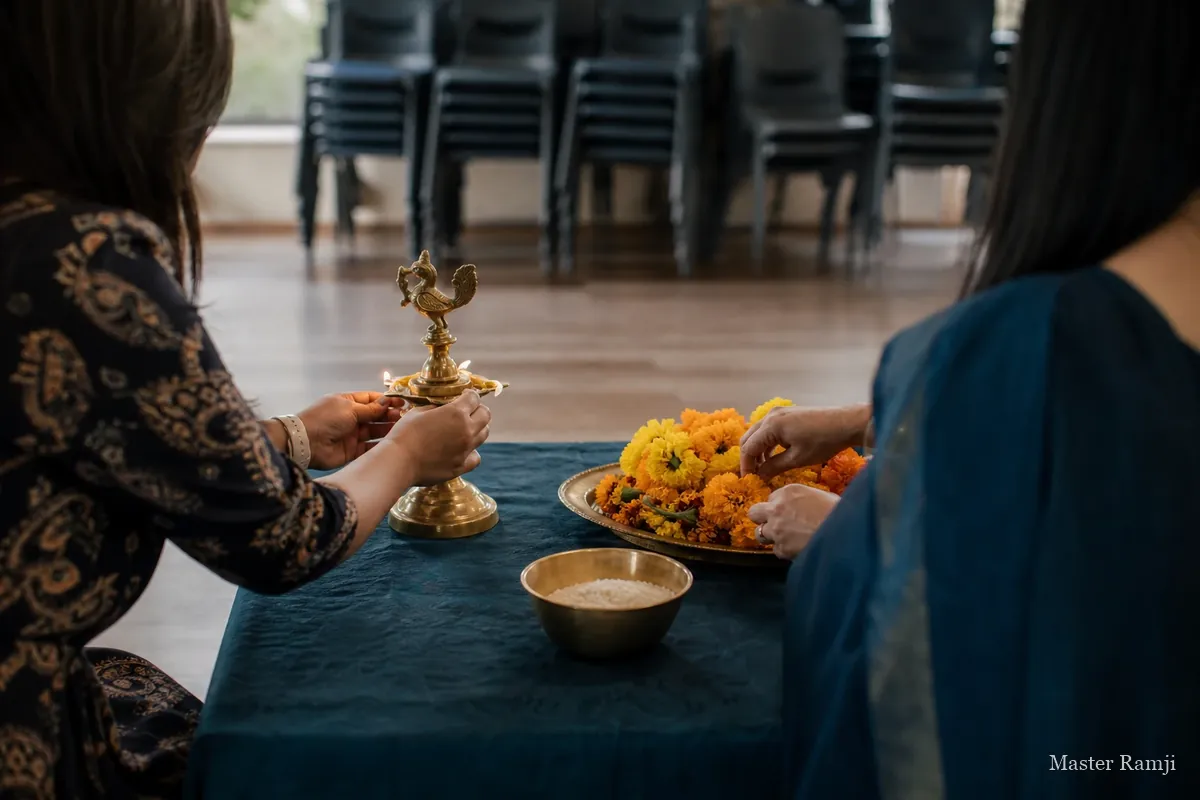
Muhurat selection is the Hindu practice of choosing an auspicious date and time for an event, such as a wedding or housewarming. For a Melbourne event, it is calculated from local sunrise and local time, then fitted around real venue options. It is a tradition of intention, not a promise of success.
What is muhurat date selection?
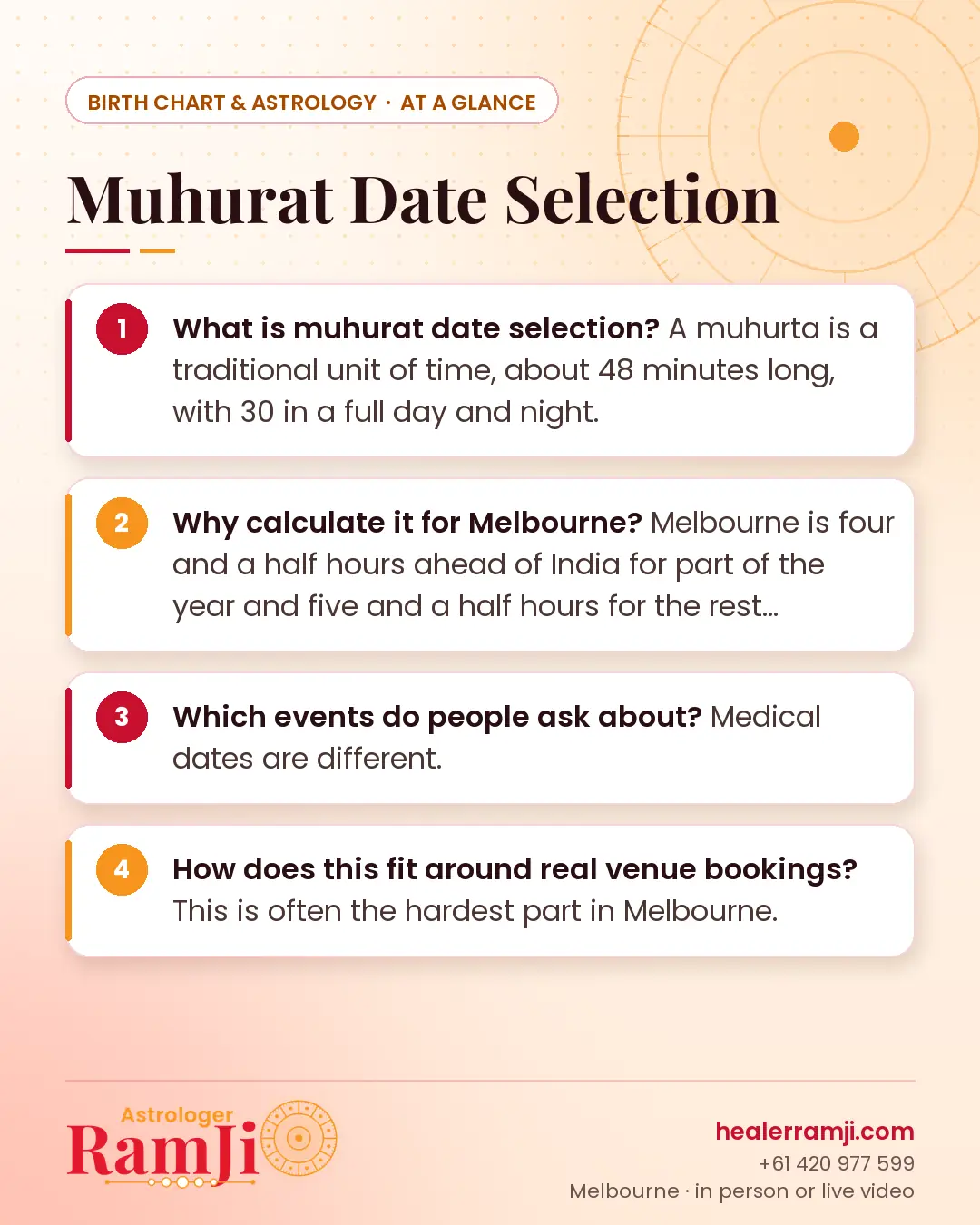
A muhurta is a traditional unit of time, about 48 minutes long, with 30 in a full day and night. In everyday use, muhurat means an auspicious time to begin something. For the short definition, read what a muhurat is.
Selection usually starts with the panchang, the Hindu almanac, and its five limbs: tithi (lunar day), vara (weekday), nakshatra (the Moon's star), yoga and karana. Times usually avoided are removed, and the remaining options may be checked against the birth details of the people involved. Traditions vary, and a family's own custom counts. For example, many families avoid wedding dates when Jupiter or Venus sits close to the Sun, and some communities observe other restrictions.
Why calculate it for Melbourne?
Melbourne is four and a half hours ahead of India for part of the year and five and a half hours for the rest, once Victoria's summer time applies. It is tempting to take an Indian date and convert the clock, but that does not give the same muhurat:
- The day starts at local sunrise. Tradition often names a day by the tithi at sunrise. Melbourne's sunrise comes hours earlier in absolute time, so a date can fall differently.
- Rahu Kalam is a local calculation. It is one of eight equal parts of the daylight hours. Melbourne's days are much longer in December than in June, so its length and clock time both move through the year.
- The rising sign depends on where you stand. A sign that is rising in Delhi is not rising in Melbourne at the converted time.
The same reasoning affects festivals. See why festival dates differ in Australia and how Diwali puja timing works in Melbourne. If you live out of town, the festival planner for regional Victoria helps with travel and home observance.

Which events do people ask about?
- Weddings and engagements. Remember the legal steps too. In Victoria, a Notice of Intended Marriage must be lodged at least one month before the wedding, so allow for that when you choose a date.
- Moving into a home. See griha pravesh timing for more on housewarmings.
- Naming ceremonies, first rice and other family rites.
- Opening a business or signing a lease. A date can feel like a good start, but it says nothing about whether the deal is sound. Financial timing guidance is reflection and not financial advice, so see a licensed adviser about the numbers.
Medical dates are different. The timing of a planned caesarean or surgery is a clinical decision for you and your doctors. It should never be moved because of a muhurat.
How does this fit around real venue bookings?
This is often the hardest part in Melbourne. Halls book out early, weekends are in demand, and relatives may be flying in. So it helps to work from what can actually happen. Here is a sensible order:
- Decide what cannot move, such as visas, leave and the availability of an elder who must be there.
- List the dates your venue and priest or celebrant can really offer.
- Have those dates compared, with the reasons for each one explained.
- Choose, and book quickly.
Many families separate the ritual from the party. The rite happens in the chosen window, on a weekday if need be, with the reception on the weekend. Others focus on one key moment in the ceremony, as the whole event does not need to fit inside a single window.

What should I bring?
- The type of event and your family's tradition or community
- The suburb or town where it will take place
- Your possible dates, including any venue limits
- Birth details for those at the centre of the event, if you have them
- Any date you have already been given, and who gave it
You will usually be taken through the options one at a time, with what favours each one and what counts against it. The final choice stays with your family.
What can't a muhurat do?
Choosing a time is a religious and cultural practice. There is no scientific evidence that it changes how things turn out. It cannot promise a happy marriage, a profitable shop or a trouble-free move. For many families, its real value is the care and shared intention it brings. Be cautious if someone tells you that only one date will do, or that disaster will follow if you choose another.
What does it cost?
Ask when you get in touch. Any fee is stated before paid work begins. That includes anything extra you may be offered beyond the date itself.
How do I get in touch?
Message on WhatsApp or call +61420977599, or send your event details through the contact form. It helps to get in touch before you lock in a venue. Vijay Ramji is based in Ascot Vale, with appointments arranged in advance, and sessions can be held by phone, WhatsApp or video.
Common questions
Our family priest in India has already given us a date. Can it be used?
Often the day can be kept and the time recalculated. Share what you were given and how it was worked out. Our guide on why a muhurat from India may not work in Melbourne explains what usually needs checking.
Our venue only has Saturdays. Can you still find something?
Usually you can compare the Saturdays you have and pick the most suitable. A full match on every factor is rare on any calendar, so the aim is the best available option, explained plainly. Picking a date when hall bookings are limited covers this.
What if we miss the muhurat because of traffic or a late start?
Carry on calmly. Missing a window does not spoil a marriage or a home, and it is no reason to expect harm. Many families focus on the main moment of the rite and take the rest as it comes.
Whose birth details are needed?
For a wedding, you may be asked for both partners' details. For a family event, it is usually the person at the centre of it. If you only have a rough time for someone, say so.
Can someone perform the ceremony as well?
Selection itself is worked out from your details. If you also need someone for the rite, ask about it when you get in touch.
Related services

Kundli Reading in Melbourne
A kundli reading in Melbourne with Vijay Ramji: your Vedic birth chart explained in plain language, with what it shows, what it can't, and useful timing.
View service →
Dasha Period Analysis
Dasha analysis with a Melbourne astrologer: see which Vimshottari period you are in, when it changes, and how to weigh decisions over the next few years.
View service →Read more

Why a Muhurat from India May Not Work in Melbourne
Why a muhurat worked out for India can't simply be converted to Australian time: local sunrise, day length, the rising sign and daylight saving all change it.
Read article →
Diwali Puja Timing in Melbourne
Why Diwali puja time in Melbourne differs from India: local sunset, daylight saving and the rising sign. How to check the right window and keep lamps safe.
Read article →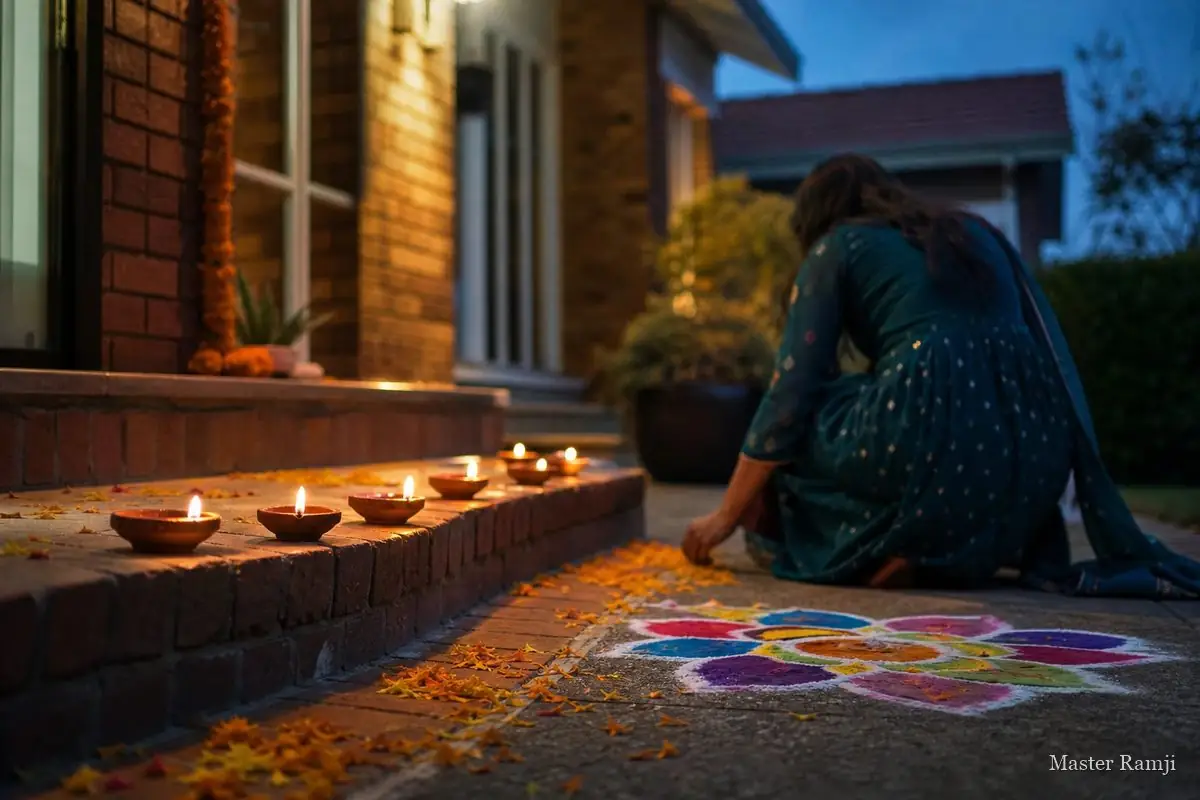
Why Festival Dates Differ in Australia
Why Hindu festival dates in Australia can fall a day apart from India: lunar days, local sunrise, time zones, regional calendars and reversed seasons explained.
Read article →Picking a Date for a Family Event in Keilor
Planning a naming ceremony, engagement or puja in Keilor? How to pick an auspicious time when hall dates are limited, and what to check before you book.
Read article →
A Hindu Festival Planner for Regional Victoria
Planning festivals from regional Victoria? How Hindu festival dates are set by the lunar calendar, why they can differ from India, and how to plan temple trips.
Read article →Quick answers
What is a muhurat?
A muhurat is an auspicious date and time chosen for an important start, such as a wedding. Learn how it is chosen, and why local time in Melbourne matters.
Read answer →What is a kundli?
A kundli is a Vedic birth chart that maps the planets at your exact time and place of birth. Here is what it shows, in plain words.
Read answer →Does daylight saving affect muhurat timing in Melbourne?
Yes. Victoria moves its clocks forward an hour from October to April, so a muhurat must be worked out for Melbourne local time, not copied from an Indian calendar.
Read answer →Talk to Vijay Ramji
Tell us what you are facing. If a reading is unlikely to help, you will be told that plainly.