
Parent and Child Chart Reading
Understanding your child's temperament without labelling them.
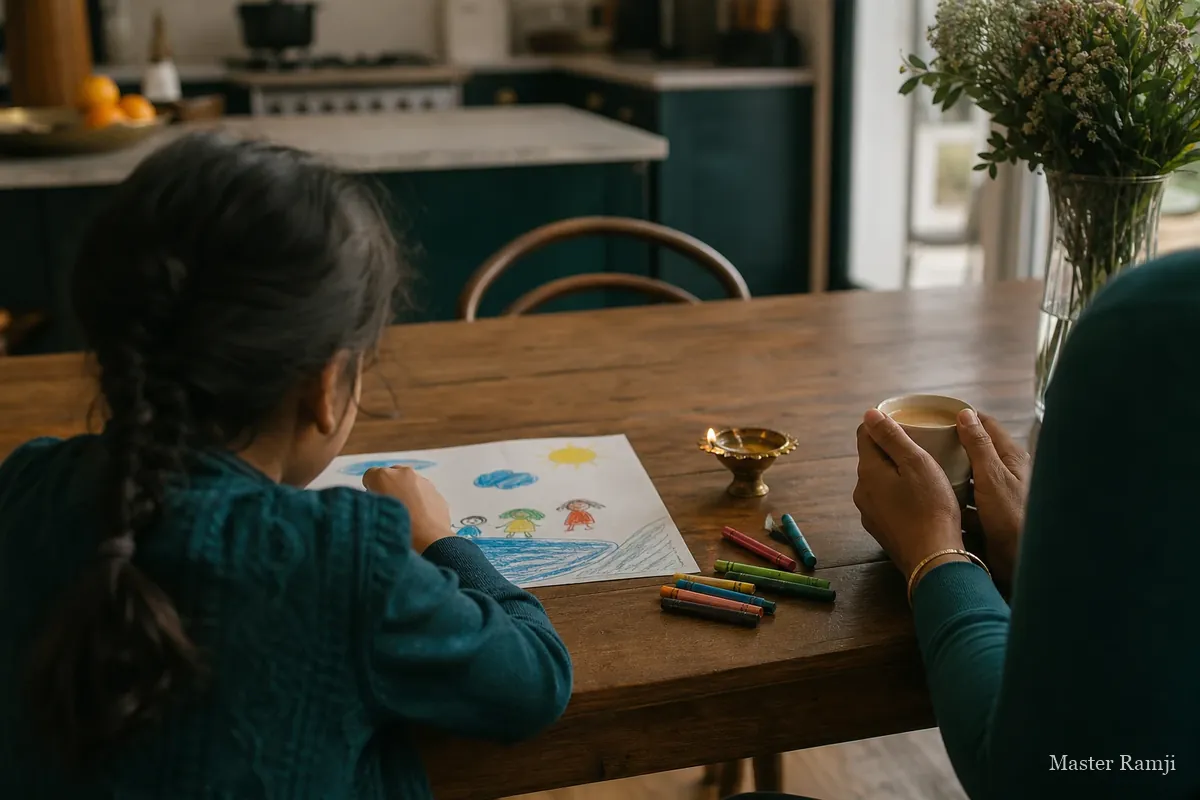
A parent and child chart reading uses Vedic astrology to reflect on a child's temperament and how it meets your own. It is a conversation for parents about patience and understanding. It does not label a child, predict health, marks or future, or replace advice from a doctor, teacher or counsellor.
What is a parent and child chart reading?
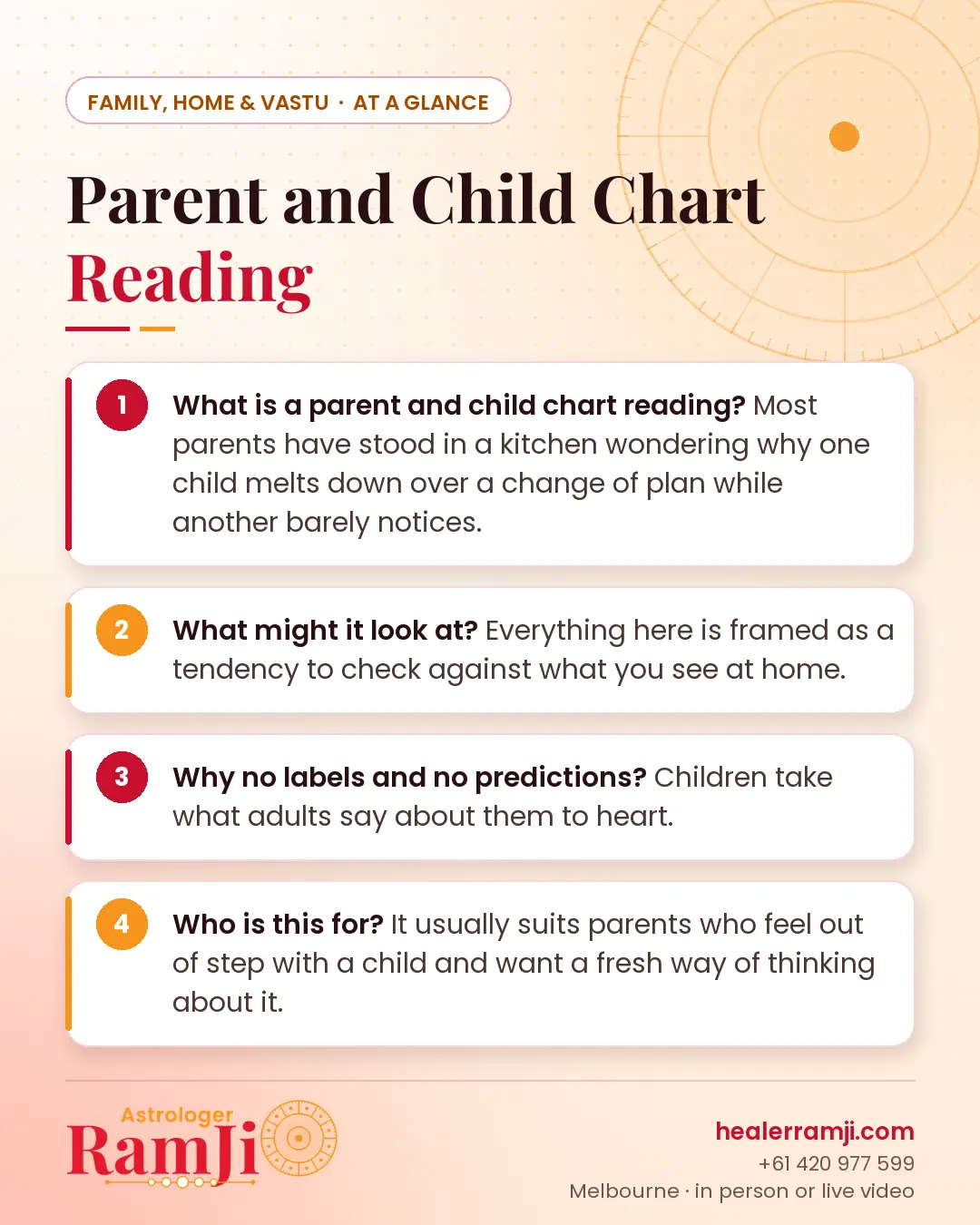
Most parents have stood in a kitchen wondering why one child melts down over a change of plan while another barely notices. In many Indian families, a birth chart is one of the ways people have tried to make sense of that. This session uses your child's chart and your own to reflect on temperament and how the two of you meet.
The session is for you. Its purpose is to help you be more patient and curious with your child. It isn't there to tell you who your child is. That is something they will show you over many years.
What might it look at?
- The Moon and birth star. The Moon sign and nakshatra are traditionally linked with emotional style. Does your child seem to need quiet, routine, movement or company?
- Mercury. It is linked with how people take in information and express themselves, which can lead to a useful talk about how your child prefers to learn.
- Your own chart. It is often the most useful part. A fast-moving parent with a slow-to-warm child may misread that child as stubborn, when the two simply run at different speeds.
- Your fifth house and current period. These can open up how you feel about being a parent right now, including the weight of your own family's expectations.
Everything here is framed as a tendency to check against what you see at home. If the chart and your child disagree, believe your child.
Why no labels and no predictions?
Children take what adults say about them to heart. A word like "difficult", "unlucky" or "not academic" can stay with a child for life, even if it was said only once and in passing. So a careful reading should stay away from these:
- Fixed labels for a child's character or abilities
- Predictions about health, illness or lifespan
- Forecasts of marks, exam results or school entry
- Claims about a child's future career or marriage
- Using a dosha to explain ordinary behaviour
Reading a child's chart without labelling them explains why children should not hear bad predictions at all. The simple rule is this: if you wouldn't want your child to overhear it, don't let it shape how you treat them.
Who is this for?
It usually suits parents who feel out of step with a child and want a fresh way of thinking about it. Examples include parents of a very sensitive or very independent child, or parents raising teenagers between two cultures. If you want to look only at your own birth star, a nakshatra reading is more direct. If the tension involves the whole household, consider family harmony guidance.
What happens in a session?
- You describe your child in your own words. You will be asked what they enjoy, what calms them and when things get hard.
- You describe yourself. You may be asked what your own parents expected of you and what you find hardest now.
- The charts are discussed side by side. The focus stays on tendencies, with care to say what is uncertain.
- You choose something small to try. That might be giving more notice before a change, or listening before you offer advice.
What should I prepare?
- Birth date, time and place for your child and for you
- Two or three specific moments that puzzled you, which are more useful than a general description
- What you hope will be different at home, in your own behaviour as well as theirs
If your child is old enough to have a view, talk to them first. Afterwards, there is no need to pass on what was said. Use it to change how you listen.
What can't it do?
Astrology has no scientific standing as a way to assess children. It can't identify a learning difficulty, a developmental concern or a mental health problem, and it must never delay getting help for one. If you are worried, speak to your GP, your maternal and child health nurse or the school's wellbeing staff.
The Better Health Channel has plain advice on talking with teenagers, and Kids Helpline has a section for parents. Young people aged 5 to 25 can call Kids Helpline themselves on 1800 55 1800, free and at all hours.
What does it cost?
Ask when you get in touch. Any fee is stated before paid work begins. No remedy is needed for this session, and nobody should tell you that your child will suffer if you decline one.
How do I get in touch?
Call or send a WhatsApp message to +61420977599, or use the contact form. What you share is kept confidential. Vijay Ramji is based in Ascot Vale, with appointments arranged in advance, and sessions can be held by phone, WhatsApp or video, ideally at a time when your child isn't within earshot.
Common questions
Should parents get a child's chart read at all?
That is your choice, and it needs care. Our short answer on whether parents should get a child's chart read sets out when it may help and what to avoid.
Can you tell me what marks my child will get or what career to push them towards?
No. No chart can predict those things, and a forecast could add pressure to a child who already feels it. School pressure and what parents can do offers better ways to help.
A relative said my child's chart is bad. Should I worry?
Please don't let that frighten you. A chart isn't a verdict on a child, and you don't need to pay for a remedy to protect them. Keep the comment away from your child, and talk it through with someone calm.
Can my teenager join in?
Only if they want to. A teenager's chart and birth details are their own business, so ask first. If they say no, respect that and focus on your own chart and how you parent.
Can this be done for a new baby?
Yes, as long as it stays gentle. Many families look at the birth star when choosing a name. Holding a namkaran in Melbourne covers the ceremony. Please avoid forecasts for someone so new to the world.
Related services
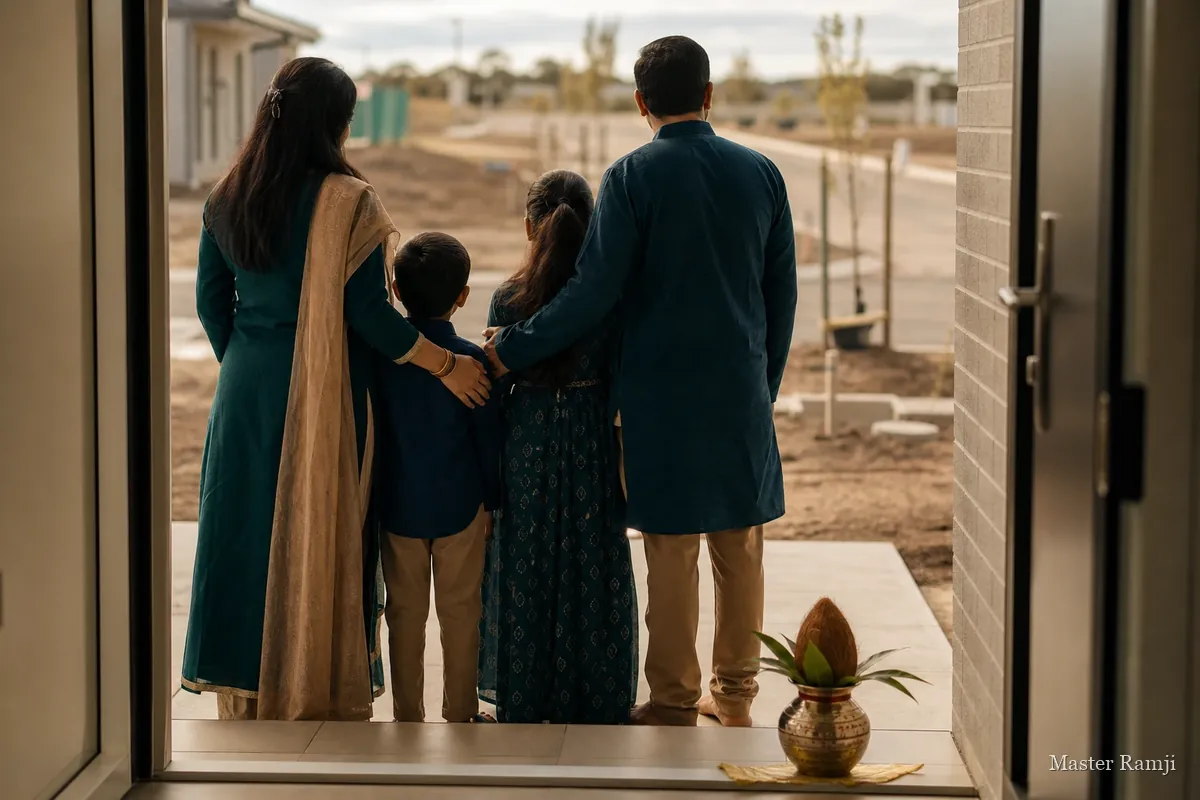
Griha Pravesh and Home Buying Timing
Griha pravesh muhurat in Melbourne, with dates that fit settlement, removalists and work rosters. Home buying timing for reflection, not legal or financial advice.
View service →
Vastu for Homes in Melbourne
A vastu consultant for your Melbourne home, working from floor plans and photos. Non-destructive adjustments for local houses and apartments, with no fear tactics.
View service →Read more

Raising Teenagers Between Two Cultures
Raising Indian teenagers in Australia means balancing family values with a teen's growing identity. How to set expectations, listen and stay connected.
Read article →
Reading a Child's Chart Without Labelling Them
A parents' guide to a child's horoscope reading: why children should never hear bad predictions, which labels do harm, and what to say if they already have.
Read article →
School Pressure and What Parents Can Do
Academic pressure from Indian parents in Australia often comes from love and sacrifice. How to ease it at each stage of school while still backing your child.
Read article →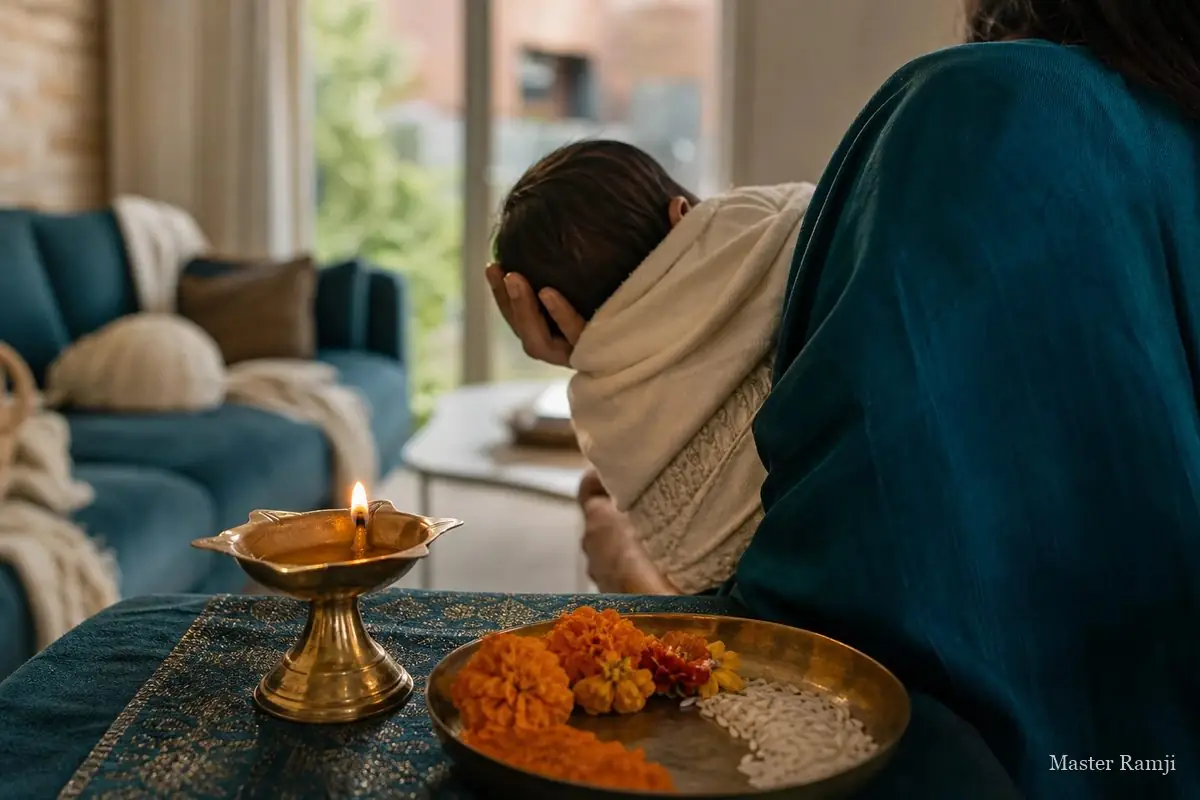
Holding a Namkaran in Melbourne
Planning a namkaran ceremony in Melbourne at home: choosing the day, a running order built around your baby, guests, relatives on video, and registering the name.
Read article →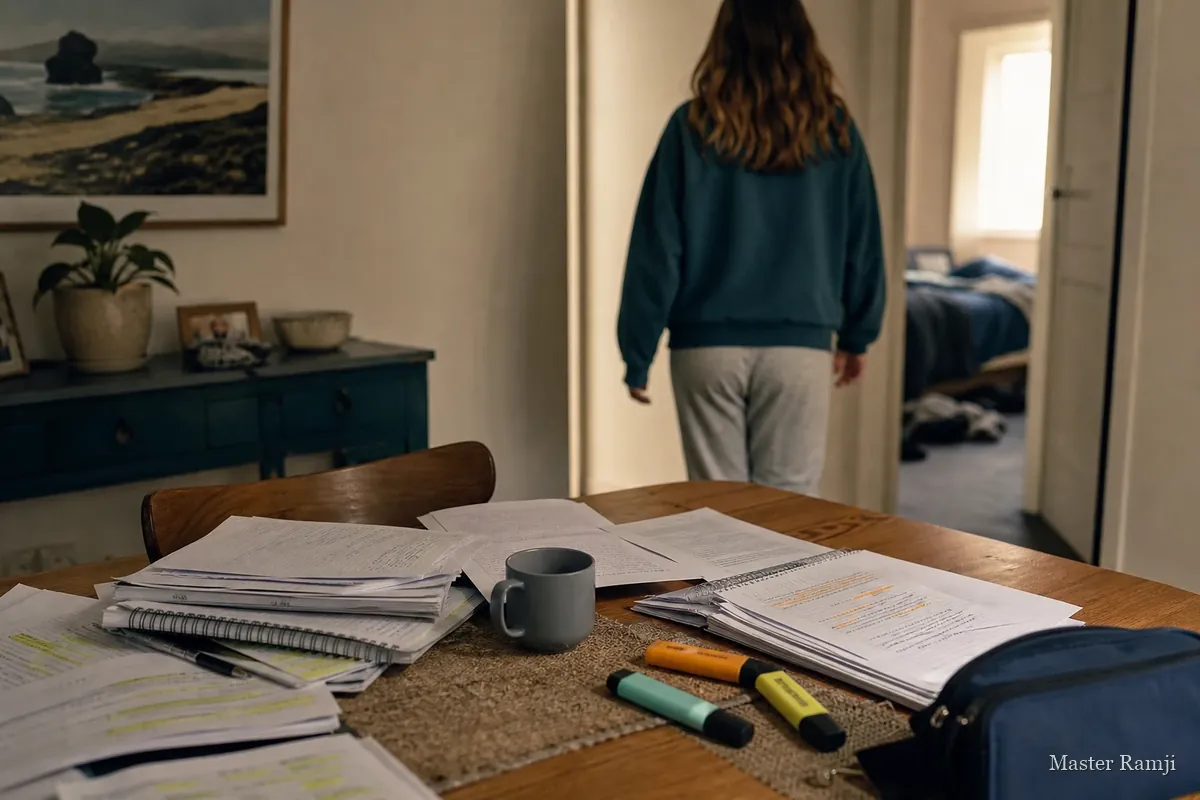
Year 12 Pressure in Mill Park Families
Is VCE stress weighing on your teen in Mill Park? Practical ways parents can ease Year 12 pressure, the warning signs to watch, and where to find local support.
Read article →Quick answers
Should parents get a child's chart read?
A child's chart can be read with care, as a way to reflect on temperament. Here is when it may help, what to avoid, and who to see about real concerns.
Read answer →What is vastu shastra?
Vastu shastra is a traditional Hindu system of home and building design based on direction and layout. Here is what it covers and what it can't claim.
Read answer →Talk to Vijay Ramji
Tell us what you are facing. If a reading is unlikely to help, you will be told that plainly.