
Your Child's Temperament: A Guide for Berwick Parents
Berwick parents can treat a child's chart as a gentle prompt for reflection, never a verdict. A birth star can't tell you who your child is, and it can't predict their health, marks or future. Start with what you see at home and what teachers notice, and take real concerns to a GP or nurse.
Berwick has changed a lot from the farming town it once was. Victorian Places describes a settlement named by early leaseholder Robert Gardiner after his birthplace, Berwick-on-Tweed, and now an outer suburb 43 km south-east of Melbourne. It also records a long run of schools, from St Margaret's in 1920 to Beaconhills College in 2003. In some families here, a school report and a grandparent's horoscope end up on the same kitchen table.
Perhaps a relative has mentioned your child's birth star, or you've looked up their nakshatra after a hard week. This guide is about using a chart gently, if you use one at all, and keeping your child at the centre.
Key takeaways
- No temperament is good or bad. A chart shouldn't be used to make one sound that way.
- A horoscope can't tell you your child's health, marks, career or future. Please don't let anyone say it can.
- Teachers see your child in a group, which you rarely do. What they notice counts for more than any chart.
- Keep any chart talk between adults, and never use it to describe your child to them or to others.
What does temperament actually mean?
Emerging Minds, an Australian mental health resource for families, describes temperament as a person's nature or general mood, especially as it affects their behaviour. It says plainly: "There is no 'good' or 'bad' temperament." It also warns against unhelpful labels such as calling a child "difficult" or a baby "fussy". A cautious child who takes a while to settle usually becomes comfortable with repeated exposure and support.
Vedic astrology offers a different kind of language. The Moon sign and birth star are traditionally linked with emotional style. That link is a belief handed down in a tradition. It isn't science, and it hasn't been shown to describe real children. So a child temperament horoscope works best as a prompt for your own thinking, and not as a finding about your child.
Why shouldn't you trust a nakshatra trait list?
Search for your child's birth star and you'll quickly find lists of traits. We've left them out of this page on purpose, for a few reasons:
- They disagree. Different writers give different descriptions of the same star.
- They stick. Once you've read that a child is meant to be stubborn, you start noticing stubbornness and missing everything else.
- Children overhear. A child who keeps hearing "that's just your star" may come to believe there's no point trying something new.
- Children change. A shy five-year-old can be a confident ten-year-old. A fixed description has no room for that.
Comparing siblings by their stars is worse still. If it comes up at a family dinner, it's fine to change the subject.
How can you use a chart gently?
The safest approach is to turn every idea from a chart into a question you then check against real life. For example:
- Not "they're a sensitive child", but "does my child need more quiet after school than I've been allowing?"
- Not "they won't listen", but "do we both dig in at the same moment, and could I go first in calming down?"
- Not "this is a bad period", but "what has changed at home or at school in recent weeks?"
Your own chart and habits may be the most useful part of the conversation. You can change how you respond, and that's something you actually control. If what a chart suggests and what your child shows you don't match, believe your child.
Some topics should stay off the table. An ethical reader won't forecast your child's marks, illness, career, marriage or lifespan. They also won't tell you your child's chart is bad, or sell you a gem, a fast or a ritual to fix a child. If you hear any of that, you're free to end the session. Teenagers have their own say too. Their birth details and chart are their own business, so ask them first and respect a no.
Why should you listen to teachers first?
A teacher sees what you can't: how your child behaves among twenty-odd others, how they manage a task they find hard, and what happens at lunchtime. Whichever Berwick school your child goes to, that's useful evidence from someone who knows many children of the same age.
At your next conversation, you could ask:
- When does my child seem most settled and most interested?
- What seems to be hard for them right now? Can you give me an example?
- Is there anything you'd like us to try at home?
- Who else at the school should we talk to if this continues?
Listen before you explain. If you disagree, ask for another example. Your child may well act differently at home, and both pictures can be true at once. There's no need to tell a teacher about your child's star or chart, as it can colour how they see your child.
If school stress is the main worry, our page on school pressure and what parents can do has more ideas.
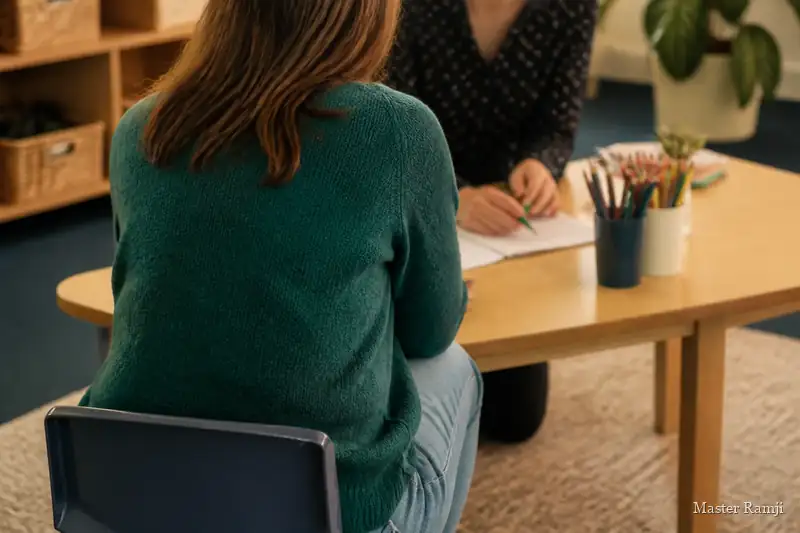
Who can help with a real concern in Berwick?
A chart is the wrong tool for a worry about health, development, sleep, eating, mood or safety. Please go to the people trained for it:
- Maternal and child health nurses. The Better Health Channel says this service is free for Victorian families from birth until a child starts school, and it includes growth and development checks. In Berwick, the City of Casey runs a service, and healthdirect's service finder lists centres including Brentwood Maternal and Child Health Centre. The Maternal and Child Health Line is open around the clock on 13 22 29.
- Your GP. Emerging Minds also suggests speaking to your GP if you feel you or your child need more support. A GP can refer you on if needed.
- The school. Ask about the wellbeing staff and what support is available.
- Kids Helpline. Children and young people aged 5 to 25 can call for free, at all hours, on 1800 55 1800.
Call 000 in an emergency. Seeking help doesn't go against your faith, and a prayer can sit beside it comfortably.
What if a relative says the chart is bad?
This happens often in a loving family. A grandparent may be frightened, and fear can come out as advice. You could say: "Thank you for caring. We're watching what they need, and we're talking to their teacher." Then move on, and keep the comment away from your child.
You don't need to pay for a remedy to protect your child, and you don't need to argue about astrology either. Our short answer on whether parents should get a child's chart read covers when it may help and what to avoid.
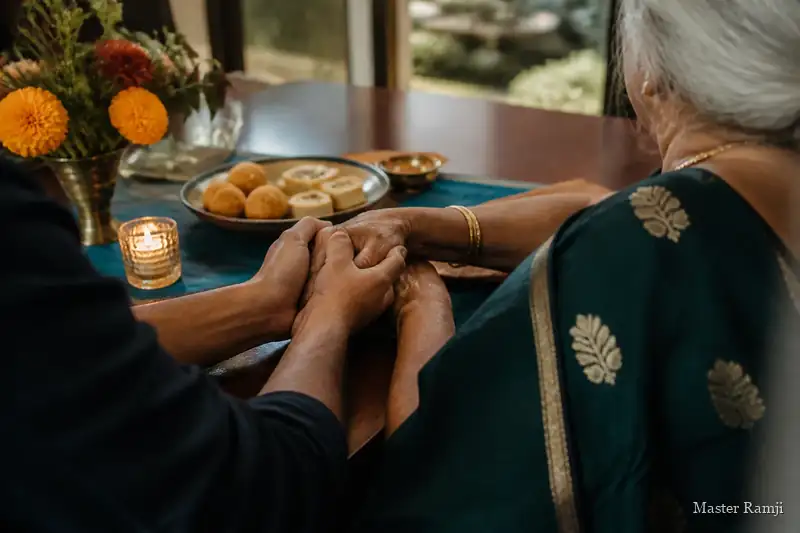
Is a reading worth having?
It's optional, and many thoughtful parents never have one. Some like having the space to talk about patience, family expectations and how they were raised. A parent and child chart reading is designed for this, and the conversation is for you, not about predicting your child. Reading a child's chart without labelling them goes further into the ethics, and a nakshatra reading explains what a birth star means in the tradition.
Sessions can be held by phone, WhatsApp or video, so they can fit around school runs and bedtime. There's more about our work in Melbourne's south-east, and if you'd like to talk it over first, get in touch.
Related service
Keep reading
Looking After Elderly Parents in Avondale Heights
Caring for ageing parents in Avondale Heights? Family duty and real support services side by side, from aged care assessments to elder abuse help.
Read article →
Goldfields Homes and Vastu in Bendigo
Vastu in a Bendigo miner's cottage or goldfields home: what you can change, what to leave alone, and why heritage rules and old mine workings come first.
Read article →
Planning a Griha Pravesh for Your New Clyde Home
Moving into a new Clyde home? How to set a griha pravesh date when handover keeps shifting, book a priest early, and share the work out on the day.
Read article →More from Melbourne's South-East
Separated and Still Sharing Kids in Narre Warren
Separated and sharing children in Narre Warren? Put the kids' safety first, find local mediation and legal help, and keep yourself steady while things settle.
Read article →Planning a Griha Pravesh for Your New Clyde Home
Moving into a new Clyde home? How to set a griha pravesh date when handover keeps shifting, book a priest early, and share the work out on the day.
Read article →
Bad Luck Since Moving to Pakenham? Check These First
Things going wrong since you moved to Pakenham? Check money, health, sleep, commute and home safety first, then consider calm spiritual steps if you wish.
Read article →Local pages

Astrologer for Dandenong
For Dandenong traders and new arrivals: shop timing, vastu for premises, and how to check any spiritual adviser. Sessions by phone, WhatsApp or video.
View area →
Astrologer for Clayton
For Clayton students and graduates dealing with family pressure, relationships and first jobs. Vedic astrology by phone, WhatsApp or video, from Ascot Vale.
View area →Quick answers
Should parents get a child's chart read?
A child's chart can be read with care, as a way to reflect on temperament. Here is when it may help, what to avoid, and who to see about real concerns.
Read answer →What is vastu shastra?
Vastu shastra is a traditional Hindu system of home and building design based on direction and layout. Here is what it covers and what it can't claim.
Read answer →Talk to Vijay Ramji
Tell us what you are facing. If a reading is unlikely to help, you will be told that plainly.