
Reading a Child's Chart Without Labelling Them
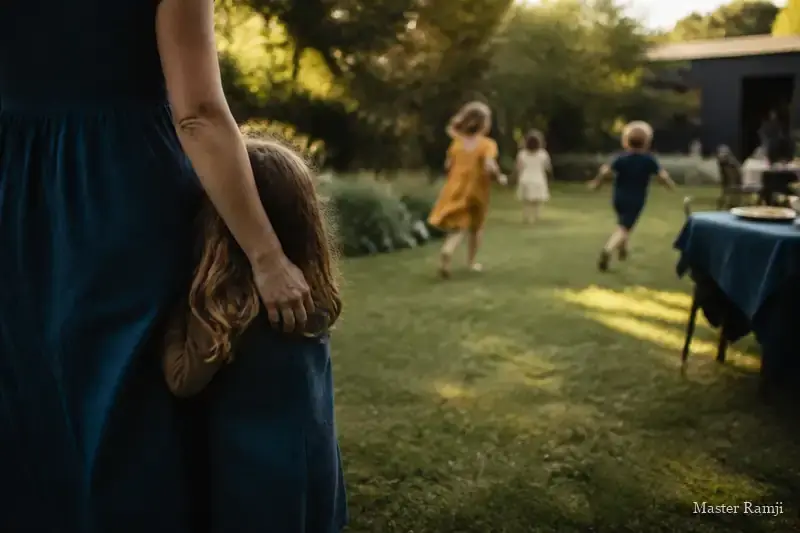
A child horoscope reading should guide parents, not define the child. Keep predictions away from your child, especially frightening ones, because children tend to believe what adults say about them. Turn any chart theme into a question about what your child needs, and trust what you see at home over what the chart says.
It often starts with one sentence. A relative looks at a newborn's kundli and says the stars are "heavy". A reader mentions that a toddler's chart shows a temper, or that a ten-year-old "isn't made for study". The adults move on. The child, if they heard it, may not.
This parents' guide is about using a child's chart, if you choose to, without letting it turn into a label. Its main point is simple: bad predictions should never reach the child.
Key takeaways
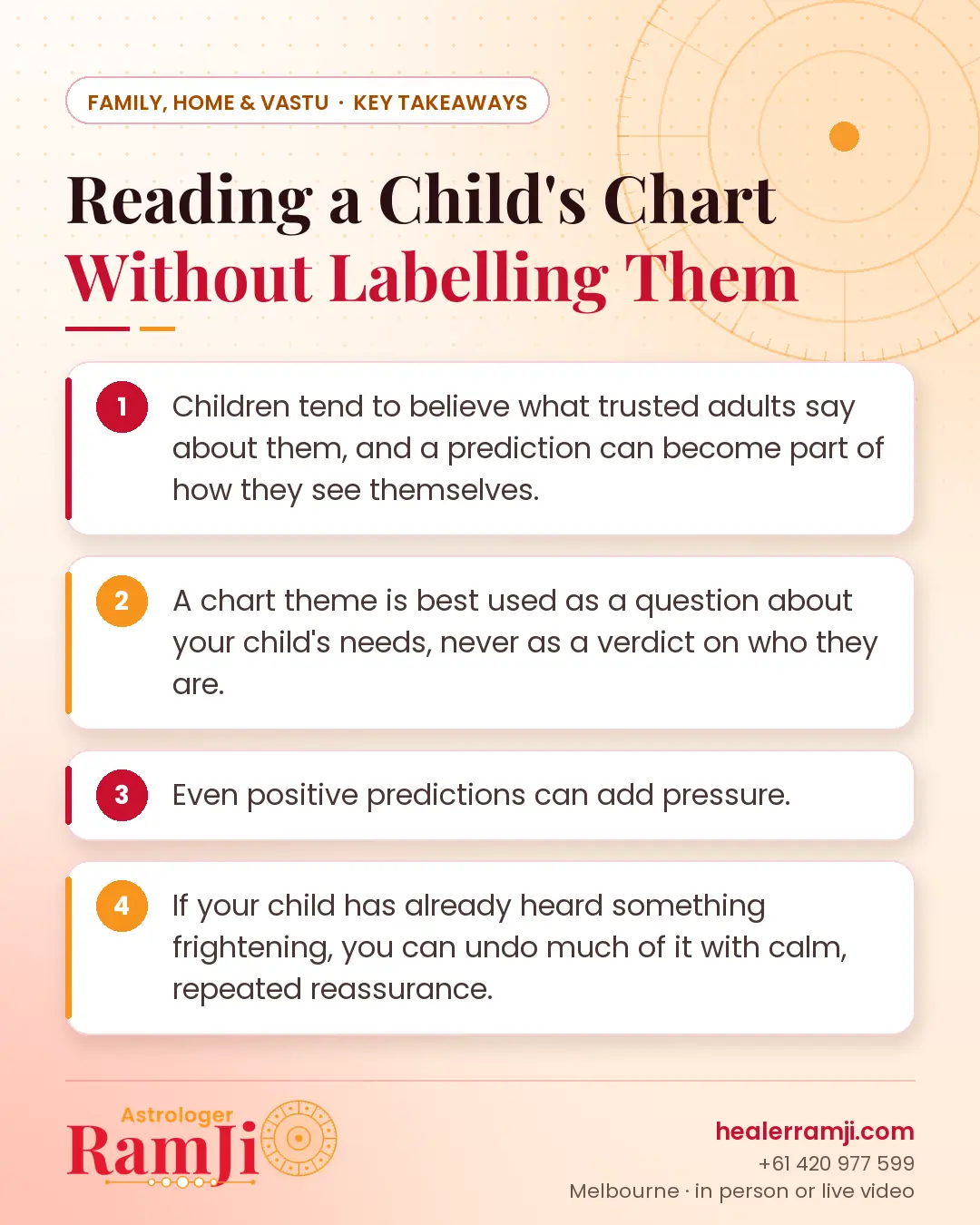
- Children tend to believe what trusted adults say about them, and a prediction can become part of how they see themselves.
- A chart theme is best used as a question about your child's needs, never as a verdict on who they are.
- Even positive predictions can add pressure.
- If your child has already heard something frightening, you can undo much of it with calm, repeated reassurance.
Why do predictions land so hard on children?
Young children don't yet have the experience to weigh what adults tell them. If a parent or grandparent says something about them, it is often taken as fact. A child told they are unlucky may start to explain every setback that way. A child told they will struggle at school may stop trying, because what is the point?
Predictions also change the adults. Once a parent has heard that a child will be "difficult", it is easy to notice every tantrum and overlook every kind moment. The child then meets a slightly different parent, without ever knowing why.
Astrology is a traditional practice, not a scientific way to assess children. That is one more reason to keep its forecasts well away from them.
Which labels do the most harm?
Some phrases come up again and again in families. Each can stay with a child for years:
- "Unlucky" or "bad stars". A child has no way to argue with this, and may come to expect bad things.
- "Born in a bad nakshatra". In some traditions, births in certain nakshatras are called gandmool and are thought to need a shanti ritual. A child who overhears that their birth was a problem for a parent can carry real guilt.
- "Manglik". Telling a child early on that they will have trouble marrying turns a contested idea into a lifelong worry. Our article on common Mangal dosha myths explains why the label is so often overstated.
- "Not academic" or "not a leader". These quickly become reasons not to try.
- Anything about health or lifespan. No chart can predict these, and no child should hear such things.
Positive labels deserve care too. A child told their chart shows a future doctor or a genius may feel they have failed their stars if they want something else. Our guide to school pressure and what parents can do looks at how expectations can weigh on a child.

How can you use a chart without labelling?
Turn every theme into a question. If a reading suggests your child may be slow to adjust to change, don't file that away as "stubborn". Ask: does my child need more notice before a change? Do they settle better with a familiar routine?
This matches mainstream parenting advice on temperament. Emerging Minds notes that there is no "good" or "bad" temperament, and that labels such as "difficult" or "fussy" are common and unhelpful. It describes slow-to-warm-up children as children who do warm up with repeated experiences and patient support.
A few rules help keep a chart in its place:
- Describe behaviour, not identity. "She gets upset when plans change" helps more than "she is a difficult child".
- Believe your child over the chart. If they don't match the reading, the reading is wrong for them.
- Look at your own chart too. Often the more useful question is how your own temperament meets your child's.
- Keep the details private. If you wouldn't want your child to overhear it, don't repeat it at family gatherings either.
What if a reader gives you a frightening prediction?
Don't act on it straight away, and don't pass it on. Ask the reader what in the chart led to the comment and how certain they are. A careful reader should be able to explain their reasoning, admit uncertainty and avoid forecasts about health, marks or lifespan altogether.
You don't need to buy a remedy to protect your child. If you are told your child will suffer unless you pay for a ritual, treat that as pressure, not care. Our short answer on whether parents should get a child's chart read sets out what to avoid.

What if your child has already heard it?
It isn't too late. Children can let go of a label when the adults they trust consistently tell them something different. You might try:
- Raising it gently. "Nani said something about your stars the other day. How did that make you feel?"
- Correcting it plainly. "Some people believe charts tell the future, but a chart can't decide who you are or what you can do."
- Pointing to real evidence. Remind them of times they worked hard, were kind or did something brave.
- Saying it more than once. One talk rarely undoes a fear. Come back to it calmly over weeks.
Watch for signs that the worry has stuck, such as trouble sleeping, avoiding school or talking about being cursed. If you see these, speak to your GP or the school's wellbeing staff. Kids Helpline has a section for parents, and young people aged 5 to 25 can call Kids Helpline themselves on 1800 55 1800, free and at any hour.
What about teenagers who want to see their chart?
A teenager's chart is increasingly their own business. If they are curious, let them explore it with balanced sources, and talk about what astrology can and can't say. If they don't want their chart read, respect that. Asking first shows them their story belongs to them.
What should a good reading for parents focus on?
On you. A parent and child chart reading looks at temperament as a set of tendencies to check against real life, and at how your style meets your child's. It avoids labels and predictions about health, marks or the future, and it doesn't replace a doctor, teacher or counsellor. If you would like to talk about your family, get in touch.
Related service
Keep reading
School Pressure and What Parents Can Do
Academic pressure from Indian parents in Australia often comes from love and sacrifice. How to ease it at each stage of school while still backing your child.
Read article →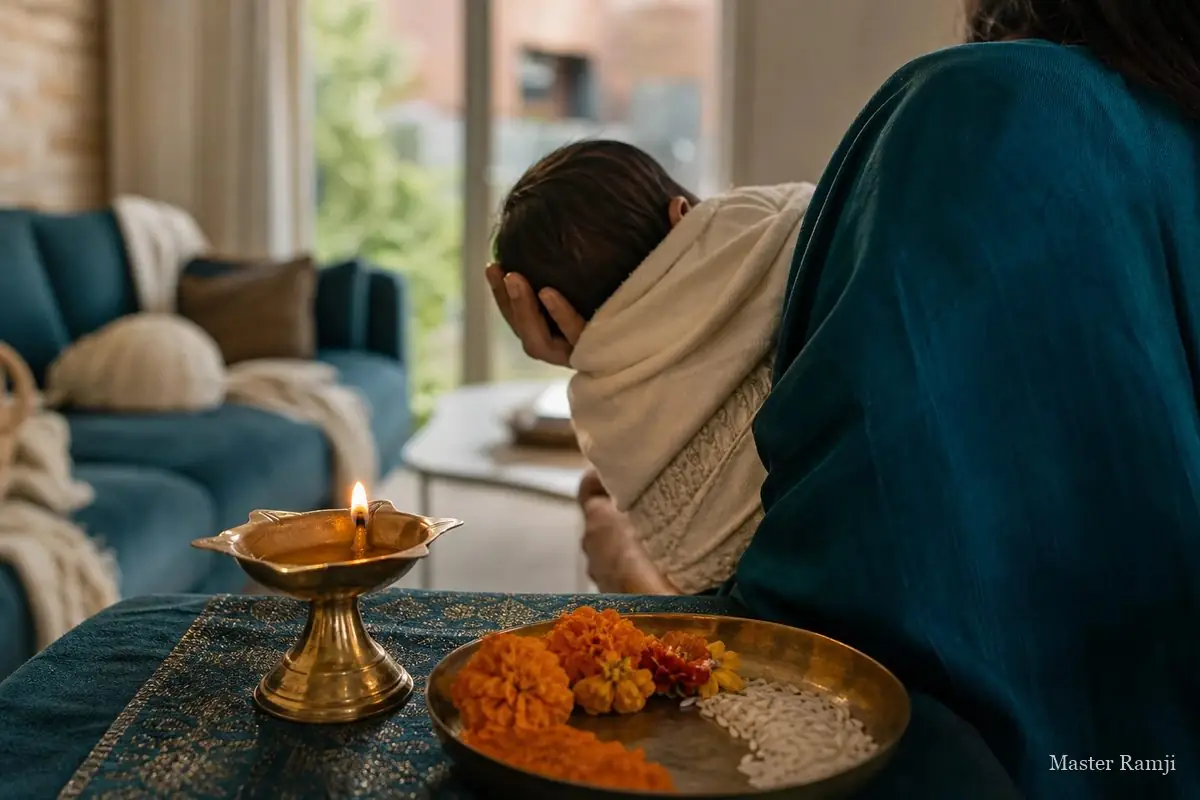
Holding a Namkaran in Melbourne
Planning a namkaran ceremony in Melbourne at home: choosing the day, a running order built around your baby, guests, relatives on video, and registering the name.
Read article →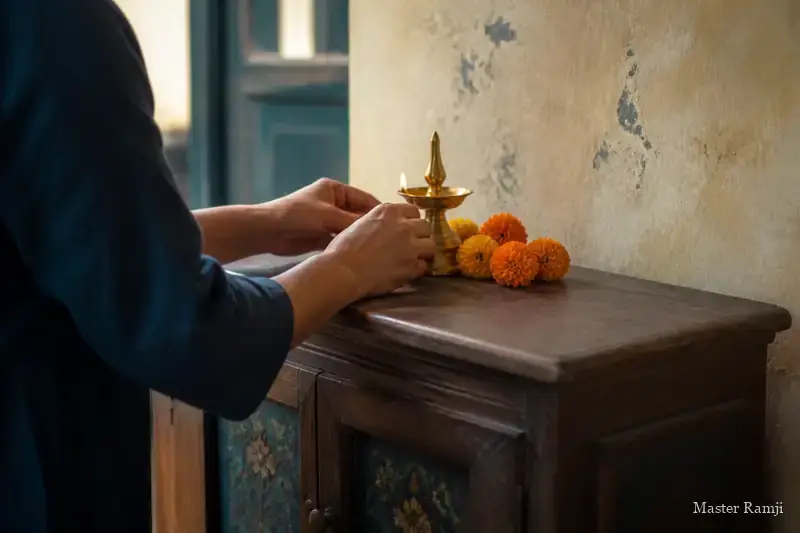
Setting Up a Small Home Mandir
Home mandir setup for a small apartment: where to place it, what to keep inside, daily care, and how to keep lamps, incense and camphor safe in a tight space.
Read article →Quick answers
Should parents get a child's chart read?
A child's chart can be read with care, as a way to reflect on temperament. Here is when it may help, what to avoid, and who to see about real concerns.
Read answer →What is vastu shastra?
Vastu shastra is a traditional Hindu system of home and building design based on direction and layout. Here is what it covers and what it can't claim.
Read answer →Talk to Vijay Ramji
Tell us what you are facing. If a reading is unlikely to help, you will be told that plainly.