
Why Mantra Counts Are 108
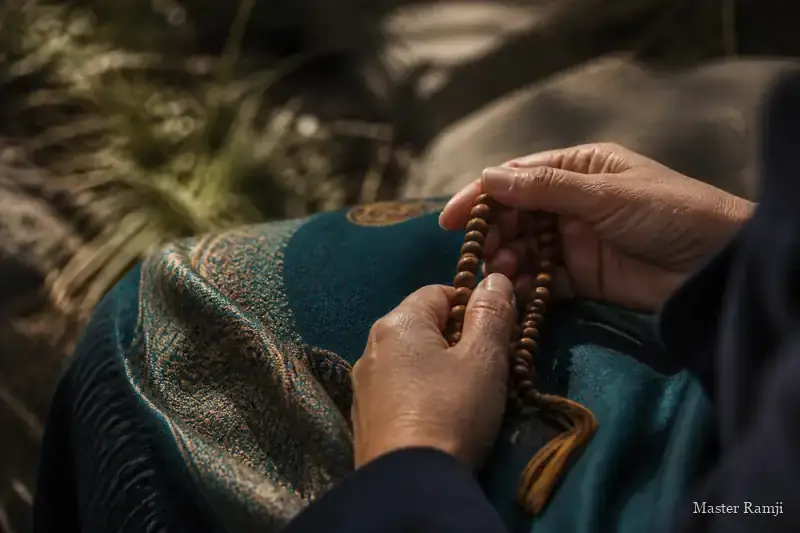
Mantras are often chanted 108 times because 108 is a sacred number in Hindu and Buddhist traditions, and a standard mala has 108 beads. Explanations include 12 signs times 9 planets and 27 nakshatras times 4 padas. For most people, steady attention and regular practice matter more than reaching an exact count.
Anyone who has picked up a mala, or been given a mantra by a priest or an astrologer, has met the number 108. It turns up in temple rituals, in remedy plans and in the beads themselves. Many people quietly wonder why it has to be 108, and what happens if they only manage 30.
This article looks at the reasons traditions give for the number, how a mala is meant to be used, and how much the exact count really matters for a daily practice.
Key takeaways
- 108 is a sacred number across several Indian traditions, and there is no single agreed reason for it.
- The popular explanations are symbolic. They are not records of how the number began.
- A smaller count, done with attention and kept up, fits the spirit of japa well.
- If your teacher or family tradition sets a count, follow it. If not, choose one you can sustain.
Where does the number 108 come from?
Nobody can point to a single origin. What we have are explanations that people have offered over time, and they come from different places:
- Astrology. Twelve zodiac signs multiplied by nine grahas gives 108. So does 27 nakshatras, each with four quarters called padas. Our beginner's guide to the 27 nakshatras explains the padas.
- Scripture. The Muktika, a traditional list of the Upanishads, names 108 texts.
- Buddhism. Buddhist tradition speaks of 108 afflictions, or kleshas, and some explain the mala count that way.
- Sacred names. Many deities have a list of 108 names, recited in worship.
These ideas overlap and reinforce each other, which is probably why the number has lasted. None of them shows that 108 repetitions have a special effect, and there is no evidence that they do.
How is a mala counted?
A standard japa mala has 108 beads on its main string. There is also an extra bead, often larger, called the guru bead, sumeru or meru. It is not counted. You begin at a bead next to it, move one bead for each repetition, and finish at the bead on its other side.
Many practitioners don't cross over the guru bead. If they want to do another round, they turn the mala around and go back the other way. Families and teachers differ on finer points, such as which finger to use, so ask if your tradition has a rule. Our guide to using a mala goes through the method step by step.
Smaller malas exist too, often with 54 or 27 beads, which are factors of 108. Two rounds of a 54-bead mala, or four of a 27-bead mala, bring you to the same total.
Does it have to be exactly 108?
For most home practice, no. Japa is about steady attention to a sacred sound or name. The beads are a tool for that. They let you stop thinking about the number, so your mind can rest on the mantra itself.
If counting to 108 has turned into a race to finish, the count is getting in the way. Many people find these questions useful:
- Did I say the mantra clearly and with attention, or did I rush?
- Can I keep this up on a busy weekday, not just on a quiet Sunday?
- Is the count calming me, or making me anxious?
Eleven, twenty-one or twenty-seven repetitions done with care are closer to the spirit of the practice than 108 mumbled while checking the time.
When does the count matter more?
There are times when a set number carries real weight within a tradition:
- A teacher's instruction. If a guru gave you a mantra with a daily count, that count is part of the teaching.
- A family custom. Some families have recited a certain number for generations. Keeping it can be a way of honouring them.
- A formal ritual. Priests performing a puja or havan often follow set counts, and large totals may be spread over many days or shared among several people.
- A remedy plan. An astrologer may suggest a count linked to a graha. That suggestion is a traditional belief, and it should come with a smaller fallback for hard weeks.
Even then, a missed day is just a missed day. Be cautious if anyone says something bad will happen unless you reach a number, or that you must pay them to recite tens of thousands of repetitions on your behalf. Our article on astrology remedies that cost nothing is a useful counterweight.
How long does a round of 108 take?
It depends on the mantra. A short divine name can take only a few minutes. A longer verse, such as the full Gayatri mantra, takes much longer. If you are new, time one round on a calm day so you know what you are committing to.
If that feels too long, start smaller. healthdirect suggests beginning meditation with one to two minutes a day and slowly building up over weeks or months, and notes that it works well when done regularly. The same approach suits a mantra practice.
How can you count without a mala?
You don't need to buy anything. Some traditions count on the joints of the fingers, using the thumb to move from one to the next. Others use a simple string of beads or seeds made at home. Some people just set a gentle timer and stop counting altogether. A practice that fits your life is better than a perfect one that doesn't happen.
What can a mantra count not do?
Many people find repetition steadying, and that alone is a good reason to practise. But reaching 108, or 1,008, won't change a diagnosis, a visa outcome or another person's feelings. It doesn't replace care from a GP, a counsellor or any other professional. If you have been feeling anxious or low for a while, please see your GP, and Beyond Blue is on 1300 22 4636.
Would a personal plan help?
If you'd like a mantra, day and count chosen to suit your chart and your week, a personal mantra remedy plan sets that out in plain language, with little ongoing cost. For the short version of this topic, see why mantras are chanted 108 times. Sessions can be held by phone, WhatsApp or video, and fees are stated before paid work. To ask a question, get in touch.
Related service
Keep reading
Astrology Remedies That Cost Nothing
Free astrology remedies from the tradition itself: prayer and mantra, giving time, daily discipline and optional fasting, with the planets each is linked to.
Read article →
Fasting as a Remedy: Doing It Safely
Weekday fasts for the planets are a Hindu tradition, but not safe for everyone. Who should check with a doctor first, and gentler ways to keep a vrat.
Read article →
Charity as an Astrological Remedy
Which gifts tradition links with each planet, how to turn them into useful local giving, and how to check a charity is registered before you donate.
Read article →Quick answers
Do astrology remedies have to cost money?
Astrology remedies don't have to cost money. Many traditional ones are free, such as mantra and service. Here is when a fee is fair and when to walk away.
Read answer →Why are mantras chanted 108 times?
Mantras are chanted 108 times because 108 is a sacred number in Hindu tradition and the count of beads on a mala. Here are the usual explanations.
Read answer →Talk to Vijay Ramji
Tell us what you are facing. If a reading is unlikely to help, you will be told that plainly.