
Hindu Rites After a Death in Melbourne
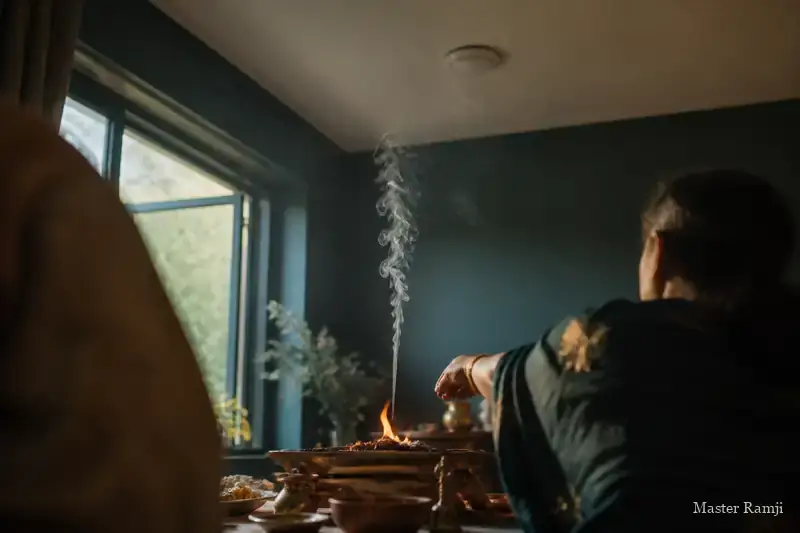
Hindu funeral rites in Melbourne usually follow the same core customs as in India: preparing the body, cremation with the chief mourner's role, a mourning period of around ten to thirteen days, and later shraddha. Families adapt details such as the pyre, fire and ashes to Australian crematoria. Customs vary, so elders guide the specifics.
When someone dies, Hindu families often turn to rites that have been passed down for generations. In India, many of those rites assume a riverside cremation ground, a family priest nearby and relatives within a short drive. Here, the setting is a funeral home, a crematorium chapel and relatives joining by video. The meaning of the rites can stay the same even when the details change.
This article explains the main customs and what they are for, and how families commonly adapt them. For the practical first steps, such as certificates and choosing a funeral director, see our guide to planning last rites from Melbourne's west.
Key takeaways
- Antim sanskar, the last rite, centres on preparing the body, the cremation and the chief mourner's role.
- Customs differ by region, language, community and family. Your elders or family priest are the best guide.
- Some steps, such as an open pyre or breaking the skull, are usually replaced by symbolic versions in Australian crematoria.
- Doing what is possible with love is a real farewell. Missing a step is not a failure.
What is antim sanskar?
Antim sanskar, also called antyesti, means the final rite of passage. In Hindu tradition it is the last of the sanskars that mark a life, from birth and naming through to marriage. Cremation is the most common practice, as fire is seen as returning the body to the elements. Some communities, and some holy people, are buried instead.
The rites are traditionally done soon after death, often within a day. In Australia, paperwork usually makes that harder, and many families wait longer than they would wish. That delay is not anyone's fault.
How is the body prepared?
In many families, close relatives of the same gender wash the body, sometimes with water mixed with Ganga jal, milk or yoghurt. The person is then dressed, often in white, though some communities dress a married woman whose husband is living in red or in her wedding sari. A tilak may be placed on the forehead, a tulsi leaf or a few drops of Ganga water in the mouth, and flowers around the body.
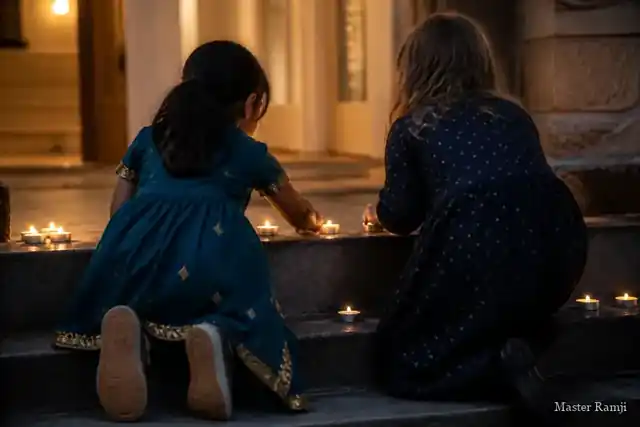
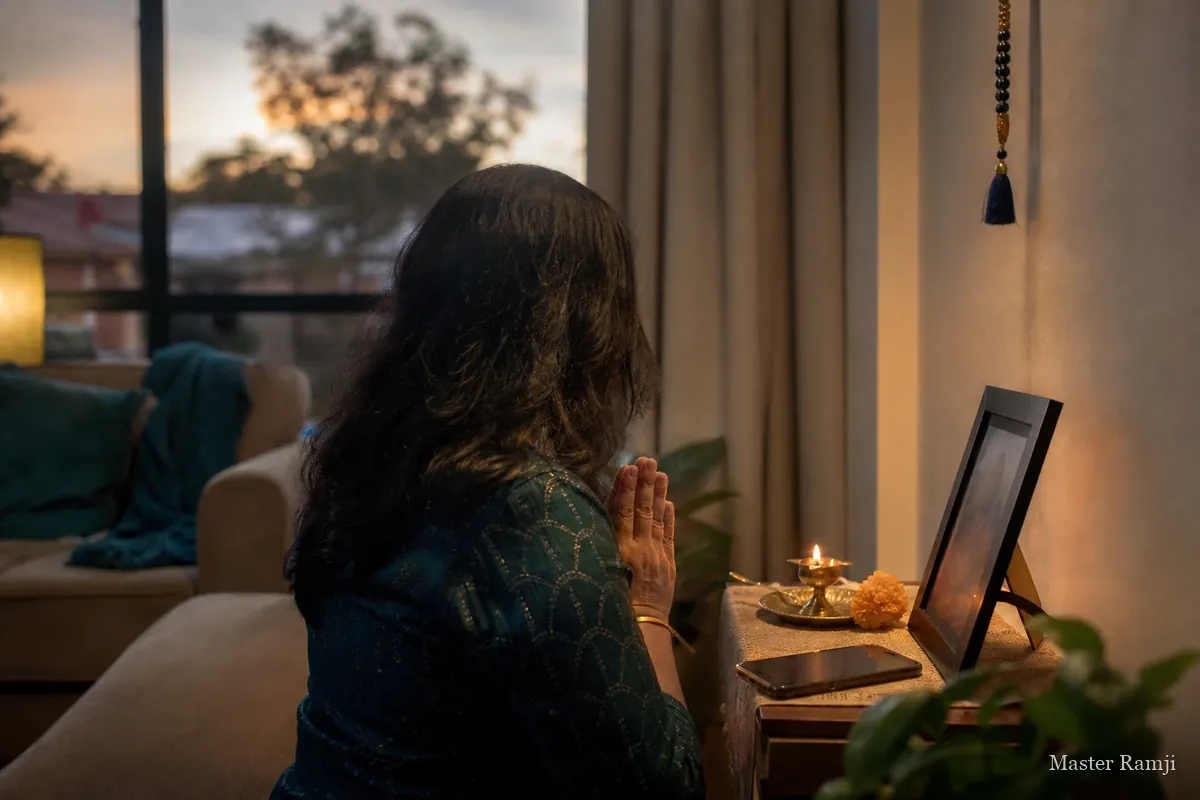
A lamp is often lit near the head, and family members chant or play a recording of a prayer such as the Gayatri Mantra or a bhajan the person loved. Some families also read from the Bhagavad Gita or the Garuda Purana in the days that follow.
How families adapt: ask the funeral director whether family can help wash and dress the person, and whether a lamp or incense is allowed in the viewing room. Rules vary between venues, so asking early helps.
What does the chief mourner do?
Traditionally the eldest son, or another close male relative, acts as the chief mourner. In some families today a daughter, wife or other relative takes this role, and practices are changing. The chief mourner circles the body, offers prayers and, at a riverside cremation, lights the pyre. This is called mukhagni.
In older practice, the chief mourner also breaks the skull during the cremation, a rite known as kapala kriya, which is said to release the spirit. Many families also carry a clay pot of water around the body and break it.
How families adapt: in an Australian crematorium, the cremation is usually started by pressing a button or watching the coffin enter the chamber. Research by the Greater Metropolitan Cemeteries Trust heard that Hindu and Sikh families want key relatives to start the cremation in this way, along with viewing areas so family can watch, and symbolic fire such as oil lamps or incense. Kapala kriya is generally not possible. Families often talk with their priest about how prayers and the button press can carry the intent of mukhagni. Ask your crematorium what they allow.
What happens during the mourning days?
The days after a death are often treated as a period of impurity, sometimes called sutak. During this time the immediate family may:
- Stay at home and avoid celebrations, temple visits and festivals
- Eat simple vegetarian food, sometimes cooked by friends or neighbours rather than the family
- Keep a lamp burning and gather for prayers each evening
- Have male relatives shave their heads, in some communities
The length varies. Many North Indian families mark the end with a gathering on the thirteenth day, often called terahvin. Other communities mark the tenth, eleventh, twelfth or sixteenth day. A meal for relatives, priests or people in need is common, along with pinda daan, the offering of rice balls for the departed.
How families adapt: many people have only a few days of leave. Some keep the core prayers each evening and hold the final day's gathering on the nearest weekend, often at home or in a temple hall. Relatives overseas can join prayers by video.
What happens with the ashes?
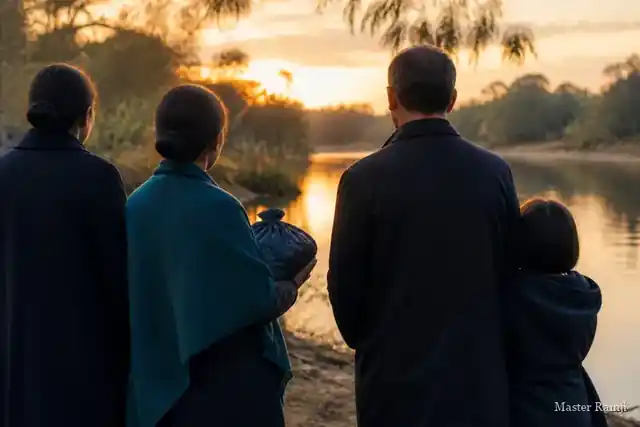
Asthi visarjan, the immersion of ashes, traditionally takes place in a river, ideally the Ganga, or the sea. Some families wait to take the ashes to India, to places such as Haridwar or Varanasi. Others choose a local waterway.
If you are thinking of a local river, beach or park, ask the council or the waterway manager before you go, as rules differ from place to place. A quiet spot where the family can stand together, say a prayer and offer flowers can matter more than the exact location. There is no need to rush the decision.
What is shraddha?
Shraddha is the rite of remembrance for ancestors. It is usually held on the anniversary of the death, worked out by the lunar day or tithi in the Hindu calendar, so the date moves on the Western calendar each year. Many families also remember ancestors during Pitru Paksha, a fortnight set aside for them. Offerings typically include water with sesame seeds (tarpan), rice balls and a meal given to priests or people in need.
The first year is often treated with special care, with monthly remembrance in some families and a larger rite at the first anniversary. Our guide to keeping Pitru Paksha in Australia explains how to work out the dates and keep the rites in a suburban home. A more formal puja honouring ancestors is also an option for families who want one.
What if you can't do everything?
Many people can't. A parent may have died overseas, a priest may not be available, or a crematorium may not permit a particular step. Tradition itself has always adapted to circumstances. A sincere prayer led by someone who loved the person still honours them.
Be cautious of anyone who says your loved one will suffer because a rite was missed, or that bad luck will follow unless you pay for more ceremonies. That is fear, not tradition.
How do you look after yourself?
Rites can give shape to the first days, but grief continues long after. healthdirect describes grief as a natural response to loss that often comes in waves. If it is affecting your sleep, work or health over time, please see your GP. Lifeline is on 13 11 14 at any hour.
When you are ready, spiritual support through grief offers a calm conversation about prayer and remembrance in your own tradition. It sits alongside professional grief care and does not replace it. Sessions can be held by phone, WhatsApp or video, and what you share is confidential. If it would help, get in touch.
Related service
Keep reading
Grieving a Parent From the Other Side of the World
Grieving a parent overseas from Australia: why distance makes loss feel unreal, how to mark it here in the months after, and where to find real support.
Read article →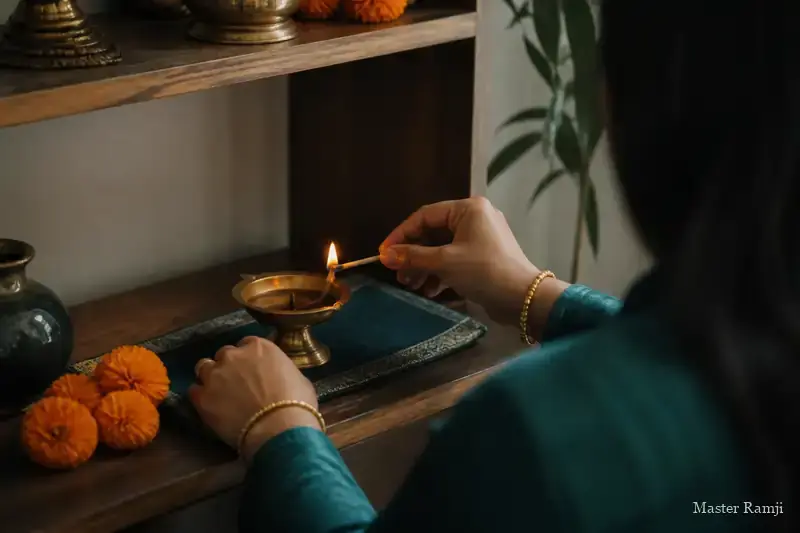
Small Rituals That Help With Grief
Simple rituals for grief at home: a lamp, a daily prayer with their name, a remembrance shelf and the dates worth keeping, done safely and at your own pace.
Read article →
Loneliness After Migrating to Australia
Feeling lonely after migrating to Australia is common and nothing to be ashamed of. Ways to rebuild connection through faith, community and small steps.
Read article →Quick answers
Can an astrologer help with grief?
An astrologer can offer ritual and a listening ear in grief, but not counselling. Here is what to expect, where the limits sit, and where to find real support.
Read answer →What is energy healing?
Energy healing rests on the belief in a life force that can be guided. Here is what a session involves, and what the evidence does and doesn't show.
Read answer →Talk to Vijay Ramji
Tell us what you are facing. If a reading is unlikely to help, you will be told that plainly.