
Keeping a Daily Practice on the Hoppers Crossing Commute
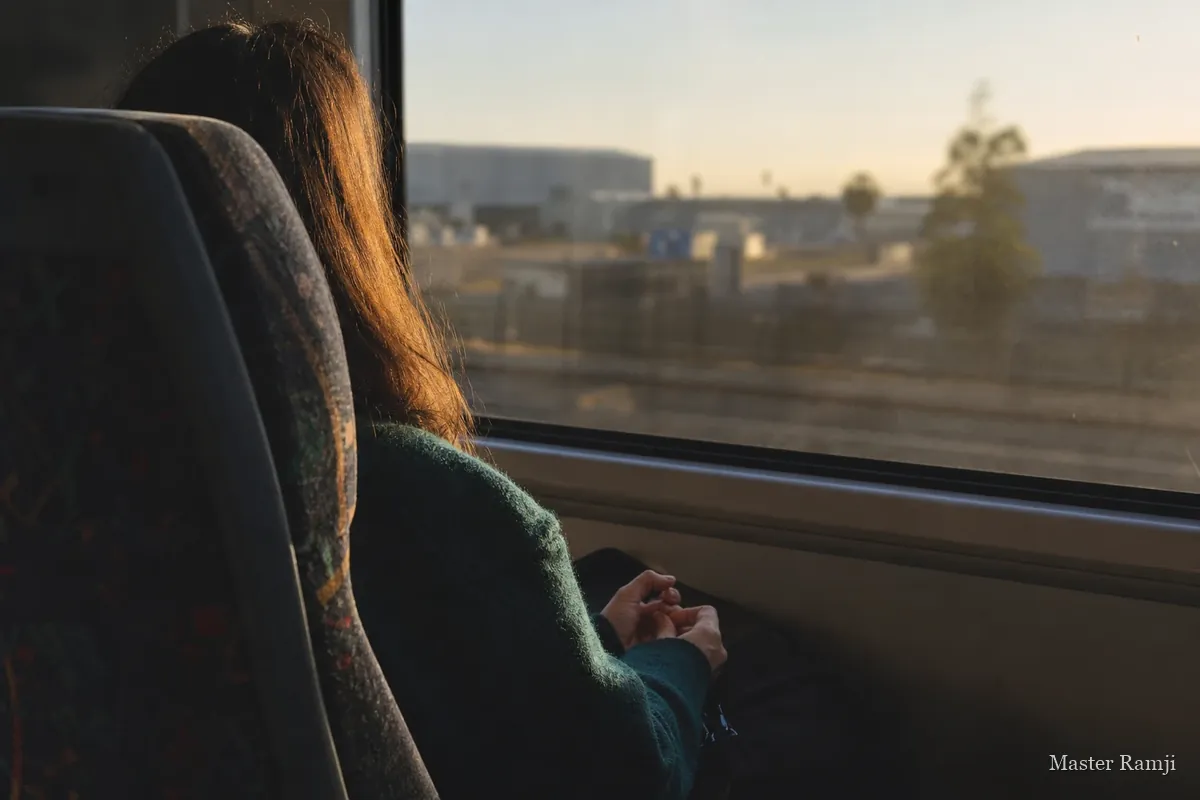
A daily mantra practice on a Hoppers Crossing commute can be simple: repeat a short mantra silently on the Werribee line, or sit for two minutes in your parked car before driving. On the road, your attention stays on the traffic. It is a devotional habit, not a treatment, and regularity matters more than length.
Hoppers Crossing is a long way from a quiet room. Victorian Places puts it about 25 km south-west of central Melbourne, immediately east of Werribee, with the approach along the Princes Highway mostly warehouses and factories. For some people here, the commute may be the longest stretch of time they get alone each day.
That makes it worth asking whether a daily mantra practice can live on the commute itself. For train travellers, it often can. For drivers, it belongs in the parked car, before you set off and after you arrive. This guide takes each in turn.
Key takeaways
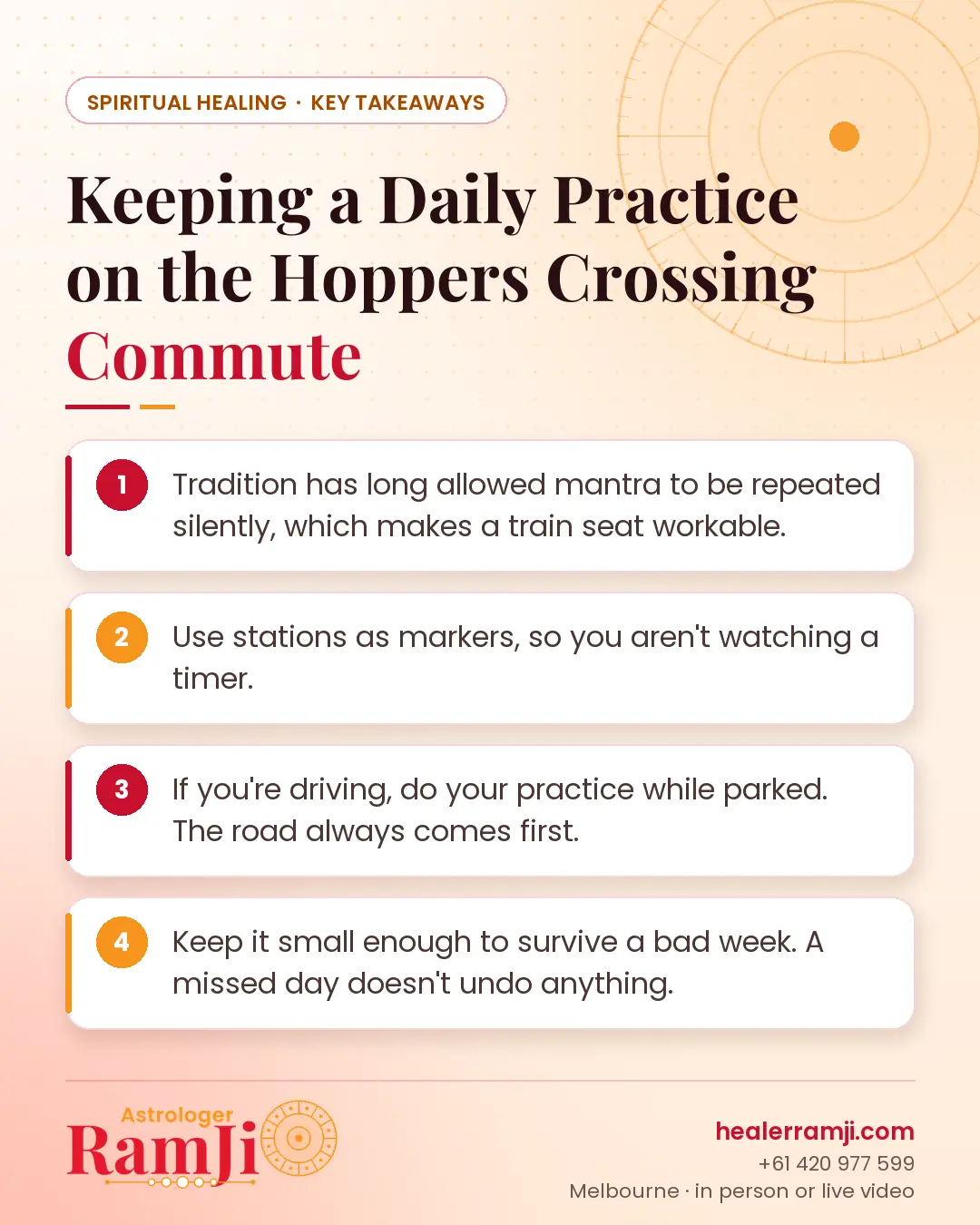
- Tradition has long allowed mantra to be repeated silently, which makes a train seat workable.
- Use stations as markers, so you aren't watching a timer.
- If you're driving, do your practice while parked. The road always comes first.
- Keep it small enough to survive a bad week. A missed day doesn't undo anything.
Is it acceptable to chant a mantra on the train?
For many Hindus, yes, though families and teachers differ. The practice of repeating a mantra is called japa. It's commonly described in three forms: vaikhari, spoken aloud; upamshu, a whisper with the lips barely moving; and manasika, repeated in the mind. Japa may be done in a formal seated posture, and it may also be done during other activities.
So a mantra on the train is usually a silent or nearly silent one. Some sources add that manasika japa is hard if you've never practised aloud, which is a good reason to learn your mantra at home first. Some traditions also ask for initiation or particular conditions for certain mantras, while others are happy for a divine name to be repeated anywhere. If yours has rules, ask a priest, a teacher or an elder in your family.
What does a routine look like on the Werribee line?
Hoppers Crossing station sits between Werribee and Williams Landing, with Aircraft and Laverton next on the way towards the city. Trains then continue via either the Altona Loop or a more direct run to Newport, so check which one you're on. You can use the first few stops as your frame:
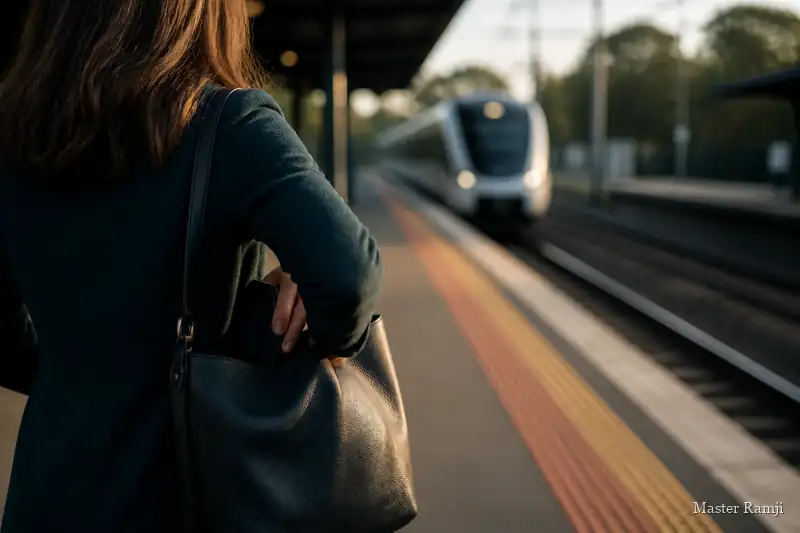
- On the platform. Put your phone in your bag or pocket. If you need your headphones, keep them in, with nothing playing.
- To Williams Landing. Find somewhere to sit or stand. Take a few slow breaths and let your shoulders drop.
- From Williams Landing to Laverton. Repeat your mantra silently. When your mind wanders to your inbox, come back without any fuss.
- After Laverton. Stop, and spend a moment on whatever you want to carry into the day. Then open your book or your email.
A routine like this might take around ten minutes, depending on the service. Going home, try the reverse: start at Laverton and finish as you pull into Hoppers Crossing, so that you walk out of the station having already let go of work.
Keep your senses about you. Listen for announcements, know where your bag is, and don't close your eyes if that means missing your stop or losing track of what's around you.
How can you count without drawing attention?
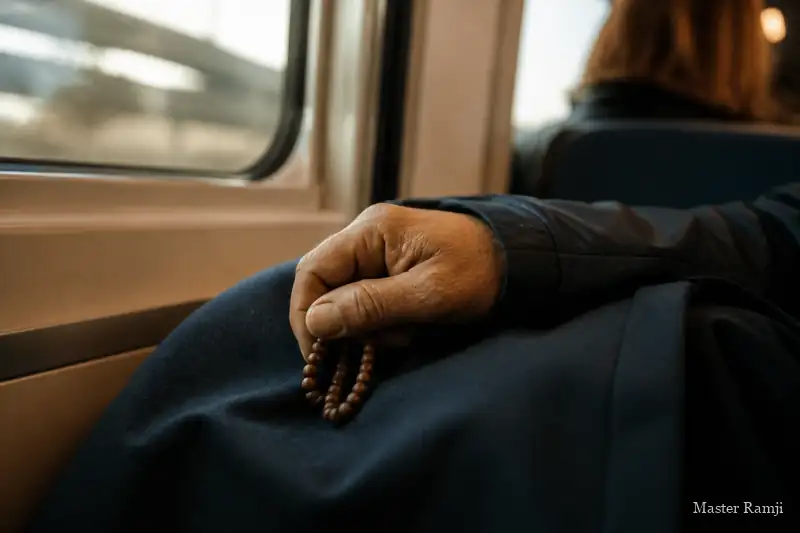
Counting isn't essential, but it can help. A small mala fits in a pocket or a closed hand, and using a mala takes little practice. You could also count on your finger joints, an old method that needs nothing in your hands. There's no need to reach a full count of 108 on a weekday. A smaller count you can actually finish is better for now.
What if you drive the Princes Freeway?
Don't try to turn the drive into a meditation. Road safety always comes first, and a Hoppers Crossing commute by car can include heavy freeway traffic and merges around the West Gate, whether you use the bridge or the newer tunnel. These need all of you. For a meditation commute by car, this version is safer:
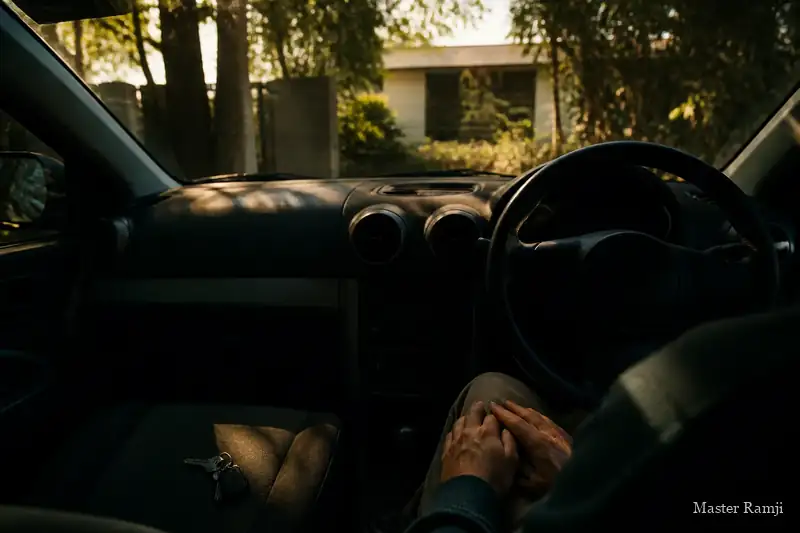
- Before you start the engine. Sit in the driveway or the car park for two minutes, with the car parked. This is the only time your eyes can close.
- While you're moving. No mantra practice, no mala in your hand and no breathing exercises. Your attention stays on the road, even on a quiet stretch.
- After you arrive. Sit for another minute before you get out. This is often when the practice feels most settled.
If you play music or anything else through a phone while driving, check Victoria's rules first. Fully licensed drivers may use hands-free functions under set conditions, while learner and probationary drivers can't use a phone while driving, even hands-free. Transport Victoria has the current rules. If you're tired, or coming off a night shift, skip the mantra and think about whether you should be driving at all.
Which mantra should you use?
Choose one that's short, that you can pronounce and that means something to you. It may be a family prayer or the name of a deity you were raised with. Don't collect several at once. If you're starting from nothing, read how to start a mantra practice that lasts, or ask for mantra and meditation guidance suited to your tradition. A reader who says you must pay for a secret mantra before you can begin is worth walking away from.
What if you miss days?
You will. Trains get replaced by buses, children get sick, and shifts change. No tradition's calendar is going to punish you for missing a Tuesday. Just start again at the next station.
It may help to link your practice to something that already happens every day, such as the moment you sit down on the train, or the moment you switch off the engine. If you really can't manage it on the way to work, try meditation for people with no spare time, which doesn't depend on a commute.
What can a commute practice not do?
Many people find that repetition steadies them, and that's a good enough reason to do it. It isn't a proven treatment for anxiety, depression or sleep problems, and it won't fix a roster that's wearing you out. If you've been low or anxious for a while, see your GP. Beyond Blue is on 1300 22 4636, and Lifeline is available at any hour on 13 11 14. A mantra can sit alongside that care, not replace it.
Where does this fit in your wider practice?
A train-seat mantra keeps a thread going between visits to a temple or gatherings at home. It works even better when you have people to share it with. If you're looking for that in the area, see finding a Hindu spiritual community in Wyndham, or browse our guides for Melbourne's western suburbs.
If you'd like help choosing a mantra or shaping a routine around your shifts, sessions can be held by phone, WhatsApp or video, so you can fit one around your commute. Please get in touch.
Related service
Keep reading

Moving to Ballarat as a Hindu Family
Thinking about moving to Ballarat as a Hindu family? What to know about the local community, worship, festivals and settling in during your first year.
Read article →
Praying for Someone in a Parkville Hospital
A gentle guide for families with someone in a Parkville hospital: where you can pray, how to ask for spiritual care, and what to check with the ward first.
Read article →
Spiritual Healing in Multicultural Springvale
Spiritual healing in Springvale can mean many traditions. Learn how they differ, how to check a practitioner, and which warning signs to take seriously.
Read article →More from Melbourne's Western Suburbs

Raising Kids Between Two Cultures in Point Cook
Raising Indian kids in Point Cook? How to fit school friends, sport, language classes and family traditions into one week, without making children choose.
Read article →
Warehouse Shift Work in Truganina: Is It Time for a Change?
Thinking of leaving a warehouse job in Truganina? Weigh pay, sleep, notice and retraining first, then see where a reflective chart reading might fit in.
Read article →
Opening a Shop in Footscray: Choosing Your Date
Choosing a shop opening date in Footscray? Check Maribyrnong council permits and your lease first, then find a muhurat that fits the dates you can't move.
Read article →Local pages
Astrologer for Footscray
Live in Footscray? Vijay Ramji is based in Ascot Vale, with sessions by phone, WhatsApp or video. Questions that fit apartments, study, shops and mixed families.
View area →
Astrologer for Sunshine
In Sunshine, Victoria? Vijay Ramji is based in Ascot Vale, with sessions by phone, WhatsApp or video. Questions about older homes, changing work and family.
View area →
Astrologer for Werribee
Live in Werribee? Vijay Ramji is based in Ascot Vale, with kundli readings by phone, WhatsApp or video. Questions for long-settled families and new arrivals.
View area →Quick answers
What is a mantra?
A mantra is a sacred sound, word or phrase repeated in prayer or meditation. Here is what the word means, how it is used, and how to begin simply.
Read answer →What is energy healing?
Energy healing rests on the belief in a life force that can be guided. Here is what a session involves, and what the evidence does and doesn't show.
Read answer →Talk to Vijay Ramji
Tell us what you are facing. If a reading is unlikely to help, you will be told that plainly.