
A Calming Evening Routine for Better Rest
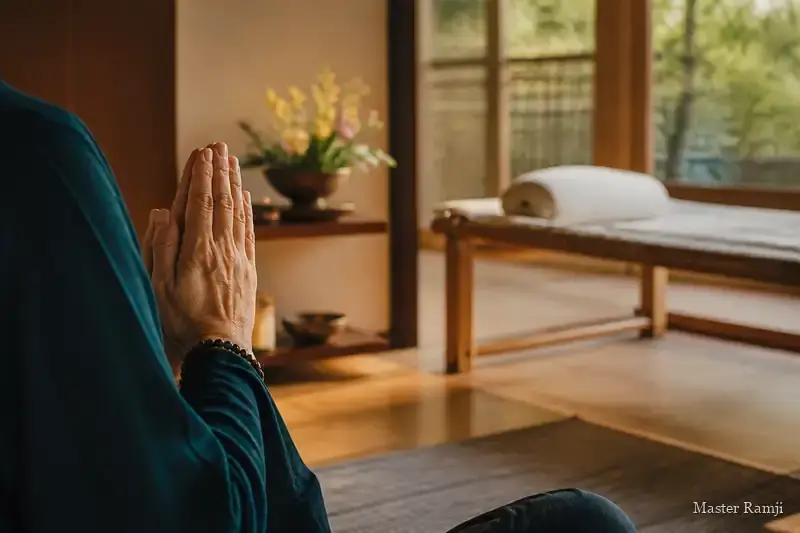
A spiritual bedtime routine is a short wind-down you repeat each night, built from simple practices such as a lamp, a prayer, slow breathing and a few minutes of reflection. It can help you mark the end of the day. It is not a sleep treatment, so if poor sleep continues or affects your mood, see your GP.
Many of us end the day the same way: lights off, phone in hand, the inbox open for one last look. Then we wonder why our thoughts are still running at midnight. Older family habits often did the opposite. A lamp was lit at dusk, a short prayer was said, and the house slowly went quiet.
This page sets out a simple spiritual bedtime routine drawn from devotional practice, and shows how it fits with mainstream sleep advice. It also explains clearly when poor sleep is a reason to see a doctor and not a reason to pray harder.
Key takeaways
- The same few steps at the same time each night matter more than which prayer or mantra you choose.
- A spiritual wind-down fits neatly inside the "buffer zone" that healthdirect recommends before bed.
- If you can't sleep, getting up for something calm usually beats lying there and fighting it.
- Ongoing trouble sleeping is a health question. See your GP, and keep any practice alongside that care.
Why does a routine matter more than the practice itself?
Your body learns from repetition. healthdirect's sleep advice suggests going to bed and waking at around the same time each day. It also recommends a "buffer zone" before bedtime, when you are not trying to solve problems or plan the next day.
That buffer zone is where a spiritual practice can sit. It doesn't need to be long or impressive. A lamp, a few breaths and a familiar verse, repeated night after night, become a signal that the day is finished. The meaning you bring to it is yours. The steadiness comes from doing it often.
What might a 20-minute evening routine look like?
Here is one shape you can adjust. Start about half an hour before you want to be asleep.
- Close the day on paper. Write tomorrow's three jobs on a notepad and leave it in the kitchen. Once it's written, it doesn't need to come to bed with you.
- Put screens away. healthdirect notes that your mind should link bed with sleep, not with your phone, computer or TV. Charge the phone outside the bedroom if you can.
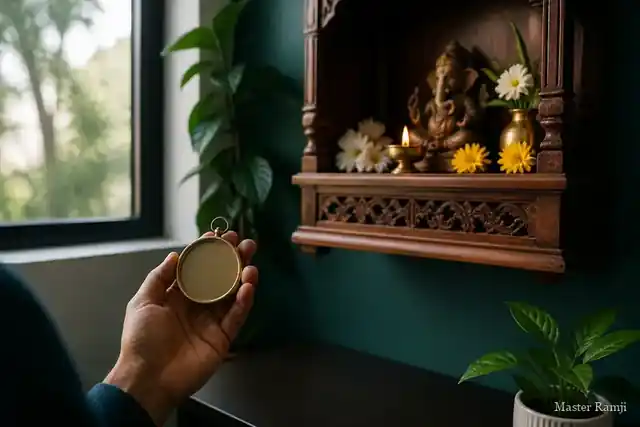
- Light a lamp, or switch one on. A small diya at your shrine, or a battery lamp if you share a room or have young children. If you use a flame, put it out before you leave the room.
- Say one short prayer. Choose something your family already knows, or a single line you find comforting. Familiar words ask less of a tired mind.
- Breathe slowly for a few minutes. Let the out-breath be a little longer than the in-breath. healthdirect lists sleep problems among the things meditation may help people manage, and suggests bedtime as one time to practise.
- Repeat a mantra quietly. Under your breath is fine. Eleven or twenty-one repetitions are enough for an evening. There's no need for a full mala.
- Look back on the day. Name one thing that went well and one thing you are letting go of until tomorrow.
Then lights out. If twenty minutes feels like too much, keep steps 2, 4 and 5. Our guide to meditation when you have very little time has shorter versions.

Which traditions suit the evening best?
Many Hindu households light a lamp at dusk, and twilight has long been treated as a time for prayer. Families differ widely in what they say. Some recite a short shloka to a family deity. Some read a few lines from a text such as the Gita. Others simply sit in silence before the shrine. All of these are traditions of faith. None needs a priest, a purchase or a particular number of minutes.
If you follow a different faith, or none, the same structure still works. The order of the steps matters more than the words.
Your room matters too. healthdirect suggests a bedroom that is quiet, dark and at a comfortable temperature. If you are interested in the traditional view of bed placement, vastu ideas for a calmer bedroom covers it, but comfort and darkness should come first.
What if your mind keeps racing?
It happens to everyone sometimes. healthdirect advises against staying in bed when you are wide awake. Get up, do something calm such as reading in dim light, and avoid screens. It also suggests not checking the clock, as clock-watching can add to the worry.
A slow round of your mantra in another room can be a gentle way to spend that time. Treat it as company, not as a test you are failing. When you feel drowsy, go back to bed.
A few habits during the day also make a difference. healthdirect suggests avoiding tea, coffee and caffeinated soft drinks for at least three to seven hours before bed, and alcohol for at least four. If you nap, it suggests keeping it to about twenty minutes.
How do you adapt it for shift work or a shared home?
Keep the same order of steps, whatever the clock says. After a night shift, the routine may happen at eight in the morning. That's fine. It's the sequence that tells your body what comes next.
In a shared house or a small flat, chant silently and use a battery lamp. If children share your room, a whispered prayer together can become part of their bedtime too.
What can a bedtime routine not do?
A prayer can't treat insomnia, sleep apnoea, pain, depression or anxiety. Some sleep problems need proper assessment, and only a health professional can give it. healthdirect advises seeing your doctor if you regularly wake up unrefreshed, often feel restless in bed, have trouble getting to sleep, or find that tiredness is affecting your mood. It also notes that sleeping pills don't usually treat the causes of poor sleep.
For advice at any hour, you can call healthdirect on 1800 022 222 to speak with a registered nurse. If low mood or worry is keeping you awake, Beyond Blue is on 1300 22 4636. If you are in crisis, call Lifeline on 13 11 14, or 000 in an emergency.
Be wary of anyone who tells you that broken sleep is proof of a curse or bad energy, especially if a paid ritual follows. Our article on what feeling drained does and doesn't mean starts with sleep and health for good reason.
Would guidance help?
Some people like help choosing a prayer or mantra that feels right, or shaping a practice around a demanding season of life. Spiritual support for hard times offers a calm conversation and small steadying practices, and mantra and meditation guidance teaches a practice you can keep up on your own. Sessions can be held by phone, WhatsApp or video, and fees are stated before any paid work. If you would like to talk it through, get in touch.
Related service

Keep reading

How to Choose a Spiritual Healer Safely
Questions to ask a spiritual healer before, during and after a session, the red flags that mean walk away, and where to take a concern in Victoria.
Read article →
Finding Your Spiritual Community in Wyndham
Living in Tarneit, Point Cook or Werribee? How to find a Hindu spiritual community in Wyndham, keep up your practice, and get support when you feel alone.
Read article →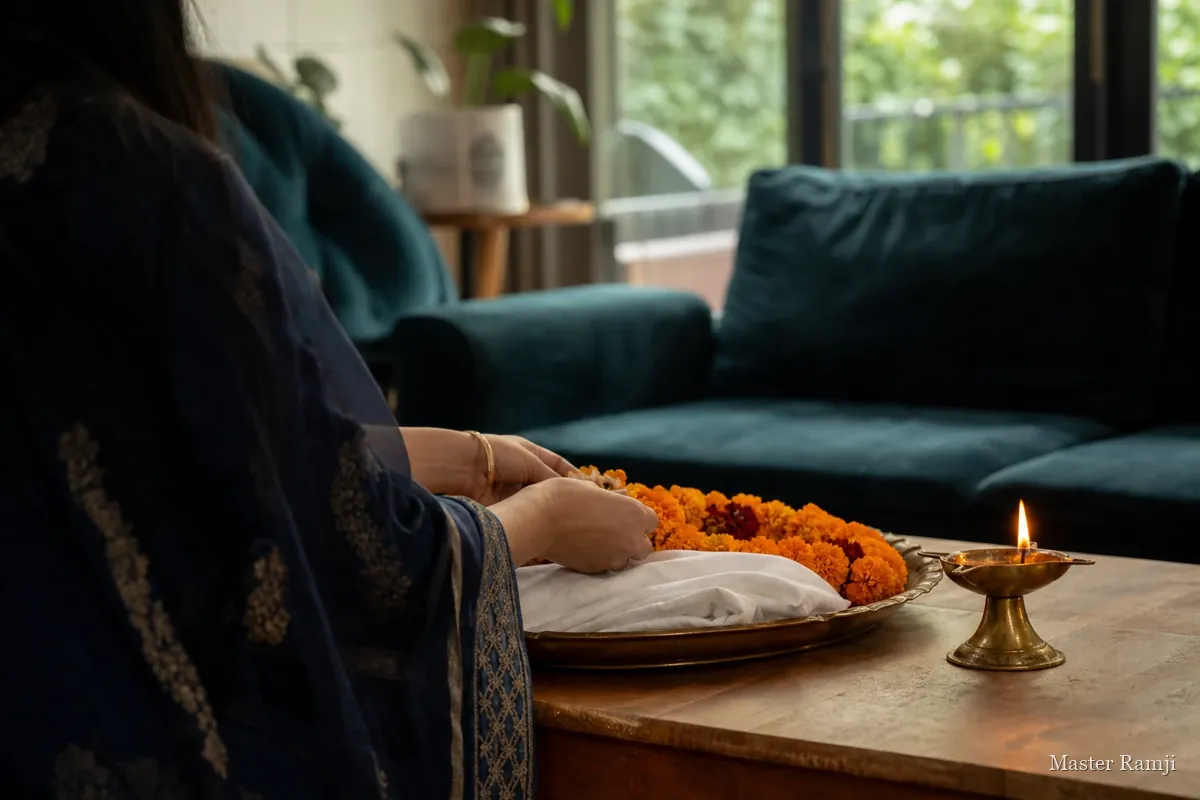
Planning Hindu Last Rites From Melbourne's West
A gentle guide for families around Werribee after a death: who to call first, Victorian certificates and cremation paperwork, and questions about Hindu rites.
Read article →Quick answers
What is energy healing?
Energy healing rests on the belief in a life force that can be guided. Here is what a session involves, and what the evidence does and doesn't show.
Read answer →Can spiritual healing replace a doctor?
Spiritual healing can't replace a doctor or prescribed treatment. Here is how to keep your faith alongside medical care, and which warning signs to watch for.
Read answer →Talk to Vijay Ramji
Tell us what you are facing. If a reading is unlikely to help, you will be told that plainly.