
Pitra Dosh Puja
Honouring your ancestors, with every step explained.
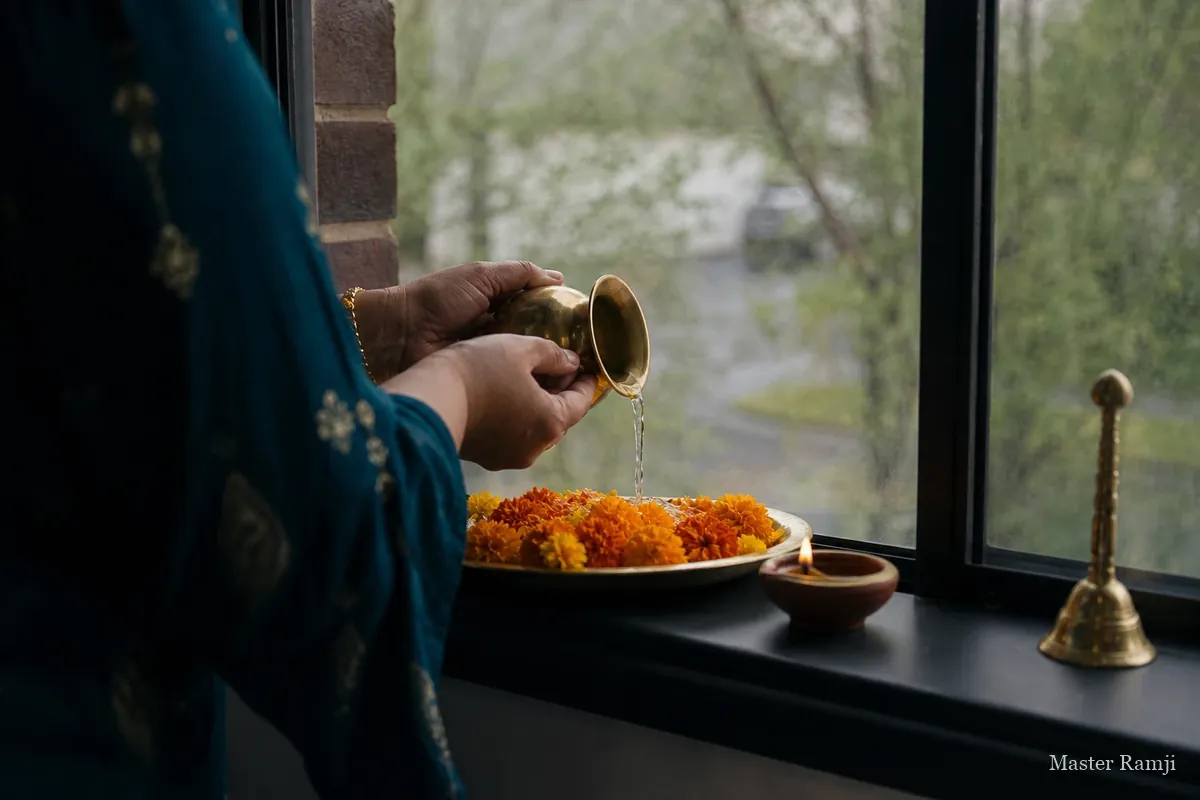
A pitra dosh puja is a Hindu rite that honours ancestors, usually with prayer, water offerings and food given in their name, for people whose chart or family tradition raises this concept. For Melbourne families it can be performed on your behalf. It is an act of remembrance and faith, not a fix for any problem.
What is pitra dosh, and what is the puja for?
Pitra refers to ancestors. In Hindu tradition, the pitrs are the departed forebears of a family, remembered with offerings. Dosh means a flaw or affliction, and "pitra dosh" is an astrological label some readers apply to a chart, often when the Sun, Rahu or the ninth house is in a difficult arrangement.
Astrologers disagree on what counts. Some use narrow rules, while others apply the label so broadly that almost anyone could qualify. So being told you have it is an opinion and not a finding. The short answer on what pitra dosh means is a good place to start.
The puja itself is older and simpler than the label. It is a way of saying thank you, naming the people who came before you, and giving something in their memory.
Who usually asks for it?
Some people come after a reader has used the term and they want to know what it means. Others feel they never had the chance to do right by a parent or grandparent, perhaps because they were overseas when that person died. Some are in a family where hardship seems to repeat, and want to look at it calmly. In that case, a consultation on family patterns may be a better starting point than any rite.
You can also ask for this simply because you want to honour your ancestors. You don't need a dosh for that.
What does the rite involve, in plain language?
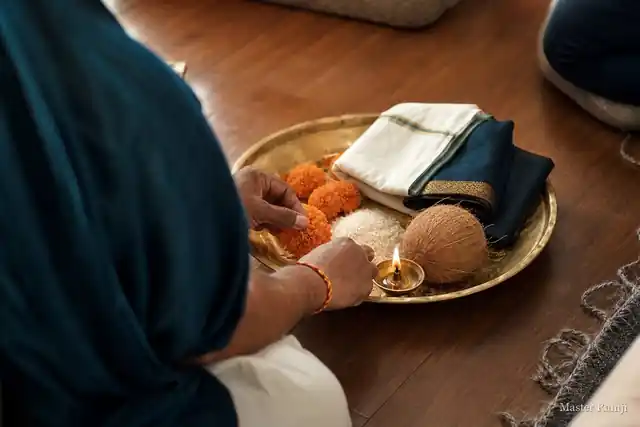
You will be told what is planned and what each part means. Terms and order differ across regions, but these are the elements you are most likely to hear about:
- Sankalp. A statement of who the rite is for, naming you, your family line and your purpose.
- Tarpan. Water, often mixed with black sesame, is poured while the ancestors are named. It's a gesture of quenching thirst, and of care.
- Pinda daan. Balls of cooked rice are offered, a very old image of feeding those who fed you.
- Shraddha. The wider rite for ancestors, often held on the lunar date of a person's death. Our guide to performing shraddha away from India explains what families adapt and what they keep.
- Food and charity. Food is given to priests or to people in need, in the name of those remembered.
Some providers promote elaborate rites at distant pilgrimage sites. These may matter deeply to a particular family, but you shouldn't feel that nothing else counts.
What details will you be asked for?
- Your full name and gotra, if you know it
- The names of the ancestors you wish to remember, on either side of the family
- Dates of death, if you have them
- Your family's region or tradition, so the form suits you
- Your birth details, if a chart raised the question
Gaps are normal. When the rite takes place on your behalf, ask what you will be shown, and who is performing it and where. You may like to light a lamp at home at the same time, or put out a photo of the person.
Can I honour ancestors without a paid rite?
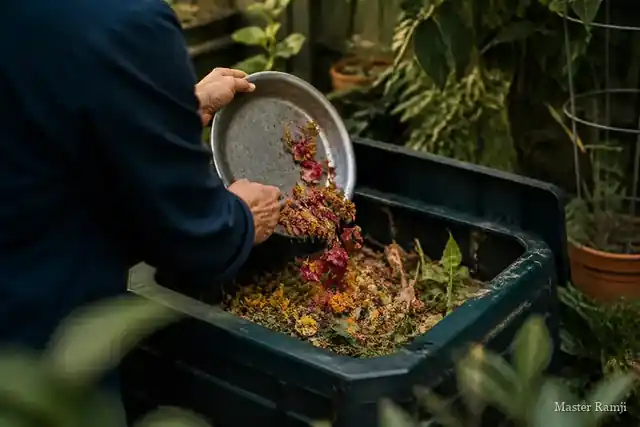
Yes. A family can say names aloud on a death anniversary, offer water and a prayer, cook a favourite dish, or give to a local food charity in someone's memory. For many people, this is the heart of the matter. You can always add something more formal later.
What can't this puja do?
It is an act of remembrance. It can't resolve infertility, illness, a stalled marriage, money trouble or a family dispute, and it is not proven to change events. Those matters need a doctor, a counsellor, a lawyer or a frank talk at home. Remembering a parent can also stir up grief that hasn't settled. Healthdirect's guide to grief explains when it's worth talking to a professional.
This is also an area where fear gets sold. Be careful if anyone says your ancestors are cursing your children, keeps finding further rites, or tells you to pay today. Scamwatch explains how to report a scam. If you are comparing rites, a graha shanti puja is a different rite with a different purpose, so ask why one is being suggested over another.
What does it cost?
Ask when you get in touch. Any fee is stated before paid work begins. Ask what it includes, and remember you are free to say no.
How do I talk this through?
Call or send a WhatsApp message to +61420977599, or use the contact form. Family matters shared with us are kept confidential. Vijay Ramji is based in Ascot Vale, with appointments arranged in advance, and sessions can be held by phone, WhatsApp or video.
Common questions
Are my ancestors angry with me?
Nothing in this rite needs you to believe that. Many families see it as gratitude and duty, not appeasement. Our guide to pitra dosh without the fear goes through what the concept means and what it doesn't.
What happens if I don't have the puja?
Nobody can honestly say your ancestors will harm you or your children if you decline. Many families remember their dead at home, simply and with love, and have never held this rite.
Can a daughter perform or request this rite?
Customs differ. Some traditions look to a son, while many families today include daughters and other relatives. It's reasonable to ask for your family's wishes to be followed, and you can request a rite for your own parents.
I don't know my ancestors' names. Can it still go ahead?
Usually, yes. Offer the names you know and describe the others as your paternal or maternal ancestors. Many migrant families have lost names over the generations, and that isn't a fault.
When is it normally done?
Many families choose Pitru Paksha, the fortnight dedicated to ancestors, or a new moon day. Our guide to observing Pitru Paksha in Australia looks at keeping these dates away from sacred rivers.
Should I do this soon after a death?
Immediate rites after a death are a separate matter, and customs differ. If your loss is recent, there's no rush to add anything more. Spiritual support through grief may be a gentler place to begin.
Related services
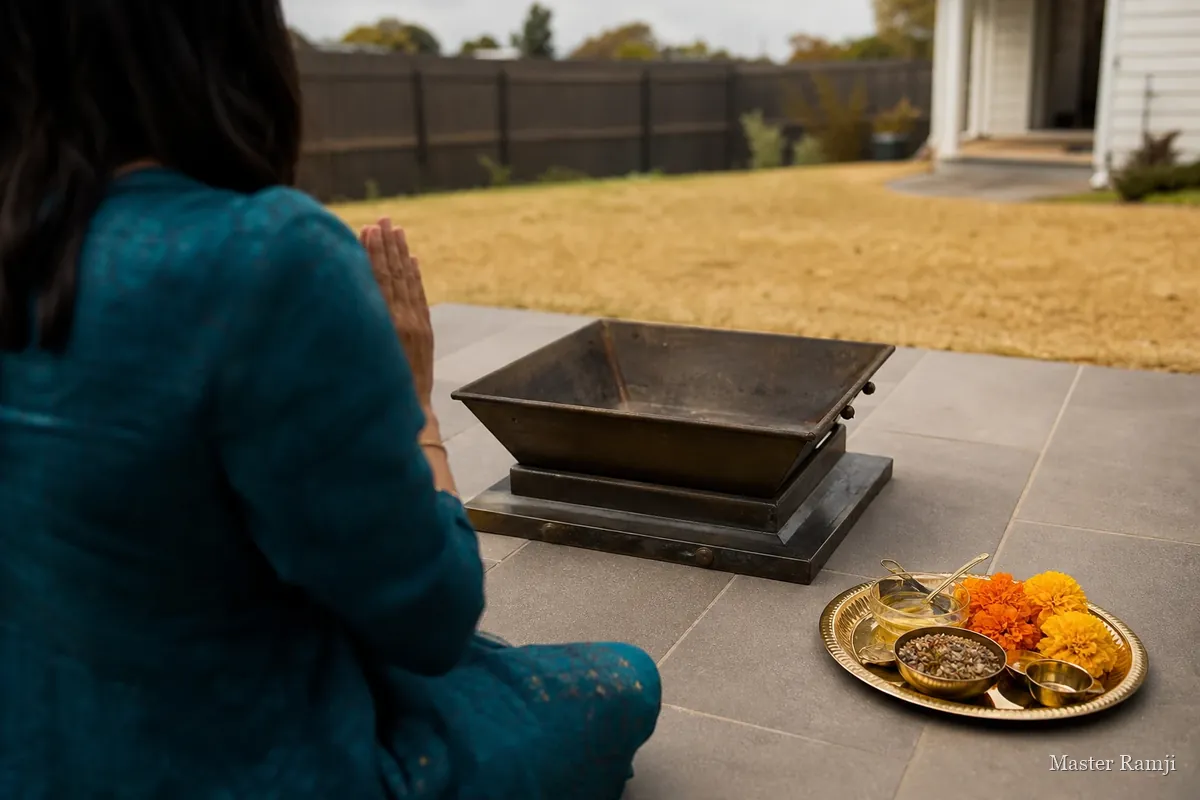
Havan on Your Behalf
A havan service for Melbourne families whose home or building can't host a fire ritual. How a havan on your behalf works, what to ask, and what it can't do.
View service →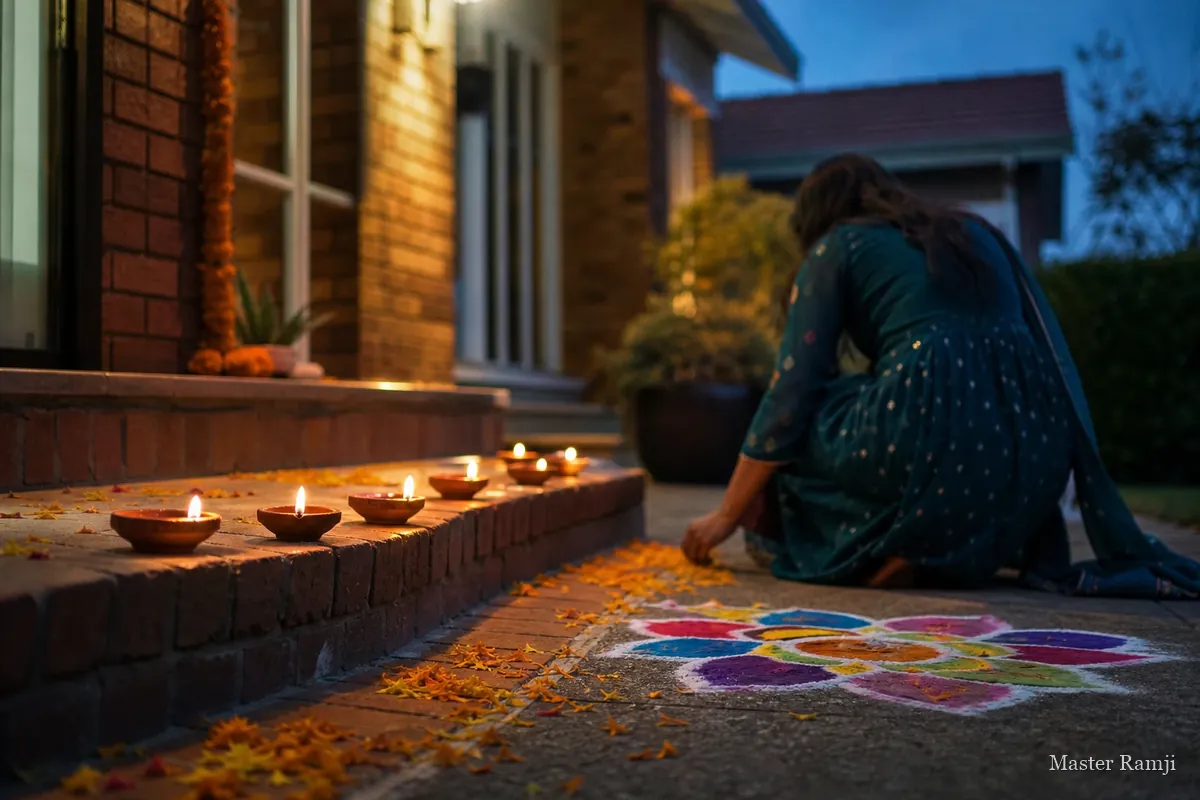
Personal Mantra Remedy Plan
An astrology remedy plan you carry out yourself at little ongoing cost: one mantra, a day and count that suit your life, and simple charity or discipline.
View service →Read more
Pitra Dosh Explained Without the Fear
What pitra dosh means, how astrologers say they see it in a chart, and what it does not mean. A calm guide for anyone who has been told they have it.
Read article →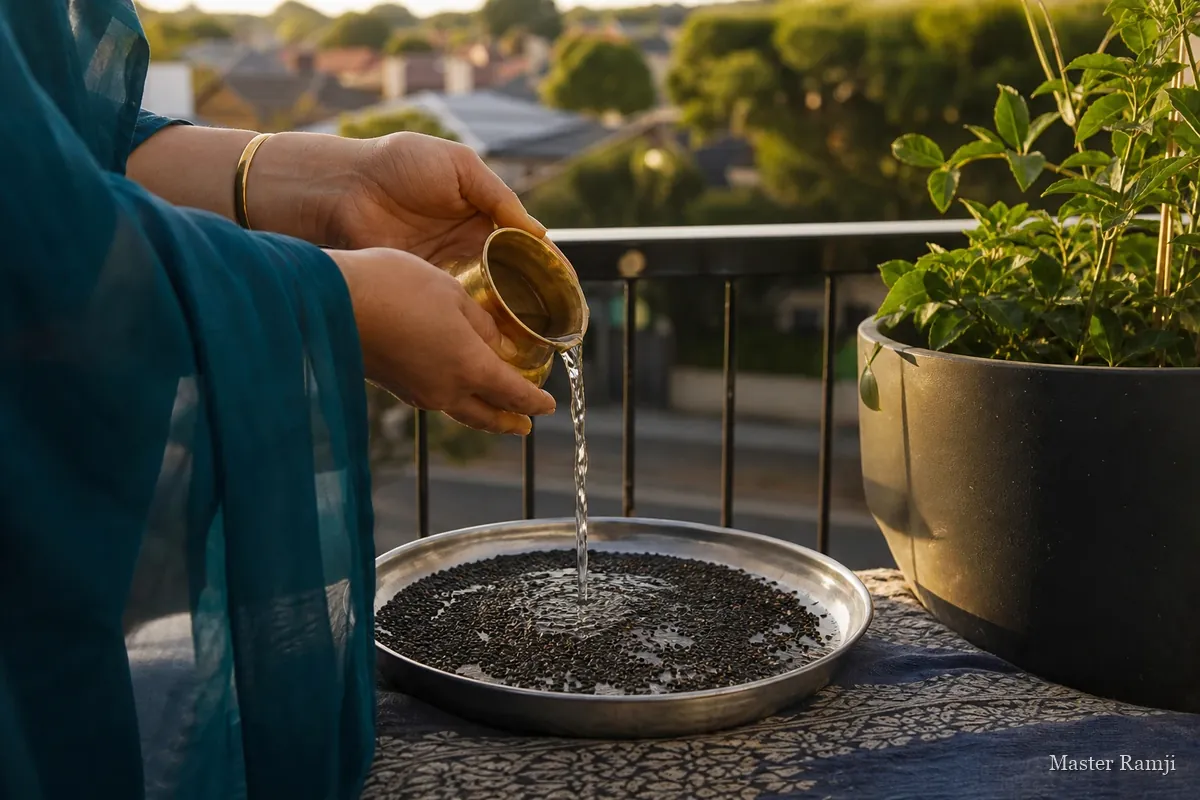
Observing Pitru Paksha in Australia
How families in Australia observe Pitru Paksha away from sacred rivers: tarpan at home, choosing the day, food offerings, safe lamps and remembering with care.
Read article →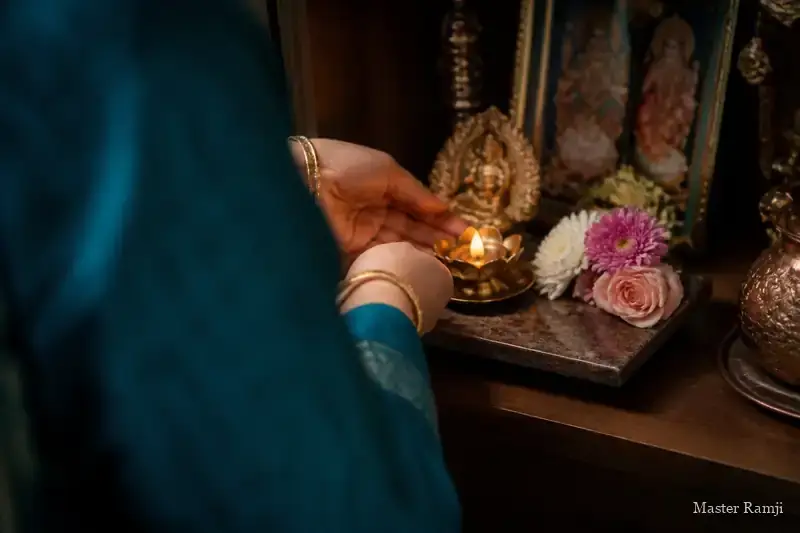
Performing Shraddha Away From India
How families living overseas keep the annual shraddha ceremony: what they keep, what they adapt, sharing the rite with relatives in India, and caring for grief.
Read article →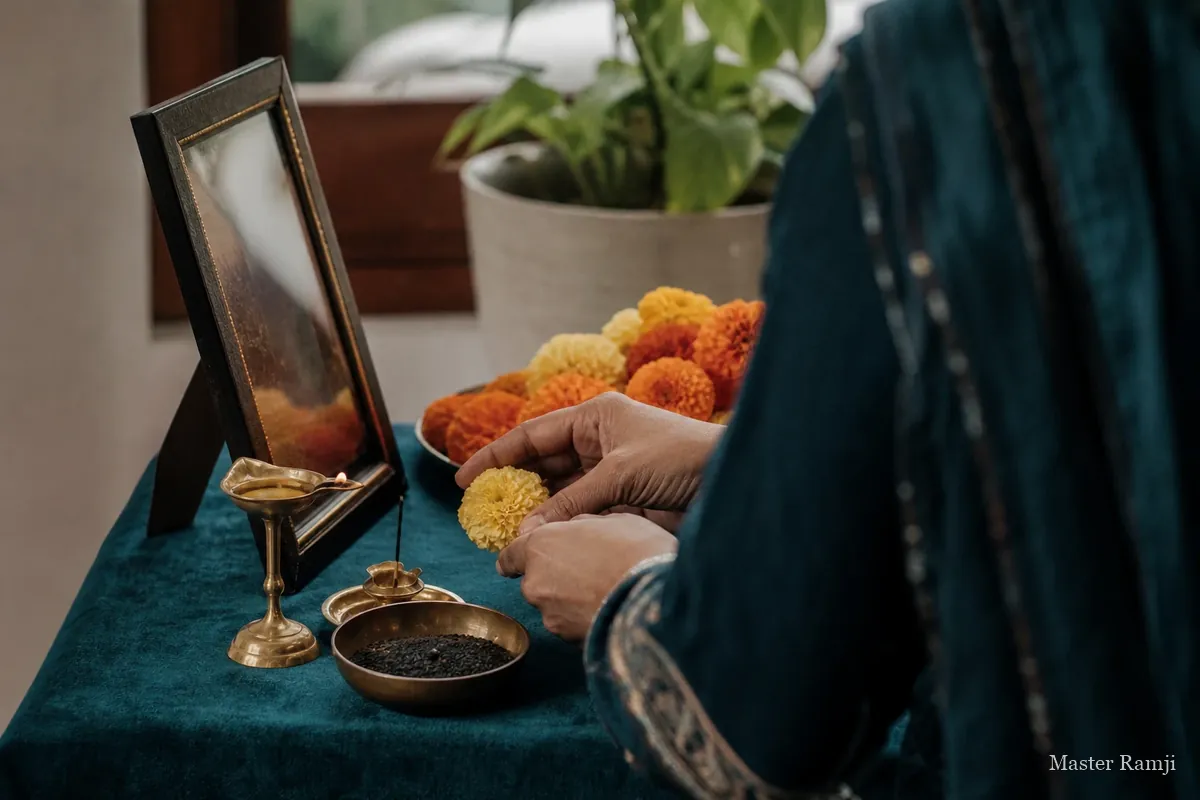
Pitru Paksha for Families in Springvale and Nearby
How families in Springvale and Melbourne's south-east can keep Pitru Paksha simply at home, find the right days for Melbourne, and share remembrance with neighbours.
Read article →Quick answers
What is Pitra dosh?
Pitra dosh is an astrological idea about ancestral karma in a birth chart. Here is what astrologers look for, and why it need not be a cause for fear.
Read answer →What is a puja?
A puja is a Hindu act of devotional worship, at home or in a temple, with offerings such as flowers, light and food. Here is what it usually involves.
Read answer →Talk to Vijay Ramji
Tell us what you are facing. If a reading is unlikely to help, you will be told that plainly.