
Spiritual Support Through Grief
Ritual and remembrance, alongside proper grief support.
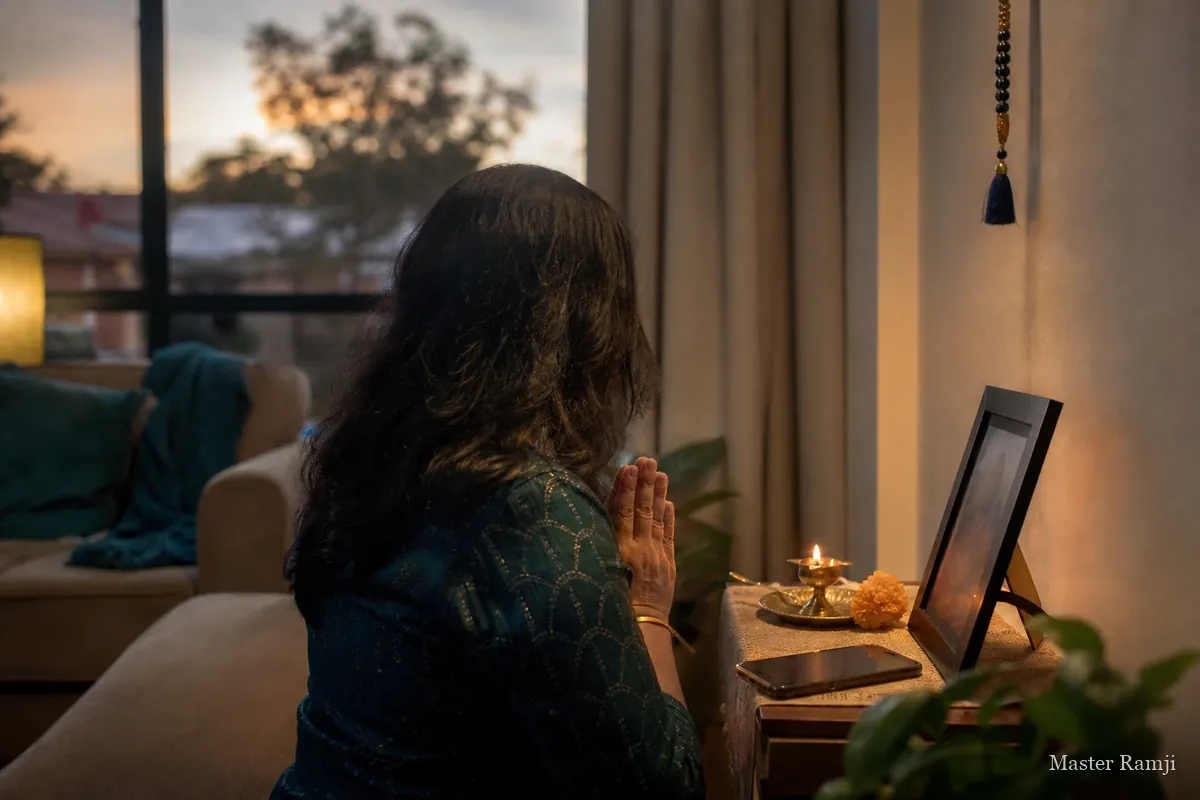
Spiritual support through grief offers a calm conversation, prayer and simple remembrance rites for people living with a loss. It can help you honour someone within your own tradition. It does not replace a GP or bereavement counsellor, and it cannot explain why a death happened or bring you messages from the person.
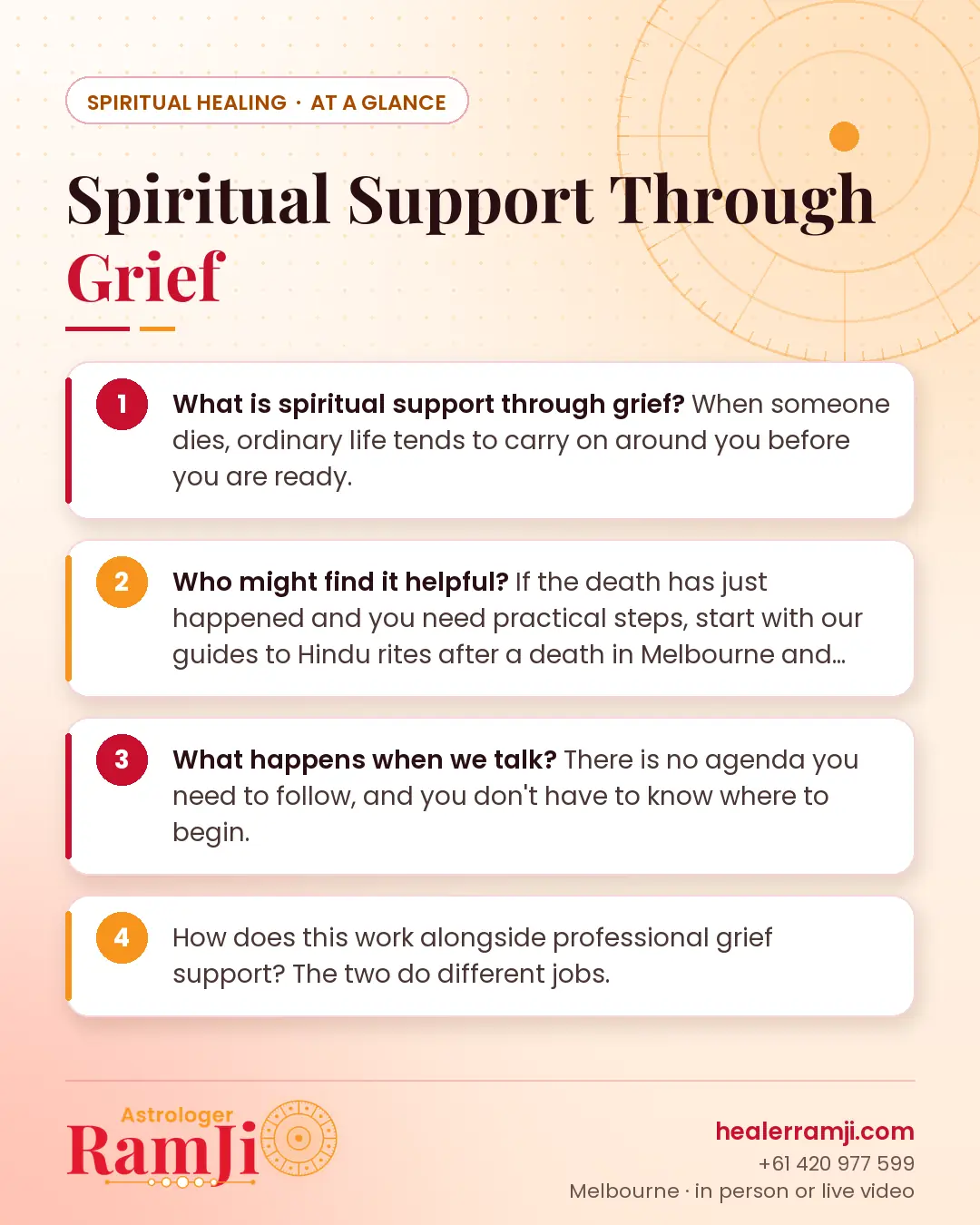
What is spiritual support through grief?
When someone dies, ordinary life tends to carry on around you before you are ready. Rituals have long given people something to do with that time: a lamp to light, a name to say, a date to keep. This service is a space to talk about the person you have lost and to work out which of those practices would mean something to you, in your own tradition and your own home.
Grief most often follows a death. It can also follow divorce, serious illness, or leaving a country and a family behind. The conversation is open to you whichever it is. It is spiritual support. It is not counselling, and it doesn't try to be.
Who might find it helpful?
- People who couldn't travel home, and whose parent's rites happened on a screen or not at all
- Adult children raised in Australia who don't know what the rites mean and feel embarrassed to ask
- People whose family holds different beliefs, or who left their tradition and now want part of it back
- Those approaching a first anniversary, a birthday or a festival without the person
- Anyone who simply wants to pray for someone and doesn't quite know how
If the death has just happened and you need practical steps, start with our guides to Hindu rites after a death in Melbourne and planning last rites from Melbourne's west. Your funeral director can also help. This conversation can come later, when you have room for it.
What happens when we talk?
There is no agenda you need to follow, and you don't have to know where to begin. You will usually be asked:
- Who the person was, and what you would like to say about them
- What has already been done, and whether anything feels unfinished to you
- What your family practises and what you yourself believe
- Who is around you at the moment, and whether you have seen your GP
From there, you may discuss a simple way to mark your loss. That might be a short daily prayer said with the person's name, a lamp on a particular day, food given to people in need in their memory, or a quiet remembrance walk by the river. Our article on small rituals that help with grief has ideas you can use with no help from anyone. Some families want a more formal rite for a parent or grandparent, which is covered under puja honouring ancestors. Nothing is required of you, and you may simply talk.
A chart is not needed. You don't have to bring anything, although some people like to have a photo nearby or a note of the date.
How does this work alongside professional grief support?
The two do different jobs. A counsellor or psychologist is trained to help with the emotional and mental weight of loss. A spiritual conversation can help with questions of meaning, duty and ritual. Many people find they want both, and there is no conflict between them.
Healthdirect describes grief as a natural response to loss. It often comes in waves, and for most people the intensity eases with time. It suggests seeking help if you have persistent sadness or despair, if grief has been distressing for 12 months or more, if it disrupts your work, sleep, appetite or relationships, or if you have thoughts of harming yourself.
Your GP is a good place to start. Griefline offers free and confidential grief support. If you are in crisis or thinking about ending your life, call Lifeline on 13 11 14, or 000 if your life is in immediate danger. Please don't wait for an appointment with anyone, including us.

What can't it do?
It can't take your grief away or set a time when it ought to end. It can't tell you where the person is now. And it can't diagnose depression, which sometimes follows a major loss and deserves proper care.
People who are grieving can be easy targets. Be wary if anyone says your parent is suffering because a rite was missed, or that bad luck will follow unless you pay for more. Traditions do hold strong beliefs about rites for the dead, but love and remembrance don't come with a penalty clause, and fear is a poor reason to spend money you may need.
If what you are carrying is less about one loss and more about a heavy period generally, support for hard times may be a better fit.
What does it cost?
Ask when you get in touch. Any fee is stated before paid work begins. You don't have to pay for a rite in order to honour someone. For many families, a lamp and a prayer at home have always been enough.
How do I get in touch?
When you feel ready, call or send a WhatsApp message to +61420977599, or use the contact form if writing is easier than talking. What you share is kept confidential. Vijay Ramji is based in Ascot Vale, with appointments arranged in advance, and sessions can be held by phone, WhatsApp or video.
Common questions
Can an astrologer tell me why this happened?
No. A chart cannot explain why someone died or show whether it could have been prevented. Be careful with anyone who offers you that kind of answer. See our short answer on how an astrologer can and can't help with grief.
Can you pass on a message from the person I lost?
That is not something anyone can honestly offer. What this support can do is help you say what you need to say, through prayer, a letter, or a quiet moment of remembrance.
I couldn't get home for the funeral. Have I done something wrong?
No. Distance, visas, cost and work keep many people from travelling. Missing a funeral doesn't mean you failed the person. Remembrance can still happen wherever you are, and our guide on grieving a parent from the other side of the world may help.
I'm not sure what my family's tradition requires. Can you help?
You can talk it through, and you can also ask older relatives or your family priest, because customs differ widely. If you are planning a rite overseas or here, read about what families adapt when performing shraddha away from India.
How do I know if I need a counsellor?
You don't have to reach a crisis first. Healthdirect suggests seeking help if grief has been distressing for 12 months or more, or keeps getting in the way of everyday life. Your GP can refer you to someone suitable.
Related services
Spiritual Support in Hard Times
Spiritual guidance in difficult times: a calm conversation and small steadying practices for when life feels stuck or heavy, alongside practical and medical help.
View service →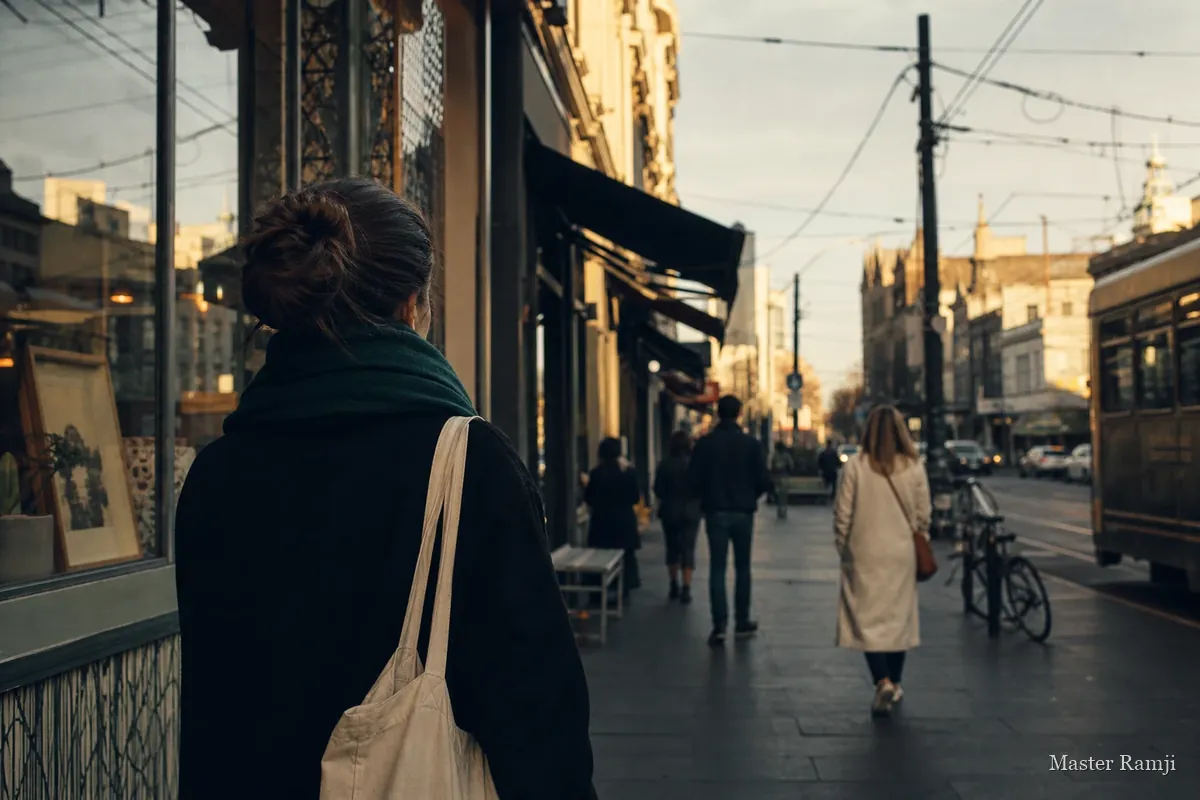
Energy Healing in Melbourne
Energy healing in Melbourne with Vijay Ramji: what a session feels like, how it sits beside your medical care, and what it can't do. Spiritual support, not treatment.
View service →Read more
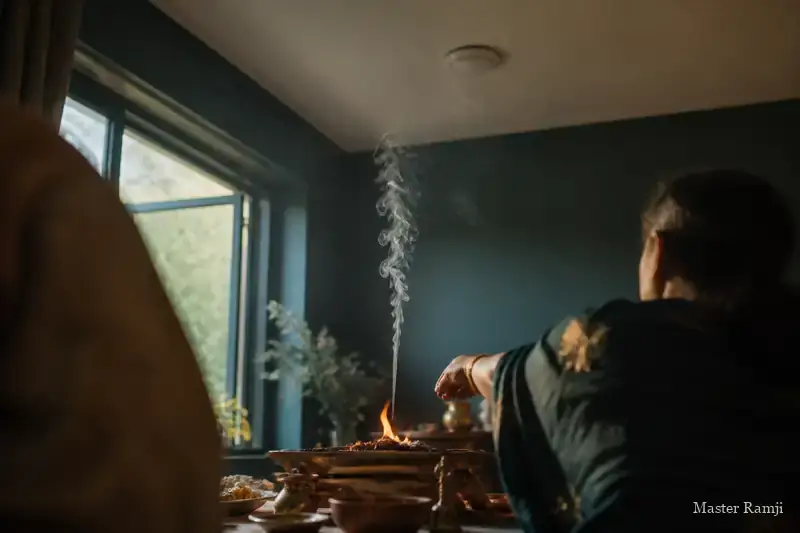
Hindu Rites After a Death in Melbourne
What antim sanskar, the mourning days and shraddha mean, and how Hindu families in Melbourne adapt funeral rites to Australian crematoria and customs.
Read article →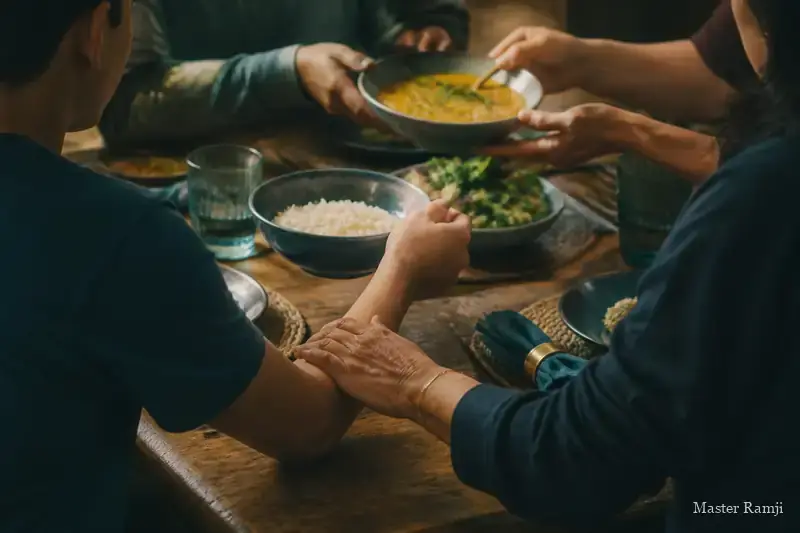
Grieving a Parent From the Other Side of the World
Grieving a parent overseas from Australia: why distance makes loss feel unreal, how to mark it here in the months after, and where to find real support.
Read article →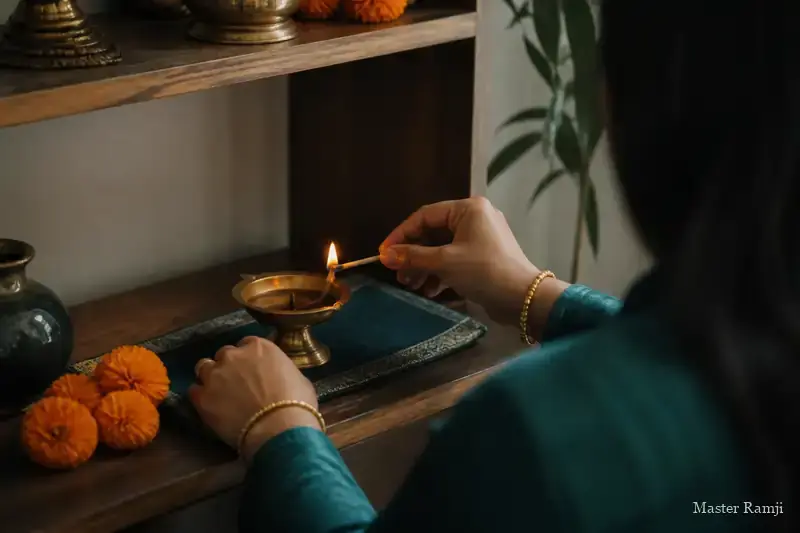
Small Rituals That Help With Grief
Simple rituals for grief at home: a lamp, a daily prayer with their name, a remembrance shelf and the dates worth keeping, done safely and at your own pace.
Read article →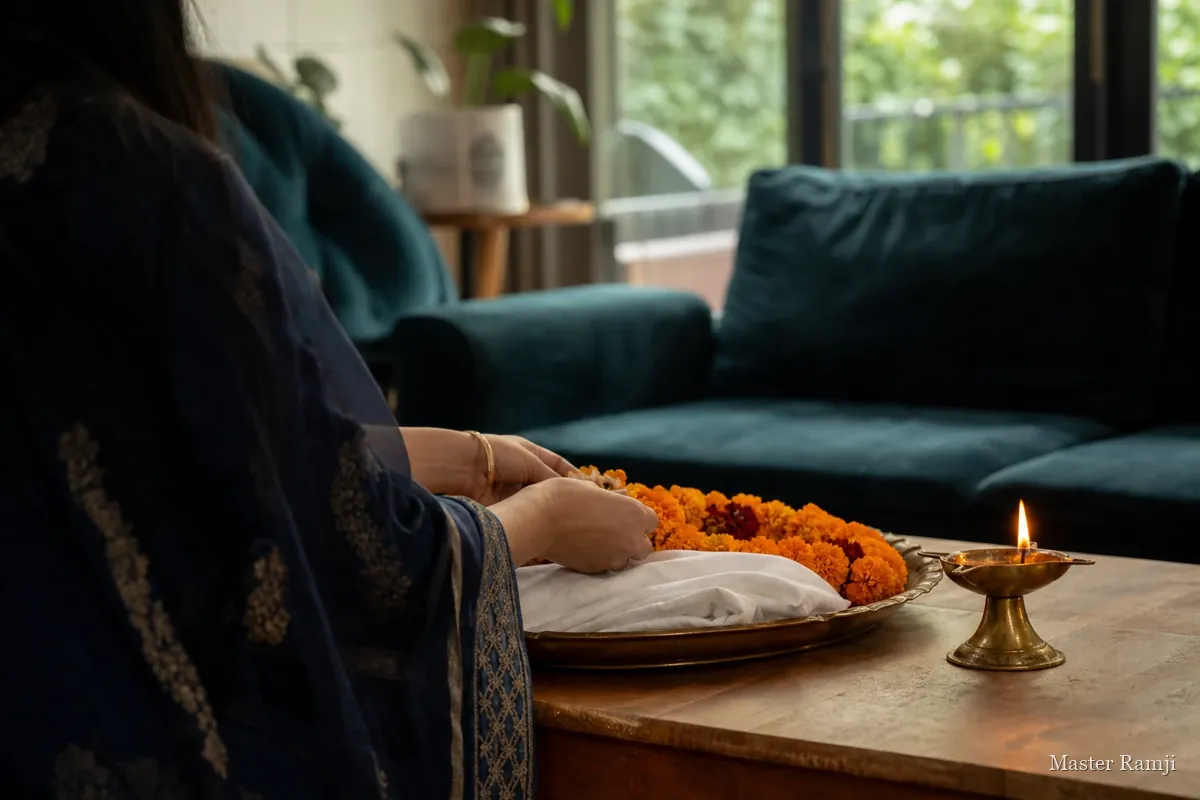
Planning Hindu Last Rites From Melbourne's West
A gentle guide for families around Werribee after a death: who to call first, Victorian certificates and cremation paperwork, and questions about Hindu rites.
Read article →
Remembering Someone by the Maribyrnong River
A quiet remembrance ritual for walking by the Maribyrnong River, with nothing left in the water. Where to walk, what to bring, and where to find support.
Read article →Quick answers
Can an astrologer help with grief?
An astrologer can offer ritual and a listening ear in grief, but not counselling. Here is what to expect, where the limits sit, and where to find real support.
Read answer →What is energy healing?
Energy healing rests on the belief in a life force that can be guided. Here is what a session involves, and what the evidence does and doesn't show.
Read answer →Talk to Vijay Ramji
Tell us what you are facing. If a reading is unlikely to help, you will be told that plainly.