
Observing Pitru Paksha in Australia
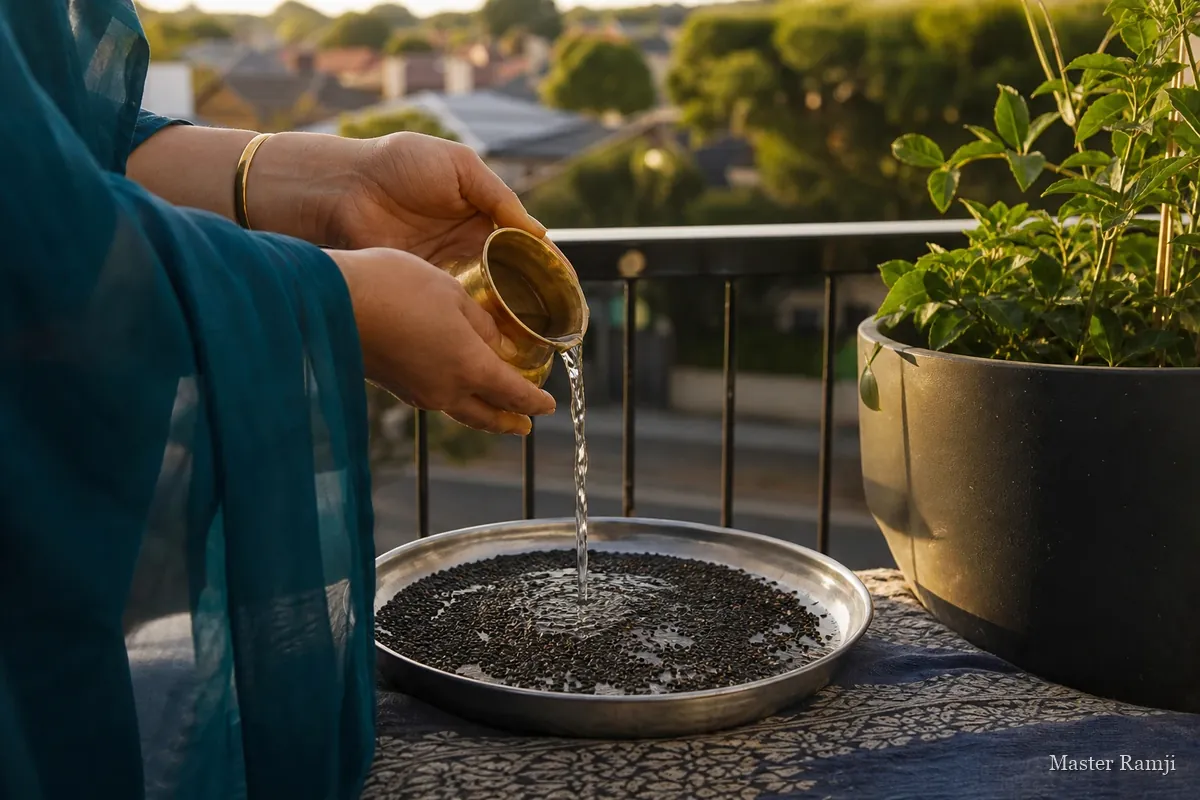
Pitru Paksha is a fortnight in the Hindu lunar calendar set aside for honouring ancestors. In Australia, families often keep it at home with tarpan, an offering of water and black sesame, along with prayer, a favourite meal and charity. Check the dates with your priest, temple or a panchang calculated for your city.
In India, many families mark Pitru Paksha by a river. A priest guides the rites, water is offered with sesame, and the day has a rhythm passed down for generations. In Australia, the river may be a long way off, the priest may be busy, and the day falls in an ordinary working week.
None of that stops you from honouring your ancestors. This guide looks at how families observe the fortnight at home, what they keep, what they adapt and how to do it safely.
Key takeaways
- Pitru Paksha is a fortnight in the lunar calendar for remembering ancestors through shraddha and tarpan.
- Dates depend on your family's calendar and your location, so check locally rather than copying a date from India.
- Tarpan can be done at home with water, black sesame and the names of those you remember.
- Keep lamps safe, keep offerings out of waterways, and let grief be part of it.
What is Pitru Paksha?
According to this overview of Pitri Paksha, it is a 16-lunar-day period in the Hindu calendar devoted to the pitrs, or ancestors. It falls in the waning fortnight of Bhadrapada or Ashvin, depending on whether a family follows the amanta or purnimanta calendar. The names and customs vary by region, and many families call it Shraddh or Mahalaya.
Shraddha for a parent or grandparent is traditionally held on the lunar day, or tithi, on which they died. The final new-moon day, often called Sarvapitri Amavasya or Mahalaya Amavasya, is treated as a day for all ancestors. Families who don't know a death date often use it.
How do you work out the dates in Australia?
Lunar days don't line up neatly with calendar days, and they are calculated for a particular place. A tithi that begins in the evening in India may begin on a different calendar day in Melbourne. That is why a date forwarded from relatives overseas may not match a local panchang.
Ask your family priest or temple, or use a panchang calculated for your city. Our guide to why festival dates differ in Australia explains the reasons. If two sources disagree, choose the one your family trusts and don't let it become a source of worry.
How can you do tarpan without a river?
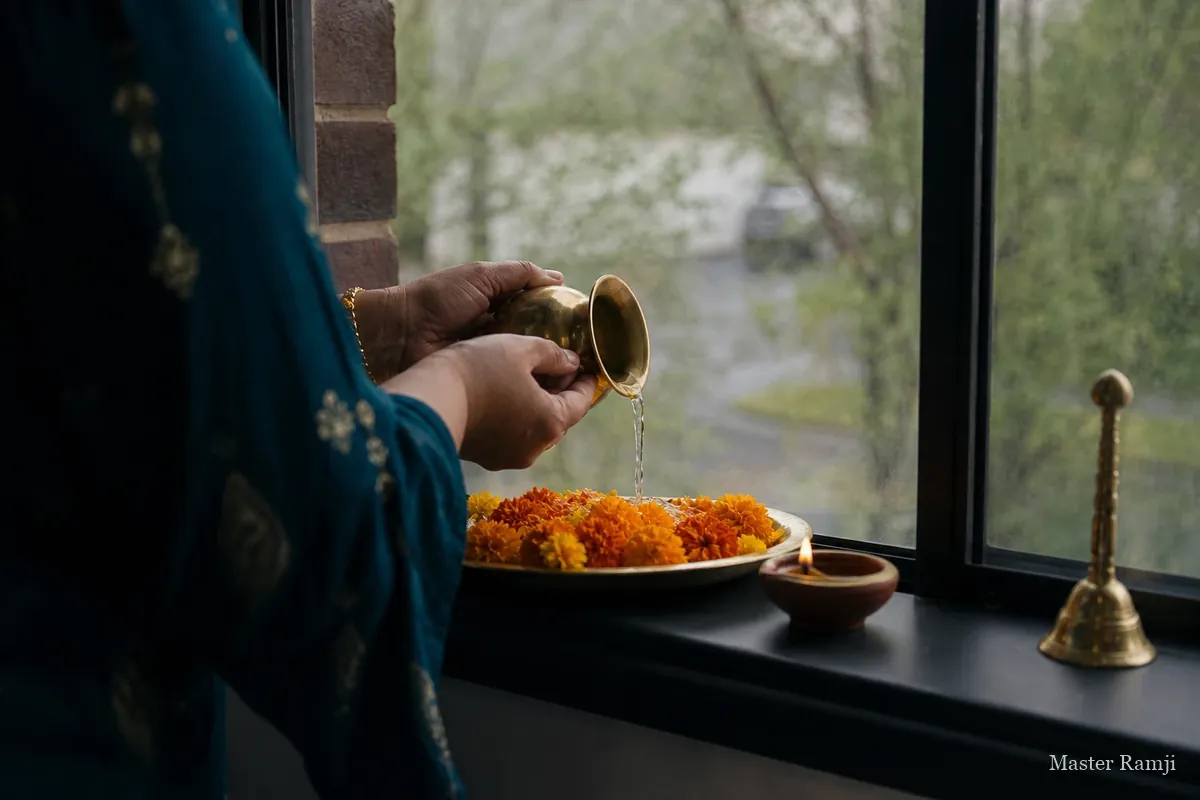
Tarpan is an offering of water, traditionally mixed with black sesame, poured while the ancestors are named. The water is the heart of it, not the river. A simple home version looks like this:
- Prepare a clean space. A quiet corner, a balcony or a spot in the garden. Some families face south during the rite, as Hindu tradition associates the southern direction with the ancestors.
- Gather a few things. A vessel of clean water, a pinch of black sesame, and a plate or bowl to receive the water. Some families use kusha grass if they have it.
- Say the names. Name the parents, grandparents and others you wish to remember. If names have been lost, describe them as your ancestors on your father's or mother's side.
- Pour slowly. Let the water flow into the plate as you name each person, with a prayer from your tradition.
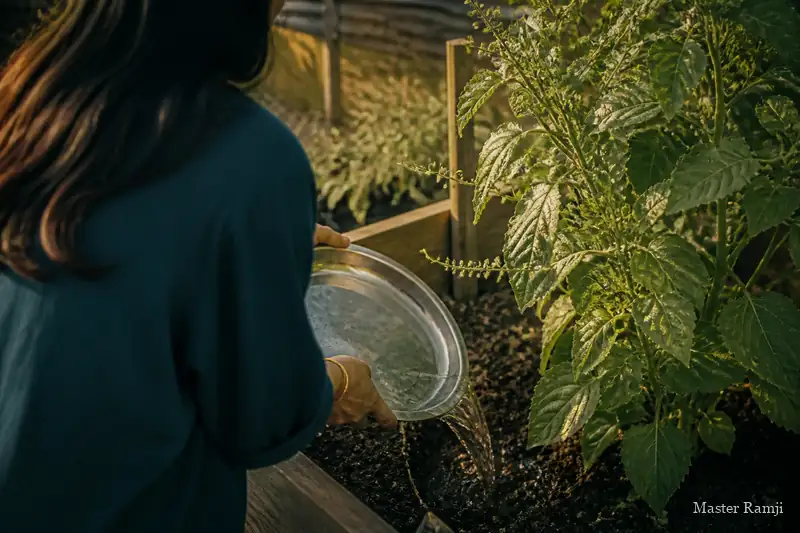
- Return the water to the earth. Many families pour it onto a garden bed or at the base of a plant afterwards.
Please don't tip offerings, food or ritual items into creeks, rivers, drains or the bay. Local waterways aren't the place for them. If immersion matters deeply to your family, ask your temple what it suggests.
What about food offerings and crows?
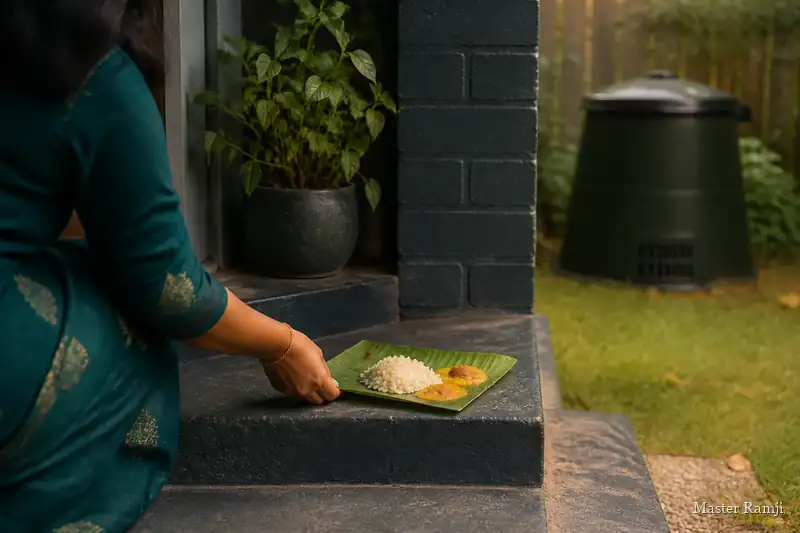
A meal cooked for the ancestors, often including dishes they loved, is central for many families. Traditionally a portion is set aside for crows, cows or dogs, and food is given to priests or people in need.
In Victoria, wildlife guidance generally discourages feeding wild birds. Many families now set a small portion outside briefly as a symbolic gesture, then bring it in and compost it. Others give the equivalent to a food charity in their ancestors' names. Both keep the meaning of the custom.
Who performs the rites?
Traditionally, the eldest son or another male relative from the father's side performs shraddha. Many families today also include daughters, daughters-in-law and grandchildren in the prayers, the cooking and the naming of ancestors. Customs differ, and some communities are more flexible than others. Follow your family's custom, and ask your priest if you are unsure. Remembering a parent with love doesn't depend on who holds the vessel.
If you would like the full rite performed for you, a puja honouring your ancestors can include sankalp, tarpan and pinda daan carried out on your behalf, with each step explained. You don't need a chart reading or a "dosh" to ask for it.
How do you fit it into a working week?
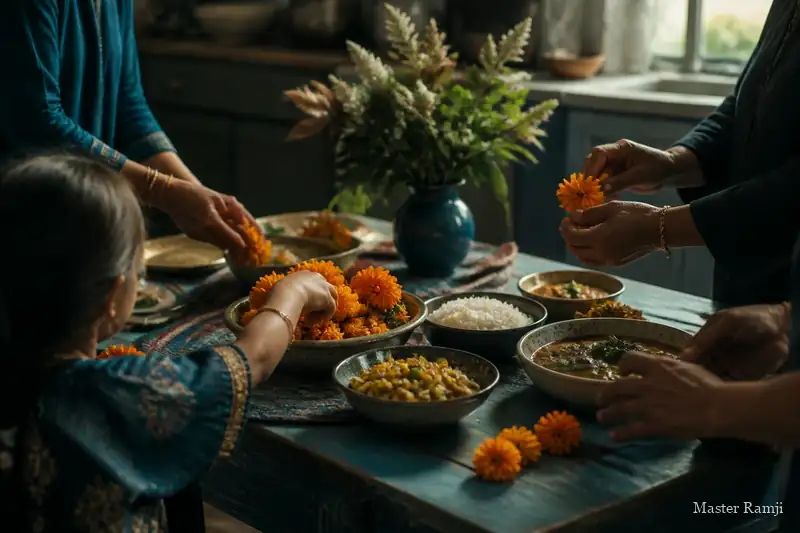
Tradition places shraddha around midday. Not everyone can manage that on a work day. Families adapt by doing a short tarpan in the morning, holding the meal in the evening, or keeping the main observance on the weekend or on the final new-moon day. Our guide to performing shraddha away from India looks at what families keep and what they change.
Many families also avoid weddings, housewarmings and big purchases during the fortnight. Others don't. It is a custom, not a rule everyone follows.
How do you keep lamps and incense safe?
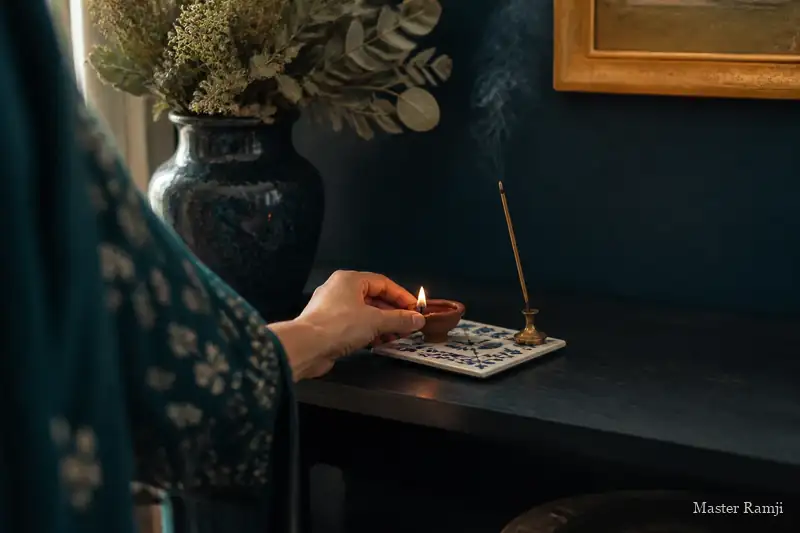
A diya or incense often accompanies the prayers. Keep flames on a stable, heat-proof surface, away from curtains and children, and never leave them burning unattended. CFA's advice on candles, oil burners and incense is worth a read before you begin.
What if remembering brings up grief?
For many people, especially those who couldn't travel home when a parent died, Pitru Paksha stirs up grief. That is natural. Saying the names aloud may be the first chance to mourn properly. healthdirect's guide to grief and loss explains when it may help to talk to a GP or counsellor, and Lifeline is on 13 11 14 at any hour.
The rite is an act of remembrance and faith. It cannot change events or fix problems, and nobody can honestly say your ancestors will harm you if a step is missed. Be wary of anyone who uses fear to sell a costly ritual.
Vijay Ramji is based in Ascot Vale. Sessions can be held by phone, WhatsApp or video, and any fee is stated before paid work begins. If you would like help planning a simple observance, get in touch.
Related service
Keep reading
Performing Shraddha Away From India
How families living overseas keep the annual shraddha ceremony: what they keep, what they adapt, sharing the rite with relatives in India, and caring for grief.
Read article →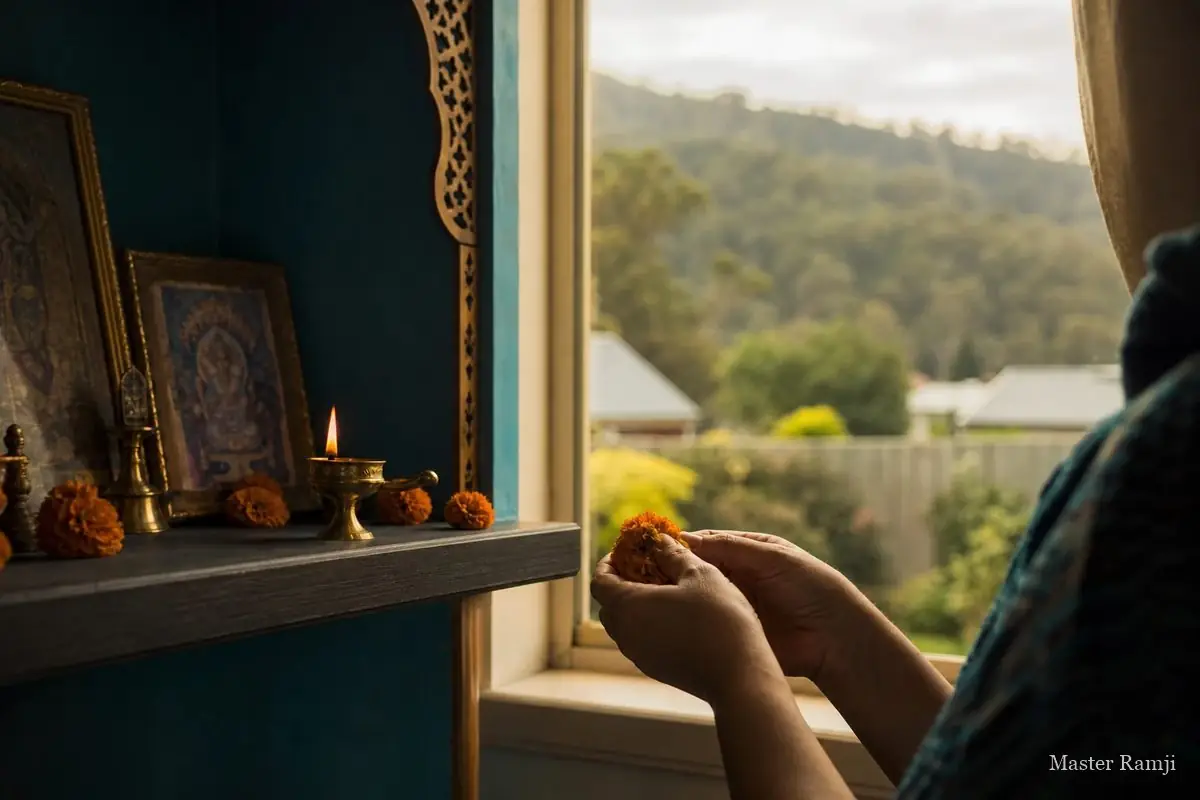
Can You Do a Havan at Home in Melbourne?
Havan at home safety for Melbourne families: setting up the kund, smoke alarms, ghee flare-ups, and the fire restrictions to check before any outdoor havan.
Read article →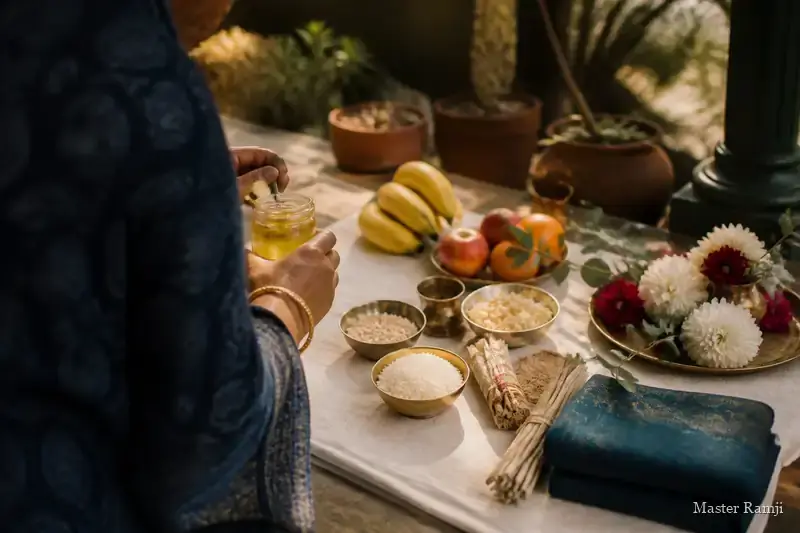
Havan Samagri: What Goes in and Where to Look
A havan samagri list explained: what each ingredient is, why it is offered, how to read a packet, and the biosecurity rules for bringing samagri into Australia.
Read article →Quick answers
What is Pitra dosh?
Pitra dosh is an astrological idea about ancestral karma in a birth chart. Here is what astrologers look for, and why it need not be a cause for fear.
Read answer →What is a puja?
A puja is a Hindu act of devotional worship, at home or in a temple, with offerings such as flowers, light and food. Here is what it usually involves.
Read answer →Talk to Vijay Ramji
Tell us what you are facing. If a reading is unlikely to help, you will be told that plainly.