
Performing Shraddha Away From India
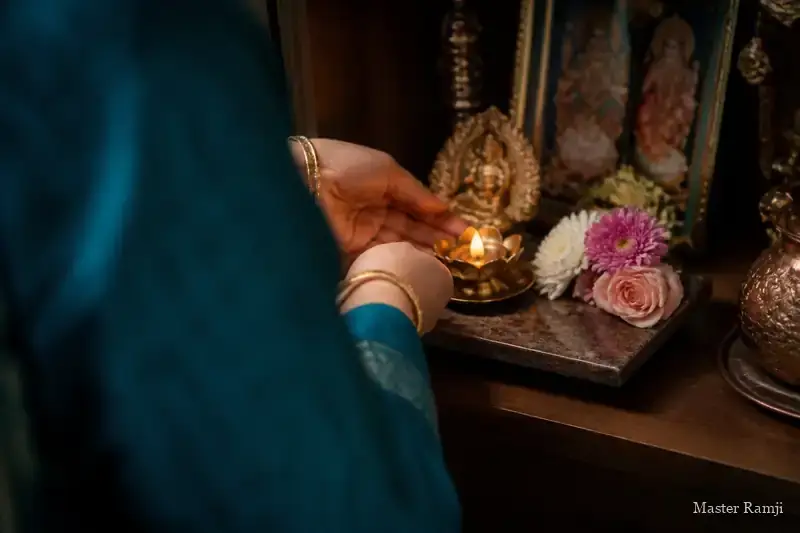
Families performing a shraddha ceremony overseas usually keep its heart: the lunar date, the names of the departed, the statement of intention, and food offered and given in their memory. They adapt the setting, the priest, who takes part and where offerings go. Many share the rite with relatives in India by video.
When a parent or grandparent dies, the yearly shraddha becomes one of the ways a family keeps their memory close. In India, it may follow a pattern your family has kept for generations, with the same priest, the same kitchen and the same relatives around you. In Australia, very little of that is in place.
This article looks at the annual rite from the point of view of families living far from home. It covers what most families hold on to, what they change, and how to share the day with relatives on the other side of the world.
Key takeaways
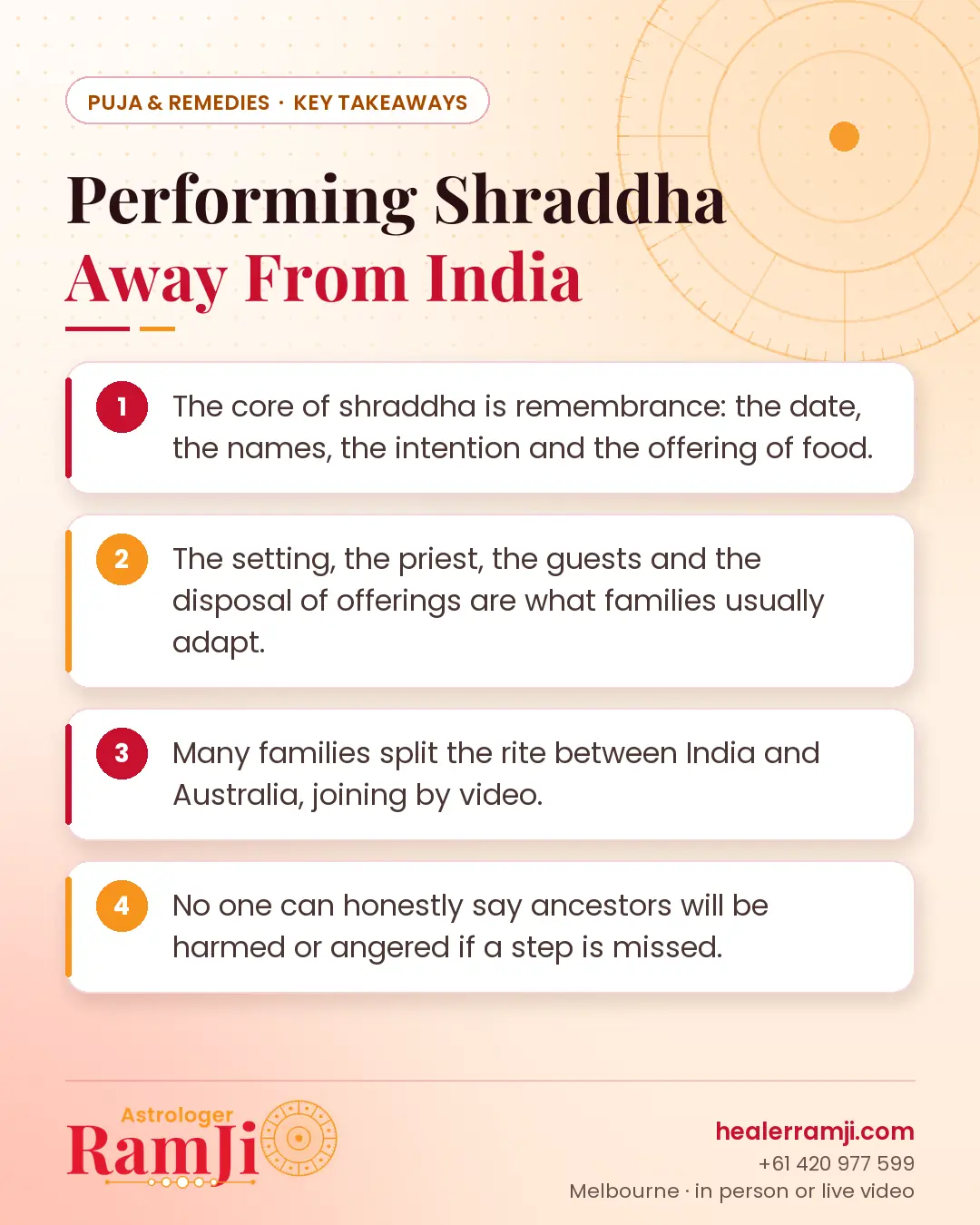
- The core of shraddha is remembrance: the date, the names, the intention and the offering of food.
- The setting, the priest, the guests and the disposal of offerings are what families usually adapt.
- Many families split the rite between India and Australia, joining by video.
- No one can honestly say ancestors will be harmed or angered if a step is missed.
What is shraddha?
Shraddha is a Hindu rite performed for one's departed ancestors. It is held on the anniversary of a death according to the Hindu lunar calendar, and also collectively during Pitru Paksha, the fortnight of the ancestors. Offerings, including balls of rice called pinda, are traditionally made to three generations, such as father, grandfather and great-grandfather, with a parallel line of women such as the mother and grandmothers. Which relatives are named varies by family. The person performing the rite, known as the karta, traditionally invites priests, feeds them and gives them a gift called dakshina.
Regional customs differ a great deal, in the order of steps, the mantras used and who takes part. If your family has its own way, that is the version that matters for you.
What do families usually keep?
Ask families living overseas what they hold on to, and the answers tend to be similar:
- The date. The anniversary follows the lunar day, or tithi, of the death. It falls on a different calendar date each year, so it needs checking annually.
- The names. Saying the names of those being remembered is the heart of the rite for many people.
- The intention. A sankalp, or statement of who the rite is for and why, opens the observance.
- The food. A meal is cooked in their memory, often including dishes they loved. Many families keep it simple and vegetarian, and some leave out onion and garlic. Customs vary.
- The giving. Food or a gift is given in the name of the departed.
How do you work out the date in Australia?
Because a tithi begins and ends at different clock times in different places, the date in Melbourne may not match the one your relatives in India see. Families differ on whether to follow a calendar calculated for where they now live, or for the family's home town. Ask your family priest or temple which they follow, and choose one approach. Our guide to why festival dates differ in Australia explains the reasons.
If the day falls midweek, many families hold a short observance on the day itself and the meal on the nearest weekend. Others take the day off work. Do what is possible without guilt.
How can a family share the rite across two countries?
This is one of the biggest adaptations, and it works well for many families. A common arrangement looks like this:
- One sibling holds the main rite in India, often with the family priest, at the family home or a traditional site.
- Relatives in Australia join by video for the sankalp and the naming, and offer water and prayer at home at the same time.
- Everyone cooks or gives in their own city, so each household takes part in some way.
Plan for the time difference. India is four and a half hours behind Melbourne during standard time, and five and a half hours behind during daylight saving. A midday rite in India falls in the late afternoon or early evening here. Agree the time in advance, and test the video link the day before.
If you are arranging a rite to be performed on your behalf, our guide to how a puja performed on your behalf works explains the sankalp and what any provider should show you.
What else do families adapt?
The priest
Some families ask a local temple priest to perform the rite, either at the temple or at home. Others are guided by a priest in India over video. Services differ from temple to temple, so ask yours whether it offers ancestor rites, and what the fee covers, before you agree.
Feeding the priests
Where no priest can come, many families invite elders from their community for the meal instead. Others give the cost of the meal to a food charity in the ancestor's name. The intention of feeding others is kept.
The pinda and other offerings
In India, offerings may go to a river, to cows or to crows. In Australia, please keep offerings out of creeks, rivers, drains and the bay. Many families place them in the garden or compost them with respect. Our guide to observing Pitru Paksha in Australia covers tarpan at home and the custom of setting food aside for crows.
Pilgrimage rites
Some families feel a rite at a sacred site such as Gaya is important. That may be arranged later, or by relatives in India. Doing the annual rite simply at home in the meantime is not a lesser form of care.
The children
Children raised here may not know what the day means. Let them say a grandparent's name, help cook a favourite dish, or hear a story about the person. That is how the meaning carries on.
What if you couldn't be there when they died?
For many migrants, this is the hardest part. Visas, travel costs, work or a pandemic may have kept you away from the funeral and the first rites. The annual shraddha can become the first real chance to mourn. That is natural, and it can bring up grief you didn't expect.
healthdirect's guide to grief and loss suggests seeing your doctor if a major loss is hard to cope with, and lists counselling services. If the day leaves you struggling, Lifeline is on 13 11 14 at any hour.
What if you can't do all of it?
Then do what you can. Light a lamp, say the names, cook one dish and give something in their memory. Nobody can honestly say your ancestors will harm you or your children because a step was missed. Be wary of anyone who uses that fear to sell a costly rite.
If you would like the full rite performed with each step explained, a puja honouring your ancestors can include sankalp, tarpan and pinda daan carried out on your behalf. Sessions to plan it can be held by phone, WhatsApp or video, and any fee is stated before paid work begins. If you would like help planning this year's observance, get in touch.
Related service
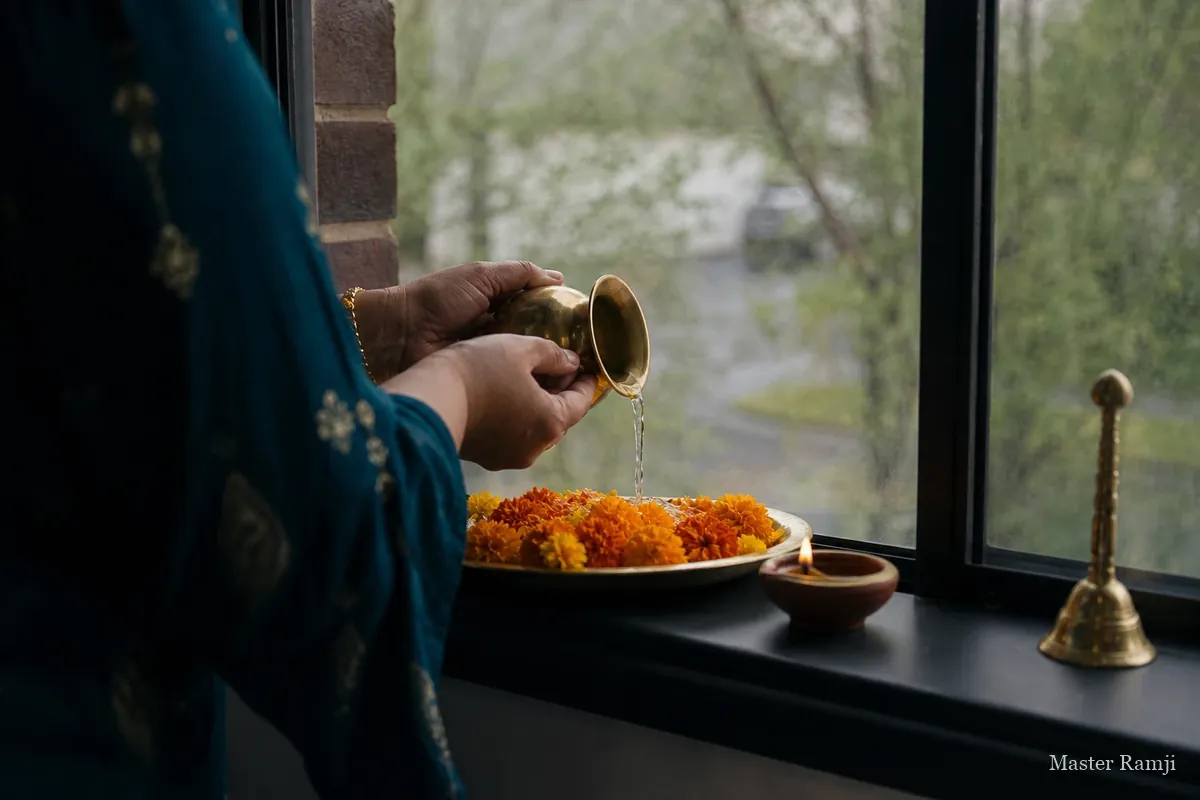
Keep reading
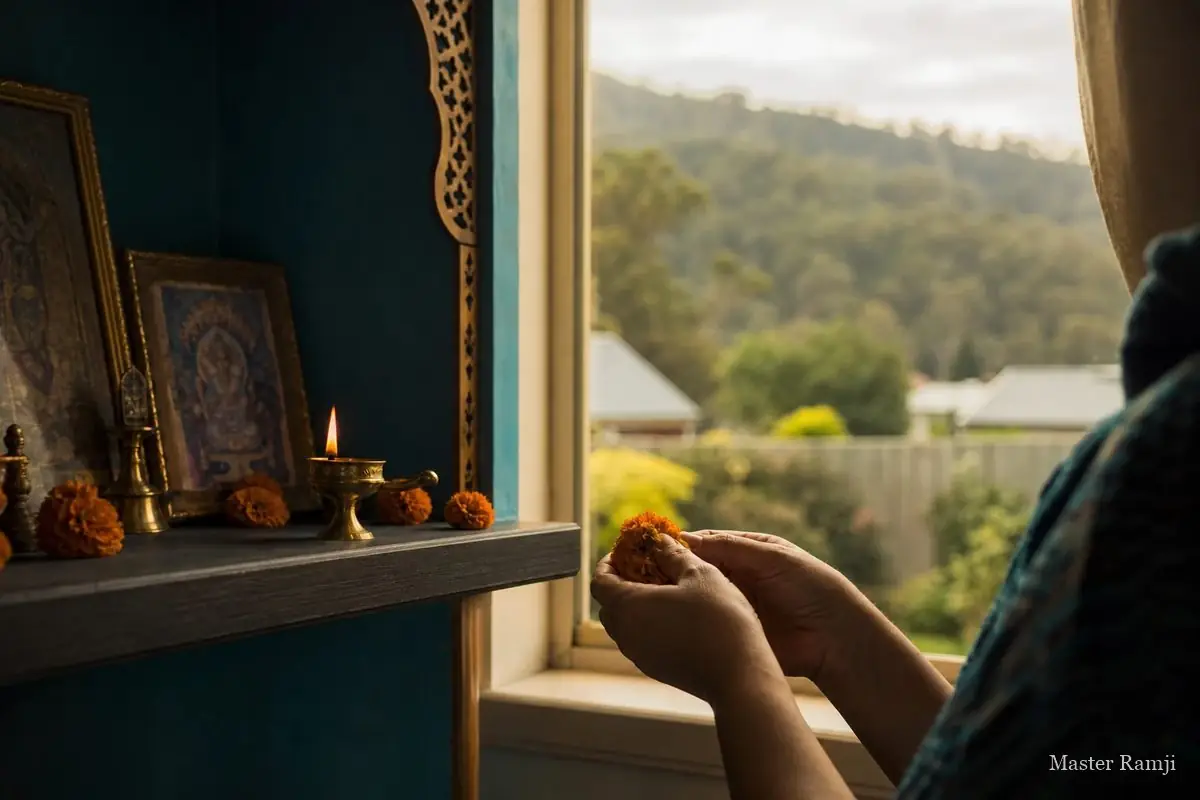
Can You Do a Havan at Home in Melbourne?
Havan at home safety for Melbourne families: setting up the kund, smoke alarms, ghee flare-ups, and the fire restrictions to check before any outdoor havan.
Read article →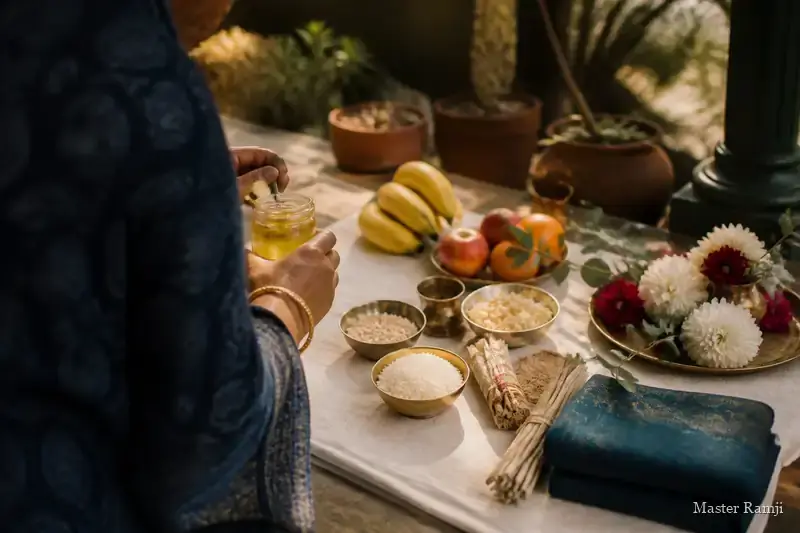
Havan Samagri: What Goes in and Where to Look
A havan samagri list explained: what each ingredient is, why it is offered, how to read a packet, and the biosecurity rules for bringing samagri into Australia.
Read article →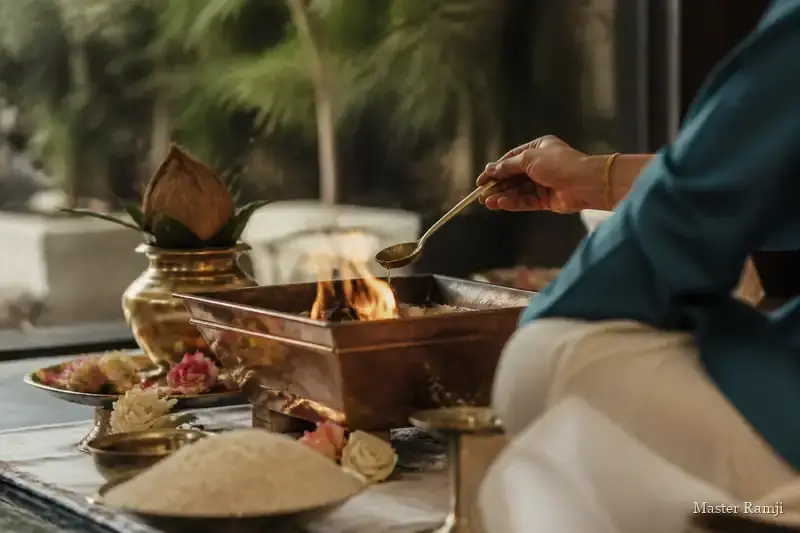
What a Havan Means
What is the meaning of havan? The fire ritual explained for second-generation families: why fire, what svaha means, what the offerings stand for, and how to explain it.
Read article →Quick answers
What is Pitra dosh?
Pitra dosh is an astrological idea about ancestral karma in a birth chart. Here is what astrologers look for, and why it need not be a cause for fear.
Read answer →What is a puja?
A puja is a Hindu act of devotional worship, at home or in a temple, with offerings such as flowers, light and food. Here is what it usually involves.
Read answer →Talk to Vijay Ramji
Tell us what you are facing. If a reading is unlikely to help, you will be told that plainly.