
How a Puja Performed on Your Behalf Works
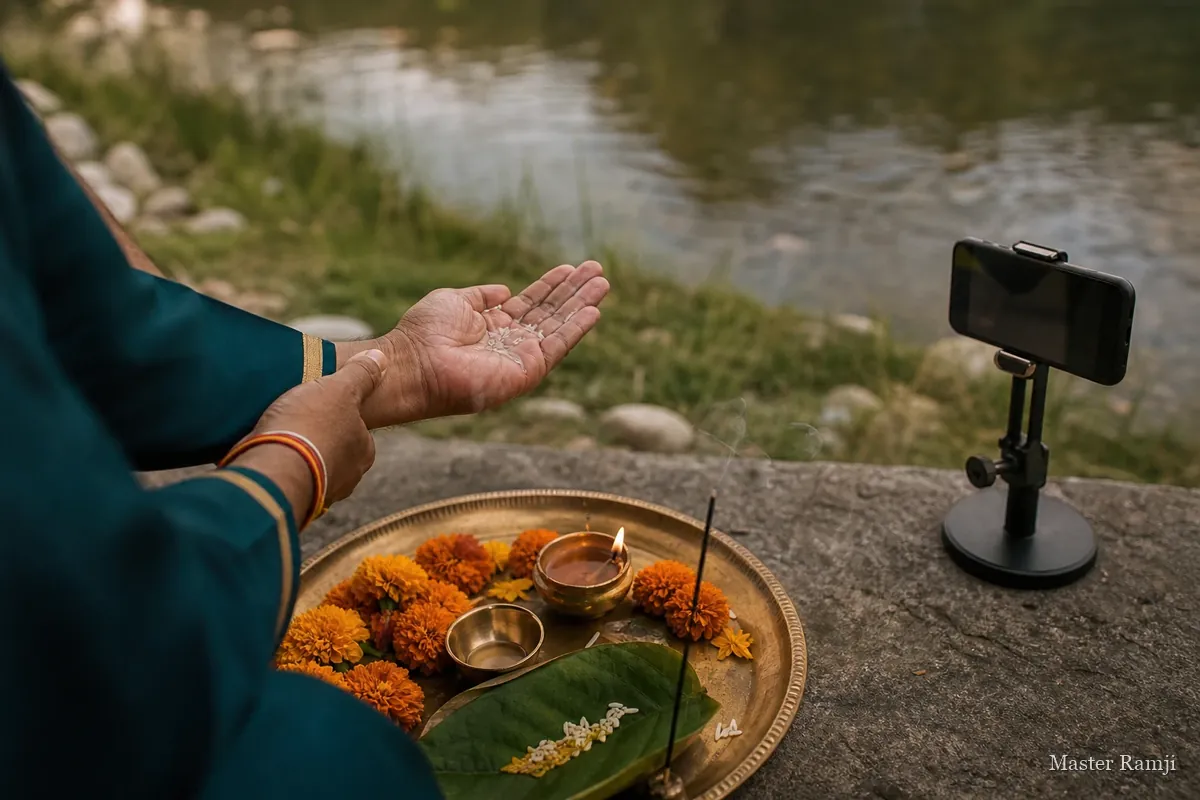
A remote puja is usually performed by a priest in your name. The priest states your name, gotra, place and purpose in a sankalp, then completes the rite while you join by video or receive a record. Belief holds that intent carries it. Ask what you will be shown, because distance makes checking harder.
You might live in Melton while the family priest is in Varanasi. You might rent an apartment that can't host a fire, or work a roster that doesn't line up with an auspicious time. For many families in Australia, a puja performed on their behalf is the practical choice.
So how does remote puja work? The answer lies mostly in one short part of the rite, the sankalp. This guide explains what it contains, what details you need to give and what you should expect to see. That last part matters, because you can't check much from a long way away.
Key takeaways
- The sankalp is the statement that links the rite to you. It usually names you, your gotra, the place and the purpose.
- Not knowing your gotra is a common situation. It shouldn't be treated as a problem or a reason to charge more.
- Before you pay, ask for the rite, the priest, the place, the date and what you will be shown.
- Traditions differ on whether a rite can be done without you. Either way, it is a matter of faith and not a proven process.
How can someone else perform a puja for you?
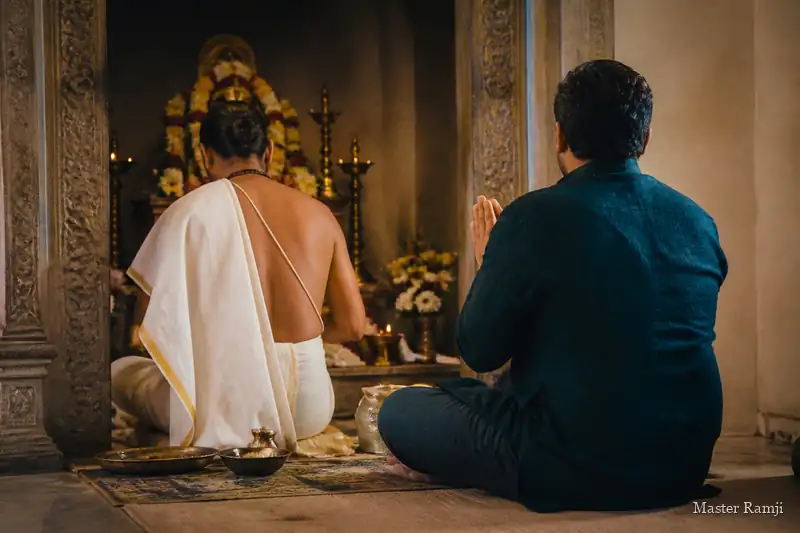
Hindu ritual has long drawn a line between the person who conducts a rite and the person it is for. A priest, or purohit, performs the actions and recites the mantras. The person the rite is for is called the yajman or karta. Even when you are in the room, the priest does most of the work.
A remote puja stretches that idea across a distance. Families have long asked a temple to offer an archana in the name of a relative who lives elsewhere, and video has simply made it easier to watch.
Not everyone accepts this equally. Some priests and families feel the person should be present, or that a relative should sit in their place, while others are comfortable with a sankalp alone. If your family has a view, it's reasonable to honour it. Our short answer on whether a puja can be done without you covers the basics.
What is the sankalp, and what does it say?
The sankalp is a formal statement of intent, made at the start. It answers a few simple questions: who, where, when and why. A typical version includes:
- The time. The date according to the Hindu calendar, such as the month, tithi and day of the week.
- The place. Usually where the rite is being held, and some priests also name where you live.
- The person. Your name and gotra, and sometimes your birth star.
- The purpose. A short phrase describing what the rite is for, such as peace in the home.
Wording varies by region and by priest. Because this is the moment that connects the rite to you, it's fair to ask that your name be said clearly and that you see or hear it if possible.
What details should you give, and what should you hold back?
Most priests need only a few things:
- The full names of those included, spelled as you would like them said
- Your gotra, if you know it
- Your birth star or rashi, if the tradition uses it
- Your birth details, if the rite is linked to a chart reading
- The purpose, in a sentence
No one needs your passport, Medicare number, online banking login or one-time passcode to perform a puja. If you are asked for these, stop. You also don't need to share a private family problem in detail. A general purpose is enough.
What if you don't know your gotra?
This is very common, particularly for people who grew up overseas or lost touch with older relatives. A gotra is a lineage name that is usually traced through the father's side. Start by asking parents, grandparents, uncles and aunts. An old wedding invitation or family priest may also have it.
If that doesn't help, tell the priest. Many will simply proceed with your name, and some use Kashyapa as a general gotra, although this is a convention and there is no single rule. Families also differ on whether a married woman uses her husband's gotra. Be wary if you are told that a missing gotra is a serious fault that needs an extra paid rite to correct.
How do time zones and timing work?
If the rite is in India, Melbourne is four and a half hours ahead during standard time and five and a half hours ahead during daylight saving. A morning rite there can fall during your working day here. Always confirm the start in Melbourne time.
Timing also raises a tradition question. Tithis and auspicious times are worked out for a location, so a time chosen for India may not match one chosen for Melbourne. Ask which location the priest is using. Our guide to why festival dates differ in Australia explains why this happens.

What should you be shown?
Distance is where the honest and the dishonest look alike, so ask for specifics. A reasonable provider should be able to give you the following:
- Before you pay: the name of the rite, who will perform it, where and when, how long it should take, what is included and the full fee.
- During the rite: a live video link where possible, or a recording that includes your name in the sankalp.
- Afterwards: a short written note of what was done, including the date and the place.
Recordings have limits. A clip can show a rite took place, but it can't prove that a large mantra count was completed. If a quote relies on a high count, ask how many priests are involved and over how many sittings.
Prasad by post is a nice gesture but not essential. Food, seeds and plant material sent from overseas can be stopped under Australian biosecurity rules, so check the federal agriculture department's mail guidance before you rely on it.
What are the warning signs?
- A video or photo that could belong to anyone, with no mention of your name
- A claim that something went wrong in the rite and more money is needed to fix it
- Pressure to pay today because your planets are dangerous
- A promise of a specific result, such as a visa, a job or a partner's return
- No clear answer about who the priest is or where the rite takes place
For more on money, see how to judge a puja quote. If you have paid and feel misled, Consumer Affairs Victoria can explain your options.
What can you do on your side?
You don't have to be a spectator. Many people sit quietly at the same time, light a lamp, or say a simple prayer at home, even if they watch the recording later. Some choose to give to charity on the day. Doing this is entirely optional, but it can make the rite feel more like your own.
Keep your expectations honest as well. A rite on your behalf is an act of faith. It doesn't replace a doctor, lawyer or financial adviser, and no provider can promise what happens next.
Our graha shanti puja and havan on your behalf pages explain what is performed and how you can take part from a distance. Sessions can be held by phone, WhatsApp or video, and fees are stated before any paid work. To ask a question first, get in touch.
Related service
Keep reading
What Should a Puja Cost?
What affects the cost of a puja, the questions to ask before you pay, and the signs that a quote is built on fear rather than on the work involved.
Read article →
Pitra Dosh Explained Without the Fear
What pitra dosh means, how astrologers say they see it in a chart, and what it does not mean. A calm guide for anyone who has been told they have it.
Read article →
Observing Pitru Paksha in Australia
How families in Australia observe Pitru Paksha away from sacred rivers: tarpan at home, choosing the day, food offerings, safe lamps and remembering with care.
Read article →Quick answers
What is a puja?
A puja is a Hindu act of devotional worship, at home or in a temple, with offerings such as flowers, light and food. Here is what it usually involves.
Read answer →Can a puja be done without me being there?
Yes, in many traditions a priest can perform a puja on your behalf using a sankalp. Here is what that means and what to ask before you pay for one.
Read answer →Talk to Vijay Ramji
Tell us what you are facing. If a reading is unlikely to help, you will be told that plainly.