
Outdoor Havan in Melton: Check the Fire Danger First
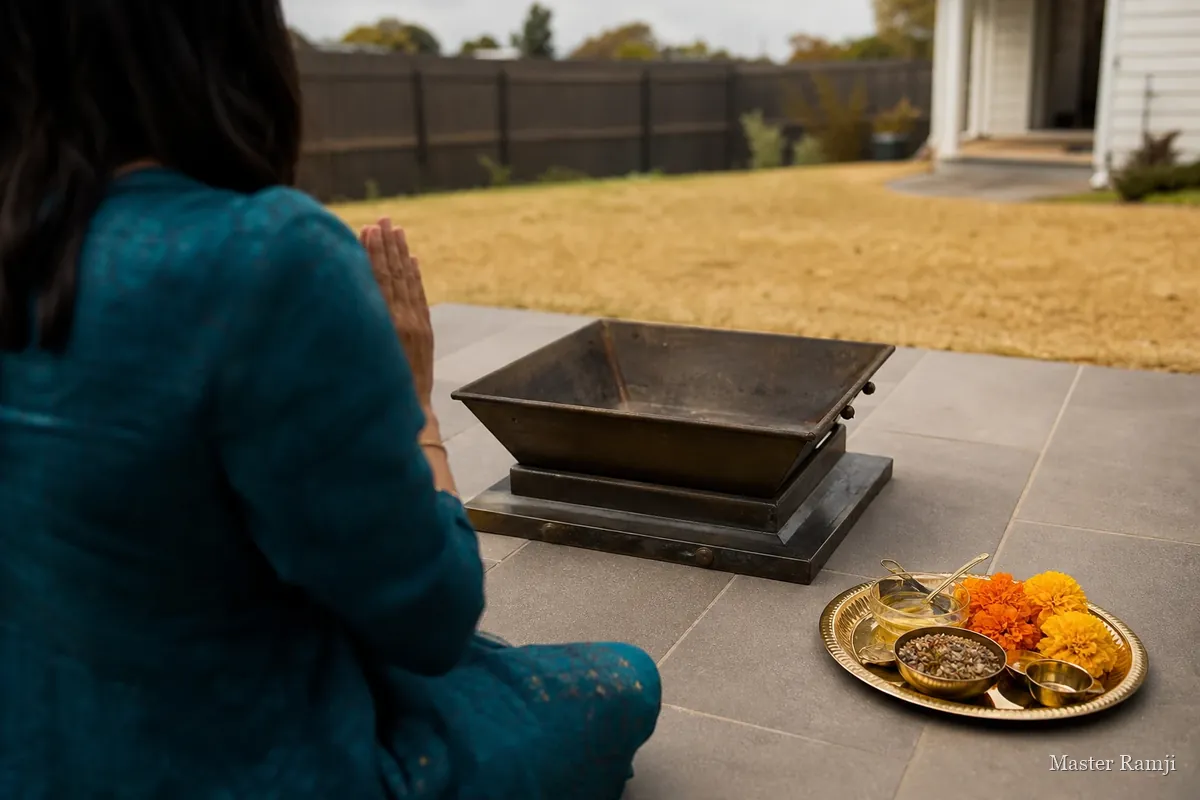
An outdoor havan in Melton is a fire in the open air, so check fire rules first. Don't light one on a Total Fire Ban day without a permit. During the Fire Danger Period, ask Melton City Council or CFA before lighting anything. If unsure, change the date, use a temple or arrange a havan elsewhere.
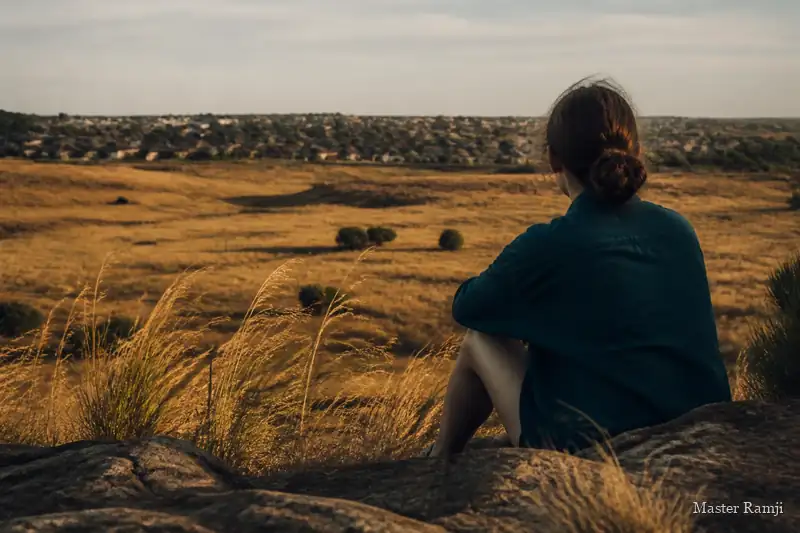
Melton sits about 36 kilometres north-west of Melbourne, on what Victorian Places describes as undulating basaltic and alluvial plains. Its suburbs include Kurunjang, Melton South, Brookfield and Melton West, and Toolern Creek runs through linear parks. With a decent backyard, it is natural to think of holding a havan outdoors. But on the city's fringe, dry grass may not be far from your fence.
A havan is a sacred fire, but the law sees a fire. This page explains the rules to check, the questions to ask, and what to do if the answer is no. It is general information, not legal advice, and restrictions change, so confirm your own situation with the authorities.
Key takeaways
- Total Fire Ban days and the Fire Danger Period are different things, and both can affect a havan.
- A pergola, carport or open-sided patio can still count as the open air.
- CFA's public guidance doesn't list backyard havans, so ask before assuming an exemption applies.
- The rite can usually move. A later date, a temple or a smaller practice can serve the same purpose.
What is the difference between a Total Fire Ban and the Fire Danger Period?
The Fire Danger Period is set by CFA for each municipality ahead of the warmer months. It runs from a start date to an end date, often for weeks or months, and those dates change each season. Don't rely on last year's dates. CFA publishes the current ones.
A Total Fire Ban is declared by CFA's Chief Officer for particular days when fire danger is high. CFA says it can be declared even when the rating has not reached Extreme. It applies to fire weather districts, and CFA lists Melton in the Central district. CFA warns that breaching a ban can bring heavy penalties, including large fines and even imprisonment.
Can you hold an outdoor havan on a Total Fire Ban day?
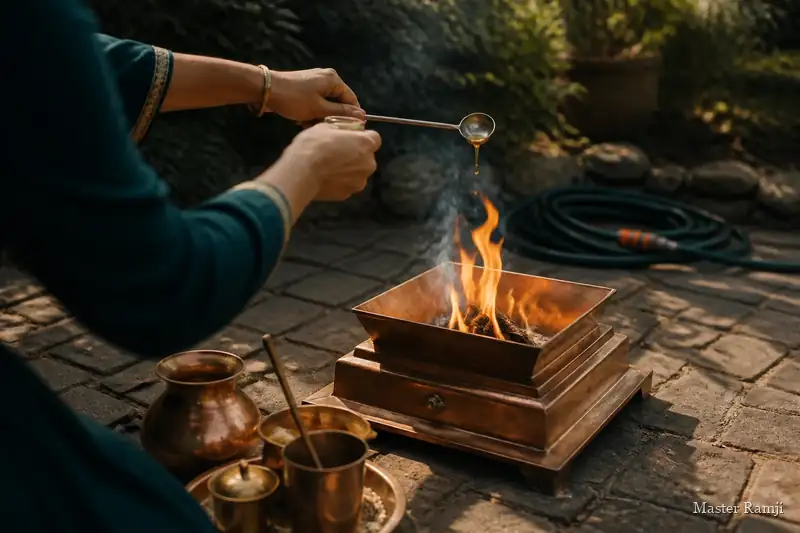
Plan on no. CFA's "Can I or can't I?" page says campfires and fires for warmth or comfort are banned on these days, including fire pits, braziers and chimineas. Solid fuel cooking in the open air is also banned. A wood and ghee fire in a metal kund is hard to see as anything other than an open fire. Existing fires, even those allowed under a Fire Danger Period permit, must be completely out before the ban begins, and those permits are suspended for the day.
There is one narrow exception to know about. CFA's Total Fire Ban permits page includes "some religious or cultural ceremonies and activities". Permits are issued only if the granting officer agrees the use of fire is necessary. Applying doesn't guarantee a permit, and any permit can be suspended or revoked. A family havan that could simply move to another day may struggle to meet that test.
What about the rest of the Fire Danger Period?
Melton City Council's fire prevention page says property owners are prohibited from lighting fires without a permit during the Fire Danger Period. CFA's page sets out conditions for certain fires during this time, such as a fire for warmth or comfort in a fire pit, brazier or chiminea. Neither page mentions a havan, so don't assume that those conditions cover your ceremony.
Ask first. You can ring the council's Fire Prevention Officer on 03 9747 7200, or check through Fire Permits Victoria, which handles applications and notifications online. Describe exactly what you plan: the size of the kund, the fuel, the location, the number of guests and how long it will burn. Ask for the answer in writing if you can.
The council also notes that no burning off is permitted on properties under 2 hectares. That rule is about burning off, not ceremonies, but it shows how limited fire is on suburban blocks.
Does a roof or a patio make it indoors?
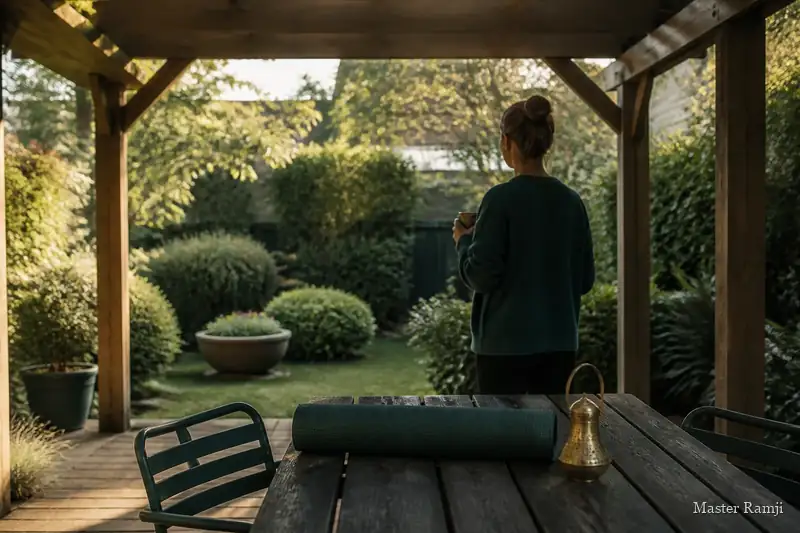
Not by itself. CFA defines the open air as any place that isn't inside a permanent structure with a roof and fully enclosed walls. So a pergola, carport, verandah or garage with an open door is unlikely to count as indoors. If in doubt, ask the same officer.
A fully enclosed room falls outside that definition, but it brings its own risks. Smoke, flame and hot embers don't suit every home, and smoke alarms may go off. Read our guide on whether a havan at home is safe before you try it. Renters and owners corporation members should also check their own rules.
What if the season has ended?
Outside the Fire Danger Period, and on a day with no ban, you still have work to do. Melton City Council's permit listing on the Australian Business Licence and Information Service says you might need a permit to burn any material or light a fire, so check with the council's Local Laws team.
If the council says you can go ahead, CFA's fire pit conditions make a sensible minimum, even when they aren't legally required:
- Wind of no more than 10 km/h, so leaves and small twigs are not in constant motion.
- Three metres clear around and above the fire, with nothing that can burn.
- A fire of no more than 1 square metre, using only as much fuel as you need.
- Someone able to put it out staying with the fire at all times.
- The fire completely out before anyone leaves it.
A few practical additions. Keep a hose connected and ready. Pour ghee in small amounts with a long spoon, as it can flare. Tie back scarves, and keep children well back. Tell your neighbours beforehand, as smoke can worry people. Soak the ashes, and never put warm ash in a bin.
What are the safer alternatives?
A havan's meaning doesn't rest on your backyard. Priests differ on how much a rite can be adapted, so ask yours. What a havan means sets out the background. Some options:
- Change the date. Ask your priest about a suitable day in a cooler month. Many ceremonies don't depend on a single date.
- Use a temple. A temple with its own facilities and insurance may already have a process for fire rites. Ask how it handles Total Fire Ban days.
- Arrange a havan on your behalf. The rite takes place elsewhere while your family joins in prayer at home.
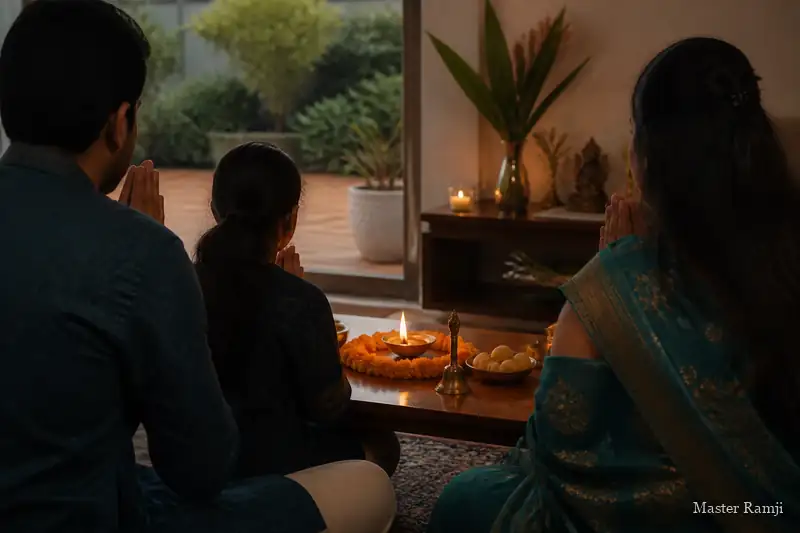
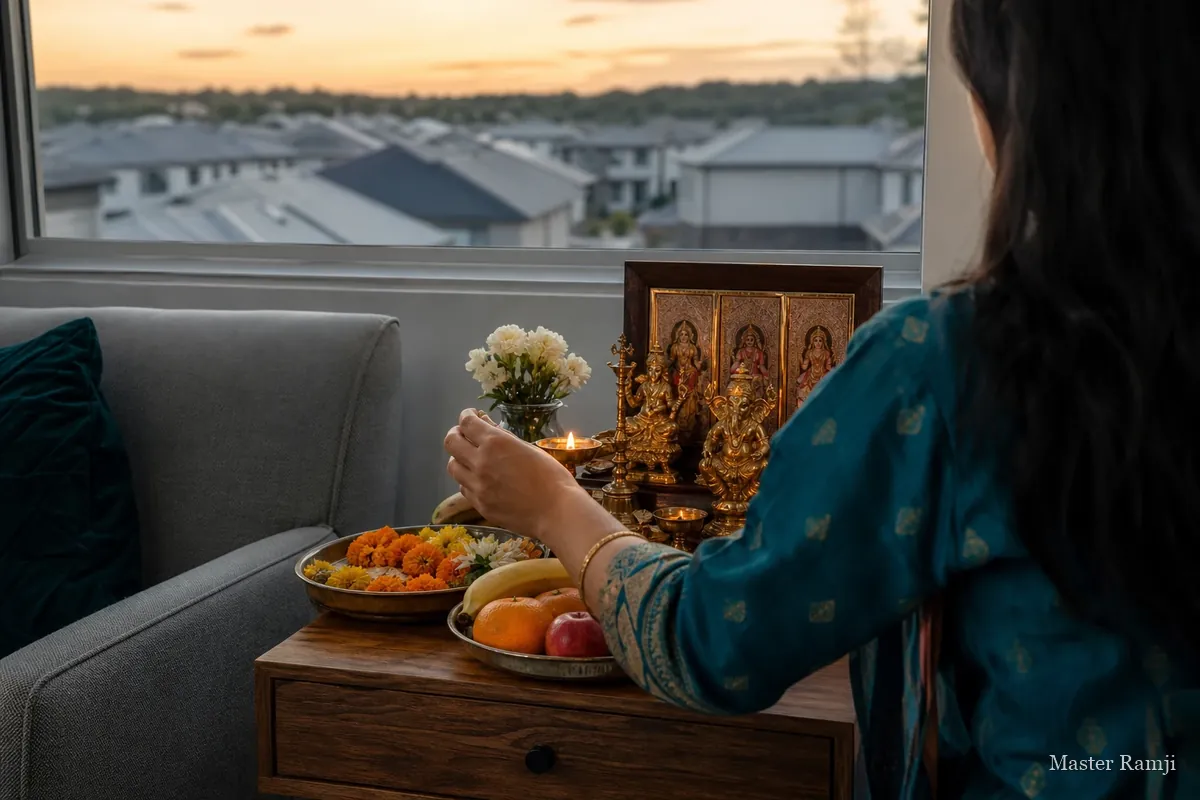
- Hold a puja without the fire. Lamp, flowers, mantra and prasad at home are a complete form of worship for many families. CFA has separate guidance on candle and incense safety indoors.
Festivals need particular care. Holika Dahan usually falls in February or March, when restrictions may still be in force. Check well ahead.
What should you do on the day?
Check the CFA website or VicEmergency that morning, as ratings and bans do change. The VicEmergency Hotline is 1800 226 226. If conditions look wrong, stop, even with guests arriving. No priest worth trusting would want your street at risk.
If a fire escapes, call 000 straight away. Don't stay to fight it. The council's advice for grass fires is to walk at least two streets back from the fire.
How can we help you plan?
Fire rules are for CFA and the council to decide. For the spiritual side, start with a short explanation of what a havan is. We can talk through timing and alternatives by phone, WhatsApp or video, and fees are stated before paid work. Read about our work in Melbourne's western suburbs, or get in touch.
Related service
Keep reading
Observing Durga Puja Around Rockbank
Living in Rockbank or nearby in Melton? Where to find a Durga temple, how community Durga Puja is usually organised, and how to keep the festival at home.
Read article →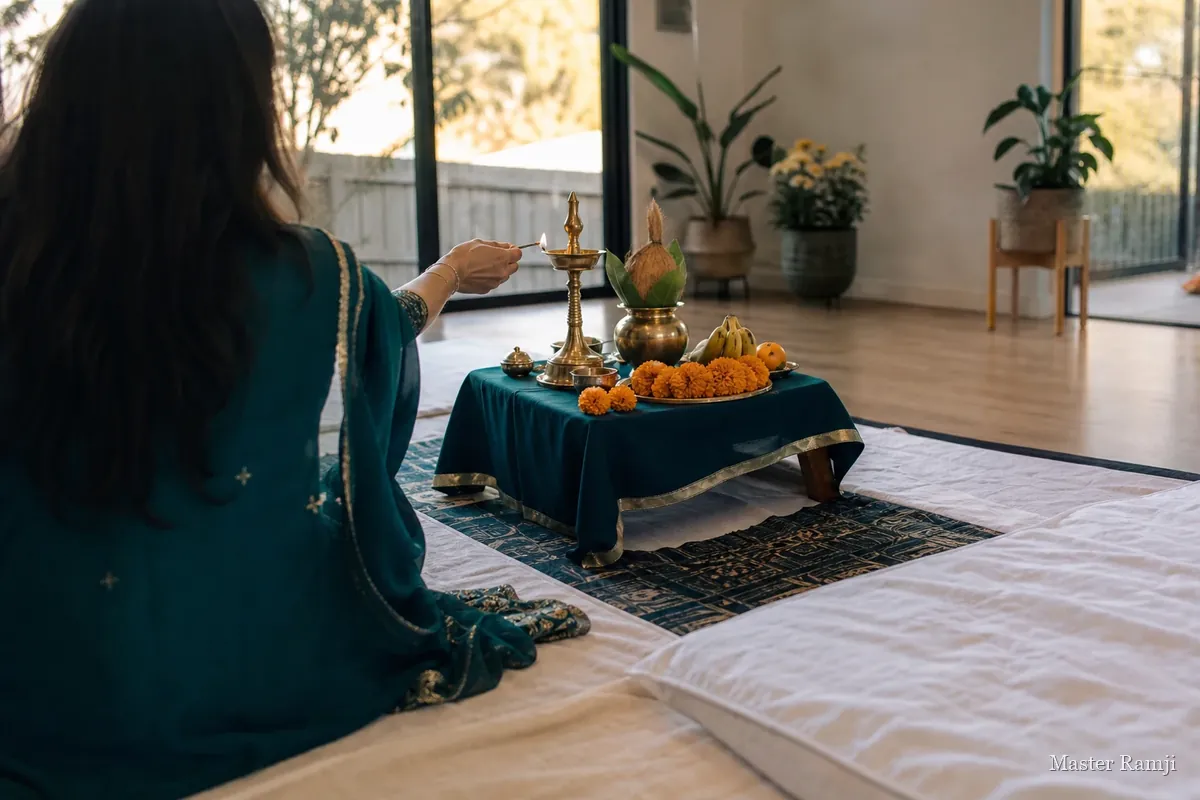
Hosting a Satyanarayan Katha in Niddrie
Planning a Satyanarayan katha in a small Niddrie home? How to set up the room, manage guest numbers, and make and serve prasad safely on the day.
Read article →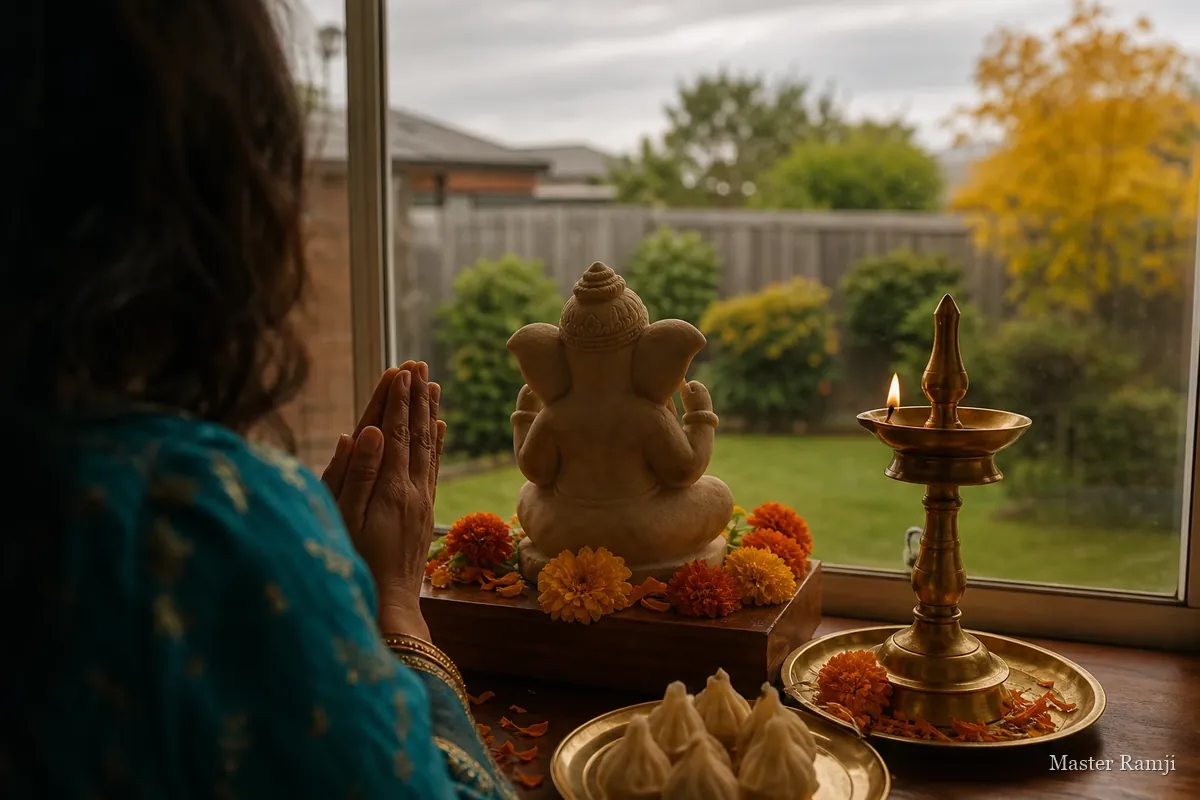
Ganesh Chaturthi at Home in Melbourne's North
Celebrating Ganesh Chaturthi in Thomastown or Melbourne's north? Choosing a clay murti, doing visarjan at home in a bucket, and keeping offerings out of creeks.
Read article →More from Melbourne's Western Suburbs
Observing Durga Puja Around Rockbank
Living in Rockbank or nearby in Melton? Where to find a Durga temple, how community Durga Puja is usually organised, and how to keep the festival at home.
Read article →
Arranged Introductions in Wyndham: Keeping It Private
Making arranged introductions in Wyndham Vale? How to protect both families' privacy, share bio-data with permission, and make sure anyone can say no.
Read article →
Two-Income Homes in Williams Landing: Timing Big Decisions
Two incomes, one mortgage, big choices. How Williams Landing couples can use astrology for reflection, while money decisions stay with a licensed adviser.
Read article →Local pages
Astrologer for Footscray
Live in Footscray? Vijay Ramji is based in Ascot Vale, with sessions by phone, WhatsApp or video. Questions that fit apartments, study, shops and mixed families.
View area →
Astrologer for Sunshine
In Sunshine, Victoria? Vijay Ramji is based in Ascot Vale, with sessions by phone, WhatsApp or video. Questions about older homes, changing work and family.
View area →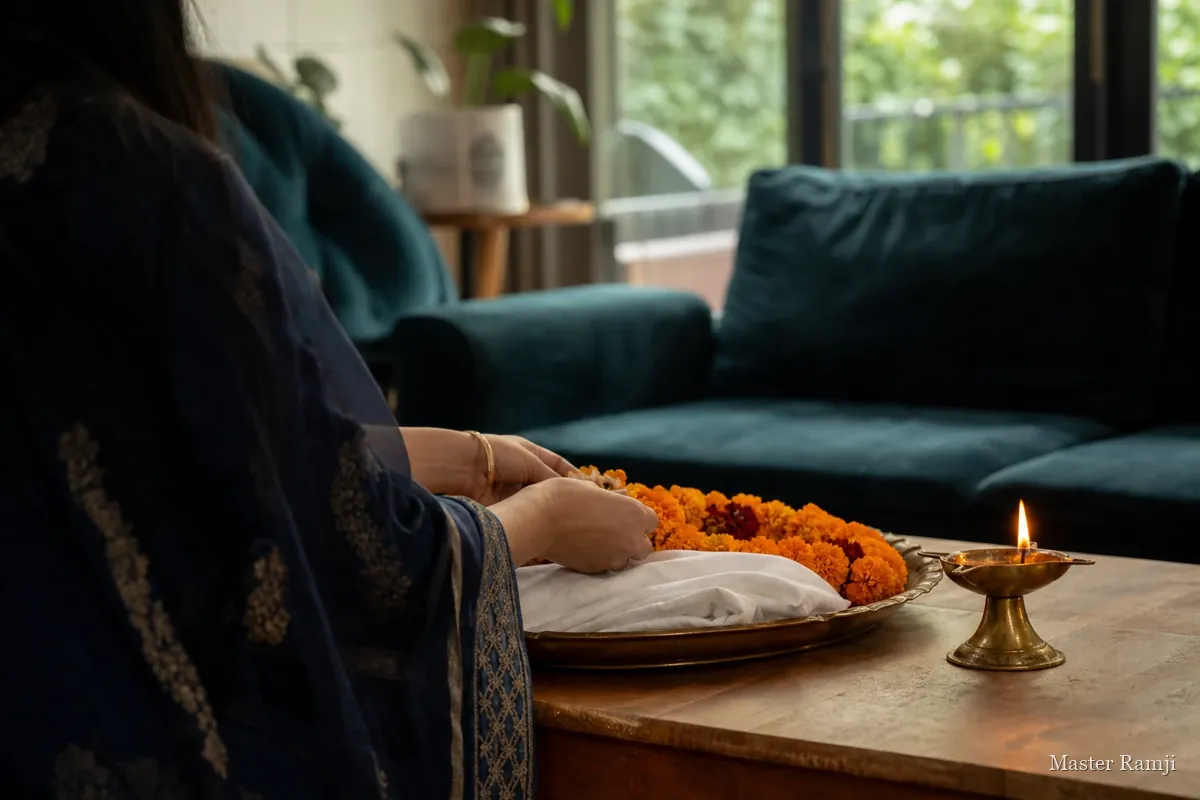
Astrologer for Werribee
Live in Werribee? Vijay Ramji is based in Ascot Vale, with kundli readings by phone, WhatsApp or video. Questions for long-settled families and new arrivals.
View area →Quick answers
What is a havan?
A havan is a Hindu fire ritual with offerings such as ghee, grains and herbs, usually led by a priest. Here is what happens and what to check for safety.
Read answer →What is a puja?
A puja is a Hindu act of devotional worship, at home or in a temple, with offerings such as flowers, light and food. Here is what it usually involves.
Read answer →Talk to Vijay Ramji
Tell us what you are facing. If a reading is unlikely to help, you will be told that plainly.