
Visiting a Navagraha Shrine: A Beginner's Guide
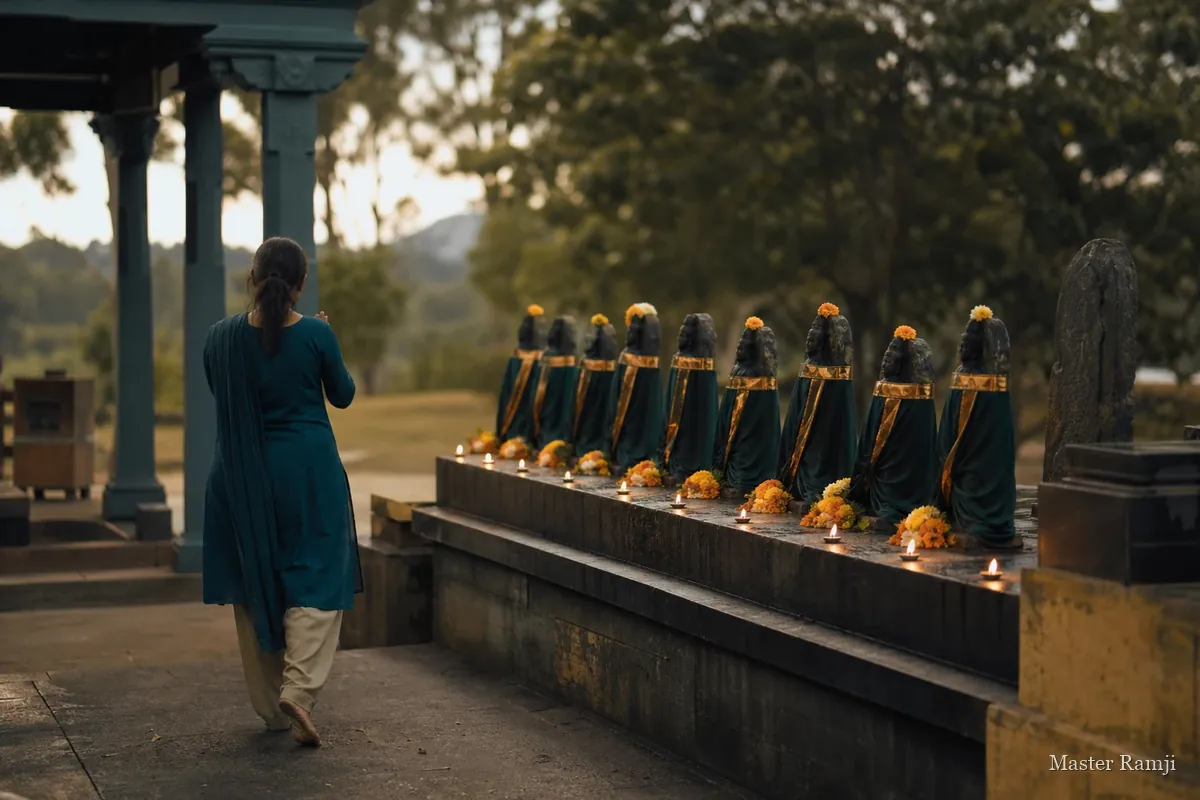
At a Navagraha shrine, visit the main deity first if your temple follows that custom, then walk slowly clockwise around the nine images, commonly for nine rounds, with a simple prayer or the graha names. Customs differ, so follow the temple's signs and priests, and ask before touching images or leaving offerings.
You don't need to know Sanskrit, have your chart read or come from a family that visits temples often to stand at a Navagraha shrine. Plenty of people raised in Australia walk past one for years without knowing what to do, and they feel awkward asking.
This is a plain guide for your first visit. It covers what the shrine is, what to do when you get there and which rules vary. If you have been wondering how to pray at a navagraha temple, the short answer is: slowly, respectfully and with an eye on what others around you are doing.
Key takeaways
- Many temples follow the custom of visiting the main deity first and the Navagraha shrine afterwards.
- Walk clockwise. Nine rounds is common, but seven or eleven are also used, and fewer is fine if you can't manage that many.
- A short, sincere prayer is enough. You don't need to know a long stotram.
- When a rule at the temple differs from what you read here, follow the temple.
What is a Navagraha shrine?
The Navagraha are the nine grahas of Hindu astrology, honoured together in one place. The usual layout has Surya, the Sun, in the centre, with the other eight around him, each facing a different direction. It is often said that no two face each other. In some South Indian temples, you may instead see them in a single row.
Devotees come to pay their respects and to pray for steadiness, particularly in a period they find hard. Some come simply because circling the shrine is part of their usual temple visit.
Not every temple has one, and it may be a small corner of a large complex. Before you set off, check the temple's website or call the office. Our local guides, such as where to pray in Melbourne's north, can help you decide where to start.
What should you do before you go?
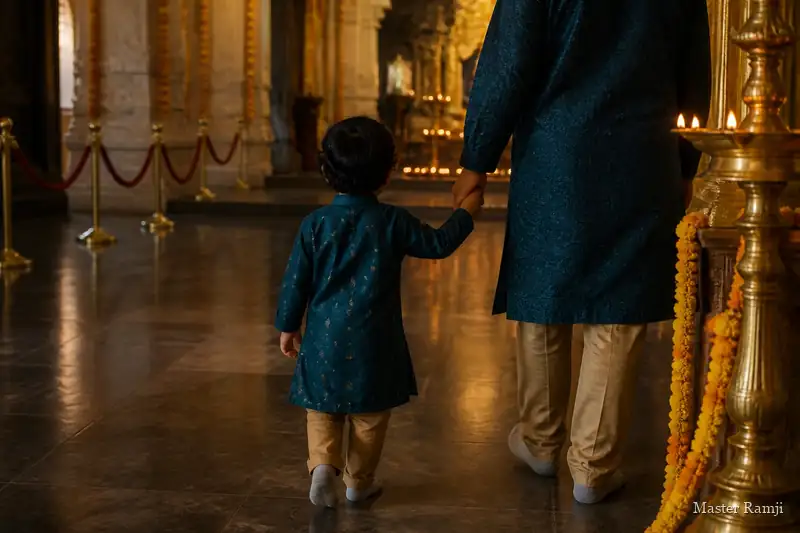
- Check the temple's own information. Opening times, dress expectations and photography rules vary. Many Australian temples are run by community organisations and post these details themselves.
- Dress modestly. Covered shoulders and knees are a safe choice in most places.
- Plan to remove your shoes. Temple floors can be cold in a Melbourne winter, so wear something warm.
- Pick a quieter time if you can. Weekends and festival days can be busy, which makes it harder to go slowly.

How do you pray at the shrine, step by step?
- Greet the main deity first. This is the usual custom, although some temples guide you along a particular route. If you see a set path, follow it.
- Stand quietly before the shrine. Fold your hands and take a few slow breaths.
- Begin your rounds. Circumambulation, or pradakshina, is done clockwise, so the shrine stays on your right. Walk slowly, keeping your hands folded if you like.
- Pray as you walk. Say the graha names or a short prayer, or stay silent.
- Finish facing the shrine. Bow or fold your hands again, and give others room to pass.
How many rounds should you take?
Nine rounds is the most common practice, one for each graha. Some devotees take seven or eleven. In some temples, you may be told to do the final two rounds anticlockwise for Rahu and Ketu, while others discourage this. Traditions differ, and no single rule applies everywhere, so ask if you're unsure.
If you have sore knees, a pram or a restless child, do what you can. A single calm round is a better prayer than nine rushed ones.
What can you say if you don't know any mantras?
Speaking simply from the heart is a long-standing way to pray. If you'd like some words, you can say each graha's name in a short greeting as you pass, in this form:
- Om Suryaya Namah for the Sun, linked with Sunday
- Om Chandraya Namah for the Moon, linked with Monday
- Om Mangalaya Namah for Mars, linked with Tuesday
- Om Budhaya Namah for Mercury, linked with Wednesday
- Om Gurave Namah for Jupiter, linked with Thursday
- Om Shukraya Namah for Venus, linked with Friday
- Om Shanaye Namah for Saturn, linked with Saturday
- Om Rahave Namah for Rahu
- Om Ketave Namah for Ketu
Wordings vary a little between families. If you want to go further, many people learn the Navagraha Stotram, and how to start a mantra practice can help you build something steady at home. To learn what each graha stands for, see the nine grahas guide.
Should you bring an offering?
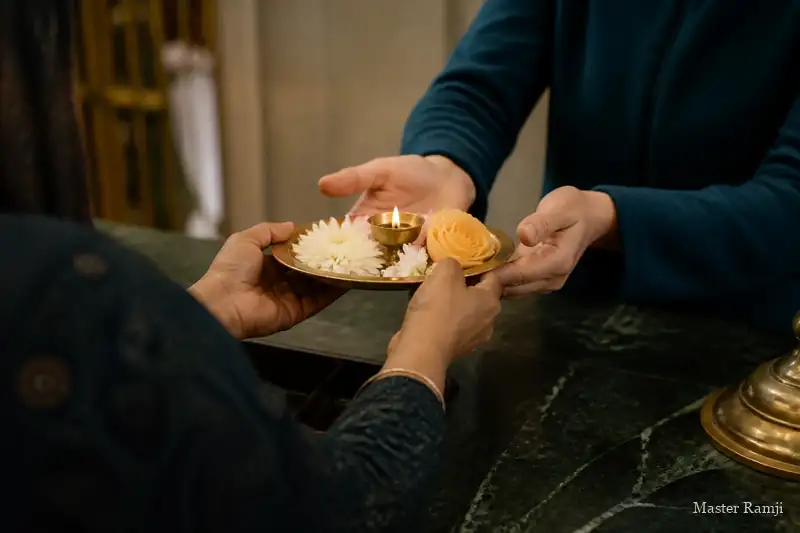
You don't have to. Prayer alone is enough for a first visit. If you do want to offer something, ask at the temple office or counter first. Each temple has its own arrangements for lamps, oil, flowers and paid archanas, and some keep offerings to set places for safety and cleanliness. The Shri Shiva Vishnu Temple's service list shows how one Melbourne temple sets this out.
You may hear that each graha has its own colour and grain, such as black sesame for Saturn or yellow chana for Jupiter. These associations are traditional, and they vary a little by region. They are not a requirement, and you shouldn't feel you need to buy anything to be welcome.
Please don't touch the images unless you can see that it's permitted. Avoid pouring or leaving anything on them yourself. If in doubt, hand your offering to the priest or volunteer.
What about the rules you may have heard?
Newcomers are often told things like "never turn your back on the shrine", "don't look Saturn in the eye" or "don't go straight home afterwards". Some of these are real regional customs, and others are family habits. Few apply everywhere, so there is no need to feel anxious about getting one wrong.
If you make a mistake, you can quietly start again. Temple priests and volunteers are usually used to first-time visitors. Politely asking "What is the custom here?" is a respectful thing to do.
Also be cautious if someone approaches you at or near a temple to say that your planets are dangerous and only a paid ritual will help. This isn't part of a normal visit. You can say no and walk away.
What can a visit do, and what can't it do?
Devotees believe that honouring the grahas invites a gentler influence. That is a matter of faith, and it hasn't been proven. What many people can recognise more readily is the effect of slowing down: a few quiet minutes, a settled breath and a pause from whatever is on your mind.
A visit doesn't replace medical, legal or financial help, and it shouldn't delay it. It also doesn't oblige you to book anything further.
Some people find a shrine visit is all they want. Others ask about a fuller rite, which is what a graha shanti puja involves. If you would like to understand the difference, read what a graha shanti is meant to do, or get in touch with your questions.
Related service
Keep reading
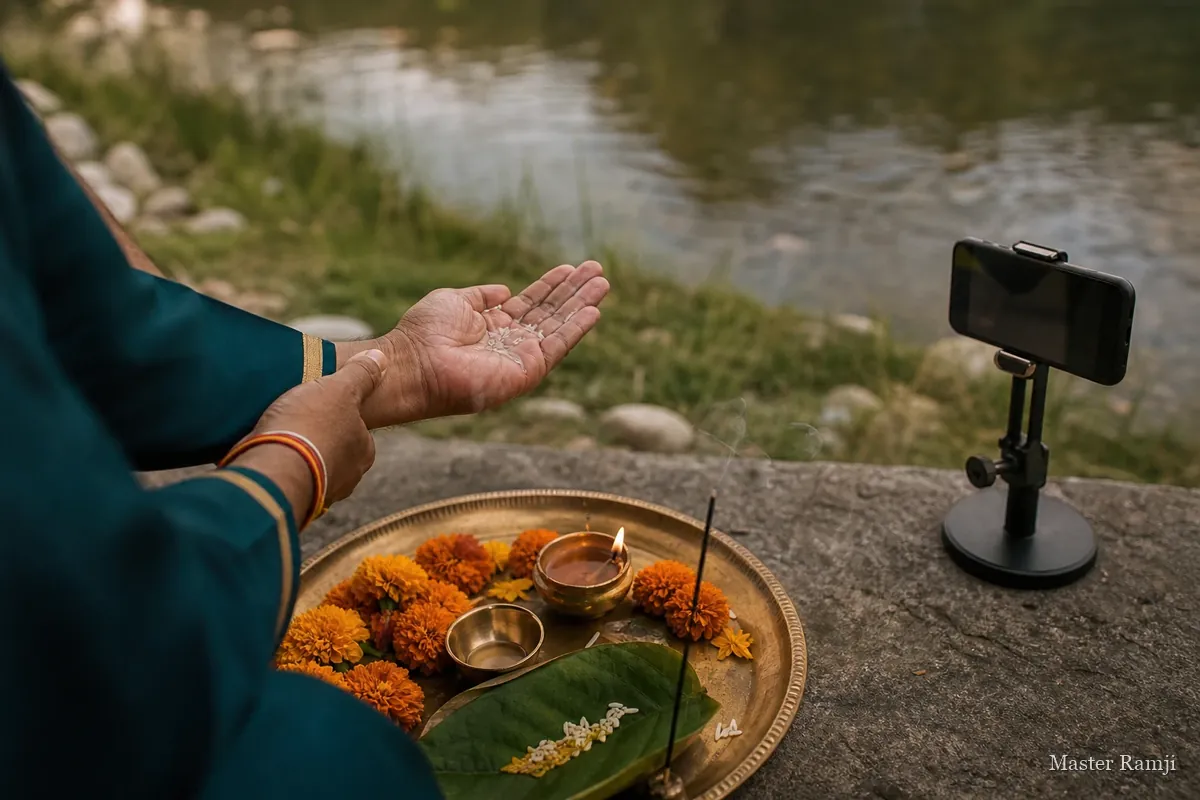
How a Puja Performed on Your Behalf Works
How a puja on your behalf works: the sankalp, your name and gotra, what to do if you don't know your gotra, and what any provider should show you.
Read article →
What Should a Puja Cost?
What affects the cost of a puja, the questions to ask before you pay, and the signs that a quote is built on fear rather than on the work involved.
Read article →
Pitra Dosh Explained Without the Fear
What pitra dosh means, how astrologers say they see it in a chart, and what it does not mean. A calm guide for anyone who has been told they have it.
Read article →Quick answers
What is a puja?
A puja is a Hindu act of devotional worship, at home or in a temple, with offerings such as flowers, light and food. Here is what it usually involves.
Read answer →Can a puja be done without me being there?
Yes, in many traditions a priest can perform a puja on your behalf using a sankalp. Here is what that means and what to ask before you pay for one.
Read answer →Talk to Vijay Ramji
Tell us what you are facing. If a reading is unlikely to help, you will be told that plainly.