
What Is a Graha Shanti Puja Meant to Do?
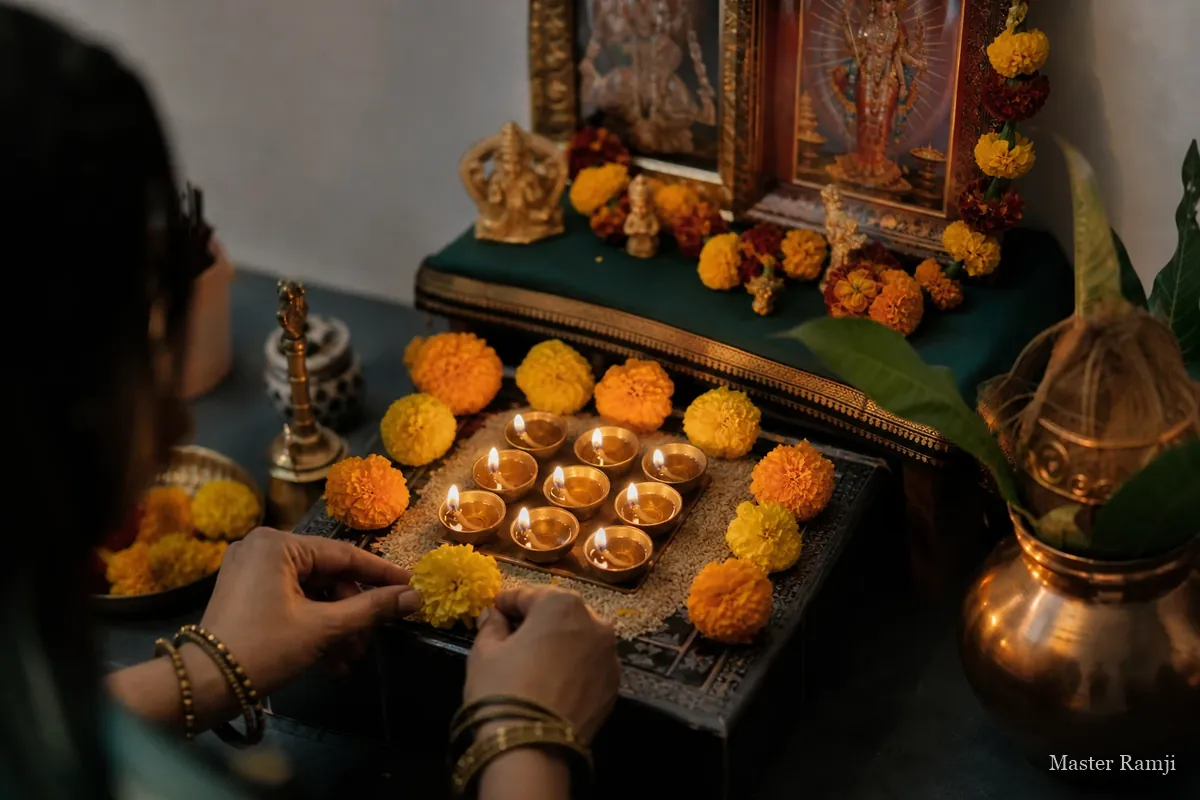
A graha shanti puja is a Hindu rite that seeks peace with one or more of the nine grahas through invocation, mantra and offerings, often with a sacred fire. In the tradition, it is meant to calm and steady. It is an act of faith, not a fix for health, money or legal problems.
If an astrologer, a relative or a family priest has suggested a graha shanti, you may have said yes before you knew what it involved. That is common. The rite is familiar in many Hindu households, yet few people get a clear account of what it is for, or of what it can't do.
This guide explains what a graha shanti puja means, the intent behind the rite and what you can honestly expect afterwards. Practice differs between regions, families and priests, so treat this as a general outline.
Key takeaways
- Graha shanti means peace with the grahas. The rite is an offering of respect to them, not a way of commanding them.
- Tradition describes its aim as calming and steadying. It is a matter of belief and has not been proven to change events.
- It can't replace a doctor, lawyer, financial adviser or a hard decision you need to make.
- You can ask why a rite is being suggested, and you can start with something simpler.
What does graha shanti actually mean?
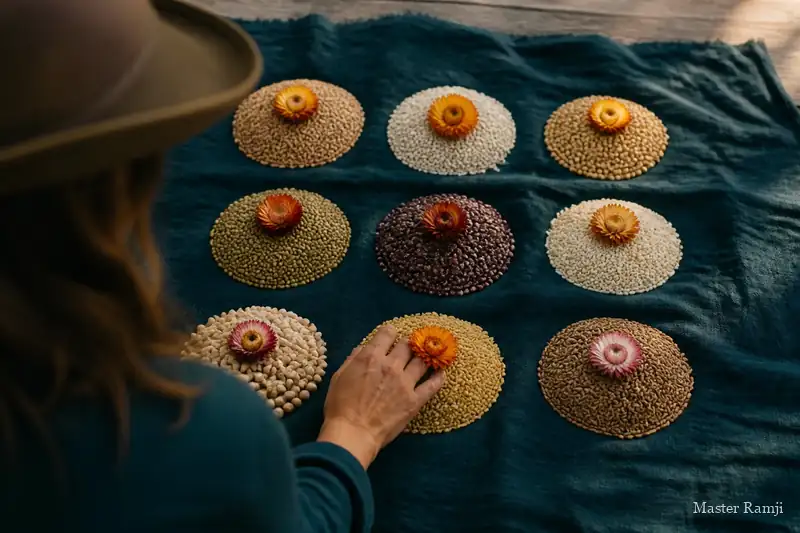
In Sanskrit, shanti means peace. Graha is usually translated as planet, although its root is closer to "that which seizes". Jyotish counts nine grahas: the Sun, Moon, Mars, Mercury, Jupiter, Venus and Saturn, along with Rahu and Ketu, the two lunar nodes. Rahu and Ketu aren't physical bodies. They are points in the sky that Jyotish treats as powerful influences.
So the name means something like "making peace with the forces that grip us". The rite may address all nine grahas, which is often called navagraha shanti, or focus on a single graha.
The word is easy to confuse with griha, which means house. A griha pravesh is a housewarming. Some families also use "griha shanti" for a rite held before a wedding, so if a priest uses either term, ask exactly what is planned.
What is the rite meant to do?
In the traditional view, your chart reflects the results of past actions, and the grahas show how those results may unfold over time. A hard period isn't seen as punishment from an angry planet. It is seen as a time to respond with humility and effort.
The rite expresses that response in three ways:
- Acknowledgement. You accept that some things are outside your control.
- Request. You ask that a difficult influence may ease, and for the strength to get through it.
- Discipline. You set aside time, attention and resources for something beyond your immediate worries.
People usually consider a graha shanti during a difficult dasha, during sade sati (the roughly seven and a half years when Saturn passes around your Moon sign), or before a big step such as a wedding. For some families, it is simply custom. Our guide to the nine grahas explains what each one is said to represent.
What usually happens during the rite?
The order varies, but many versions follow a pattern like this:
- Sankalp. The priest states who the rite is for and why.
- Invocation of Ganesha. Many rites begin here, asking that obstacles be cleared.
- Altar and kalash. A small altar and a water vessel are prepared, and the grahas are invoked.
- Mantra. The mantras of the grahas are recited, sometimes many thousands of times over several sittings.
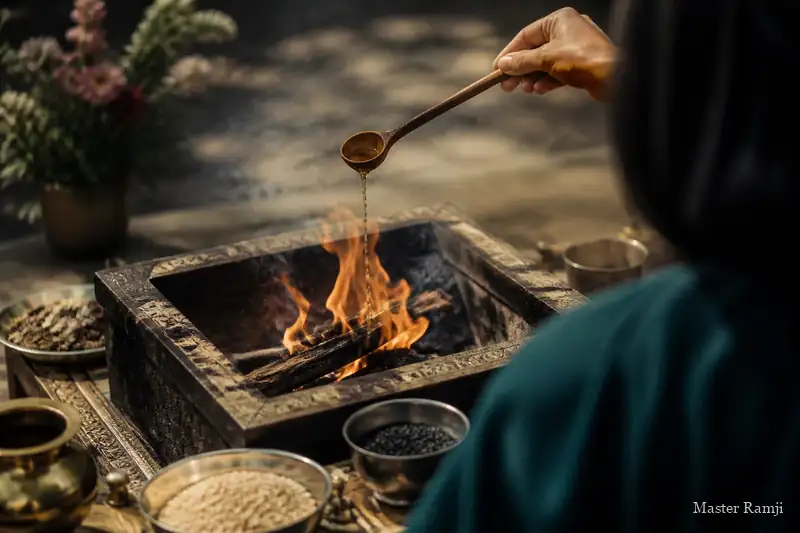
- Fire offering. In a homa or yajna, ghee, grains, sesame and particular woods are offered into the fire.
- Closing. The rite ends with prayers, aarti and prasad. Charity is often added.
Not every version uses fire. Some rely on mantra alone, which suits many Melbourne homes and apartments where an open flame isn't practical. If fire is part of your plan, check your building's rules and any local fire restrictions first. Temples offer versions of these rites too. The Shri Shiva Vishnu Temple's service list includes a navagraha homam and a navagraha archana.
What can a graha shanti not do?
This is the part that often gets left out. Graha shanti is a religious practice. It has not been shown to change physical events, and it can't:
- Replace medical care or treat an illness
- Decide a court case, a visa application or an insurance claim
- Clear a debt or make a business profitable
- Change another person's feelings or choices
- Remove all difficulty from your life or your chart
If you are dealing with any of these, see the right person first: a GP, a lawyer, a registered migration agent or a licensed financial adviser. A rite can sit alongside that help. It should never delay it.
Be wary of anyone who promises a fixed result by a set date, or who says a rite will remove a dosha forever. No one can honestly make that kind of promise, and it is often how people end up paying for one rite after another.
What can you honestly expect afterwards?
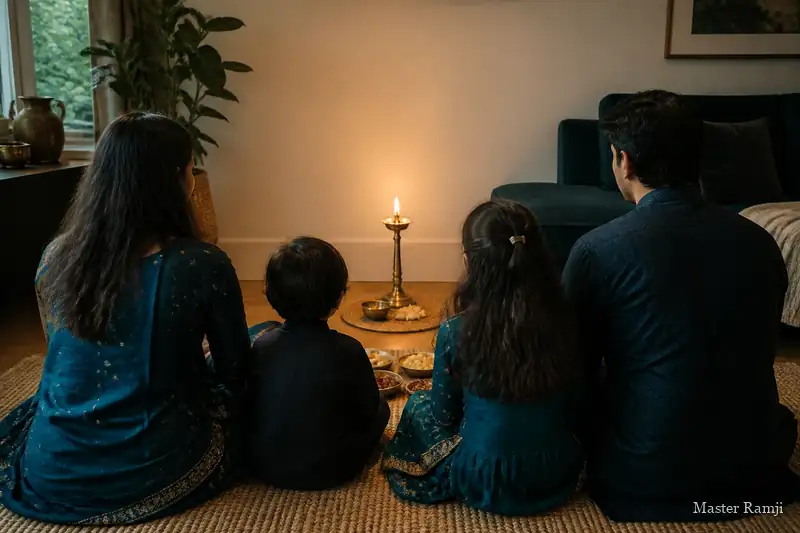
When people ask about graha shanti puja benefits, the honest answer is modest and human. It gives you a set time to stop and name what is worrying you. It may bring the family together around a shared concern. You may feel that you have done your part, which can make it easier to face what comes next.
These things can matter, but they aren't the same as a changed outcome. You may also feel nothing in particular, and that doesn't mean something went wrong or that you need to pay for another rite.
Do you actually need one?
Perhaps not. Before you agree, ask whoever suggested it:
- Which graha is this for, and where does it sit in my chart?
- Why now? Is this linked to a particular period, and when does that period end?
- What would a simpler version look like?
- What do you expect it to do, and what won't it do?
A careful astrologer can answer in plain words and won't mind being asked. They should also be comfortable telling you that no rite is needed. Hard transits pass, and astrologers themselves often disagree about how serious a given placement is.
Graha shanti is also only one of the planetary remedies in Vedic astrology. Many traditions start with regular prayer, a personal mantra practice, charity or service. There are plenty of remedies that cost nothing, and they are a fair place to begin. If cost is a concern, see how to judge a puja quote.

What if you decide to go ahead?
Choose someone who will explain each step and let you take part as much as you wish. If you can't be there, or your home can't host the rite, read how a puja on your behalf works so that you know what to ask.
Our graha shanti puja page sets out what is performed and how you can take part from a distance. Fees are stated before any paid work, and you are free to decide against it. If you would like to talk it through first, please get in touch.
Related service
Keep reading
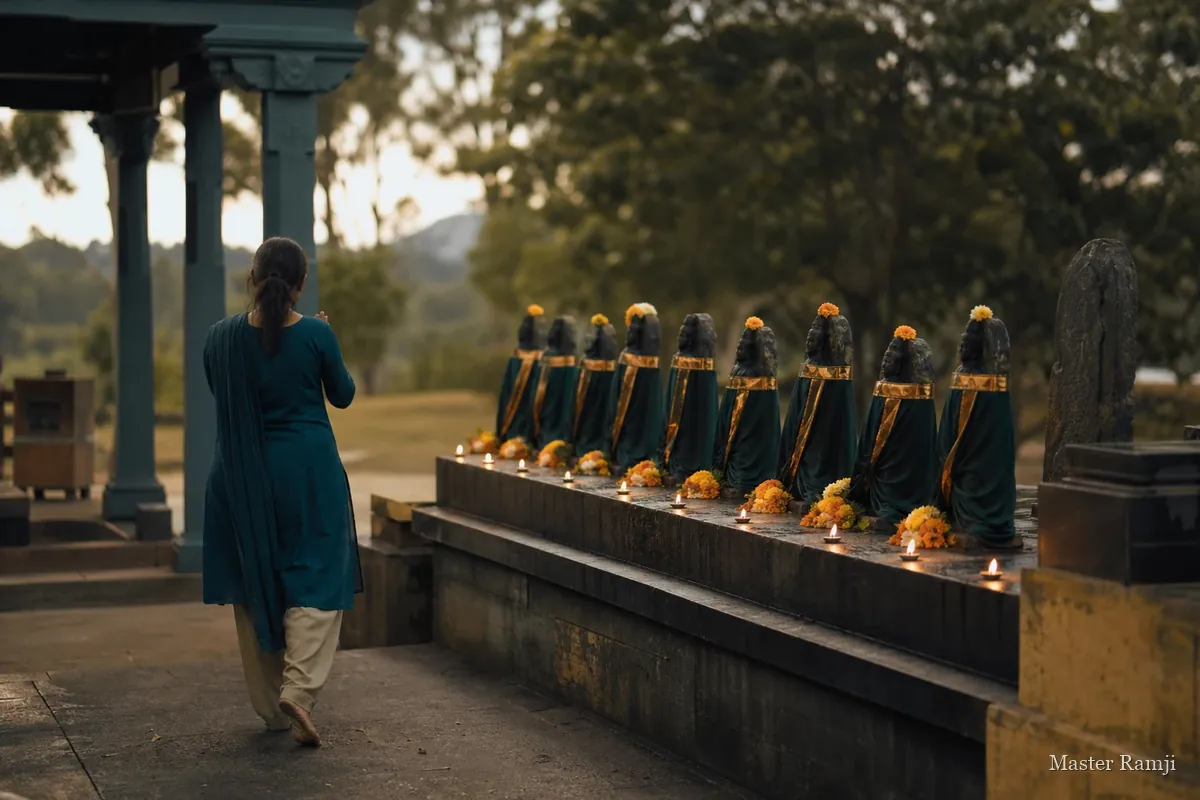
Visiting a Navagraha Shrine: A Beginner's Guide
First time at a Navagraha shrine? How to walk around it, how many rounds to take, what to say, what to offer, and which temple customs differ from place to place.
Read article →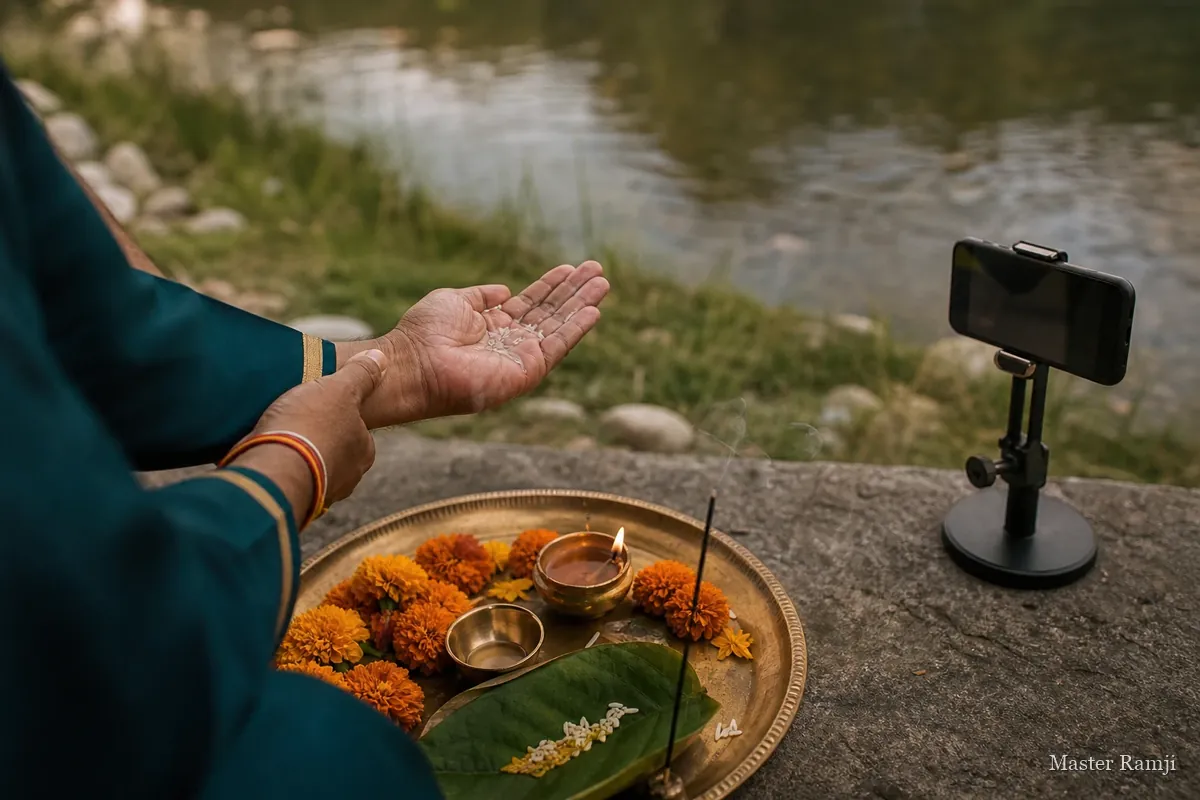
How a Puja Performed on Your Behalf Works
How a puja on your behalf works: the sankalp, your name and gotra, what to do if you don't know your gotra, and what any provider should show you.
Read article →
What Should a Puja Cost?
What affects the cost of a puja, the questions to ask before you pay, and the signs that a quote is built on fear rather than on the work involved.
Read article →Quick answers
What is a puja?
A puja is a Hindu act of devotional worship, at home or in a temple, with offerings such as flowers, light and food. Here is what it usually involves.
Read answer →Can a puja be done without me being there?
Yes, in many traditions a priest can perform a puja on your behalf using a sankalp. Here is what that means and what to ask before you pay for one.
Read answer →Talk to Vijay Ramji
Tell us what you are facing. If a reading is unlikely to help, you will be told that plainly.