
The Nine Grahas and What They Represent
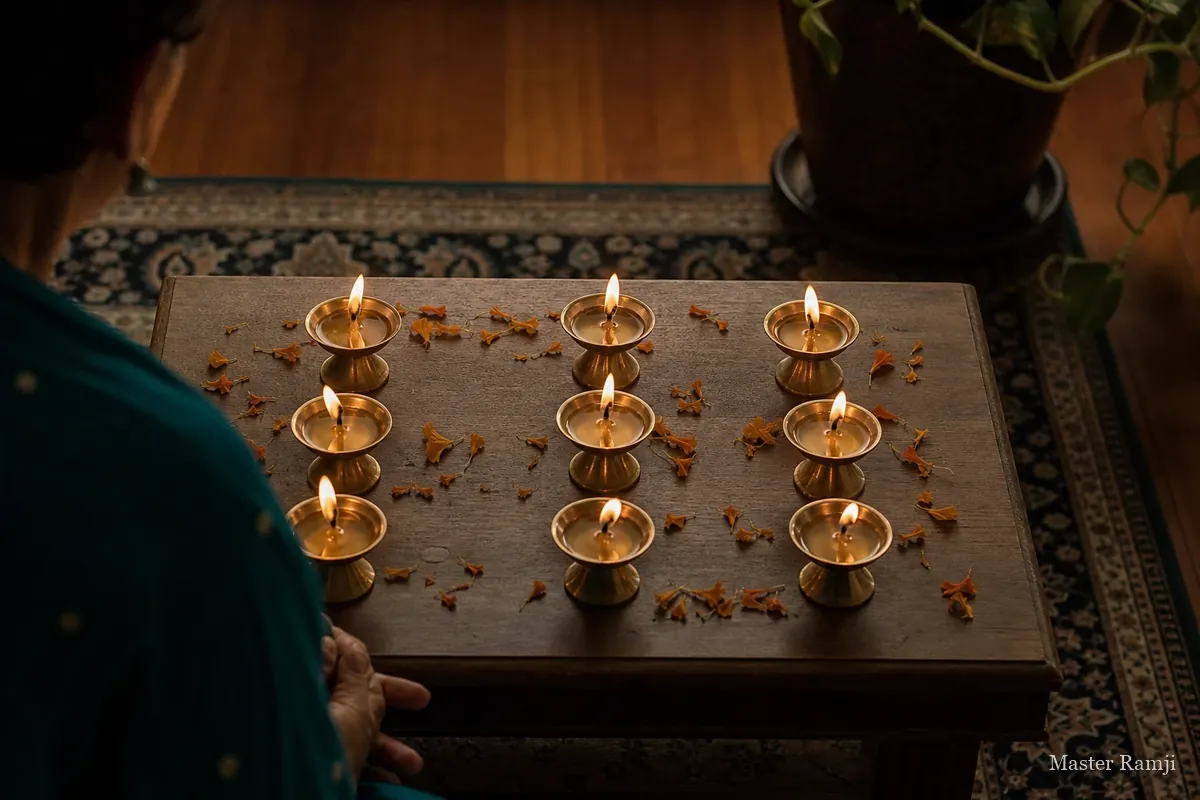
The nine grahas of Vedic astrology are the Sun, Moon, Mars, Mercury, Jupiter, Venus, Saturn, Rahu and Ketu. Each is traditionally linked with a set of life themes, such as the Moon with the mind or Saturn with duty. No graha is simply good or bad. Its meaning depends on its place in your chart.
Many people first hear about the grahas as a warning. Saturn is "bad", Rahu is "dangerous", Jupiter is "lucky". That shorthand is everywhere, and it leaves people afraid of half their own chart.
This guide takes a different view. It treats each graha as a group of life themes, a set of subjects the chart is talking about, rather than a force that rewards or punishes you.
Key takeaways
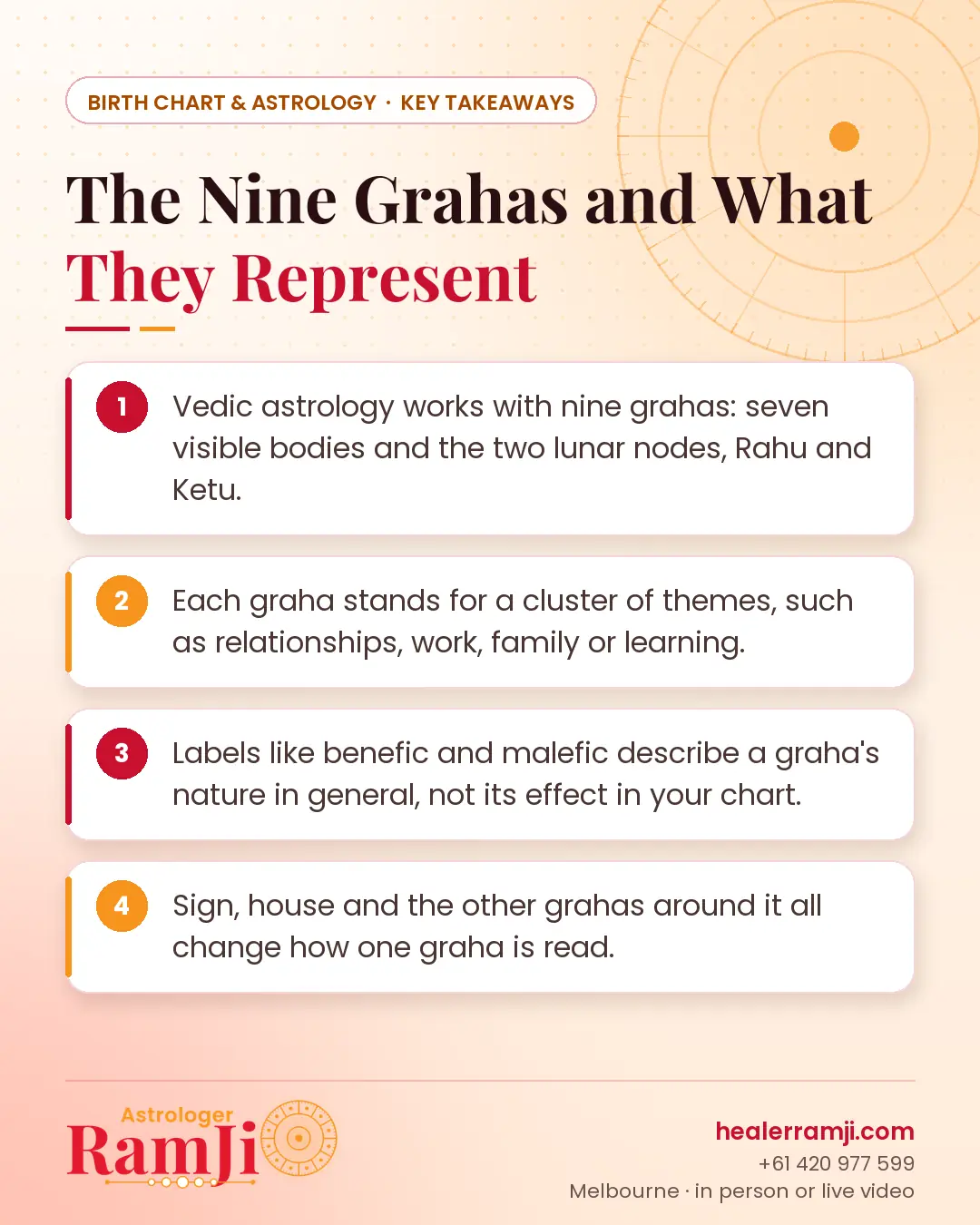
- Vedic astrology works with nine grahas: seven visible bodies and the two lunar nodes, Rahu and Ketu.
- Each graha stands for a cluster of themes, such as relationships, work, family or learning.
- Labels like benefic and malefic describe a graha's nature in general, not its effect in your chart.
- Sign, house and the other grahas around it all change how one graha is read.
What does the word graha mean?
Graha is often translated as planet, but the Sanskrit is closer to "one who seizes" or "takes hold". The Navagraha, or nine grahas, are the bodies the tradition says take hold of our attention and experience. That is why the list includes the Sun and Moon, which are not planets in the modern sense, and two points that are not physical bodies at all.
Classical Jyotish works with these nine. Uranus, Neptune and Pluto were unknown when the texts were written, and many Vedic astrologers leave them out.
What does each of the nine grahas represent?
Every graha carries many associations, and lists differ between texts and teachers. These are the themes you will hear most often.
Surya, the Sun
Self, vitality, father and authority. The Sun is read for how you stand on your own feet and how you relate to people in charge. Its day is Sunday.
Chandra, the Moon
Mind, feelings, mother and comfort. Vedic astrology gives the Moon great weight. Your Moon sign and birth star are central to many readings, and the Moon also sets your planetary timeline. Its day is Monday.
Mangala, Mars
Energy, courage, drive and conflict. Mars is also linked with siblings, land and physical effort. It is the graha behind the much-discussed Mangal dosha. Its day is Tuesday.
Budha, Mercury
Thinking, speech, learning and trade. Mercury is read for how you take in information and how you explain yourself. Its day is Wednesday.
Guru, Jupiter
Wisdom, teachers, faith, children and growth. Jupiter is often called the great benefic, but too much of its expansive quality can show up as overconfidence. Its day is Thursday.
Shukra, Venus
Love, pleasure, beauty, art and comfort. Venus is the main graha read for partnership. Our guide to how Venus shows the way you love goes further. Its day is Friday.
Shani, Saturn
Discipline, time, work, limits and endurance. Saturn has the heaviest reputation, yet it is also the graha of patience and earned results. Saturn and the slow years at work looks at this more closely. Its day is Saturday.
Rahu, the north node
Desire, ambition, the unfamiliar and the foreign. Rahu is a shadow graha, the point where the Moon's path crosses the Sun's. It is often linked with hunger for more and with unconventional paths.
Ketu, the south node
Detachment, loss of interest, insight and spiritual seeking. Ketu sits exactly opposite Rahu. Together they are tied to the old story of eclipses, and they get a separate guide in Rahu and Ketu explained without the fear.
Are some grahas good and others bad?
The texts do sort the grahas into two broad groups. Jupiter and Venus are natural benefics, and Mercury and the Moon are usually benefic too, depending on their condition. The Sun, Mars, Saturn, Rahu and Ketu are natural malefics.
Those words describe temperament, not destiny. A malefic is a graha whose themes involve pressure, effort or separation. That can be hard, but it can also be where people build skill and resilience. A benefic placed awkwardly can bring indulgence or complacency. So a reader who says "you have Saturn in the seventh, so marriage will be bad" is skipping most of the work.
Think of it like weather. Rain is not good or bad in itself. It depends on whether you are a farmer in a drought or someone hosting an outdoor wedding.

How does a reader actually weigh a graha?
When an astrologer looks at one graha in your chart, they usually ask several questions:
- Which sign is it in? Each graha has signs where it is considered strong, such as its own signs or its sign of exaltation, and a sign where it is weaker.
- Which house is it in? The house shows the area of life where its themes play out. Our plain guide to the twelve houses explains each one.
- Which houses does it rule? A graha also carries the topics of the houses whose signs it rules.
- Which grahas are with it, or aspect it? Company changes character. Mars with Jupiter is read very differently from Mars with Saturn.
- Is its period running now? In the dasha system, each graha takes a turn at setting the tone for some years. A short answer on what a dasha is explains the idea.
Only after all of that does a reader say anything about how a graha may show up for you. Even then, it is an interpretation within a tradition. Two careful astrologers can weigh the same placement differently.
Where do the gemstones and weekdays come in?
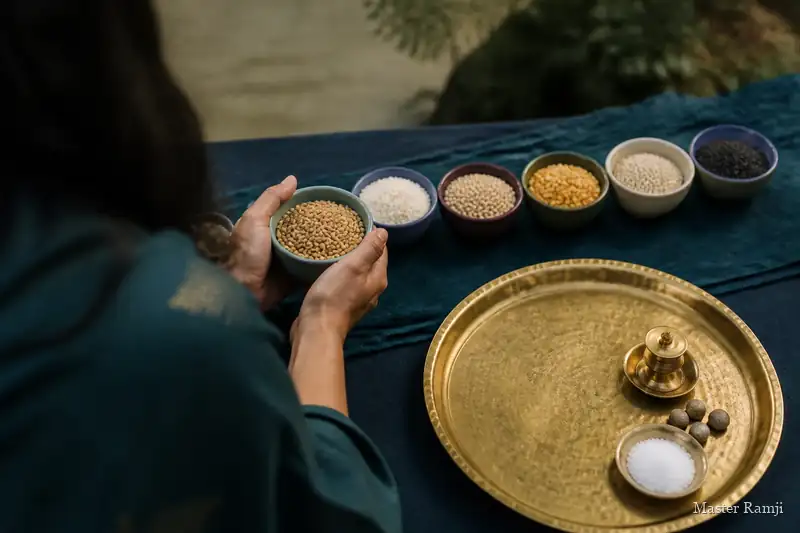
Each graha has traditional links to a weekday, a colour, a grain, a metal and a gemstone. Ruby goes with the Sun, pearl with the Moon and blue sapphire with Saturn, for example. These links are mainly used in devotional practice and remedies.
They do not tell you anything about your chart on their own. Buying a stone because of its graha, without a reading, is not something the tradition recommends, and it can be expensive. Fasting on a graha's day or giving to charity are traditional options that cost far less.

What can the grahas not tell you?
Astrology is a traditional practice, not a science, and the scholarly view of astrology treats it as a system of belief. The grahas cannot show what another person is thinking. They cannot diagnose illness, predict a court result or pick an investment. If someone tells you a graha means certain misfortune unless you pay for a ritual, treat that as pressure and get a second opinion.
What the grahas can offer is a vocabulary. Naming a theme, such as "this is a Saturn kind of year, built on effort and patience", can help some people think more calmly about where they are.

How can you see your own grahas?
Any chart calculator will show where the nine sit, as long as you enter your date, time and place of birth correctly. Reading them together is the harder part. A kundli reading goes through each graha in the context of your whole chart and your questions. Sessions can be held by phone, WhatsApp or video, and any fee is stated before paid work begins. If you would like to talk it through, get in touch.
Related service

Keep reading
How the Vimshottari Dasha System Works
How the 120-year Vimshottari dasha cycle is calculated from your birth star, how sub-periods are worked out, and how to read your own timeline sensibly.
Read article →
Getting Through a Difficult Dasha
Told you are in a hard dasha? A calm, practical plan for a tough planetary period: check the dates, protect the basics, and keep decisions in your own hands.
Read article →
Rahu and Ketu Explained Without the Fear
What Rahu and Ketu mean in Vedic astrology, why they are always opposite each other, and how to read them as desire and release rather than doom.
Read article →Quick answers
What is a kundli?
A kundli is a Vedic birth chart that maps the planets at your exact time and place of birth. Here is what it shows, in plain words.
Read answer →What details do I need for a kundli reading?
A kundli reading needs your date, time and place of birth, plus a clear question. Here is how exact each detail should be, and what to do if one is missing.
Read answer →Talk to Vijay Ramji
Tell us what you are facing. If a reading is unlikely to help, you will be told that plainly.