
Diwali Puja Timing in Melbourne
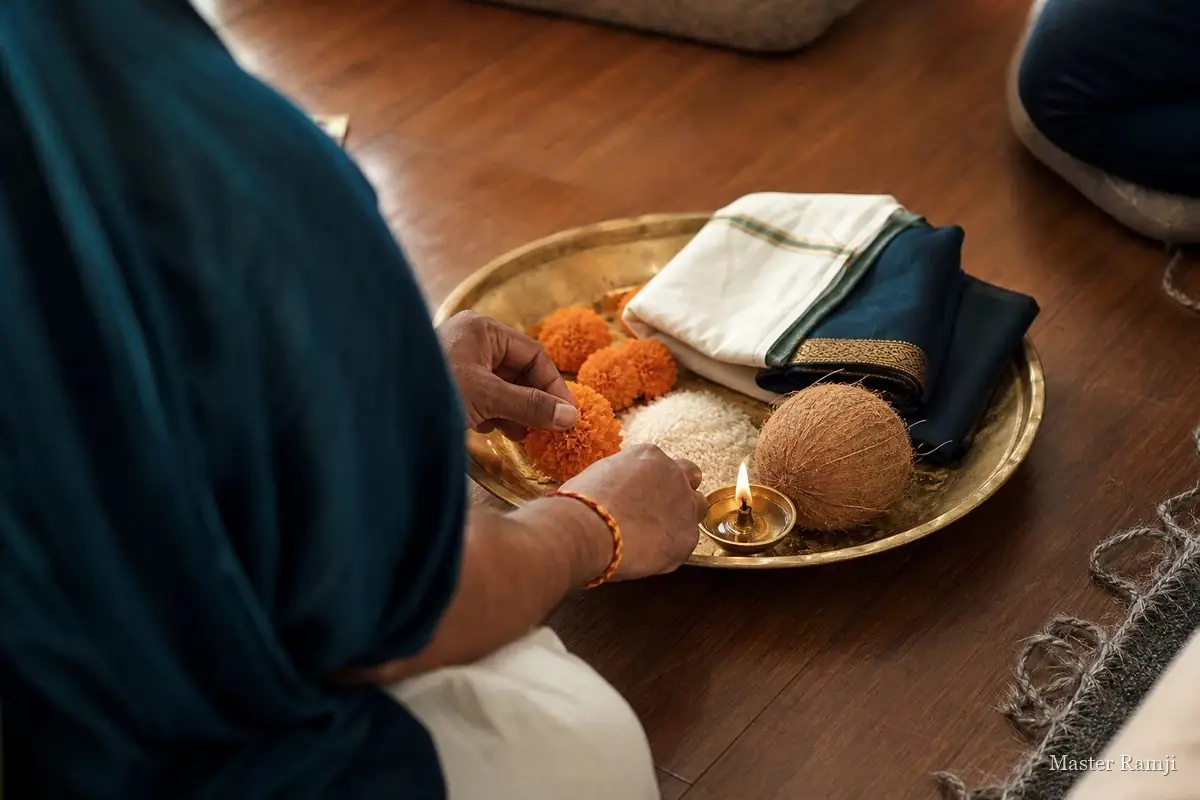
Diwali puja time in Melbourne is worked out from local sunset, not converted from Indian time. Lakshmi puja is usually done in the evening window called pradosh kaal while the new moon tithi runs. Daylight saving and late spring sunsets push that window later on the clock, so check a panchang set for Melbourne.
Every year, families in Melbourne receive a Diwali puja time on WhatsApp from relatives in India. Often it is simply the Indian time with five and a half hours added. It is an understandable shortcut, but it usually gives the wrong window.
This page explains how Diwali puja time in Melbourne is chosen, why it differs from India's, and how to keep the evening's lamps safe. It gives no dates, because they change every year. Check them with your temple or a Melbourne panchang.
Key takeaways
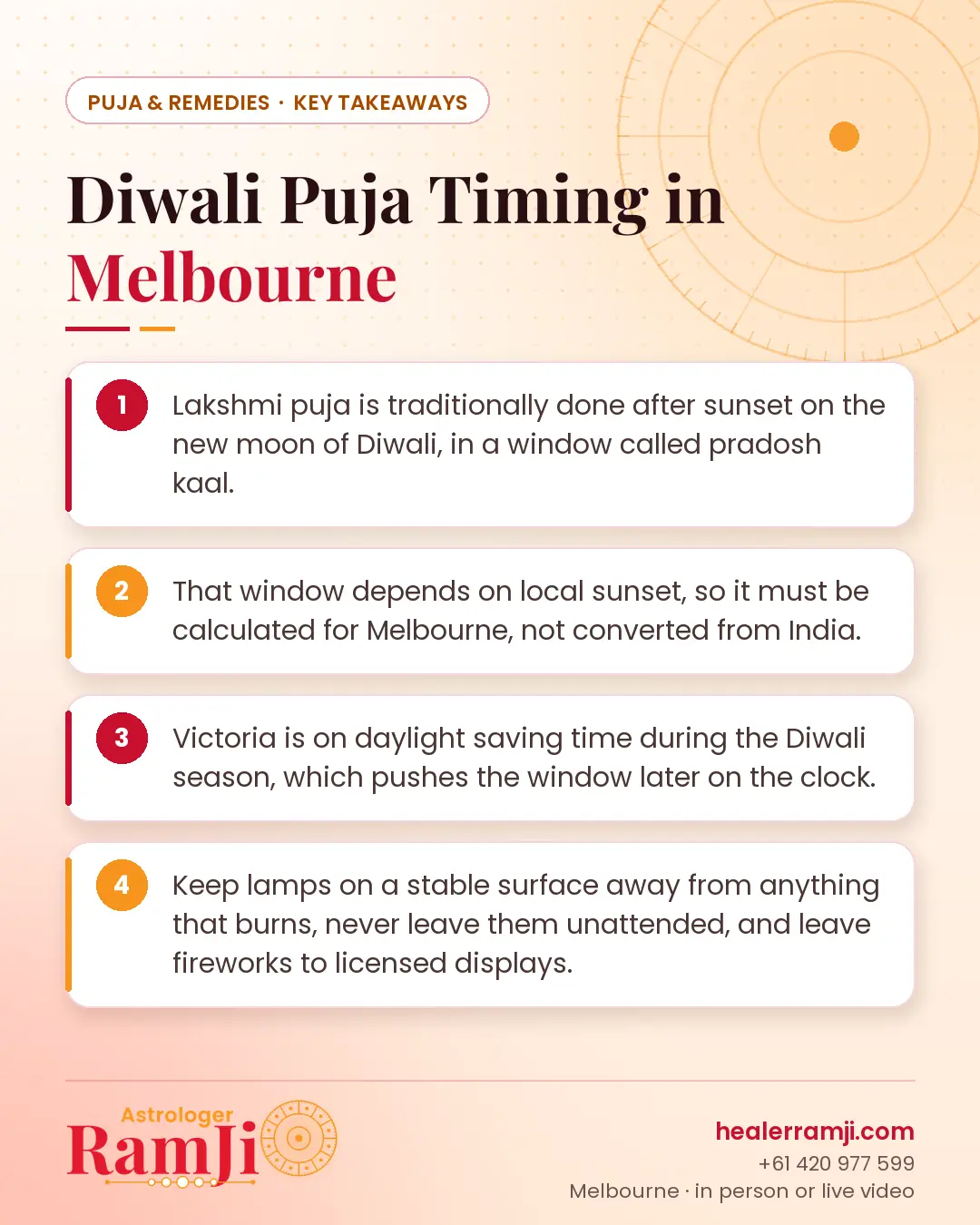
- Lakshmi puja is traditionally done after sunset on the new moon of Diwali, in a window called pradosh kaal.
- That window depends on local sunset, so it must be calculated for Melbourne, not converted from India.
- Victoria is on daylight saving time during the Diwali season, which pushes the window later on the clock.
- Keep lamps on a stable surface away from anything that burns, never leave them unattended, and leave fireworks to licensed displays.
How is the Lakshmi puja time chosen?
In the common North Indian approach, three things are checked together:
- Amavasya. The new moon tithi, or lunar day, should be running at the time of the puja.
- Pradosh kaal. An evening window that begins at sunset and is usually given as about two hours and twenty-four minutes long.
- A fixed rising sign. Many panchangs prefer a moment within pradosh kaal when a sthir, or fixed, sign is rising. Vrishabha (Taurus) is the one most often named for Diwali evening.
Some practitioners also use a later window around midnight, called nishita kaal, though it is generally described as suited to specialist or tantric practice rather than household puja. Traditions differ, and your family's custom counts.
Why doesn't Indian time simply convert?
Three of the ingredients are local:
- Sunset is local. Pradosh kaal starts at sunset where you are. Melbourne's sunset bears no fixed relationship to Delhi's, so adding hours to an Indian time lands you somewhere arbitrary in the evening.
- The rising sign is local. Which sign is on the eastern horizon depends on your latitude and longitude. Melbourne is in the southern hemisphere, so signs rise at different speeds from India. A sign that rises quickly in Delhi can take noticeably longer here, and the other way round. The fixed-sign window has to be calculated for Melbourne.
- The tithi meets a different evening. A tithi begins and ends at the same instant everywhere, but that instant falls at a different local hour in each city. Whether amavasya is still running during Melbourne's evening window is a separate check from whether it runs during India's. In some years, calendars disagree about which evening suits.
The same reasoning applies to other festivals. See why festival dates can differ in Australia and why a muhurat from India may not work in Melbourne.

How does daylight saving change things?
Victoria's summer time begins on the first Sunday in October, so it is always in force by Diwali. Melbourne is then five and a half hours ahead of India. Combined with long spring evenings, this means sunset, and so the start of pradosh kaal, falls quite late on the clock. Families used to an early evening puja in India are often surprised.
If you use an app or website, check two settings: that the location is Melbourne, not your family's home city, and that daylight saving is applied. A one-hour error is easy to miss.
Which calendar should you follow?
Customs vary widely across India, and they travel with families. Many South Indian homes focus on an early morning oil bath and prayers for Deepavali. Many Bengali families keep Kali Puja at night. Gujarati families may be preparing for the new year as well. Your family's practice comes first.
For the North Indian Lakshmi puja window, your local temple's announced time is a good guide, as is a panchang calculated for Melbourne. Different panchangs can give slightly different minutes. That's normal, and it's no reason to worry.
What if the window clashes with work or bedtime?
This is common in Melbourne, where Diwali often falls on a working day. Some options:
- Do the main prayer within the window, and keep the rest of the evening flexible.
- Keep the puja short. A few focused minutes can mean more than a rushed hour.
- Let young children light a lamp earlier, then join in what they can.
- If you miss the window, pray anyway. Missing a muhurat doesn't spoil the festival or bring harm.
Business owners may want a separate approach. Our guide to Lakshmi puja for business owners covers shops and offices.
How do you keep the lamps safe?
Diwali means many flames at once, often in homes that are shut up against a cool spring evening. The CFA advises:
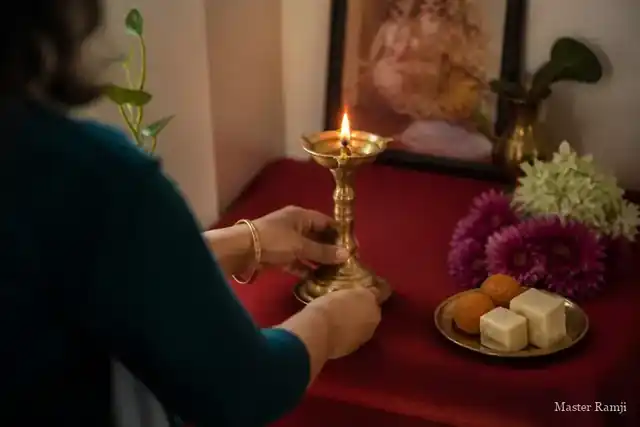
- Place lamps on a stable, hard surface at least one metre from anything that can burn, including curtains.
- Never leave them burning without someone around, and put them out before going out or to sleep.
- Never leave children alone near them, and keep matches and lighters out of reach.
- Keep hair and loose clothing, including saris and dupattas, away from flames.
- Avoid strong breezes, and consider battery candles instead.
Battery diyas are a sensible choice for balconies, doorsteps, rentals and homes with toddlers or pets. Test your smoke alarms beforehand and never disable them. If you are planning a havan as well, read havan safety at home first. If the CFA declares a Total Fire Ban on the day, keep any flame indoors and check CFA advice before lighting anything outside.
Fireworks need special care. WorkSafe Victoria says you need a pyrotechnician's licence to use fireworks, so backyard crackers are out. Enjoy them at an organised public display instead.
Would a personal muhurat help?
For most families, the temple's time or a Melbourne panchang is enough. If you are combining Diwali with another event, such as a housewarming, an engagement or a shop opening, muhurat date selection works from local sunrise and sunset and fits around your real plans. It is a tradition of intention, and it can't promise prosperity.
Vijay Ramji is based in Ascot Vale, appointments are arranged in advance, and sessions can be held by phone, WhatsApp or video. Fees are stated before paid work. For help planning your Diwali evening, get in touch.
Related service
Keep reading

Keeping Navratri at Home Around a Work Week
A nine-day Navratri at home guide for families with jobs and school runs: a weekend set-up, short weeknight pujas, the main days, safe fasting and lamps.
Read article →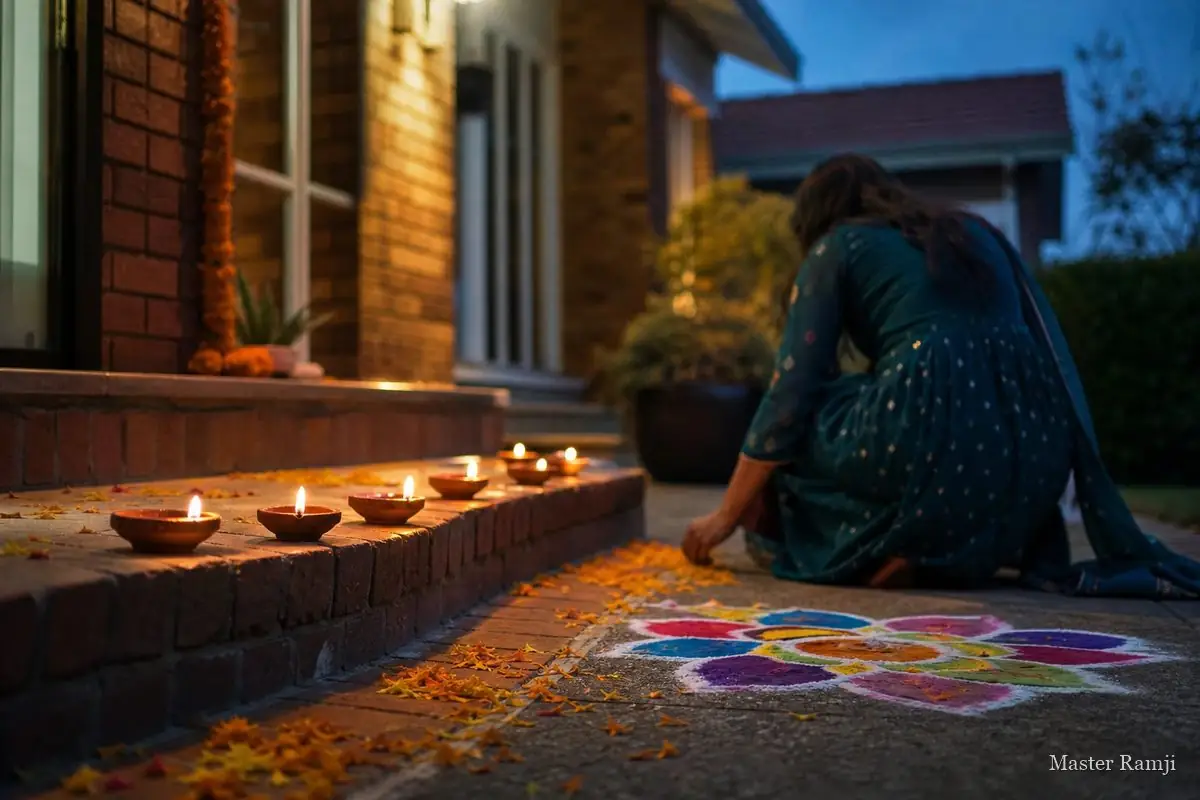
Why Festival Dates Differ in Australia
Why Hindu festival dates in Australia can fall a day apart from India: lunar days, local sunrise, time zones, regional calendars and reversed seasons explained.
Read article →
Teaching Puja to Children Raised in Australia
Teaching Hindu rituals to children raised in Australia: explaining what each step of a puja means, ideas by age, handling questions, and keeping lamps safe.
Read article →Quick answers
What is a muhurat?
A muhurat is an auspicious date and time chosen for an important start, such as a wedding. Learn how it is chosen, and why local time in Melbourne matters.
Read answer →What is a puja?
A puja is a Hindu act of devotional worship, at home or in a temple, with offerings such as flowers, light and food. Here is what it usually involves.
Read answer →Talk to Vijay Ramji
Tell us what you are facing. If a reading is unlikely to help, you will be told that plainly.