
Keeping Navratri at Home Around a Work Week
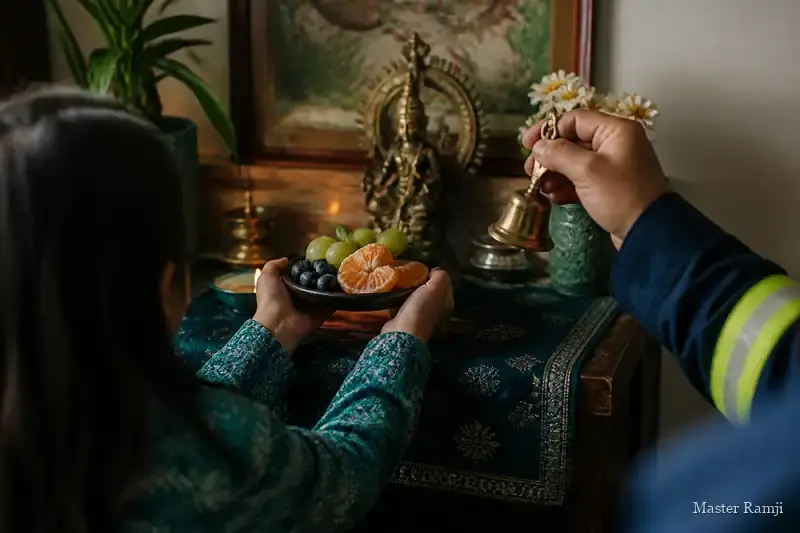
To keep Navratri at home around a work week, prepare on the weekend before, then keep a short evening puja on weeknights and save longer rites for days off. Honour the main days, such as Ashtami and Navami, as your family's custom allows. Choose a fast that suits your health, and never leave a lamp burning in an empty house.
Navratri runs for nine nights, and in Melbourne those nights usually fall in an ordinary working week. There are lunches to pack, school drop-offs and meetings, all before anyone has lit a lamp. Many families feel they can only do the festival properly if they take time off.
This guide offers a different plan. It spreads the effort across the nine days so that weeknights stay short and the bigger moments land where you have time for them. Check your temple or family priest for the dates and timings for Melbourne each year, as they shift and can differ from India.
Key takeaways
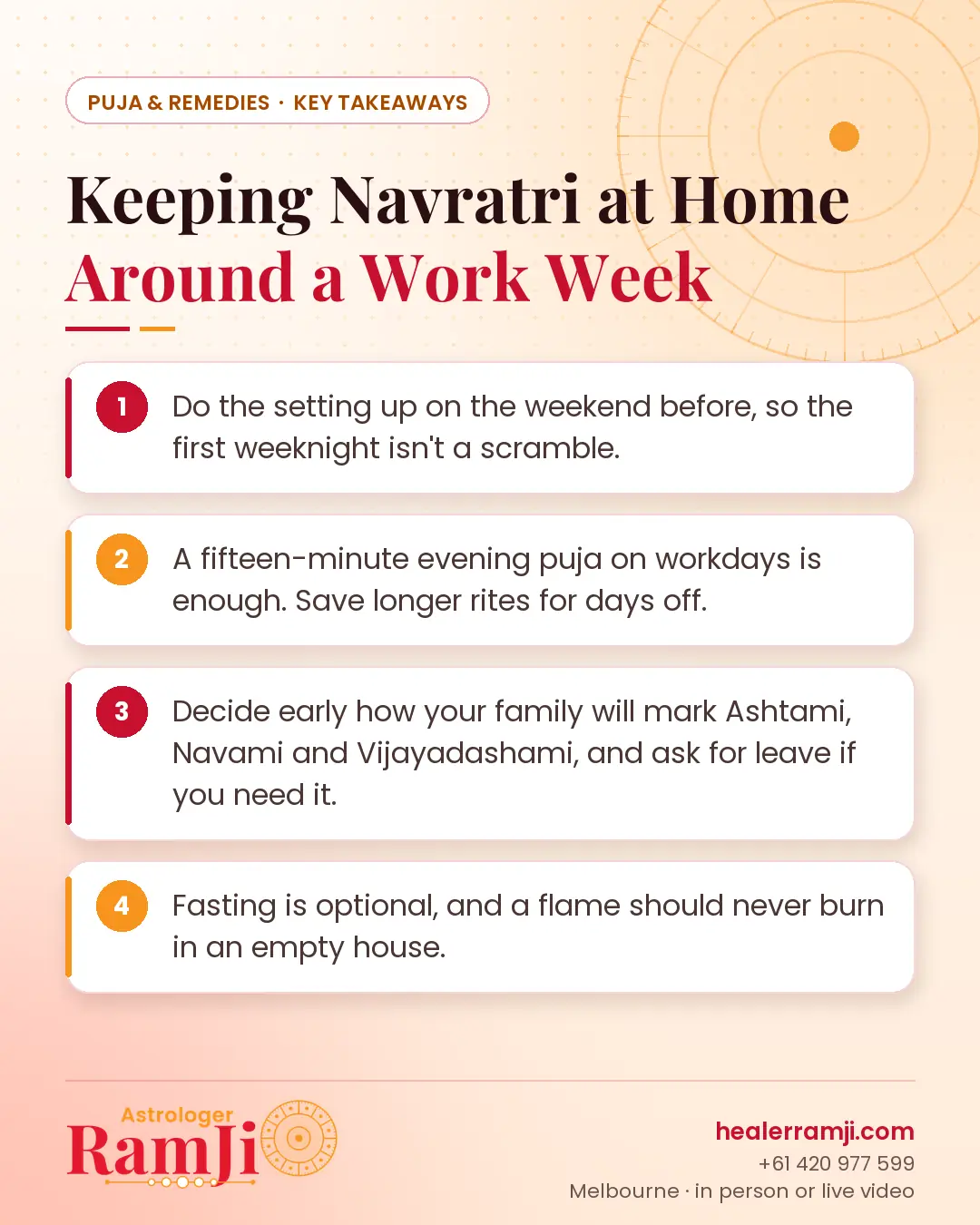
- Do the setting up on the weekend before, so the first weeknight isn't a scramble.
- A fifteen-minute evening puja on workdays is enough. Save longer rites for days off.
- Decide early how your family will mark Ashtami, Navami and Vijayadashami, and ask for leave if you need it.
- Fasting is optional, and a flame should never burn in an empty house.
What is Navratri, and how do families keep it?
Navratri means "nine nights". The festival is celebrated more than once a year, with the autumn Sharad Navratri the most widely observed and the spring Chaitra Navratri next. It ends with Vijayadashami, or Dussehra, on the tenth day.
Customs vary widely. Gujarati families are known for garba and dandiya. Bengali families mark the last days as Durga Puja. Many Tamil, Telugu and Kannada homes set up a display of dolls called golu, kolu or gombe. Others honour Saraswati, or keep ayudha puja, by blessing books and the tools of their work. Follow your own family's practice. This plan is a frame you can fill with it.
What should you do the weekend before?
A little preparation makes the week far easier:
- Clean and set up the space. Choose a shelf or corner for the shrine. Our notes on setting up a small home mandir help if you are starting fresh.
- Gather what you need. A lamp, a kalash or small pot, flowers, fruit, and any items your tradition uses.
- Plan meals. If anyone is fasting, cook and freeze some vrat-friendly meals now.
- Check work and school. Ask for leave on a main day, or swap a meeting, a few weeks ahead.
- Share the jobs. Write who does what on a list on the fridge.
How do you start on the first day?
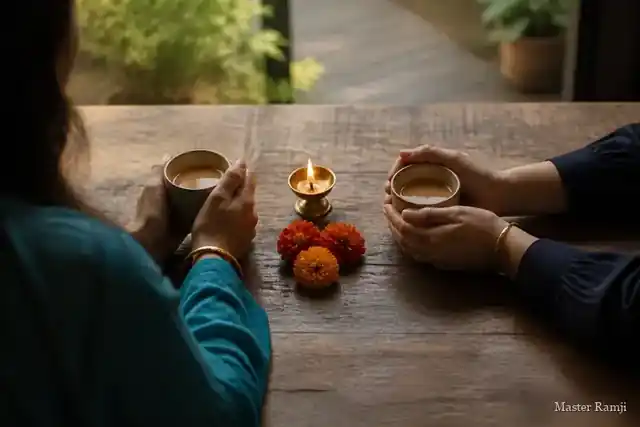
Many families begin with ghatasthapana, setting up a kalash, a water-filled pot, as the seat of the goddess. In some North Indian traditions, barley is sown in a clay pot or a bed of soil on the first day and watered through the festival. The sprouts are kept until the end.
If the first day is a workday, keep this simple. Set it up the evening before, or early that morning, and ask your priest whether there is a preferred time. You don't need an elaborate ritual for it to be meaningful.
What does a weeknight puja look like?
Aim for about fifteen minutes after dinner, or before if the children are young:
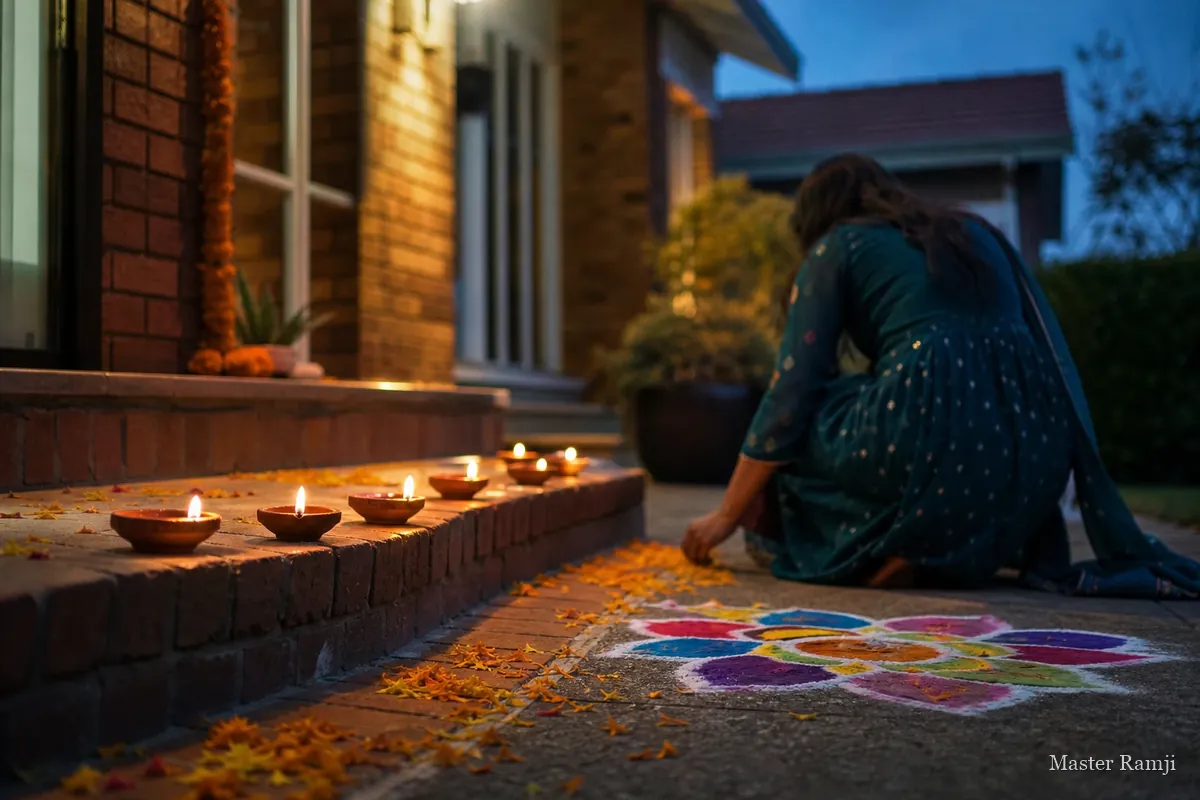
- Light the lamp and a little incense, if your home allows it.
- Offer flowers or fruit, and water the barley if you sowed some.
- Chant a short mantra, or read a few verses. One family member can lead, or take turns.
- Sing or play the aarti.
- Share prasad, then put the flame out before bed unless an adult is staying up.
Many families honour the nine forms of Durga, the Navadurga, one on each day: Shailaputri, Brahmacharini, Chandraghanta, Kushmanda, Skandamata, Katyayani, Kalaratri, Mahagauri and Siddhidatri. Traditions vary in their names and order, so follow what your family knows. A child can find a picture of each day's form and tell its story in a sentence or two.
How do you fit in the bigger days?
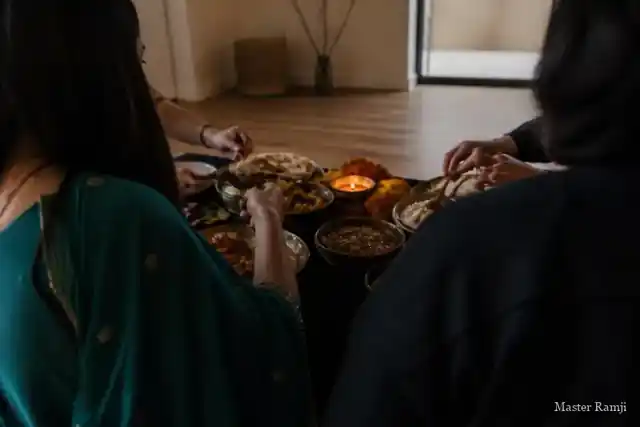
Look at where the weekend falls within the nine days and give those days the longer rites: a fuller puja, a temple visit, or a community garba night. On the main days, plan ahead:
- Ashtami and Navami. In many North Indian homes, young girls are invited, their feet washed and a meal served, honouring them as forms of the goddess. This is often called kanya pujan or kanjak. If it falls on a workday, ask your priest whether a simple evening version is acceptable.
- Vijayadashami. Close the festival with a final puja. Families may immerse or respectfully dispose of the kalash water and barley sprouts. Pour the water onto a garden bed rather than into a drain or creek.
How do you fast safely on a working week?
Navratri fasting customs differ. Some people avoid grains, onion and garlic for all nine days. Some eat one meal a day. Some fast only on the first and last days or on Ashtami. A full water-only fast is hard to combine with work, driving or caring for children.
Choose what your body can manage. If you have diabetes, the NDSS advises talking with your doctor before fasting, including for religious reasons. The same caution makes sense if you are pregnant or take regular medication. Children don't need to fast to take part. Our guide to fasting safely as a remedy has more on who should adapt a fast.
What about keeping a lamp burning?
Some families keep an akhand jyoti, a lamp that burns through all nine days. That is hard in a home where everyone is at work or school. The CFA advises keeping flames on a stable surface away from anything flammable and never leaving them unattended. Many families light the lamp only while someone is home and awake, or use an electric diya during the day. If you work rotating shifts, our article on keeping Navratri around shift work goes further.
What if you miss a day?
A late meeting, a sick child or plain tiredness can wipe out an evening. Pick up the next day without a harder fast to make up for it. Many priests and elders are gentler about this than people fear. Navratri is devotion, not an exam.
Would a personal practice help?
If you would like a short daily mantra to carry beyond the festival, a personal mantra remedy plan builds one around your real week, at little ongoing cost. It is a devotional practice, not a promise of any outcome. Sessions can be held by phone, WhatsApp or video, and fees are stated before paid work begins. To talk about your plan, get in touch.
Related service
Keep reading
Why Festival Dates Differ in Australia
Why Hindu festival dates in Australia can fall a day apart from India: lunar days, local sunrise, time zones, regional calendars and reversed seasons explained.
Read article →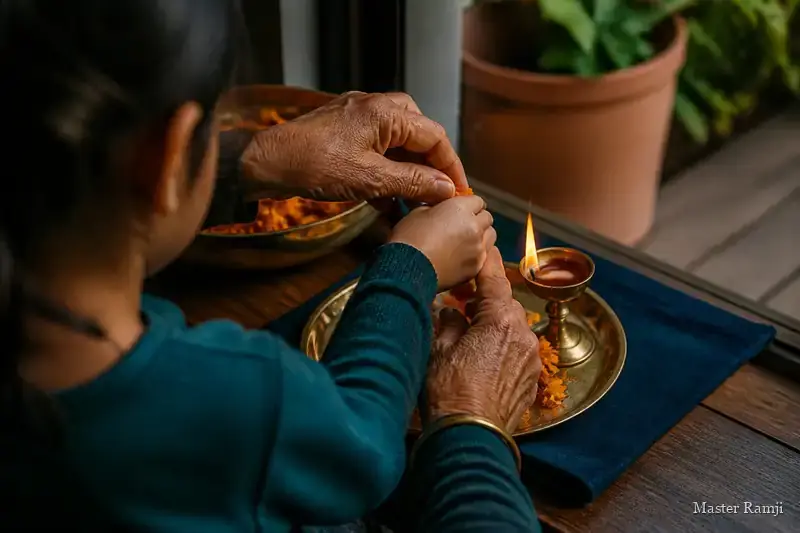
Teaching Puja to Children Raised in Australia
Teaching Hindu rituals to children raised in Australia: explaining what each step of a puja means, ideas by age, handling questions, and keeping lamps safe.
Read article →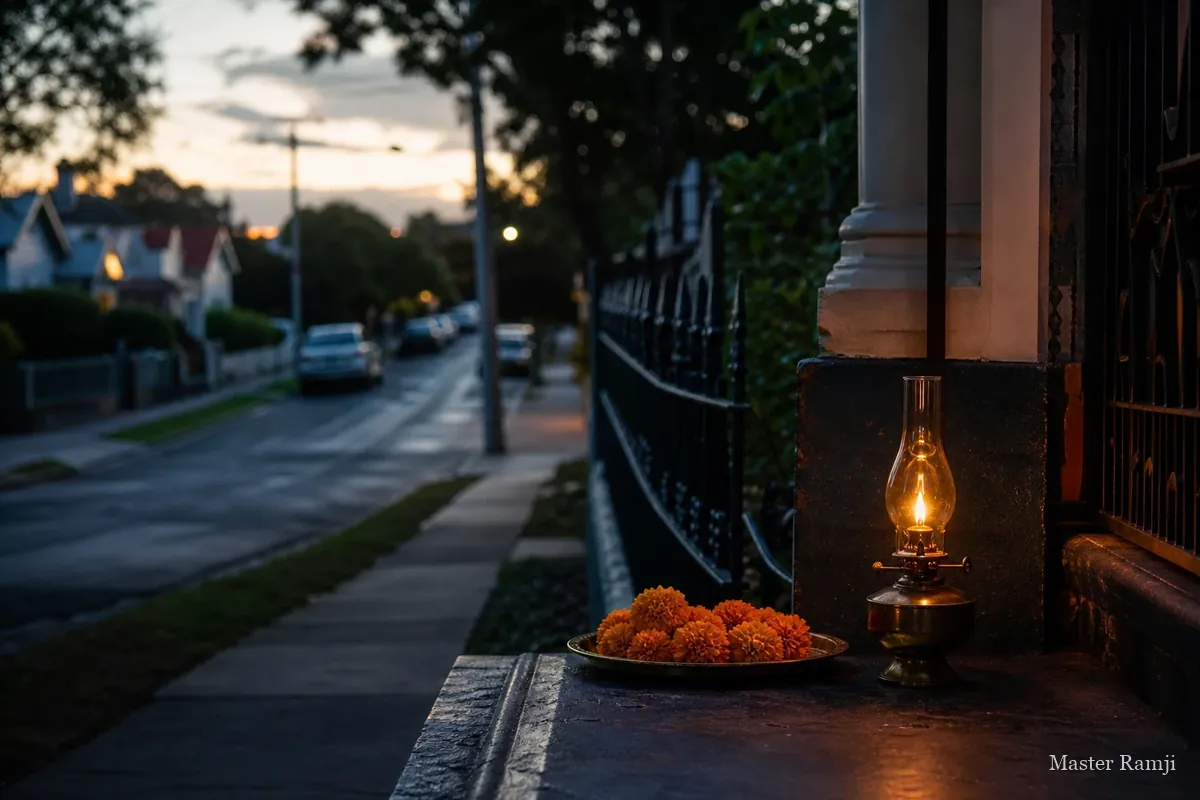
Where to Pray in Geelong
Looking for a Hindu temple in Geelong? Local groups to contact, what to confirm before you go, and options for prayer when you can't travel.
Read article →Quick answers
Do astrology remedies have to cost money?
Astrology remedies don't have to cost money. Many traditional ones are free, such as mantra and service. Here is when a fee is fair and when to walk away.
Read answer →Why are mantras chanted 108 times?
Mantras are chanted 108 times because 108 is a sacred number in Hindu tradition and the count of beads on a mala. Here are the usual explanations.
Read answer →Talk to Vijay Ramji
Tell us what you are facing. If a reading is unlikely to help, you will be told that plainly.