
Second-Generation Couples in Brunswick and Family Traditions

Second-generation Indian Australian couples in Brunswick can start by sorting family traditions into three groups: what you both want to keep, what you can adapt, and what you need to renegotiate with parents. Agree privately first, then talk to family together. No tradition should override your safety or consent.
Brunswick has seen this conversation before. Victorian Places records Italians settling here from the 1880s and again between the wars, and large numbers of Greeks arriving mostly after World War II. A former Methodist church became a Greek Orthodox church in 1969. It's a fair guess that plenty of households near Sydney Road argued about who their children should marry, whose customs a wedding should follow, and how much say the old country still had.
If you are in a second-generation Indian Australian relationship, your version may look different, but the question is familiar. You love your family, you love your partner, and you are tired of translating between them. This guide offers a simple way to sort what to keep and what to renegotiate.
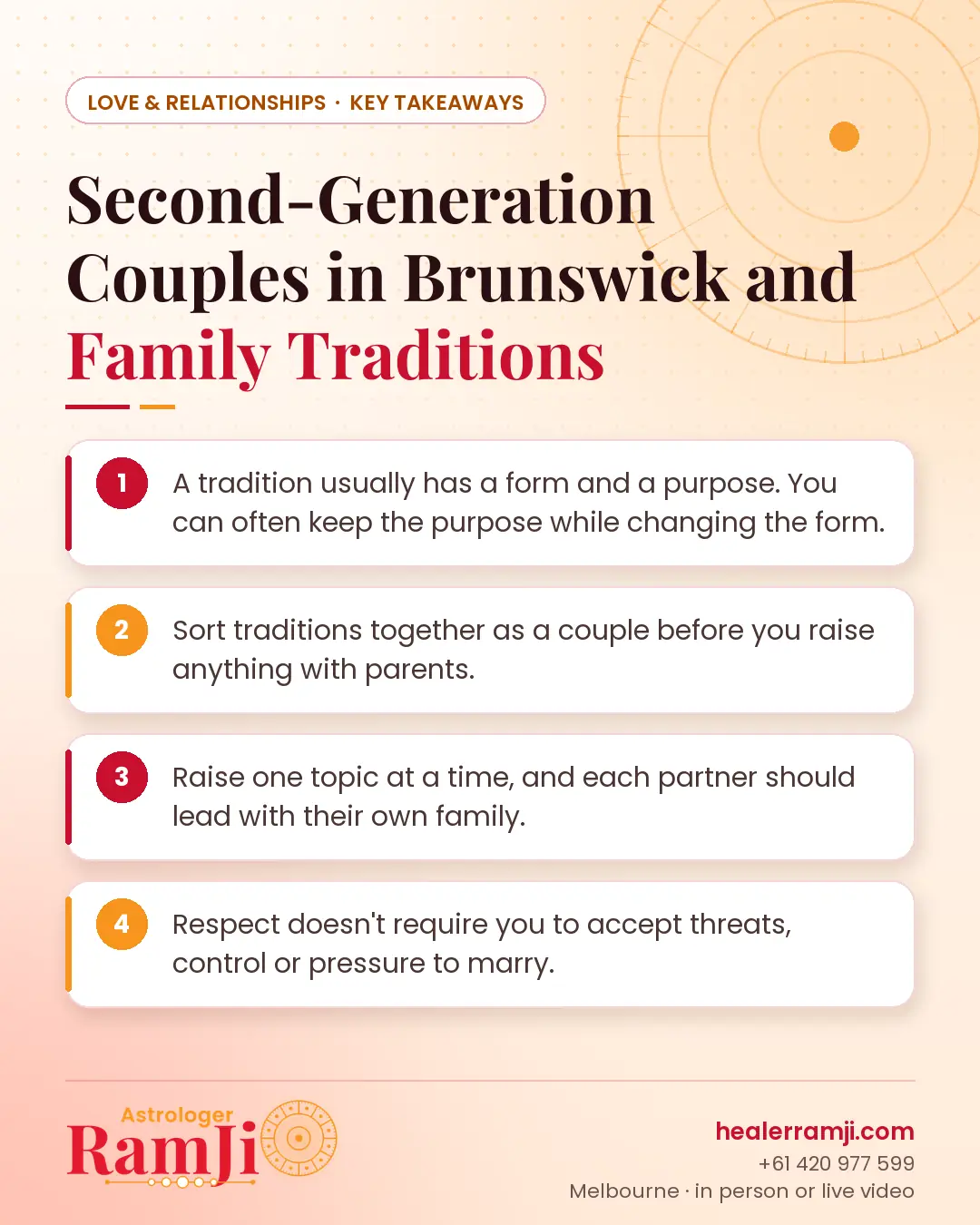
Key takeaways
- A tradition usually has a form and a purpose. You can often keep the purpose while changing the form.
- Sort traditions together as a couple before you raise anything with parents.
- Raise one topic at a time, and each partner should lead with their own family.
- Respect doesn't require you to accept threats, control or pressure to marry.
Why does this feel so hard?
Second-generation children often carry two sets of rules. At home, a decision might belong to the whole family. At school and at work, you were taught that it belongs to you. Neither view is foolish, and many people hold both at once.
There is also a debt that's hard to name. Your parents may have left everything to build a life here, and every disagreement can feel like ingratitude. Meanwhile, your partner may be puzzled by rules nobody has ever explained, especially if they come from another background or a different part of India.
So the fight about the guest list is rarely about the guest list. It tends to be about belonging, respect and whether your parents' sacrifice still counts.
What is the tradition actually for?
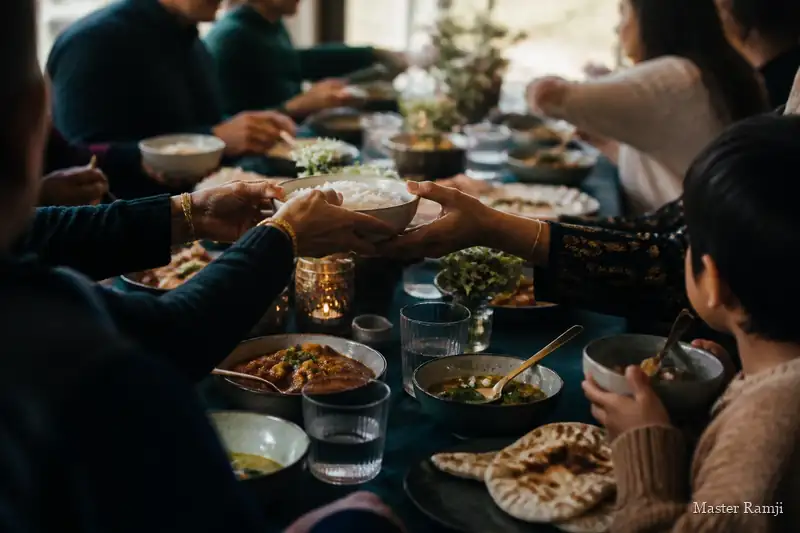
Before you decide on anything, ask what a custom is doing. Your parents' insistence on a large wedding may be about honouring relatives who supported them when they first arrived. A request to live nearby may be fear about growing old alone. When you can name the purpose, you have more to work with than yes or no.
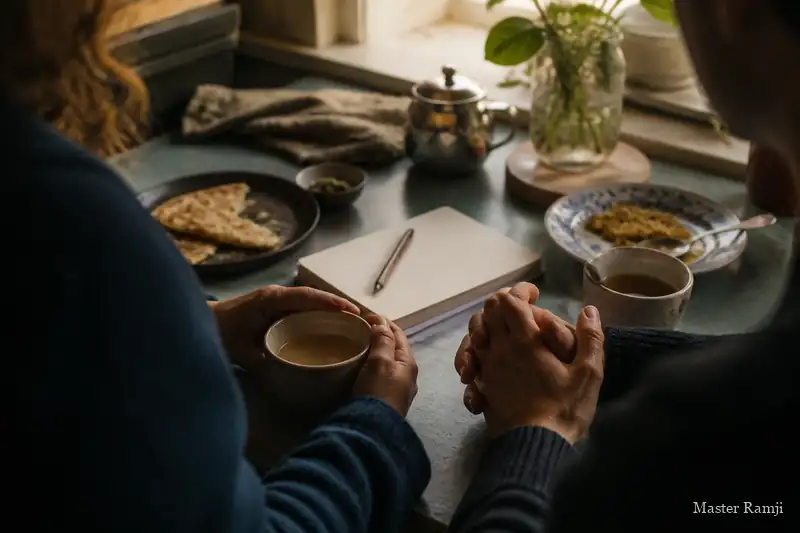
Try this with your partner over a quiet dinner. Each of you lists the family traditions you grew up with. Then, beside each one, write what you think it is for. You may be surprised by what you each care about, and by what you don't.
What should you keep, adapt or renegotiate?
Every family is different, so treat these as examples and not as rules. Sort your own list into three columns.
Often worth keeping
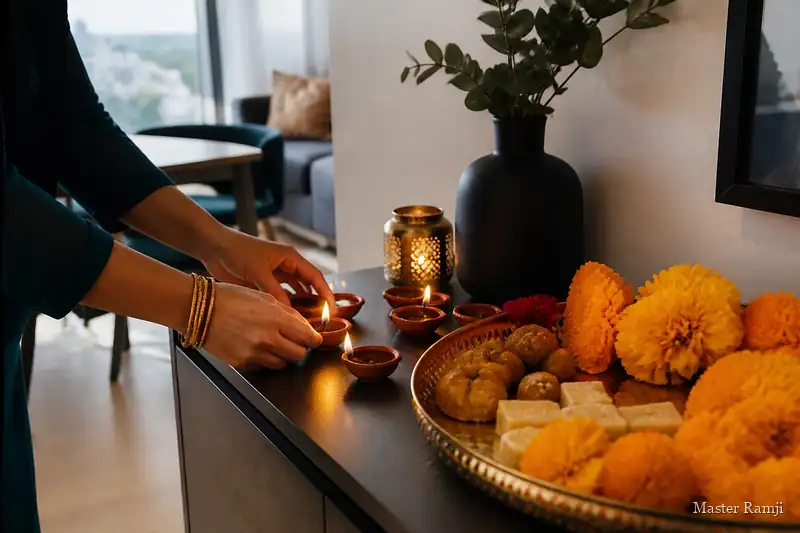
- Festivals and meals that bring the wider family together
- Greeting and caring for elders in the way they recognise as respect
- Language, stories and naming rites you would want your children to know
Often worth adapting
- A wedding with fewer events, or ceremonies from both sides
- Horoscope matching as one conversation, not a verdict
- Sunday visits or regular calls in place of living under one roof
Often worth renegotiating
- Who has the final word on your partner, your home and your career
- Money sent to family, and whether both partners agree on how much
- Who does the cooking, cleaning and caring, and whether gender decides that
- How much of your private life relatives are entitled to hear about
Keep the list short, and agree on your two or three firm lines. Everything else can be a place to give ground, which matters more than it might seem. Parents who see you honouring things they value are often more able to hear the rest.
How do you raise it with parents?
- Agree as a couple first. If your parents can find a gap between you, the conversation turns into a contest for your loyalty.
- Lead with your own family. Your parents will take a hard message better from you. Your partner shouldn't have to deliver it.
- Choose one topic. Don't try to settle the wedding, the house and the grandchildren in a single evening.
- Start with what you are keeping. Say what you value before you say what you want to change.
- Accept that it will take more than one talk. Your parents may need time, and their first reaction may not be their last.
We have more detailed guides on telling your parents about a relationship and on your options when parents disapprove.
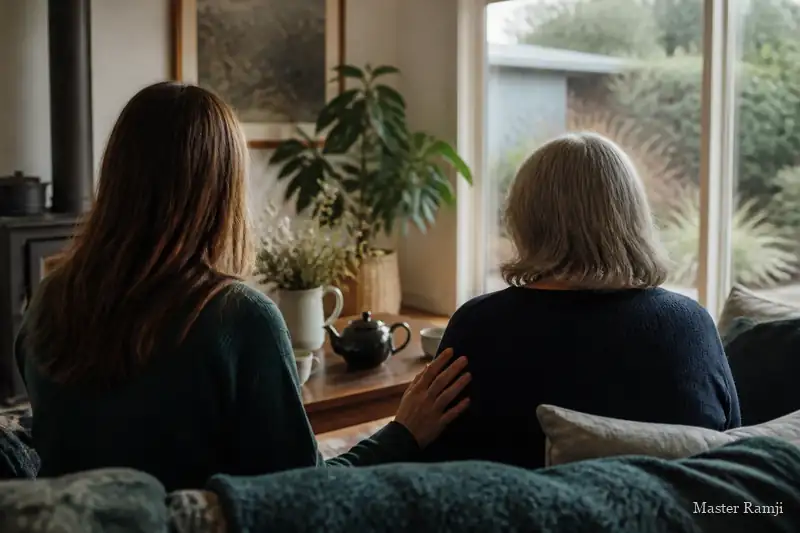
What if horoscope matching becomes the sticking point?
For some families, a chart match is the real test. It helps to understand what it is. Guna scoring is a traditional method of comparing two charts, and families and astrologers read it differently. It isn't science, and it can't tell you whether a marriage will last.
If a score is being used to end the discussion, ask what your parents are actually afraid of. Our article on whether a low-compatibility relationship can work may give you both a calmer way to talk about it.
Where can you get support around Brunswick?
A counsellor who understands family systems can help when you keep having the same argument. Merri-bek City Council lists Holstep Health as offering relationship and family therapy, with services in Brunswick, Coburg, Fawkner and Glenroy. Relationships Australia Victoria offers counselling for couples and families. Ask either one about interpreters or family sessions before you book, as what's available can change.
Some lines aren't about tradition at all. If someone is threatening you, controlling your money or movements, or pressuring you to marry, that's not a cultural disagreement. Please call 1800RESPECT on 1800 737 732 for confidential support, or 000 if you are in immediate danger. Lifeline is on 13 11 14 at any hour if things feel too heavy.
Can relationship guidance from an astrologer help?
Some couples and families do value a reading, particularly if the older generation trusts it. Guidance when family opposes a relationship is a confidential talk about what the charts traditionally suggest, along with practical questions for your own family. Sessions can be held by phone, WhatsApp or video, and fees are stated before any paid work.
It has limits. A reading can't change anyone's mind, and it can't tell you whom to marry. Nobody should offer to make your parents agree through ritual or spells, and you shouldn't pay anyone who does. The decision stays with the two of you.
You can find more local guides on our inner north-west Melbourne page. If you would like to talk it through, get in touch.
Related service
Keep reading

Dating Across Cultures in Melbourne's West
Dating someone from another culture in Footscray or Melbourne's west? How to read family expectations, when to tell parents, and what a chart can and can't add.
Read article →
Interfaith Couples in Coburg: Telling Both Families
An interfaith couple in Coburg? How to plan who tells which family, what to say first, how to handle questions about faith and children, and where to find support.
Read article →
Separated and Still Sharing Kids in Narre Warren
Separated and sharing children in Narre Warren? Put the kids' safety first, find local mediation and legal help, and keep yourself steady while things settle.
Read article →More from Inner North-West Melbourne
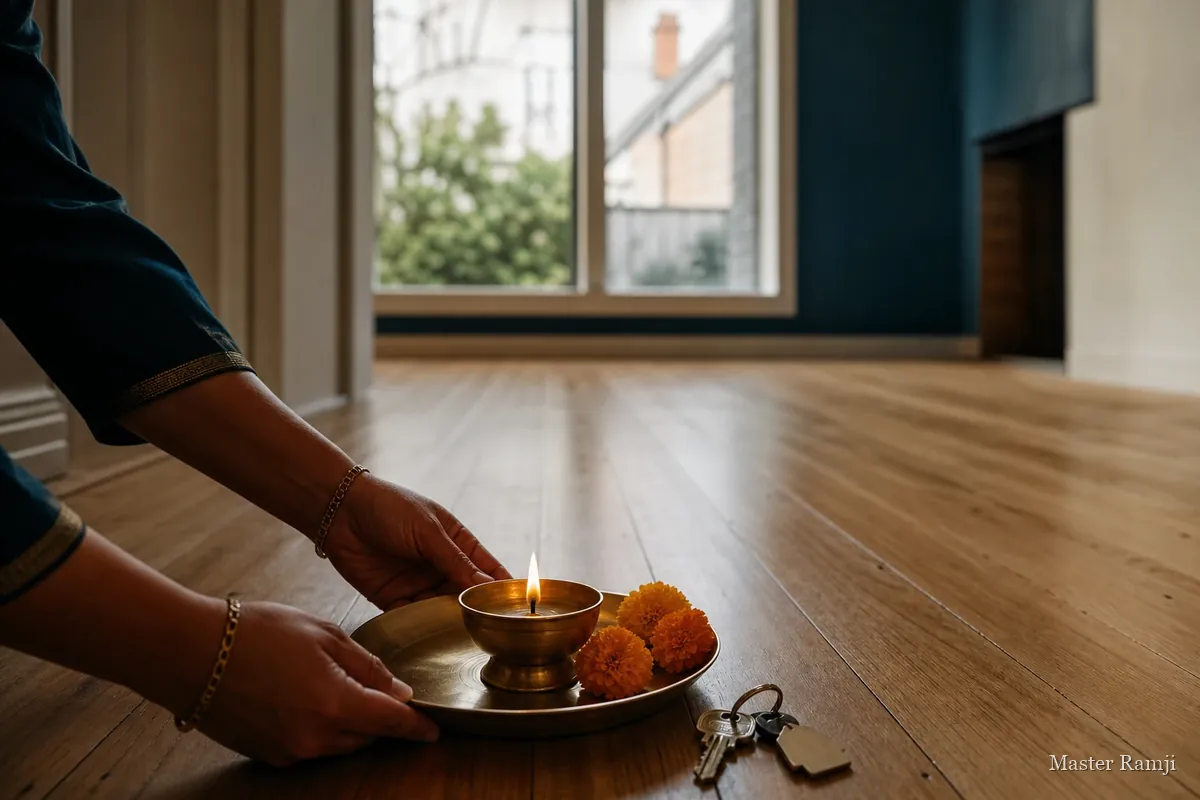
Cleansing a Kensington Townhouse Before Moving In
Moving into a Kensington townhouse? How to plan a short house blessing with neighbours through the wall, including timing, noise, smoke and what to skip.
Read article →
Remembering Someone by the Maribyrnong River
A quiet remembrance ritual for walking by the Maribyrnong River, with nothing left in the water. Where to walk, what to bring, and where to find support.
Read article →
Looking After Elderly Parents in Avondale Heights
Caring for ageing parents in Avondale Heights? Family duty and real support services side by side, from aged care assessments to elder abuse help.
Read article →Local pages
Astrologer in Ascot Vale
Vijay Ramji is a Vedic astrologer and spiritual healer based in Ascot Vale, Melbourne. Sessions are held by phone, WhatsApp or video, booked in advance.
View area →
Astrologer for Moonee Ponds
For Moonee Ponds homes, leased offices and family matches. Vijay Ramji is based in Ascot Vale, with sessions held by phone, WhatsApp or video.
View area →
Astrologer for Essendon
For Essendon households weighing up renovations, parents and teenagers, or a mixed-faith family. Based in Ascot Vale, with sessions by phone, WhatsApp or video.
View area →Quick answers
Can astrology bring my ex back?
No, astrology can't make your ex come back, and nobody can honestly promise it. Here is what a reading can help with, and how to avoid costly promises.
Read answer →Is vashikaran ethical?
No. Vashikaran aims to control another person, which is unethical and is refused here. Why consent matters, and where to turn if you feel pressured or controlled.
Read answer →Talk to Vijay Ramji
Tell us what you are facing. If a reading is unlikely to help, you will be told that plainly.