
Dating Across Cultures in Melbourne's West

Dating across cultures in Footscray usually goes best when you learn what each family means by dating before you introduce anyone. Talk as a couple first, tell parents when the relationship is steady, and expect different timelines. Any compatibility reading needs both partners' consent, and it can't settle whether your families will accept you.
Footscray's migration history comes in layers. Victorian Places records English and European arrivals first, then people from Asia and the Middle East. In 1976, residents born in Yugoslavia, Greece or Italy made up 22.5 per cent of the population. At the 2011 census, the same page reports, 11.8 per cent of residents spoke Vietnamese at home, against 1.6 per cent across Victoria. Maribyrnong City Council says more than 38 per cent of its residents were born overseas, and that together they speak over 80 languages.
So meeting someone from a different background here is ordinary. The harder part usually comes later, when two sets of family expectations meet. This guide covers that part: what dating means to each family, when to tell them, and whether a chart reading has any place in it.
Key takeaways
- The word "dating" can mean very different things in different families, so ask early.
- Sort out your own views as a couple before you involve parents.
- Each partner should lead with their own family, and each family may need a different pace.
- A chart reading is optional, needs both people's consent, and can't decide for you.
Why doesn't a diverse suburb make this easy?
Living among many cultures means nobody looks twice at you on the street. It doesn't change what happens at your parents' table. A parent can be friendly with neighbours from every background, and still be upset that their son is seeing someone from outside the community. Being open to neighbours and being open to in-laws are two different things.
The worry underneath is often about loss. A family that arrived with very little may have held on to its language, food and faith with real effort. If the next generation partners with someone outside it, they may fear that those things will end with them. That fear can come out sounding like prejudice, and sometimes it is prejudice. Often, though, it's both.
Distance plays a part too. Melbourne's west runs from inner Footscray out to growth suburbs where extended family may live a few streets apart. Your partner's parents might be ten minutes away, or in another country and known to you only through video calls.
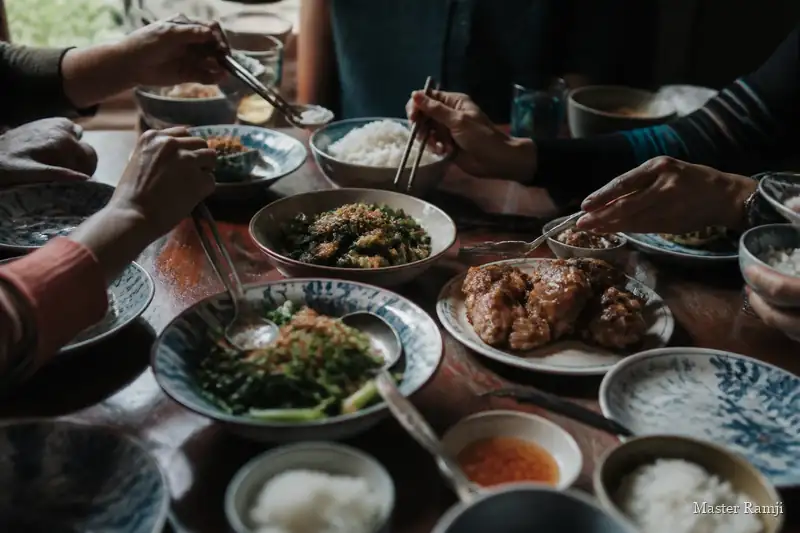
What does dating mean in each family?
Don't guess from a passport. A Punjabi Sikh family and a Tamil Brahmin family may differ as much as either differs from a Vietnamese Catholic family or an Eritrean Orthodox one. Ask your partner directly, and answer these yourself:
- Is dating seen as normal, or only as the step just before engagement?
- Who would be told first, and how soon would the wider family find out?
- Do religion, caste, language or region matter? To whom, exactly?
- Are there expectations about living near parents, or caring for them later?
- Does anyone expect money to go to relatives overseas?
You may find the strongest views belong to one grandparent, or that your partner has never asked these questions out loud. Cross-cultural dating gets easier once these things are said, even when the answers aren't what you hoped for.
When should you tell your family?
There's no correct date. These signs suggest you may be ready:
- You've talked about what you each want over the next few years.
- You can both cope if the first answer is no, or if nobody speaks to you for a while.
- You'd rather they heard it from you than from a cousin who saw you at the station.
Waiting makes sense in the early months, when you are still finding out whether this relationship is what you want. It also makes sense if telling your family could put you at risk. In that case, your safety comes before honesty about your plans.
When you do tell them, start small. Choose one person who is likely to listen, such as a sibling or an aunt. Then give your parents plain facts: a name, how you met, and that this person matters to you. Leave weddings out of it unless they raise the subject. A first reaction is rarely the last one, so give them room to have it.
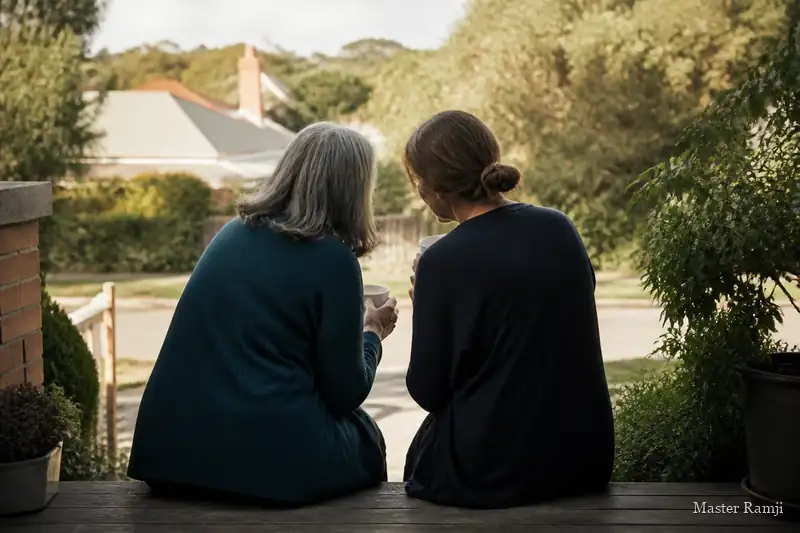
What if your families run on different timelines?
This catches many intercultural couples off guard. One family may want to meet within weeks and ask straight away about your intentions. The other may not expect an introduction until there is an engagement. Neither is wrong, but each can read the other as rude.
A few things help:
- Explain your family to your partner in advance. Tell them what a question really means. "What does your father do?" may be a sign of interest, not an interrogation.
- Agree on one answer to "Are you getting married?" Something like "We're serious and we'll tell you first when we decide" works in most houses.
- Don't let the faster family set the pace. A meeting you feel rushed into can do more harm than a slower start.
- Translate kindly. If a parent speaks limited English, you may end up interpreting. You don't have to pass on every hurtful remark word for word.
Can astrology help an intercultural relationship?
It can help if you both value the tradition and want a structured way to talk. A love compatibility reading compares two birth charts for themes such as temperament and what each person looks for in a partner.
There are limits, and they matter more here. Both of you must agree, so never have a partner's chart read behind their back. Your partner may not know their birth time, or may come from a family that has no use for astrology, or one that rejects it on religious grounds. That deserves respect.
Astrology is a tradition and has not been shown to predict how relationships turn out. A score can't tell you whether your parents will come around. Our page on how accurate love compatibility astrology is covers this honestly. If you do want to go further, what compatibility means beyond sun signs is a better starting point than an app. Couples whose families follow two different systems may also find how Indian and Chinese families in Box Hill approach readings useful.
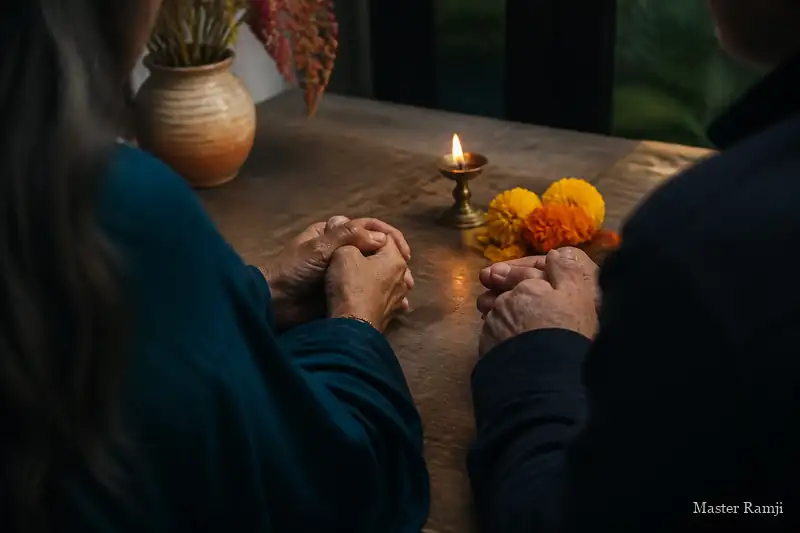
When is it more than a family disagreement?
Disapproval hurts, but it's a normal part of family life. Some things are different. Threats, tracking your phone, taking your money or documents, physical harm, or pressure to marry someone else are not ordinary disagreements.
If you feel unsafe or controlled, call 1800RESPECT on 1800 737 732. For a less urgent problem, Relationships Australia Victoria offers counselling for couples, families and individuals, and it lists Sunshine among its locations. A counsellor can do things a reading can't, including helping you work out what you want to do next.
How do you protect the relationship meanwhile?
- Limit the family talk. Set aside time for it, and then talk about something else.
- Don't make your partner carry it. Your parents' comments are yours to deal with first.
- Agree how long hiding is acceptable. Being kept secret for a few months is one thing. Being kept secret for years is another, and your partner may reach a limit.
- Learn something on purpose. Go to one festival, or learn how to greet their grandmother. Small efforts get noticed.
If you'd like to talk it through with someone outside your circle, sessions can be held by phone, WhatsApp or video, and what you share stays confidential. You can browse more guides written for Melbourne's western suburbs or get in touch.

Related service

Keep reading

Interfaith Couples in Coburg: Telling Both Families
An interfaith couple in Coburg? How to plan who tells which family, what to say first, how to handle questions about faith and children, and where to find support.
Read article →
Separated and Still Sharing Kids in Narre Warren
Separated and sharing children in Narre Warren? Put the kids' safety first, find local mediation and legal help, and keep yourself steady while things settle.
Read article →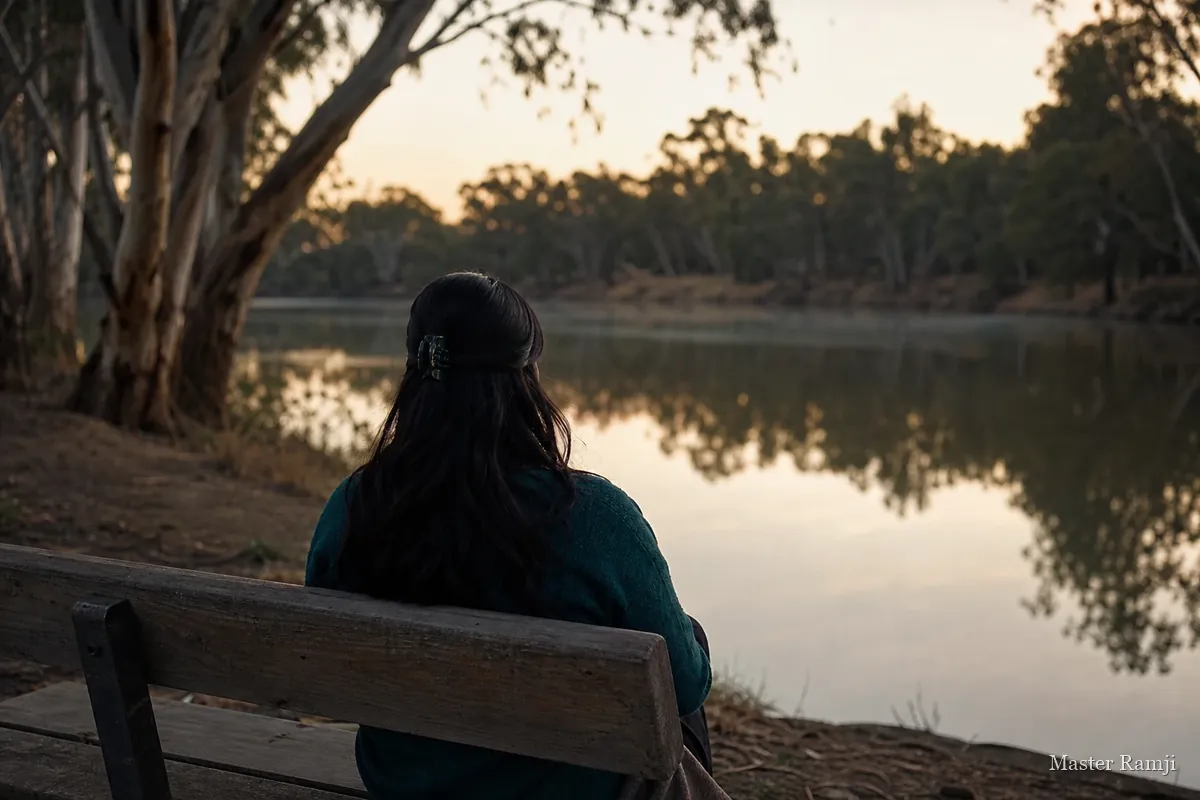
Love and Family Pressure From Shepparton
Facing family pressure about who you love while living in Shepparton? Why it can feel lonelier in a regional city, and where to find confidential support.
Read article →More from Melbourne's Western Suburbs
Moving Into an Older Home in Sunshine
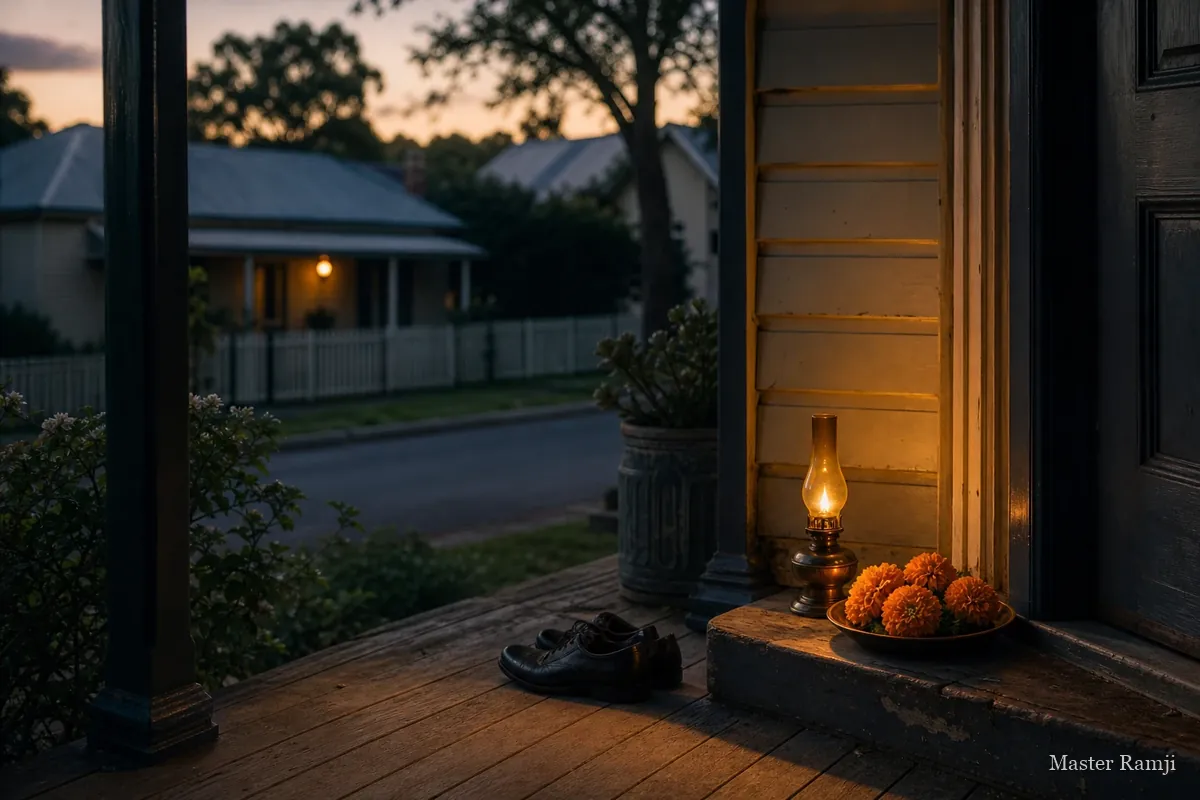
Moving into an older home in Sunshine? Check asbestos, gas heaters and damp first, then settle the house with a simple blessing that disturbs nothing.
Read article →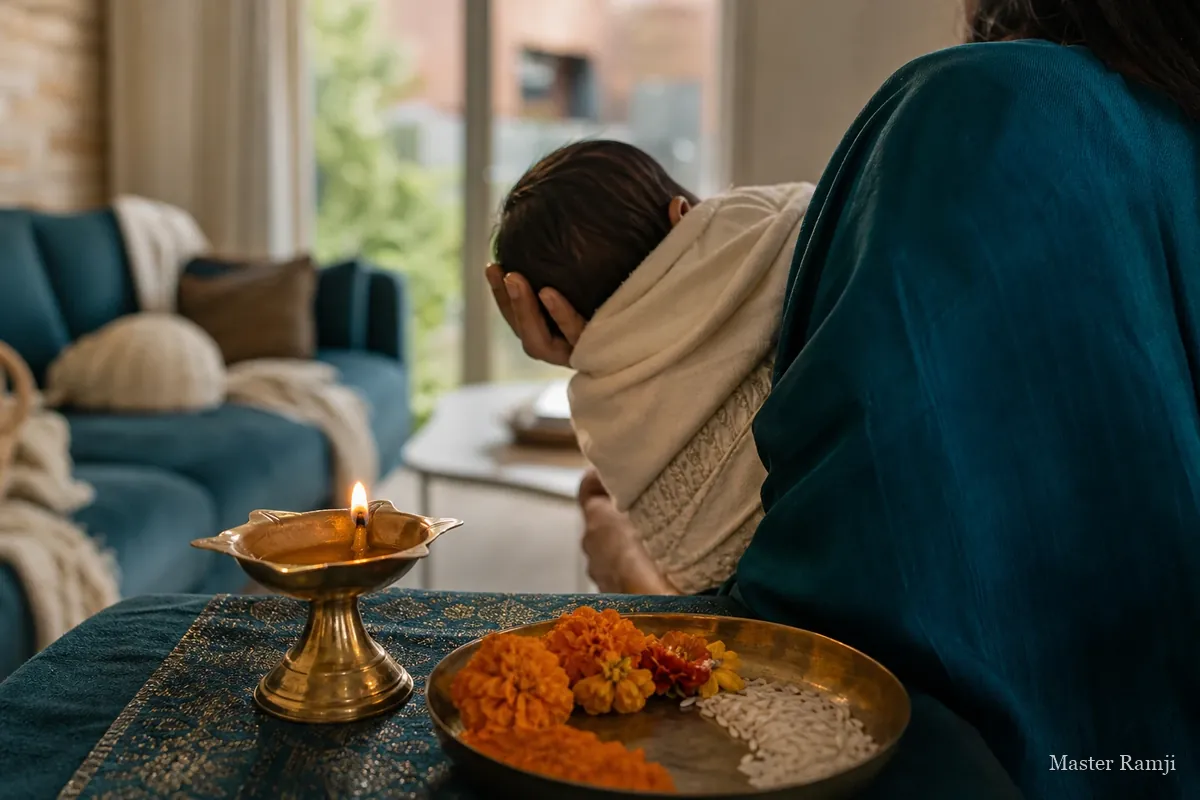
Planning a Namkaran in Caroline Springs
Planning a namkaran in Caroline Springs? Home or hired hall, what City of Melton rooms allow, keeping your baby safe, and registering the legal name.
Read article →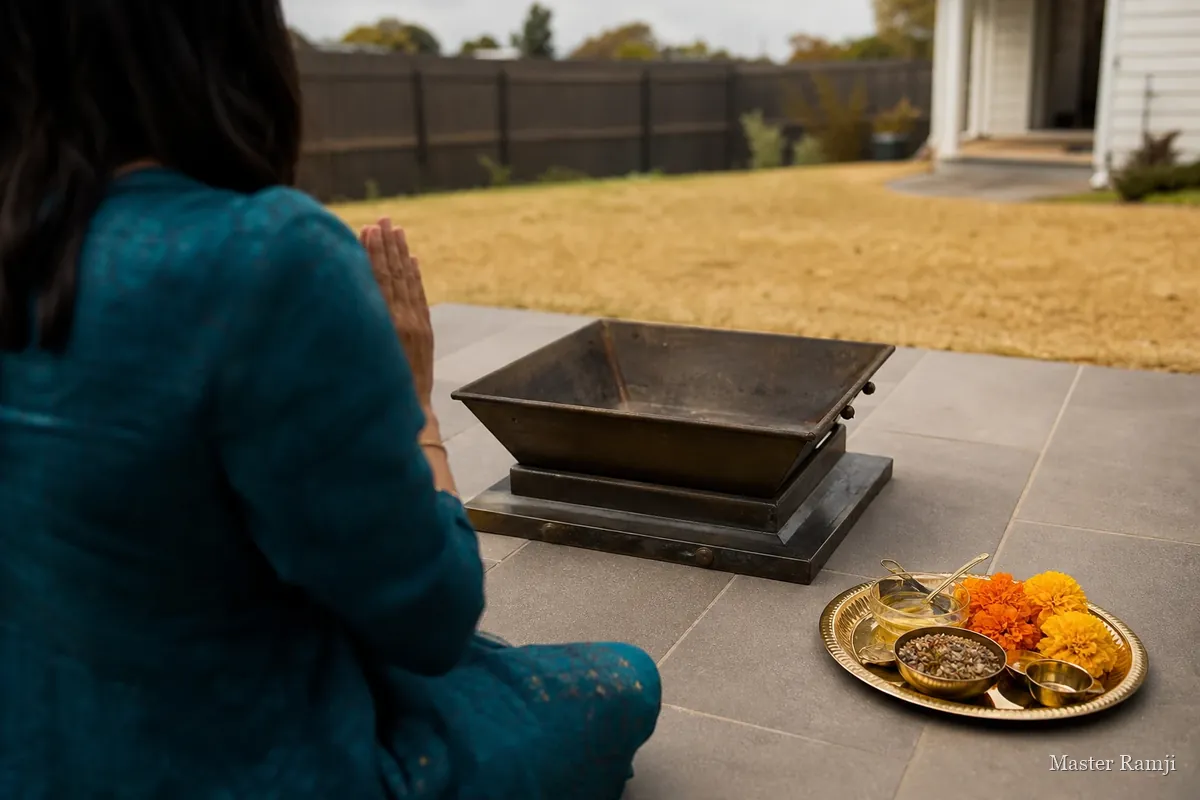
Outdoor Havan in Melton: Check the Fire Danger First
Planning an outdoor havan in Melton? Total Fire Bans, Fire Danger Period rules, permits and safer alternatives, checked against CFA and council advice.
Read article →Local pages
Astrologer for Footscray
Live in Footscray? Vijay Ramji is based in Ascot Vale, with sessions by phone, WhatsApp or video. Questions that fit apartments, study, shops and mixed families.
View area →Astrologer for Sunshine
In Sunshine, Victoria? Vijay Ramji is based in Ascot Vale, with sessions by phone, WhatsApp or video. Questions about older homes, changing work and family.
View area →
Astrologer for Werribee
Live in Werribee? Vijay Ramji is based in Ascot Vale, with kundli readings by phone, WhatsApp or video. Questions for long-settled families and new arrivals.
View area →Quick answers
How accurate is love compatibility astrology?
Love compatibility astrology isn't accurate in any measurable sense. Here is what the evidence says, and how to use a compatibility reading sensibly.
Read answer →Can astrology bring my ex back?
No, astrology can't make your ex come back, and nobody can honestly promise it. Here is what a reading can help with, and how to avoid costly promises.
Read answer →Talk to Vijay Ramji
Tell us what you are facing. If a reading is unlikely to help, you will be told that plainly.