
How to Tell Your Parents About Your Relationship
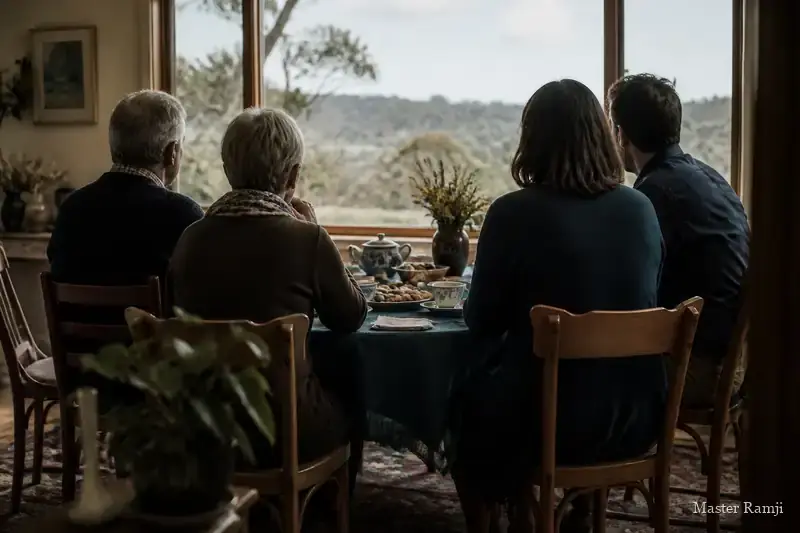
To tell your Indian parents about a relationship, plan it as a series of talks. Agree with your partner first, decide what you are asking for, prepare honest answers to the likely questions, and choose a calm moment. Expect a strong first reaction. If telling them could put you at risk, safety comes first.
You may have rehearsed it in the shower for months. You may have started a sentence at dinner and turned it into a question about the weather. Telling parents about a relationship is hard in any family. In many South Asian families it can feel like telling them about your whole future, and theirs.
This guide treats it as something to plan rather than blurt out. It won't promise a happy reaction, because nobody can. It can help you go in steadier.
Key takeaways
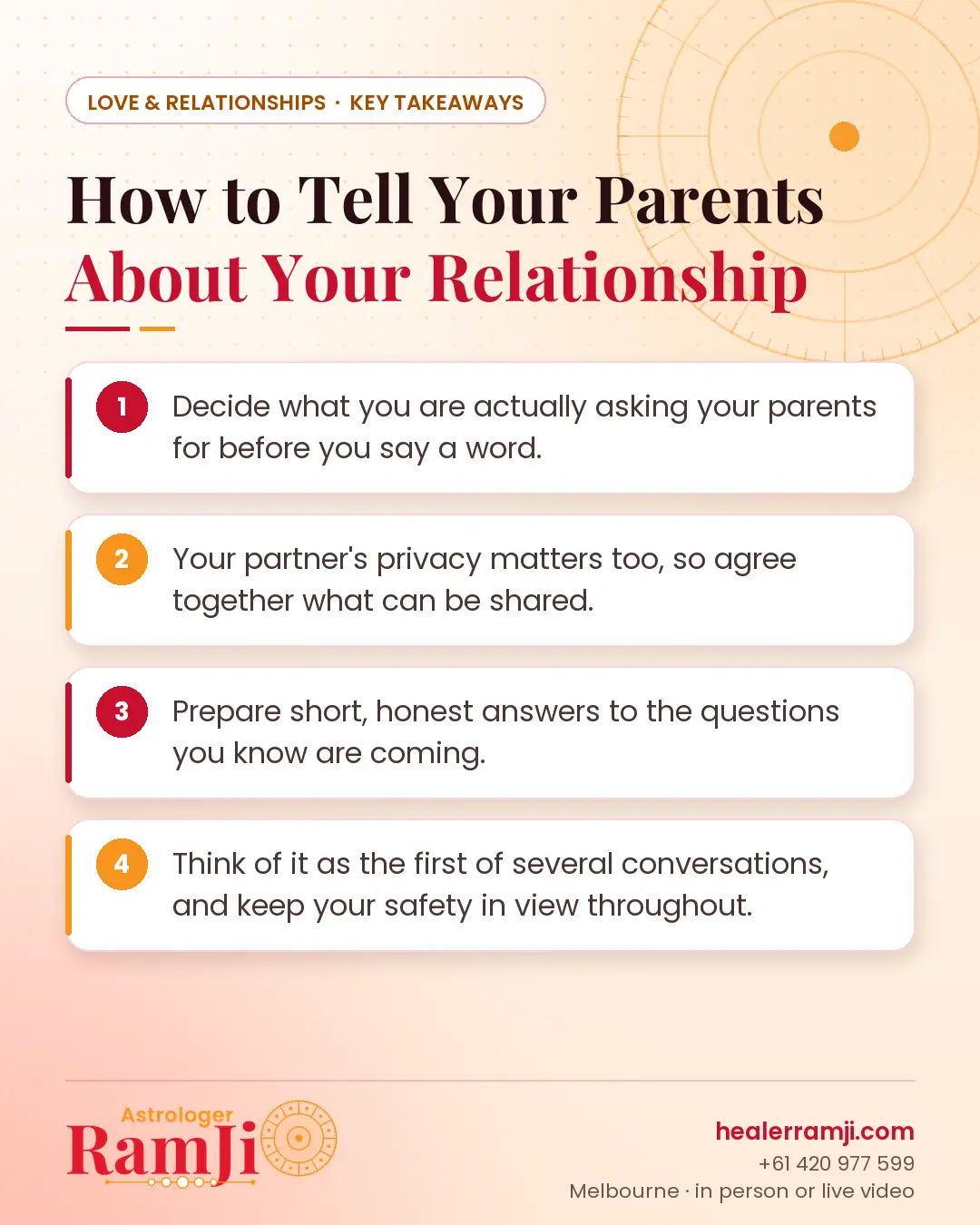
- Decide what you are actually asking your parents for before you say a word.
- Your partner's privacy matters too, so agree together what can be shared.
- Prepare short, honest answers to the questions you know are coming.
- Think of it as the first of several conversations, and keep your safety in view throughout.
What are you asking them for?
This sounds obvious, but many people skip it. Are you letting your parents know? Asking them to meet someone? Asking for their blessing to marry? Each one is a different conversation.
If you are an adult, you are not asking permission to have feelings for someone. You may still want your parents' acceptance very much, and that is worth saying aloud. Being clear in your own mind stops the talk sliding into a debate about whether you are allowed to be in a relationship at all.
Have you agreed with your partner?
Your partner has a stake in this. Talk about how much of their story you will share, including their job, family, religion or a past marriage. Some people haven't told their own families yet, and news travels fast through community networks. Ask before you show photos or forward their details to relatives.
Agree, too, on what happens if the answer is no for now. Will you keep seeing each other quietly? Give it six months? Knowing this ahead of time stops you making promises in the heat of the moment.

Who is who in your family?
Before choosing a moment, take a quiet look at the people involved. Ask yourself:
- Who decides? In some homes it is one parent. In others, a grandparent or an uncle carries real weight.
- Who worries most? Often this is the person most concerned with what the community will say.
- Who keeps secrets well? A sympathetic aunt is no help if she tells the whole family group chat.
- Who has done this before? A cousin who married outside the expected path may know what worked and what didn't.
This isn't about manipulating anyone. It is about not being blindsided by the person whose opinion turns out to matter most.
Which questions should you prepare for?
Most families ask some version of the same things. Prepare a short, true answer to each, and don't invent anything to make your partner sound more acceptable. A lie found out later does far more damage.
- What is their family background, community or caste?
- What do they do for work, and are they settled?
- What religion are they, and what about any children?
- How long has this been going on, and why are we only hearing now?
- Are you planning to marry, and when?
- Have you matched horoscopes?
- What will people say?
It is fine to answer some of these with "we haven't decided yet". It is also fine to say, kindly, that a question isn't one you are ready to discuss.

When and where should you tell them?
Choose a calm, private moment with time to spare. Avoid weddings, festivals, the night before an exam and any time someone is already upset. In person is usually better than a message. If your parents live overseas, a video call at a time that suits their day is kinder than a voice note they replay at 3am.
Some people find it easier to start with one parent. That can work, as long as you aren't asking that parent to keep a big secret from the other for long.
What could you actually say?
Keep the opening simple and warm. For example:
"I want to tell you something important because I respect you and don't want you to hear it from anyone else. I have been seeing someone. Their name is Priya. She matters to me, and I would like you to know her."
Then stop and let them respond. Resist the urge to fill every silence with reasons. You don't need to win the conversation. You only need to start it honestly.
What should you avoid?
- Ultimatums. "Accept them or lose me" closes doors you may want open later.
- Surprise introductions. Bringing your partner home unannounced puts everyone on the spot, especially your partner.
- Comparisons. Pointing out a cousin's choices usually turns into an argument about the cousin.
- Telling them during a fight. The news will be heard as an attack.
What if they bring up horoscopes or tradition?
For some parents, horoscope matching is a genuine part of faith. For others, it is a polite way to say no without naming the real worry. Either way, a chart can't forbid a relationship, and traditions differ on how much a matching score means. If your family wants a second view, a calm Guna Milan review can explain what the result does and doesn't say. Try to find out what lies underneath, too. Fear about money, faith, grandchildren or losing you is easier to talk about once it has a name.
What happens after the first talk?
Expect shock, tears, silence or anger. A first reaction is rarely a final one. Give them time, then check in. A short follow-up such as "I know that was a lot. I'm happy to answer anything when you're ready" keeps the door open. Meeting your partner over a simple meal often does more than any argument.
If things stay stuck, our article on your options when parents disapprove looks at the next stage. Parents reading this may find a guide for parents of an intercaste couple helpful. A family counsellor, for example through Relationships Australia Victoria, can also help everyone talk without it turning into a fight.
When does safety come first?
Disagreement is normal. Fear is not. If you think telling your family could lead to threats, violence, your phone or passport being taken, or being sent overseas, it is fine to wait and get advice first.
- Pressure to marry someone else: My Blue Sky is a national forced marriage service offering free, confidential help. Forcing someone to marry is a crime in Australia.
- Aged 5 to 25: Kids Helpline is free on 1800 55 1800, at any hour.
- Family violence or threats: call 1800RESPECT on 1800 737 732, or 000 in immediate danger.
Can astrology help with any of this?
Only a little, and only as a tool for reflection. Some people like to think about timing, or about how their own chart describes the way they handle conflict. A session on family opposition to a relationship can help you rehearse the conversation and think through what you won't give up. It won't take sides, and it can't change anyone's mind. If that sounds useful, get in touch.
Related service

Keep reading

What to Do When Parents Disapprove
When parents disapprove of your partner, what can you do? Six realistic options that protect your own choices and your family ties, and where to get help.
Read article →
Forgiving Yourself After a Relationship Ends
Stuck blaming yourself after a relationship ended? A calm way to sort fair responsibility from self-punishment, with simple reflection and a quiet ritual of release.
Read article →
Indian and Chinese Family Traditions in Box Hill Couples
For Indian and Chinese couples in Box Hill: how Vedic charts and Bazi differ, how to raise them respectfully with both families, and what neither one can decide.
Read article →Quick answers
Can astrology bring my ex back?
No, astrology can't make your ex come back, and nobody can honestly promise it. Here is what a reading can help with, and how to avoid costly promises.
Read answer →Is vashikaran ethical?
No. Vashikaran aims to control another person, which is unethical and is refused here. Why consent matters, and where to turn if you feel pressured or controlled.
Read answer →Talk to Vijay Ramji
Tell us what you are facing. If a reading is unlikely to help, you will be told that plainly.