
New to Tarneit: Settling In as a Young Indian Family
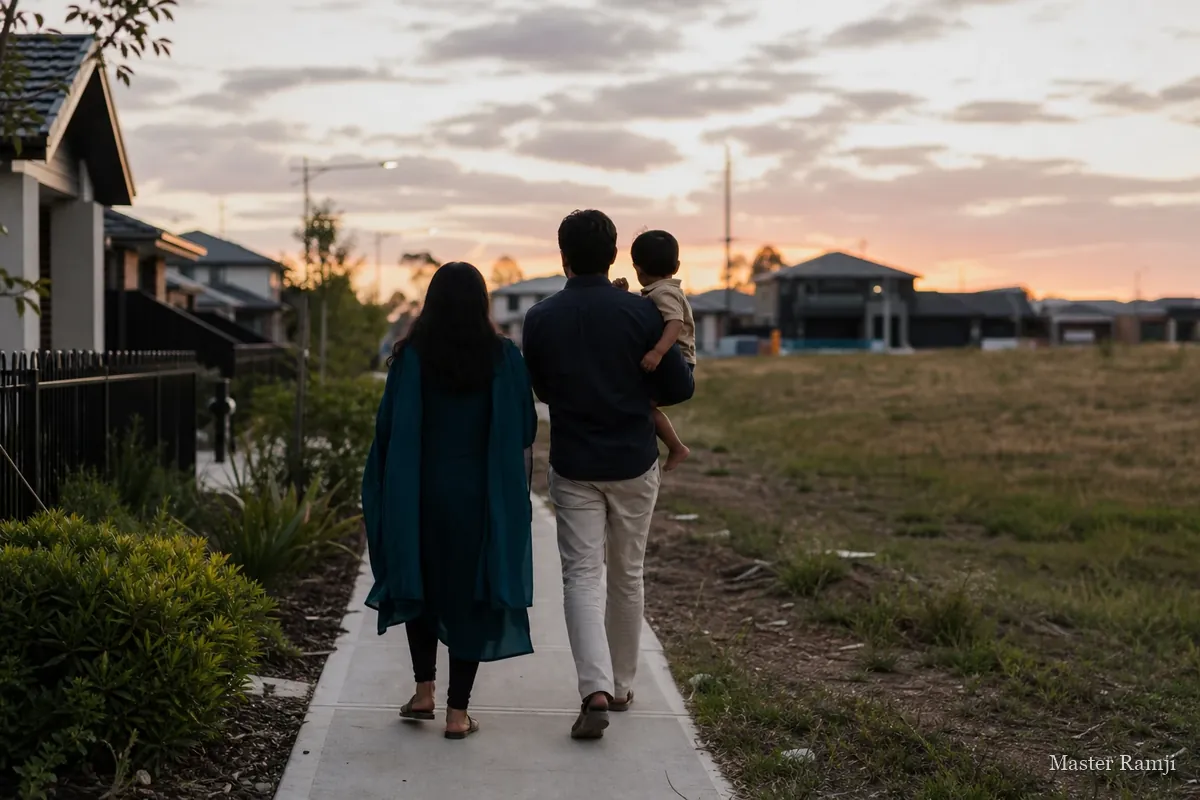
An Indian family settling in Tarneit does best by setting a few simple routines early, agreeing what you can realistically offer relatives overseas, and using local services such as free Maternal and Child Health visits and the Julia Gillard Library. Neighbours are often new too, so friendships usually need deliberate effort.
Your family may have no grandparents around the corner in Tarneit. Victorian Places shows a farming district that had only a few hundred residents at the start of this century. By the 2021 census, the ABS counted 56,370 people, and about 27 per cent reported Indian ancestry. So you may hear your language at the shops and still know nobody well enough to ask for a school pick-up.
This guide is for young families in their first year or two here. It looks at the daily routines that hold a household together, and at the expectations that arrive by video call from the other side of the world.
Key takeaways
- Choose two or three routines and protect them, rather than trying to rebuild your old life all at once.
- Decide together what you can offer relatives overseas before the next request comes.
- Tarneit has free and low-cost family services close by, but you usually have to seek them out.
- If home feels unsafe, or one parent is struggling for weeks, go to real help first.
Why can a growth suburb feel harder than you expected?
On a new estate, almost everything is still being worked out. Your street may have empty blocks, your neighbours may have moved in the same month, and the shops you need may be a drive away. There are few long-time locals to tell you which kinder has a waiting list or which paediatrician is good with worried first-time parents.
Then add the household load. You may be paying off a house and land package, working different rosters and raising a baby with no extended family nearby. Back home, an aunt might have taken the baby for an hour without being asked. Here, that hour has to be planned.
None of this means you made the wrong move. The support you grew up with just has to be built by hand.

Which routines are worth setting first?
Pick the ones that reduce arguments. For many households, these make the biggest difference:
- A weekly planning talk. Ten minutes on Sunday. Who has the early shift, who does drop-off, who takes the car, and who gets a break.
- One meal together. It needn't be dinner. If you work opposite shifts, breakfast on your shared day off counts.
- A fixed time for calls home. India is hours behind Melbourne, so calls can land right at the children's bedtime. Choose a time that suits your house as well as theirs.
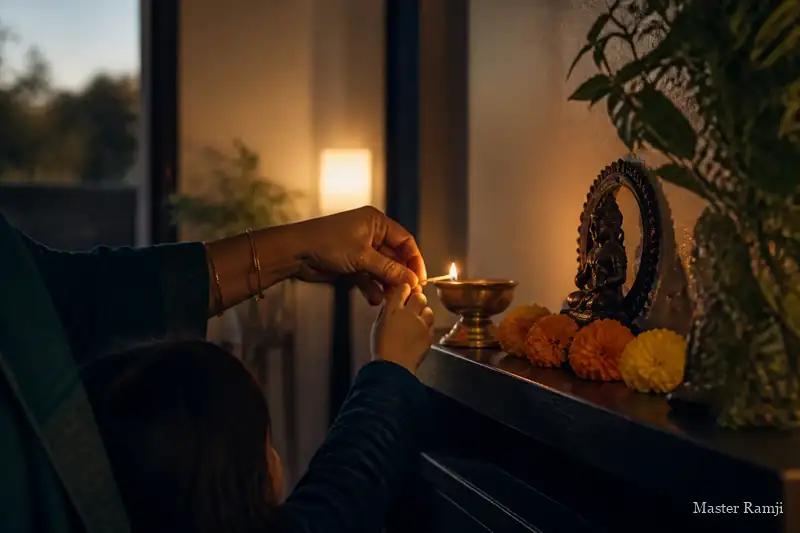
- A small faith routine. A lamp lit together on one evening a week is enough for young children to remember.
- One regular local outing. The same playgroup or library session each week is how you start recognising other parents.
How do you handle expectations from relatives overseas?
Moving away doesn't end your duties at home, and many of them come with love. Parents may hope for money each month, a long visit, a return trip for every wedding, or grandchildren who speak the language perfectly. These hopes can collide with a mortgage and two jobs.
It helps to talk as a couple before anyone asks. Try to agree on:
- Money. A fixed monthly amount you can both live with, and what happens in an emergency. If debt is already a worry, read about getting real help with debt stress first.
- Visits. How long relatives can comfortably stay, and who gives up which room. Our guide on parents visiting from India for months covers this in more detail.
- Travel. Which events you will fly back for and which you will join by video.
- Language and religion. What you will actually do each week, rather than what sounds right on the phone.
When you answer relatives, try to be kind and specific: "We can send this much each month, and we can visit next year." A clear answer often causes less hurt than repeated vague promises. Each partner should also speak to their own side of the family, so nobody is cast as the one who said no.
What help is there around Tarneit?
Services change, so check the details before you go. These are good places to start:
- Maternal and Child Health. Wyndham City Council's Maternal and Child Health service is free for families with children from birth to school age, regardless of Medicare or visa status. Its Tarneit centres include Bembit Bag-rook Community Centre on Polly Parade and the Tarneit Community Learning Centre on Sunset Views Boulevard. A nurse can also be a good first person to tell if you are not coping.
- Julia Gillard Library. The library on Sunset Views Boulevard lists Story Time and Rhyme Time sessions for young children. Its collection includes books and other materials in Hindi, Punjabi, Gujarati, Tamil, Bengali and Urdu, so bedtime stories in your own language may be easier to find than you think.
- The community learning centre. It is attached to the library and is a sensible place to ask about local classes and groups.
- Temples and cultural groups. Our guide to finding a spiritual community in Wyndham explains how to choose one that suits your tradition and your roster.
If one of you commutes on the V/Line Geelong line from Tarneit station, plan your household around the real timetable rather than the ideal one, and check for service changes.
How can a couple stop keeping score?
In many families, the old pattern gave one person the paid work and another the home, with relatives filling the gaps. Here, both of you may be working and no one is filling the gaps. Without meaning to, each person can start counting.
Try naming the invisible work out loud: booking vaccinations, remembering birthdays in India, watching the budget, comforting a mother-in-law on the phone. Then share it deliberately. If one parent is at home with a baby, give that time real value, since it often comes with little adult company.

Can a family reading help?
Some families like to reflect on a busy stretch through a chart. In Vedic astrology, the fourth house is traditionally linked with home and mother, and a person's current dasha is read as the broad theme of a period. Traditions differ on the details, and none of this is scientific. A chart can't tell you who is right in an argument or whether you should have moved.
What it can offer is a structured conversation. Family harmony guidance is a confidential talk about tension at home, with a focus on steps you can take yourselves. If you are also still working through the house, you may like our guide to vastu for a new build in Tarneit. A good reader will make clear that neither one replaces advice from a GP, counsellor or financial professional.
When is it more than settling-in stress?
Please reach out if a parent has felt low or anxious for more than a couple of weeks, is struggling to bond with a baby, or has started to feel that the family would be better off without them. A GP or your Maternal and Child Health nurse can help. Loneliness after a move is nothing to be ashamed of. Beyond Blue is on 1300 22 4636, and Lifeline is on 13 11 14 at any hour.
If you feel afraid of your partner or an in-law, or someone controls your money, your phone or your visa papers, that isn't a settling-in problem. Call 1800RESPECT on 1800 737 732, and call 000 if you are in immediate danger.
Where to from here?
A suburb that is still being built takes a while to feel like home, so give yourselves time. Sessions can be held by phone, WhatsApp or video, which suits families with young children and rosters that rarely line up. You can read more about our work in Melbourne's western suburbs or get in touch.

Related service

Keep reading

Raising Kids Between Two Cultures in Point Cook
Raising Indian kids in Point Cook? How to fit school friends, sport, language classes and family traditions into one week, without making children choose.
Read article →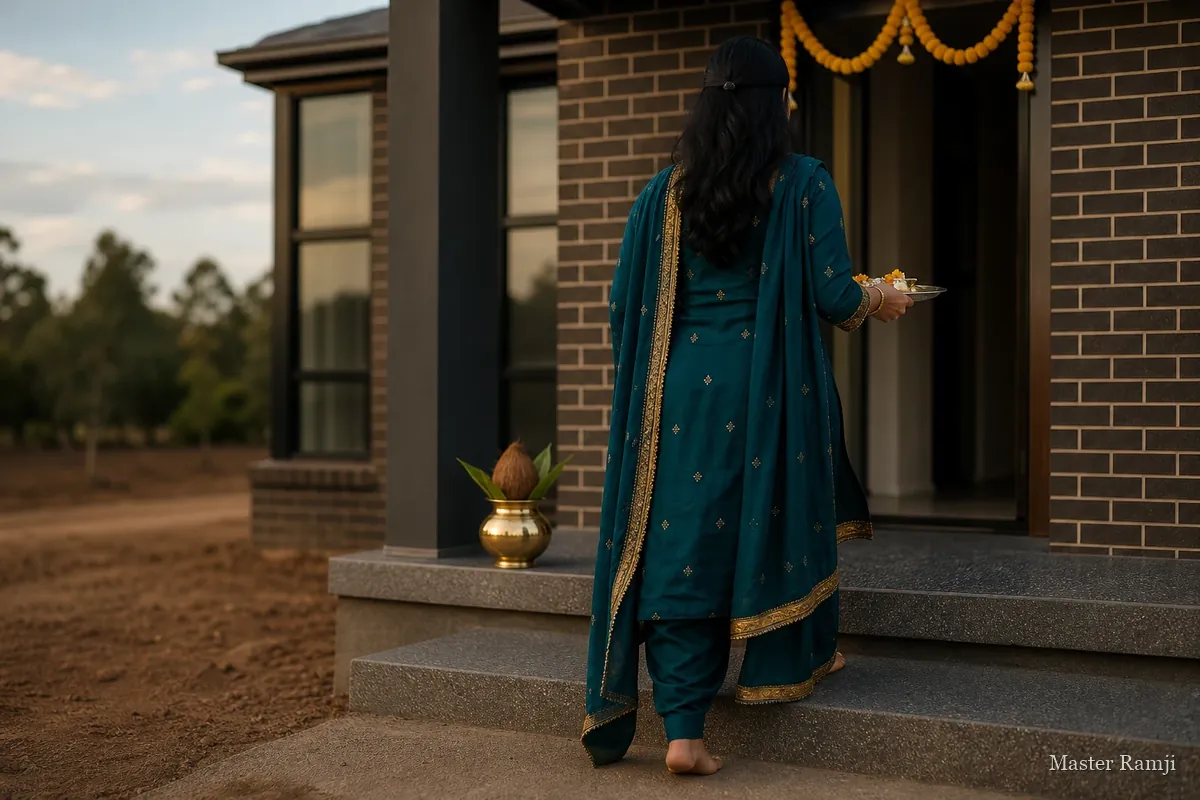
Griha Pravesh in a New Wollert Home
Planning griha pravesh in Wollert with no fence, lawn or driveway yet? How to handle the threshold, open boundaries, building sites nearby and fire safety.
Read article →
Vastu and Cold Winters in Ballarat
Ballarat winters are cold and cloudy. Why vastu advice written for India needs adjusting here, and how to balance tradition with sun, warmth and safe heating.
Read article →More from Melbourne's Western Suburbs

Keeping a Daily Practice on the Hoppers Crossing Commute
A mantra routine for the Hoppers Crossing commute: silent repetition on the Werribee line, and a safer, parked version if you drive the Princes Freeway.
Read article →Raising Kids Between Two Cultures in Point Cook
Raising Indian kids in Point Cook? How to fit school friends, sport, language classes and family traditions into one week, without making children choose.
Read article →
Warehouse Shift Work in Truganina: Is It Time for a Change?
Thinking of leaving a warehouse job in Truganina? Weigh pay, sleep, notice and retraining first, then see where a reflective chart reading might fit in.
Read article →Local pages
Astrologer for Footscray
Live in Footscray? Vijay Ramji is based in Ascot Vale, with sessions by phone, WhatsApp or video. Questions that fit apartments, study, shops and mixed families.
View area →
Astrologer for Sunshine
In Sunshine, Victoria? Vijay Ramji is based in Ascot Vale, with sessions by phone, WhatsApp or video. Questions about older homes, changing work and family.
View area →
Astrologer for Werribee
Live in Werribee? Vijay Ramji is based in Ascot Vale, with kundli readings by phone, WhatsApp or video. Questions for long-settled families and new arrivals.
View area →Quick answers
What is vastu shastra?
Vastu shastra is a traditional Hindu system of home and building design based on direction and layout. Here is what it covers and what it can't claim.
Read answer →Can vastu be applied in a rental?
Yes, vastu can be applied in a rental if you stick to reversible changes. Here is what to try first and what Victorian renters should check.
Read answer →Talk to Vijay Ramji
Tell us what you are facing. If a reading is unlikely to help, you will be told that plainly.