
When Your Parents Visit From India for Months
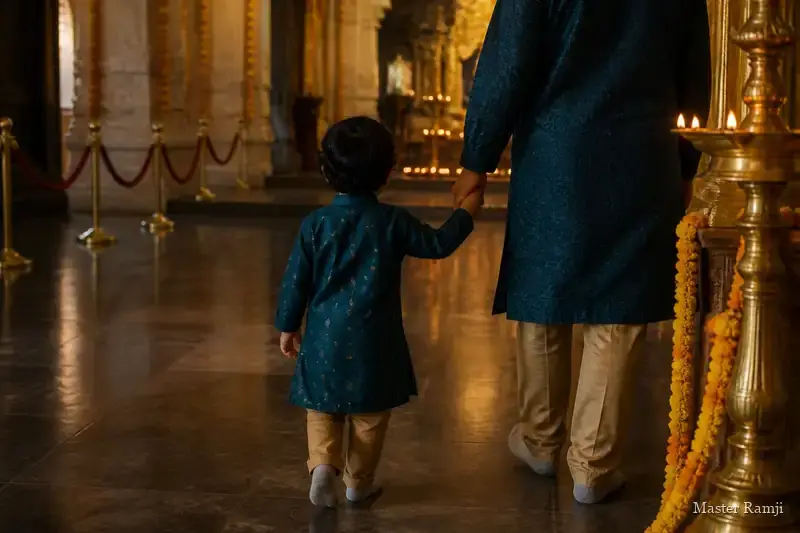
When parents visit from India for months, plan roles and routines before they land. Talk about meals, prayer, children's rules and money, give your parents real tasks and a life outside the house, and protect time for your own household. For visas, length of stay and conditions, check directly with the Department of Home Affairs.
For many families, a long visit from parents in India is something to look forward to for a year. Grandparents finally get time with the children, the house smells of familiar cooking, and you get to be a son or daughter again for a while.
Three or six months is also long enough for everyone's routines to collide. Your parents ran their own home for decades. Now they are guests in yours, in a country where they may not drive, know the neighbours or enjoy the weather. This guide looks at how roles shift during a long stay, and how to make it good for everyone, including your parents.
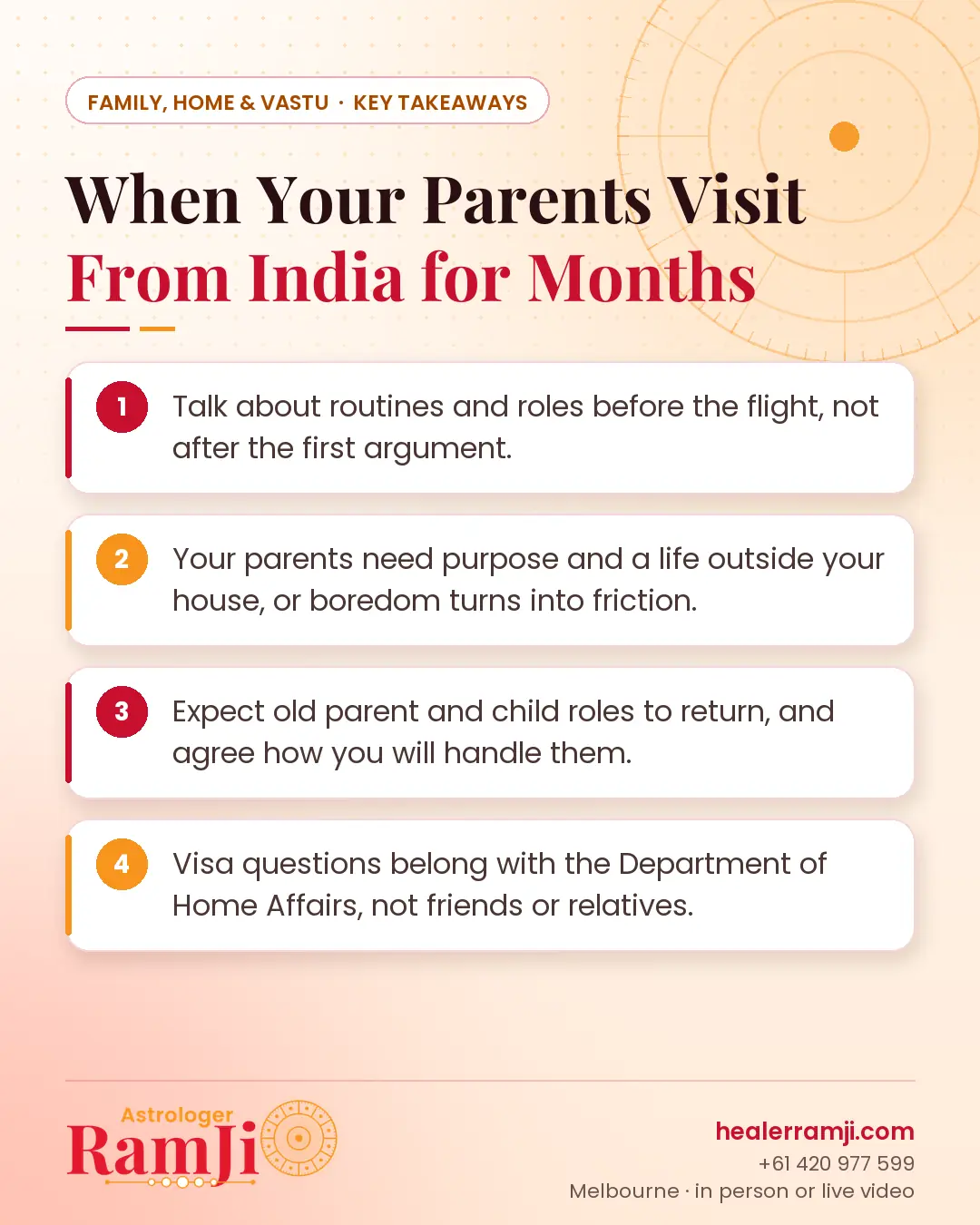
Key takeaways
- Talk about routines and roles before the flight, not after the first argument.
- Your parents need purpose and a life outside your house, or boredom turns into friction.
- Expect old parent and child roles to return, and agree how you will handle them.
- Visa questions belong with the Department of Home Affairs, not friends or relatives.
What should you sort out before they arrive?
Start with the official side, and keep it official. The Department of Home Affairs sets the rules for visitor visas, including how long a visitor may stay and what conditions apply. We can't give visa advice. Check the Home Affairs site directly, or speak to a registered migration agent if your situation is complicated. Don't rely on what worked for a cousin.
Then the practical side:
- Health cover. Ask an insurer what a visitor policy covers, including existing conditions. Medical care for visitors can be expensive.
- Medicines. Ask your parents to bring enough of their regular medicines, with a list of names and doses, and check the official rules on bringing medicines into Australia.
- Their room. A space of their own, with a heater in winter, a comfortable chair and somewhere to keep their prayer items, matters more than you might think.
- The budget. Agree who pays for outings, groceries and any trips interstate, so nobody feels awkward later.
How do roles change when parents move in for months?
Most tension during a long visit comes from roles rather than personalities. Some common shifts:
- The kitchen. A mother who has cooked for her family for forty years may take over, or feel lost if she isn't allowed to. Either way, the person who usually cooks can feel displaced.
- The head of the house. A father used to making decisions may comment on money, work or the car. It can be hard to remember that the house, and the decisions, are now yours.
- The children. Grandparents often have different ideas about food, screen time, discipline and bedtimes. Children quickly learn who will say yes.
- You. You may slip back into being a child who seeks approval, while also being the host, the driver, the translator and the peacemaker.
Naming these shifts out loud helps. You might say, "Mum, I love your cooking. Can we share the kitchen? You take weekends and I'll do weeknights."

Which routines are worth agreeing on early?
Pick a calm moment in the first few days and talk through:
- Meal times and who cooks what
- Morning prayer, bells and incense, especially if anyone sleeps nearby or works shifts
- The children's rules, and who enforces them
- TV volume and shared spaces in the evening
- When the household is quiet so people can rest
If you have a partner, agree on these together first. Each of you can then speak to your own parents if something needs raising. Our article on sharing a home with three generations covers longer arrangements.
How do you stop your parents getting lonely or bored?
A suburban weekday can be very quiet. Everyone leaves for work and school, the streets are empty, and there is no one to chat to over the gate. Many visiting parents find this the hardest part. Boredom can turn into criticism, sadness or pressure to go home early.
- Give them real roles. School pick-up, the vegetable garden, teaching the children a language or a prayer. Being needed is good for anyone.
- Find their people. Temples, gurdwaras, senior groups and libraries often run activities where they can meet others who speak their language.
- Show them how to get around. Walk the route to the local shops with them, and help them learn public transport if they are confident.
- Keep them connected. Set up video calls with friends back home and make sure their phone works here.

What if a parent becomes unwell during the visit?
Melbourne winters, jet lag and a change in diet can all take a toll on older visitors. Keep a list of their medicines and conditions on the fridge. For health advice, healthdirect runs a health advice line on 1800 022 222. Call 000 in an emergency. Ask your insurer in advance how to claim if your parent needs to see a doctor.
How do you protect time for your own household?
A long stay isn't a holiday for the hosts. Keep some time just for your partner, or just for yourself, even if it's a walk after dinner. Children need some ordinary family time too. Grandparents generally understand this better when you explain it kindly rather than disappearing without a word. If tension is building with your partner, our article on living with in-law tension has more ideas.
What happens when it's time to say goodbye?
The last weeks can be emotional. Parents may feel they don't know when they will see you again, and they may raise big questions, such as whether they should move here. Treat that as a family conversation first. Any question about staying longer or migrating is for Home Affairs or a registered migration agent.
After they leave, the house can feel very empty. Children may be unsettled, and you may feel low for a while. That is a common reaction to a big change, not a sign that anything is wrong. If caring for your parents from a distance is weighing on you, see caring for ageing parents from Melbourne.
When is it more than ordinary family tension?
Arguments, sulking and the odd raised voice happen in many full houses. Threats, control of someone's money or documents, or anyone being hurt are not ordinary. That can run in any direction, including an older parent being mistreated by family. If anyone in the home is unsafe, call 000 in an emergency or 1800RESPECT on 1800 737 732. Seniors Rights Victoria gives information and support to people concerned about elder abuse.
Can a reading help with a long family visit?
Some families like to talk through roles, duty and expectations with someone who understands their culture. Family harmony guidance uses your own chart to reflect on what is happening at home and what you can do differently. It can't change another person or decide who is right. Sessions can be held by phone, WhatsApp or video, which helps when the house is full. If you'd like to talk privately, get in touch.
Related service

Keep reading

Sibling Disputes Over Family Property
A sibling property dispute can split a family for years. How to protect the relationship while each of you gets proper legal advice and tries mediation.
Read article →
Raising Teenagers Between Two Cultures
Raising Indian teenagers in Australia means balancing family values with a teen's growing identity. How to set expectations, listen and stay connected.
Read article →
Reading a Child's Chart Without Labelling Them
A parents' guide to a child's horoscope reading: why children should never hear bad predictions, which labels do harm, and what to say if they already have.
Read article →Quick answers
What is vastu shastra?
Vastu shastra is a traditional Hindu system of home and building design based on direction and layout. Here is what it covers and what it can't claim.
Read answer →Can vastu be applied in a rental?
Yes, vastu can be applied in a rental if you stick to reversible changes. Here is what to try first and what Victorian renters should check.
Read answer →Talk to Vijay Ramji
Tell us what you are facing. If a reading is unlikely to help, you will be told that plainly.