
A Grounding Practice for the Root Chakra
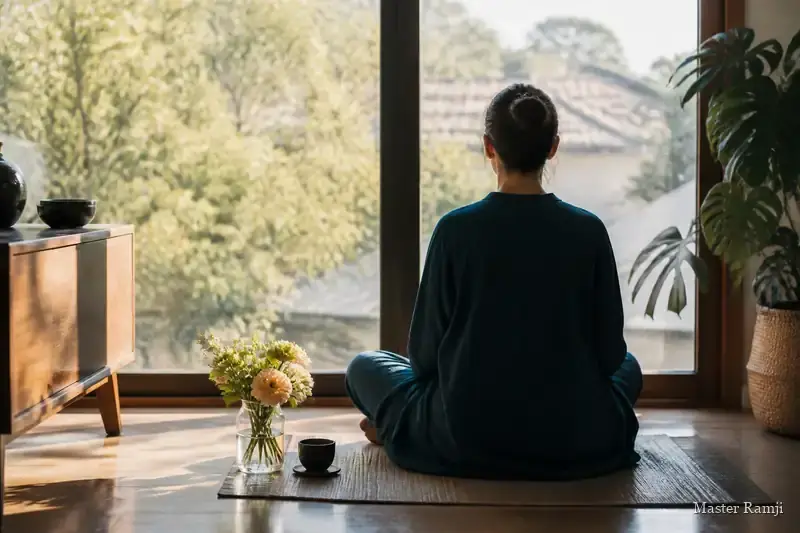
A root chakra grounding practice rests your attention on the base of the spine, the place yogic tradition gives to Muladhara and the earth element. Sit with your feet on the floor, slow your breath, notice your weight, then repeat the seed syllable Lam. Ten minutes is enough, and nothing needs to be bought.
Plenty of people want to feel more settled, but few have an hour to spare. This page offers a short practice built around the root chakra, the lowest of the centres described in yogic tradition. You need a chair, a timer and ten minutes.
It draws on the traditional picture of Muladhara, but you don't have to believe anything to try it. Treat it as a structured way to slow down and notice your body. If it helps, keep it. If it doesn't, you have lost ten minutes.
Key takeaways
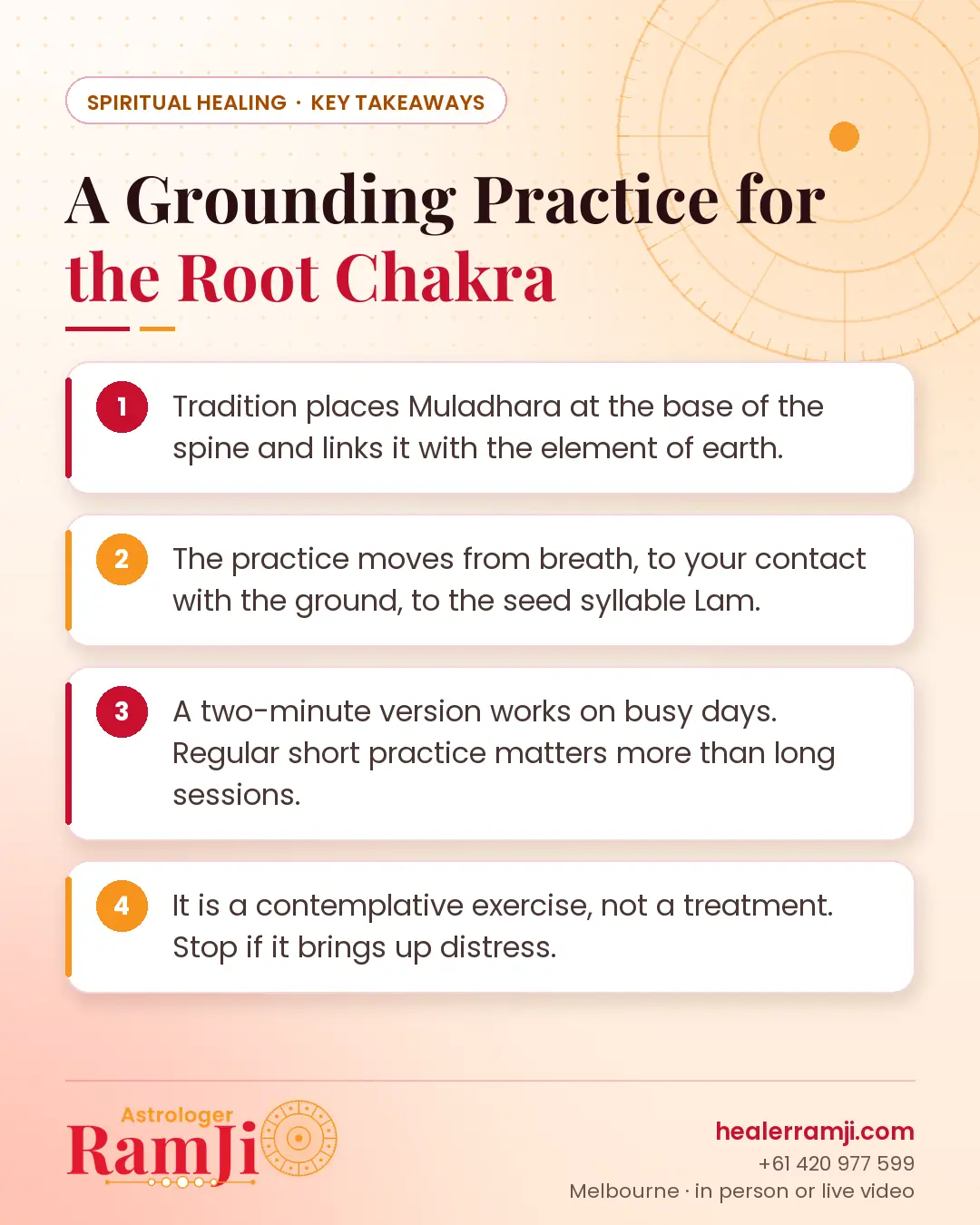
- Tradition places Muladhara at the base of the spine and links it with the element of earth.
- The practice moves from breath, to your contact with the ground, to the seed syllable Lam.
- A two-minute version works on busy days. Regular short practice matters more than long sessions.
- It is a contemplative exercise, not a treatment. Stop if it brings up distress.
What does tradition say about the root chakra?
Muladhara means something like "root support". In the traditional description, it sits at the base of the spine and is pictured as a four-petalled lotus with a yellow square at its centre, the square standing for earth. Its seed syllable is Lam. Many later accounts add the elephant as its animal, popular teaching links it with Ganesha, and tantric writing describes the dormant energy called kundalini as resting at this point.
You don't need all of that to practise. What matters is the theme. Earth, weight, steadiness and support give a wandering mind something solid to settle on. For the wider map, see the seven chakras explained simply.
What do you need?
- A firm chair where your feet can rest flat on the floor, or a cushion if you prefer to sit on the ground
- A timer on your phone, set to silent with notifications off
- A spot where nobody will need you for ten minutes
No crystals, oils or special music. Our article on chakra myths you can safely ignore explains why none of those are required.

The ten-minute practice
Minutes 0 to 1: arrive
Sit upright without stiffening. Rest your hands on your thighs. Let your eyes close, or rest your gaze softly on the floor a little in front of you. Notice that you have stopped.
Minutes 1 to 3: slow the breath
Breathe in through your nose, and let the out-breath be a little longer than the in-breath. Don't force it. Many people find a gentle count helps, such as in for four and out for six. If counting makes you tense, drop it and simply follow the air moving in and out.
Minutes 3 to 5: feel the ground
Move your attention to where your body meets something solid. Start with the soles of your feet on the floor. Notice their weight and temperature. Then notice the backs of your legs on the chair, and the base of your spine resting on the seat. You are not trying to relax anything. You are just noticing that you are supported.
Minutes 5 to 7: rest at the base of the spine
Let your attention settle at the base of your spine. If images help you, picture a small yellow square there, or simply the colour and weight of earth. If images don't help, stay with the physical sense of sitting. Each time your mind wanders, and it will, bring it back without scolding yourself.
Minutes 7 to 9: the seed syllable
On each out-breath, say "Lam" slowly. It sounds close to "lum", with the mouth almost closed at the end. You can chant it aloud, hum it, or repeat it silently if the walls are thin. Keep the rhythm unhurried, one syllable for each breath.
Minute 9 to 10: come back
Let the syllable go. Press your feet gently into the floor. Open your eyes and name three things you can see. Sit for a moment before you stand up.
What if you only have two minutes?
Use a shorter version before a meeting, after a hard phone call or while the kettle boils. Plant your feet, take five slow breaths with long out-breaths, notice your weight on the chair, and repeat "Lam" silently three times. It won't feel the same as ten minutes, but it keeps the habit alive. healthdirect's guide to meditation suggests starting with one to two minutes a day and building up slowly, and says regular practice works well.
A standing version works too. Stand with your feet hip-width apart and feel the floor, or the grass in the backyard if the weather allows. Please don't practise while driving or doing anything that needs your full attention.

What might you notice?
Some people feel calmer or heavier in a pleasant way. Some feel restless at first, or drowsy, or nothing at all. All of these are ordinary. None of them shows that your chakra was blocked or has now opened. A blocked chakra is not something anyone can detect.
It may take a week or two of regular practice before it feels familiar. Try it at the same time each day, such as before breakfast, so it becomes part of your routine rather than another task.
When should you stop?
Turning your attention inward doesn't suit everyone. If the practice brings up panic, painful memories, a sense of being disconnected from your body, or physical distress, open your eyes and stop. Look around the room and feel your feet. If it keeps happening, talk to your GP or a mental health professional. You don't have to push through it.
The practice can't treat back pain, anxiety, depression or any other condition. If you have symptoms, please see a doctor, and keep taking any prescribed medication. If you need to talk to someone now, Lifeline is on 13 11 14.
Where can you go from here?
If you enjoy the practice, you could work upward through the other centres, one each week. A chakra balancing session guides you through the full map with breath and seed syllables, and can be held by phone, WhatsApp or video. If sound is what helps you most, mantra and meditation guidance can help you build a regular practice around it.
If you have questions about the practice, get in touch.
Related service
Keep reading

How to Start a Mantra Practice That Lasts
How to start a mantra practice you will still be doing in a year: begin with a small daily count, tie it to an existing habit, and don't panic over missed days.
Read article →
The Gayatri Mantra: Meaning and Practice
The Gayatri mantra meaning, word by word: where the verse comes from, how translators render it, and how to chant it respectfully as a beginner.
Read article →
Meditation for People With No Spare Time
Meditation for busy people, shift workers and commuters: one to ten minute practices tied to your roster or trip, plus why you should never meditate while driving.
Read article →Quick answers
What are chakras?
Chakras are centres of subtle energy described in yogic and tantric traditions. Here are the seven usually named, and why nobody can test if one is blocked.
Read answer →What is energy healing?
Energy healing rests on the belief in a life force that can be guided. Here is what a session involves, and what the evidence does and doesn't show.
Read answer →Talk to Vijay Ramji
Tell us what you are facing. If a reading is unlikely to help, you will be told that plainly.