
Chakra Myths You Can Safely Ignore
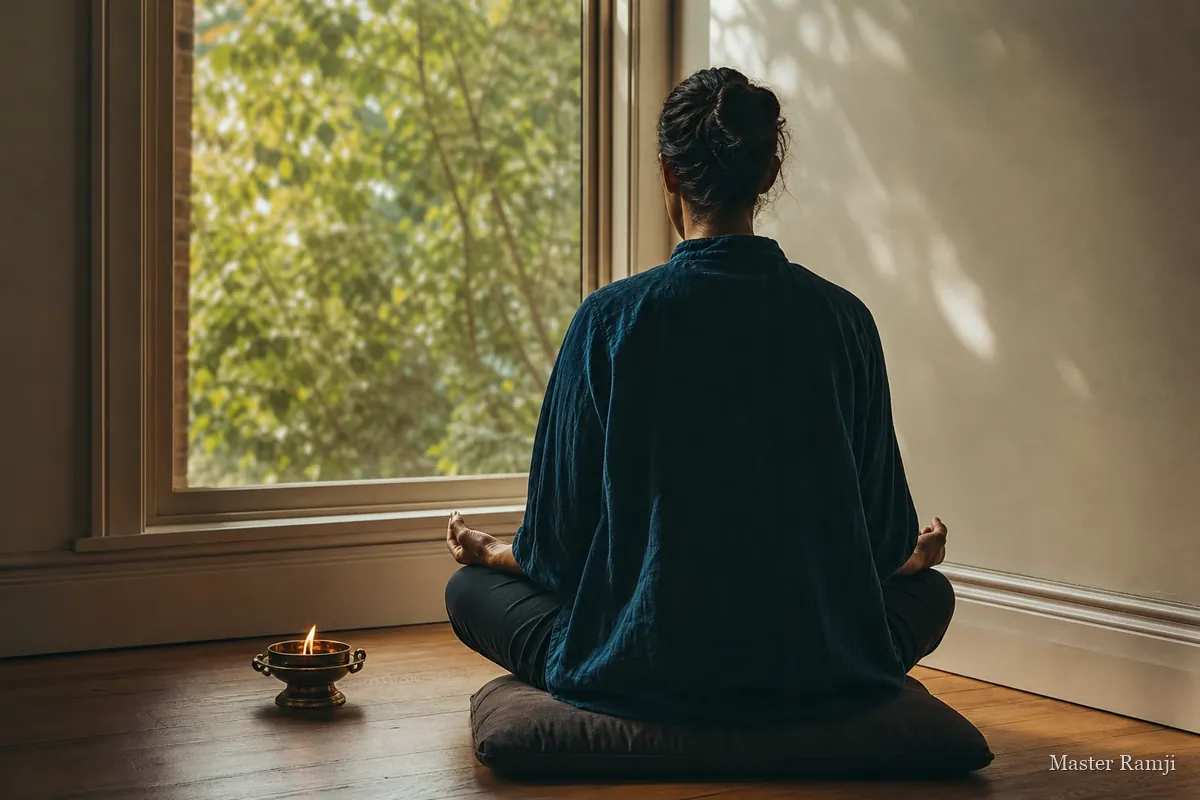
Common chakra myths include the ideas that there are always exactly seven, that the rainbow colours are ancient, and that a blocked chakra can be diagnosed or fixed with crystals. The tradition used chakras as points of focus in meditation. There is no scientific evidence that chakras exist, so health claims built on them deserve caution.
Search for chakras and you will find colour charts, crystal sets, quizzes and promises. Much of it sounds ancient. A good deal of it is surprisingly recent, and some of it would puzzle the tradition it claims to come from.
This guide sets the most common chakra myths against what the older Indian texts describe. It isn't here to spoil anyone's practice. Knowing what is old and what is marketing simply makes it easier to choose what you want to keep.
Key takeaways
- Chakras come from medieval Hindu and Buddhist tantric traditions, where they were points of focus in meditation.
- The number of chakras, their colours and their links to glands all vary or are modern additions.
- There is no scientific evidence that chakras exist, and no test can show one is "blocked".
- The original practice needed breath, attention and sound. Nothing has to be bought.
Myth 1: Chakras are a New Age invention
Not quite. The idea of chakras as centres in the subtle body appears in medieval tantric texts. The well-known Hindu scheme of six centres plus one at the crown is described in a Sanskrit work dated to 1577, the Sat-Chakra-Nirupana. So the core idea is old. What is new is much of what has been added since. Treating the tradition with respect means separating the two.
Myth 2: There are exactly seven chakras
Seven is the most familiar count today, but it is one version among many. According to this overview of chakra history, the number of chakras varied widely between traditions and texts. Medieval Buddhist texts describe four or five. One Shaiva text describes six and another eight.
If someone tells you one system is the only correct one, you can politely disagree. Different lineages mapped the subtle body differently, for different practices. Our guide to the seven chakras explained simply describes the best-known version without claiming it is the only one.
Myth 3: The rainbow colours are ancient
The neat red-to-violet sequence is probably the most widely shared chakra image. It is also one of the most recent parts. The same source notes that the rainbow colours were added by the Theosophist writer Charles Leadbeater in 1927, and that they are not found in any ancient Indian system.
The older texts described each centre with other images, such as a lotus with a set number of petals, a seed syllable and a presiding deity. The aim was a detailed image to hold in meditation, not a colour code.
Myth 4: Each chakra matches a gland or organ
You will often see charts pairing each chakra with a gland, such as the throat chakra with the thyroid. These links came from Western writers. Chakras were tied to nerve centres from the 1880s, and to endocrine glands in the 1920s. They are interpretations, not findings, and the traditions themselves place chakras in the subtle body rather than the physical one.
So a chart that says a weak heart chakra means a heart problem is mixing two different kinds of map. Any physical symptom belongs with your GP.
Myth 5: Someone can tell that your chakra is blocked
The word "blocked" has become a staple of wellness marketing. Yet there is no scientific evidence that chakras exist, and no meaningful way to measure them. That means no reader, device, photo or quiz can show that one is blocked, overactive or out of balance.
A practitioner's impression is just that. It is not a health assessment. Be especially careful if a "blockage" is diagnosed and a costly package to fix it follows straight after.
Myth 6: You need crystals, oils or sound bowls
Matching crystals, essential oils, colour sprays and playlists to each chakra is modern. The traditional practice used breath, attention, visualisation and seed syllables, often chanted, such as lam at the base of the spine and yam at the heart.
That doesn't make the add-ons wrong to enjoy. A stone or a colour can be a pleasant focus. But nothing has to be bought, and no product is needed for the practice to be complete. Our free grounding practice for the root chakra needs only a chair and ten minutes.
Myth 7: Chakra work can stand in for medical care
This is the myth that matters most. Chakra practice is a spiritual and contemplative tradition. It is not a diagnosis or a treatment, whatever an advertisement may suggest.
The Better Health Channel advises telling your doctor about any complementary therapy you use, and never stopping prescribed medication or changing a dose without talking to them first. That applies to chakra sessions too. If anyone discourages you from seeing a doctor, that is a reason to walk away.

How can you spot marketing dressed up as tradition?
A few quick questions help:
- Does the claim promise a health result? If so, it has gone beyond the tradition.
- Can the person tell you where an idea comes from, and roughly when?
- Is a purchase tied to the practice, or presented as essential?
- Is fear used, such as warnings about what will happen if you don't act?
For a closer look at claims made in classes, see our reality check on yoga studio chakra claims.
So what is left once the myths are gone?
Quite a lot. Moving your attention slowly from the base of the spine to the crown, with breath and sound, is a structured way to sit quietly. Many people value it the way others value prayer. It doesn't need to be more than that to be worthwhile.
Chakra balancing is offered in that spirit, as a contemplative practice rooted in the Indian tradition. It is not a diagnosis or a treatment for anything. Sessions can be held by phone, WhatsApp or video, and any fee is stated before paid work begins. If you would like to try the practice without the marketing, get in touch.
Related service
Keep reading
A Grounding Practice for the Root Chakra
A simple ten-minute root chakra grounding practice you can try today, with breath, the seed syllable Lam and a short version for busy days. Plain and free.
Read article →
How to Start a Mantra Practice That Lasts
How to start a mantra practice you will still be doing in a year: begin with a small daily count, tie it to an existing habit, and don't panic over missed days.
Read article →
The Gayatri Mantra: Meaning and Practice
The Gayatri mantra meaning, word by word: where the verse comes from, how translators render it, and how to chant it respectfully as a beginner.
Read article →Quick answers
What are chakras?
Chakras are centres of subtle energy described in yogic and tantric traditions. Here are the seven usually named, and why nobody can test if one is blocked.
Read answer →What is energy healing?
Energy healing rests on the belief in a life force that can be guided. Here is what a session involves, and what the evidence does and doesn't show.
Read answer →Talk to Vijay Ramji
Tell us what you are facing. If a reading is unlikely to help, you will be told that plainly.