
Outdoor Rituals and Local Rules
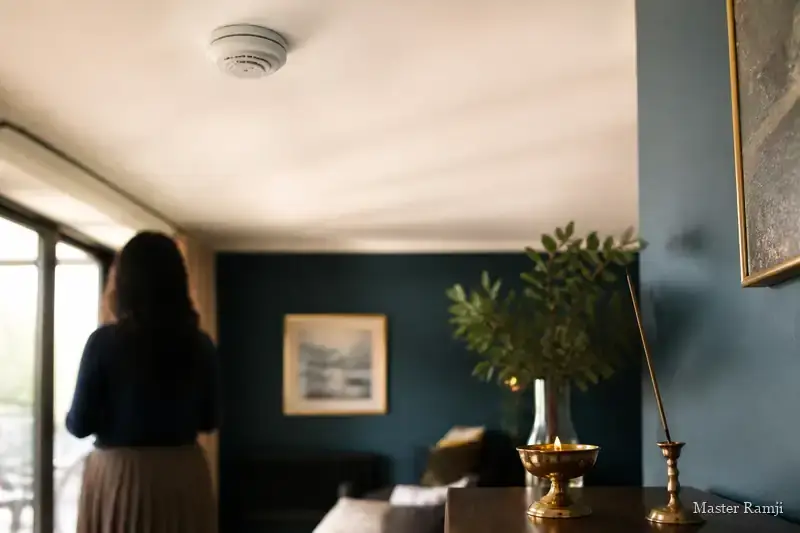
Outdoor puja fire rules in Victoria depend on the day and the place. On a Total Fire Ban day, open fires are banned unless CFA grants a permit. During the Fire Danger Period, conditions or permits may apply. Councils also have their own rules, which vary, so check with CFA and your council before lighting anything.
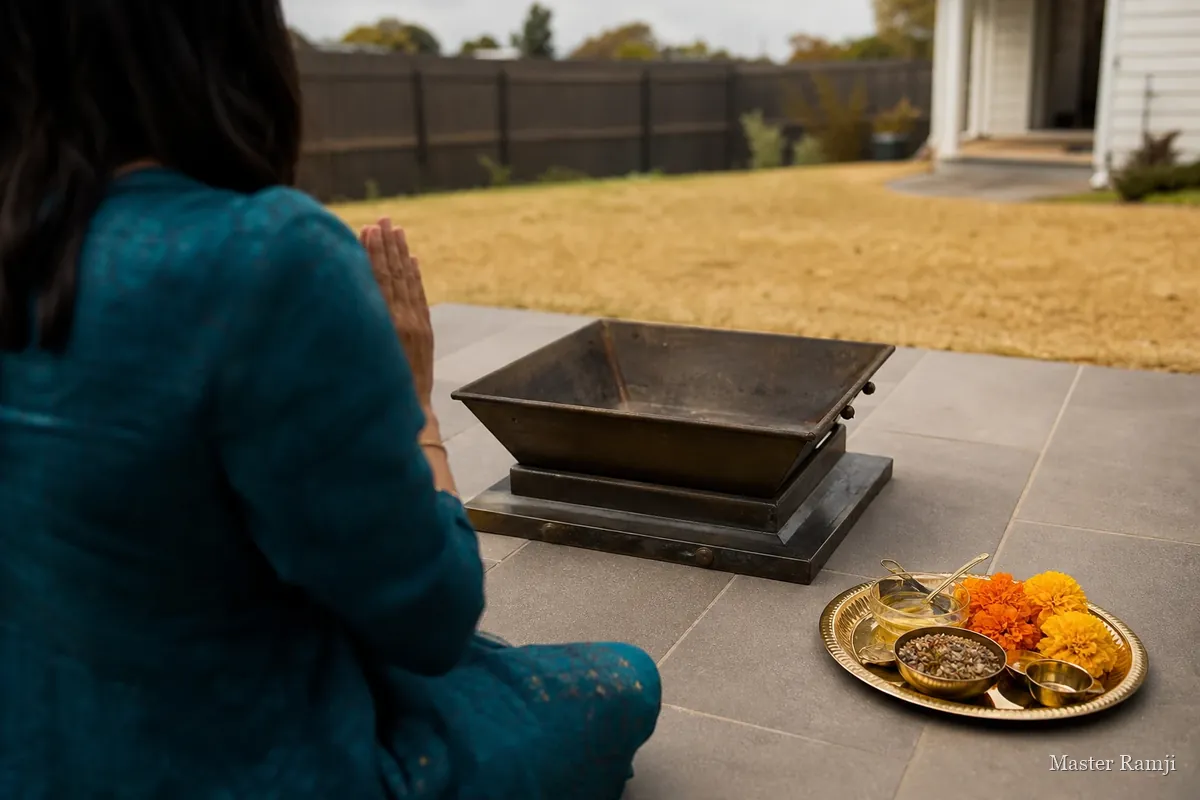
Many Hindu rites involve fire. A havan centres on it. Aarti uses a flame. Diwali fills the garden with diyas, and Holika Dahan is a bonfire. In India, much of this happens outdoors without a second thought. In Victoria, an open flame outside can fall under fire laws, council rules and, on some days, a total ban.
This article explains what to check before any outdoor ritual with fire, wherever you live in the state. It is general information, not legal advice. Rules change each season, so confirm your own situation with CFA and your local council.
Key takeaways
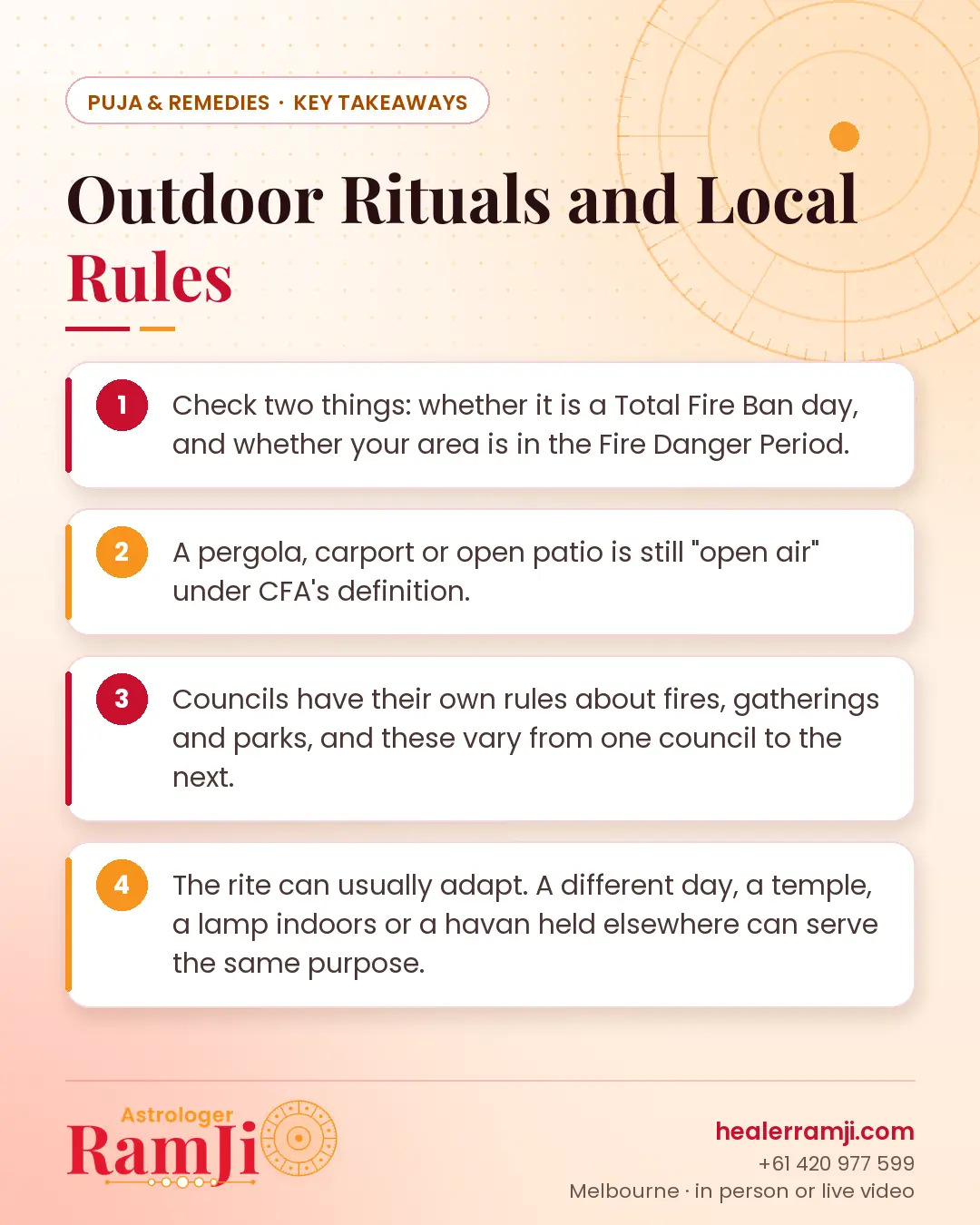
- Check two things: whether it is a Total Fire Ban day, and whether your area is in the Fire Danger Period.
- A pergola, carport or open patio is still "open air" under CFA's definition.
- Councils have their own rules about fires, gatherings and parks, and these vary from one council to the next.
- The rite can usually adapt. A different day, a temple, a lamp indoors or a havan held elsewhere can serve the same purpose.
What counts as an outdoor fire?
CFA's "Can I or can't I?" page defines the open air as any place that is not inside a permanent structure with a roof and fully enclosed walls. So a fire under a verandah, a pergola, a carport or in a garage with the door open is still outdoors in CFA's eyes.
The page talks about campfires, fire pits, braziers, chimineas and outdoor cooking. It does not list havans, aarti or diyas by name. That means there is no simple answer to look up. If you are unsure whether your ritual counts, ask CFA or your council before the day, and describe exactly what you plan.
What happens on a Total Fire Ban day?
CFA can declare a Total Fire Ban on days of high fire danger, across a whole fire weather district. It applies to suburban backyards as well as rural properties. On these days, CFA says you can't light a campfire, and all fires for warmth or comfort, including fire pits, braziers and chimineas, are banned. Solid fuel cooking in the open air is also banned.
A havan kund with wood, ghee and samagri is very hard to see as anything other than an open fire. Plan on not holding one outdoors on a Total Fire Ban day.
There is one narrow pathway. CFA's Total Fire Ban permits page lists some religious or cultural ceremonies and activities among the uses that may be considered. A permit is issued only if the granting officer agrees that the use of fire is necessary, and it can be suspended or revoked. A family ceremony that could simply move to another day may struggle to meet that test. Apply well ahead if you think it applies to you, and don't assume the answer will be yes.
What about the Fire Danger Period?
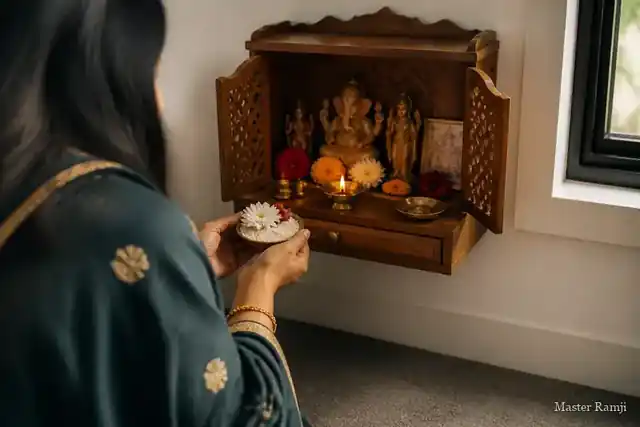
CFA declares Fire Danger Periods by municipality when fire risk rises, usually through the warmer months. The start and end dates change each year and differ between council areas, so check the current dates on the CFA website rather than relying on last year's.
During this period, CFA sets conditions for certain outdoor fires, such as a fire pit or brazier. These include low wind, a properly built fireplace, a small fire, and someone in attendance the whole time. Again, the page does not mention religious fires. Other open-air fires, such as burning off, need a Fire Danger Period permit from CFA, FRV or a council fire prevention officer, depending on where you live. Ask before you assume your ceremony is covered.
Why do council rules matter too?
Even outside the Fire Danger Period, your council may have local laws about fires in the open air, smoke and burning. These rules vary widely. A council on the urban fringe may have quite different rules from an inner-city one, and some limit burning on small suburban blocks.
Councils also look after parks, reserves and beaches. If you are planning a gathering in a public space, such as a community puja, a festival celebration or a group prayer by the water, ask the council about bookings or permits, amplified sound and any restrictions on flames or offerings. Our page on planning an outdoor havan on the urban fringe shows how these checks work for one council area.
What about diyas, aarti and incense outdoors?
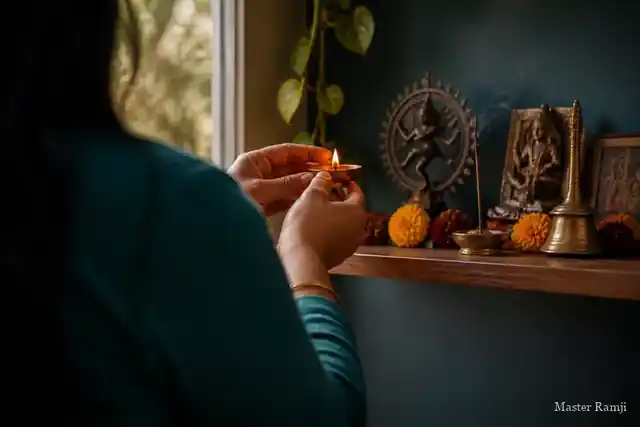
Small flames are not named on CFA's page, so the rules are less clear. Common sense goes a long way:
- Keep lamps in stable holders on hard surfaces, away from dry grass, mulch, curtains and decorations.
- Never leave a flame unattended, and keep children and loose clothing well back.
- On hot, windy days, and on any Total Fire Ban day, consider moving the aarti indoors or using electric diyas in the garden.
- Keep water or a connected hose nearby.
If you live in an apartment or rental, also check your owners corporation rules or lease. Balconies often have their own restrictions.
Can you use fireworks or crackers for Diwali?
WorkSafe Victoria says that to use fireworks you must hold a licence as a pyrotechnician. Some community events book a licensed operator. For a family celebration at home, lamps, rangoli, sweets and music are a safer way to mark the night.
Which festivals need the most planning?
Some festivals fall in warmer months when restrictions are more likely. Holika Dahan usually falls in March, and occasionally in late February. Diwali usually falls in October or November, when Fire Danger Periods may have begun in some areas. Check conditions weeks ahead, and again on the morning.
If a festival rite involves a waterway, such as immersing a Ganesh idol or offering flowers in the sea, ask the council or waterway manager first. Many families now immerse a clay idol in a bucket or tub at home, then return the clay to the garden.
What should you do on the day?
- Check the CFA website or VicEmergency that morning for bans and ratings.
- Look at the wind and temperature. If it feels wrong, change the plan, even with guests on the way.
- Keep the fire small and use only as much fuel as you need. Pour ghee in small amounts, as it can flare.
- Make sure the fire is completely out before anyone leaves it. Soak the ashes, and never put warm ash in a bin.
- If a fire gets away, call 000 straight away.
What if you can't hold the fire rite outdoors?
The meaning of a rite does not depend on your backyard. Priests differ on how far a ceremony can be adapted, so ask yours. Options include moving to a cooler month, using a temple that has its own facilities, or holding a puja with a lamp, flowers and mantra inside. Our guide on whether a havan at home is safe covers the indoor side, and a short explanation of what a havan is sets out what the fire means.
If your home or the season can't host the fire safely, a havan performed on your behalf lets the rite take place elsewhere while your family joins in prayer at home. It is an act of devotion, not a way to secure an outcome. Fire rules are for CFA and your council to decide. Any fee is stated before paid work begins, and sessions can be held by phone, WhatsApp or video. To talk through your options, get in touch.
Related service
Keep reading
Why Mantra Counts Are 108
Why mantras are chanted 108 times, where the number comes from, how a mala is counted, and whether a smaller count you keep up is just as worthwhile.
Read article →
Astrology Remedies That Cost Nothing
Free astrology remedies from the tradition itself: prayer and mantra, giving time, daily discipline and optional fasting, with the planets each is linked to.
Read article →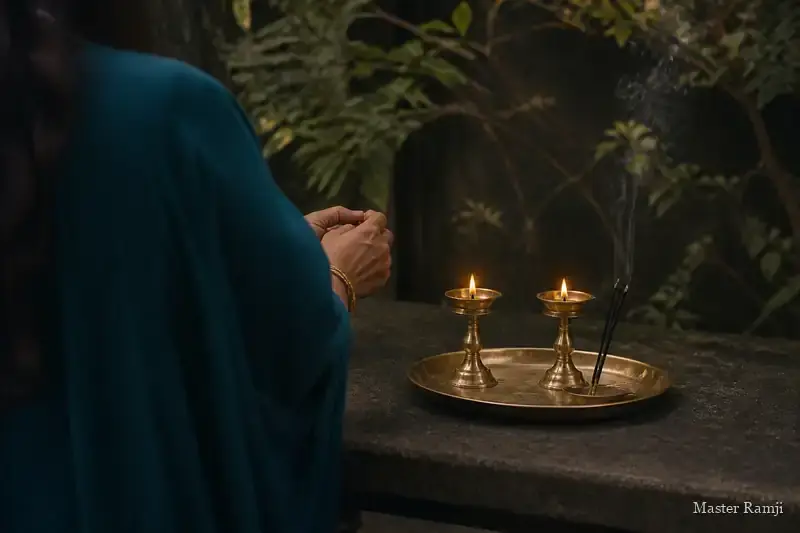
Fasting as a Remedy: Doing It Safely
Weekday fasts for the planets are a Hindu tradition, but not safe for everyone. Who should check with a doctor first, and gentler ways to keep a vrat.
Read article →Quick answers
What is a havan?
A havan is a Hindu fire ritual with offerings such as ghee, grains and herbs, usually led by a priest. Here is what happens and what to check for safety.
Read answer →What is a puja?
A puja is a Hindu act of devotional worship, at home or in a temple, with offerings such as flowers, light and food. Here is what it usually involves.
Read answer →Talk to Vijay Ramji
Tell us what you are facing. If a reading is unlikely to help, you will be told that plainly.