
Protective Mantras for Beginners

A good protection mantra for beginners is one you can say correctly and mean, such as the Hanuman Chalisa, the Maha Mrityunjaya mantra or a short name mantra like Om Namah Shivaya. Learn the words from a reliable teacher or recording, start with a small daily count, and remember protection is a matter of faith.
People often look for a protective mantra after a fright. A relative mentions nazar, a reader warns of bad luck, or a hard month leaves you feeling exposed. The instinct to reach for something old and steady makes sense. The trouble is that beginners are often handed a long list, a mantra they can't pronounce, or a warning that one slip will cause harm.
This article takes a calmer route. It covers a handful of well-known mantras that Hindu families turn to for protection, what each is about, and how to begin in a way that is respectful and easy to keep up.
Key takeaways
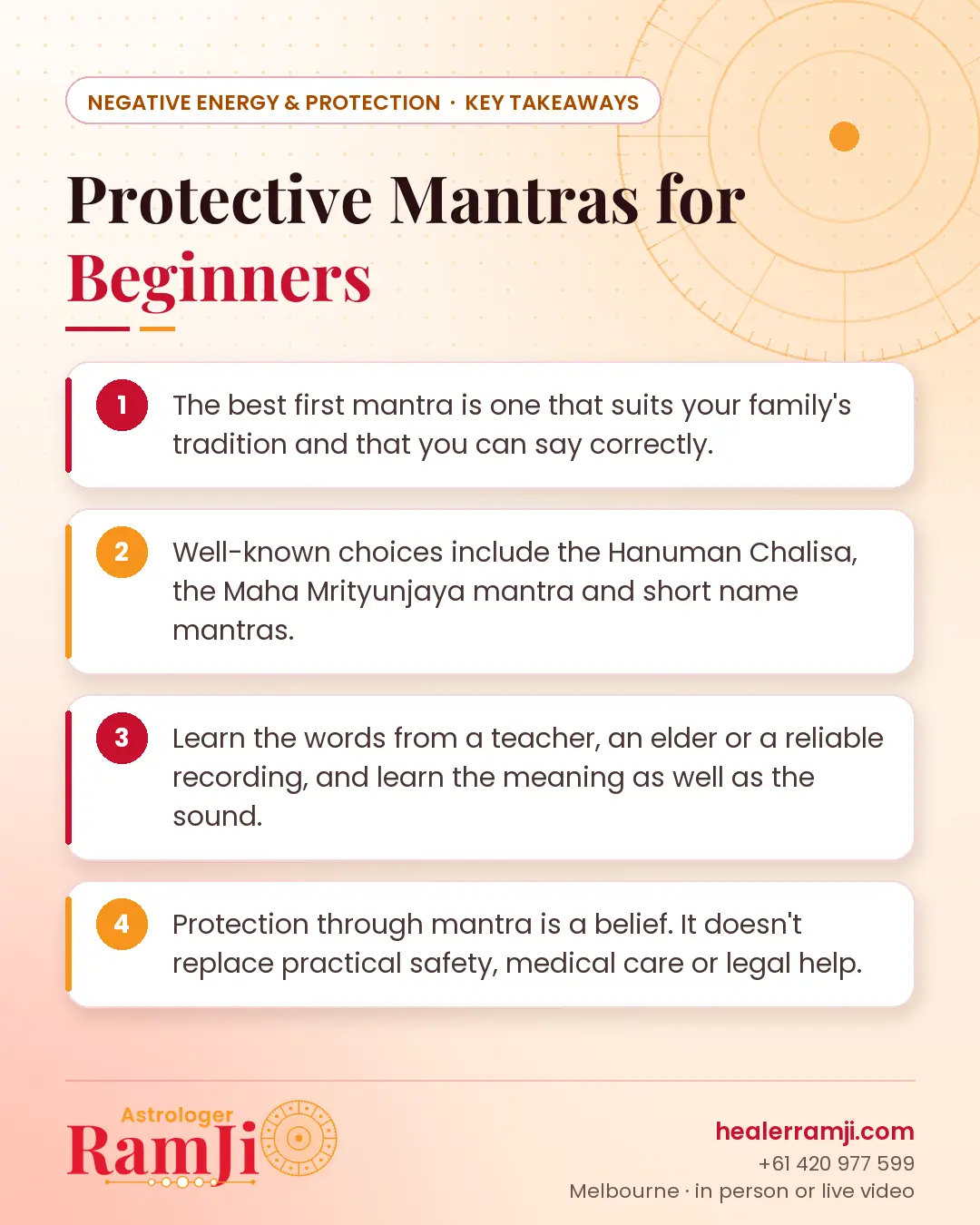
- The best first mantra is one that suits your family's tradition and that you can say correctly.
- Well-known choices include the Hanuman Chalisa, the Maha Mrityunjaya mantra and short name mantras.
- Learn the words from a teacher, an elder or a reliable recording, and learn the meaning as well as the sound.
- Protection through mantra is a belief. It doesn't replace practical safety, medical care or legal help.
What makes a mantra "protective"?
A mantra is a sacred sound, word or verse repeated in prayer or meditation. Some are prayers with a clear meaning. Others are valued mostly for their sound. Traditions call a mantra protective when it invokes a deity associated with strength, courage or guarding devotees, or when it asks to be freed from fear.
Scholars and teachers disagree about how mantras work, and believers hold different views too. What can be said is that repeating a phrase with attention is a long-standing devotional practice, and many people find it steadying.
Which protection mantras are well known?
These are widely used across many Hindu communities. Your family may favour others, and that is fine.
The Hanuman Chalisa
A devotional hymn to Hanuman attributed to the poet Tulsidas, written in Awadhi and named for its forty main verses, or chaupais. Hanuman is honoured for strength, loyalty and fearlessness, and many families recite the Chalisa on Tuesdays or Saturdays, or when they feel afraid. It is longer than a mantra, so beginners often start by reading it with a translation once a day.
The Maha Mrityunjaya mantra
A verse from the Rigveda beginning "Om tryambakam yajamahe". It is addressed to the three-eyed one, a name later linked with Shiva, and asks for release from the bonds of death and fear. Families often chant it during illness or worry. It is a prayer for strength, not a medical treatment, so please keep seeing your doctor.
Short name mantras
- Om Namah Shivaya: a salutation to Shiva, often called the five-syllable mantra after the syllables of "Namah Shivaya". It is simple enough for daily use.
- Om Gam Ganapataye Namah: a salutation to Ganesha, who is traditionally honoured before beginnings and for removing obstacles.
- Shri Ram Jai Ram Jai Jai Ram: a repetition of Rama's name, common in many North Indian households.
The Gayatri mantra
Many families treat the Gayatri as a prayer for clear understanding and inner protection. Some traditions teach it only after initiation, while others share it openly. Our guide to the Gayatri mantra's meaning and practice goes through the words and these different views.
How do you choose just one?
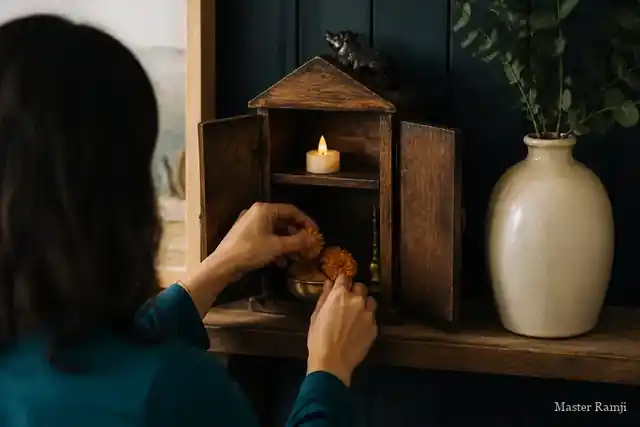
Beginners do better with one mantra than five. A few questions can help you choose:
- What does your family already say? A mantra your grandmother chanted carries meaning and comes with someone to ask.
- Which deity do you feel drawn to? Devotion matters more in most traditions than picking the "strongest" mantra.
- How much time do you really have? A short name mantra fits a busy morning. The Chalisa takes several minutes.
- Can you pronounce it? If a Sanskrit verse feels like a tongue twister, start with a shorter one and come back later.
How do you learn the words properly?
Pronunciation matters in many traditions, and it also helps you feel confident. Some practical steps:
- Ask an elder or a priest at your temple to say it slowly while you repeat it.
- Use a recording from a temple or an established religious organisation, not a random clip.
- Write the words in a script you read easily, with the meaning beside each line.
- Say it aloud slowly for a week before you try to speed up or count.
Small errors are human. Most teachers say sincerity counts for a great deal, and nobody should frighten you about a stumble.
Do you need permission or initiation?
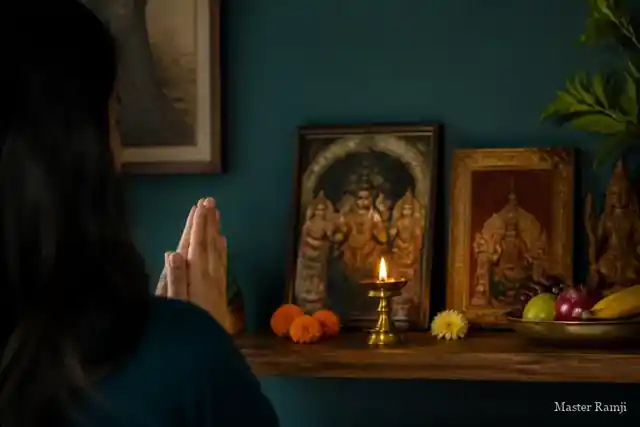
It depends on the mantra and the tradition. Prayers like the Hanuman Chalisa and simple name mantras are generally open to anyone. Some lineages hold that certain Vedic verses or seed syllables should be received from a teacher. If your family follows a guru or sampradaya, ask them. If you are unsure, start with an open devotional mantra.
How should a beginner start?
Keep the first month simple. Choose a regular time, such as after a shower or before dinner. Sit somewhere quiet, take a few slow breaths, and say the mantra a small number of times. Eleven or twenty-one is plenty to start with. If you want to count on a mala, our article on how to use a mala explains the basics, and our guide to starting a mantra practice that lasts covers building the habit.
Many people also find that the practice works as a kind of meditation. healthdirect notes that a mantra can be a point of focus in meditation, and that meditation takes time and practice. That is a fair expectation for mantra practice too.
What should you be wary of?
Protection is an area where fear sells. Step back if anyone:
- says you are under attack and only their secret mantra can save you
- charges a high fee to "activate" a mantra or an object
- tells you something terrible will happen if you miss a day
- offers a mantra to control or harm another person
None of these reflects mainstream devotional practice. The well-known mantras above are freely available, and you owe nobody money to say them.
What can a protective mantra not do?
No one can show that a mantra stops harm from reaching you. If you are worried about your safety, contact the police or a support service. If you are anxious, sleeping badly or feeling low, see your GP. A mantra can sit alongside that help, offering a few calm minutes and a link to your faith, but it shouldn't replace it.
Would guidance help?
If you'd like help choosing a mantra that fits your tradition and routine, spiritual protection practices sets you up with one or two simple habits to carry on alone. For pronunciation and meaning, there is also one-to-one mantra guidance. Sessions can be held by phone, WhatsApp or video, and fees are stated before paid work. To arrange a time, please get in touch.
Related service
Keep reading

Amulets and Yantras: An Honest Buyer's Guide
What amulets and yantras are meant to do in tradition, what nobody can promise, how to judge a fair price, and the warning signs of a costly, fear-based sale.
Read article →
Workplace Jealousy and Spiritual Protection
Worried about jealous coworkers? Pair a simple protection practice with practical workplace steps, know when it is really bullying, and avoid costly fear-based offers.
Read article →
Slow Trade: Is Your Shop Energy or Your Business Plan?
Shop not getting customers and thinking about remedies? Trace where customers drop away, test one change at a time, and see where a cleansing fits, if at all.
Read article →Quick answers
What do people mean by black magic?
Black magic usually means the belief that ritual can harm someone. Here is what the term covers, what it can't show, and what to do if you're worried.
Read answer →How do I know if someone did black magic on me?
There is no reliable sign that proves black magic. Here is what to check first, why fear is a warning sign, and when to get medical help.
Read answer →Talk to Vijay Ramji
Tell us what you are facing. If a reading is unlikely to help, you will be told that plainly.