
Amulets and Yantras: An Honest Buyer's Guide

Whether amulets and yantras work is a matter of belief. In tradition they are aids to worship, focus and a sense of protection, and nobody has shown they change events. If you want one, buy for meaning and craftsmanship, compare prices and walk away from anyone who uses fear, keeps raising the cost or says you must buy from them.
A small copper square on a family altar. A black thread on a baby's wrist. A taveez passed down from a grandmother. For many families, these objects carry comfort and memory. They are also sold online and in shops with big promises attached, sometimes at prices that bear no relation to what they are made of.
This guide explains what amulets and yantras are meant to do, what nobody can honestly offer, and how to buy one without being taken advantage of.
Key takeaways
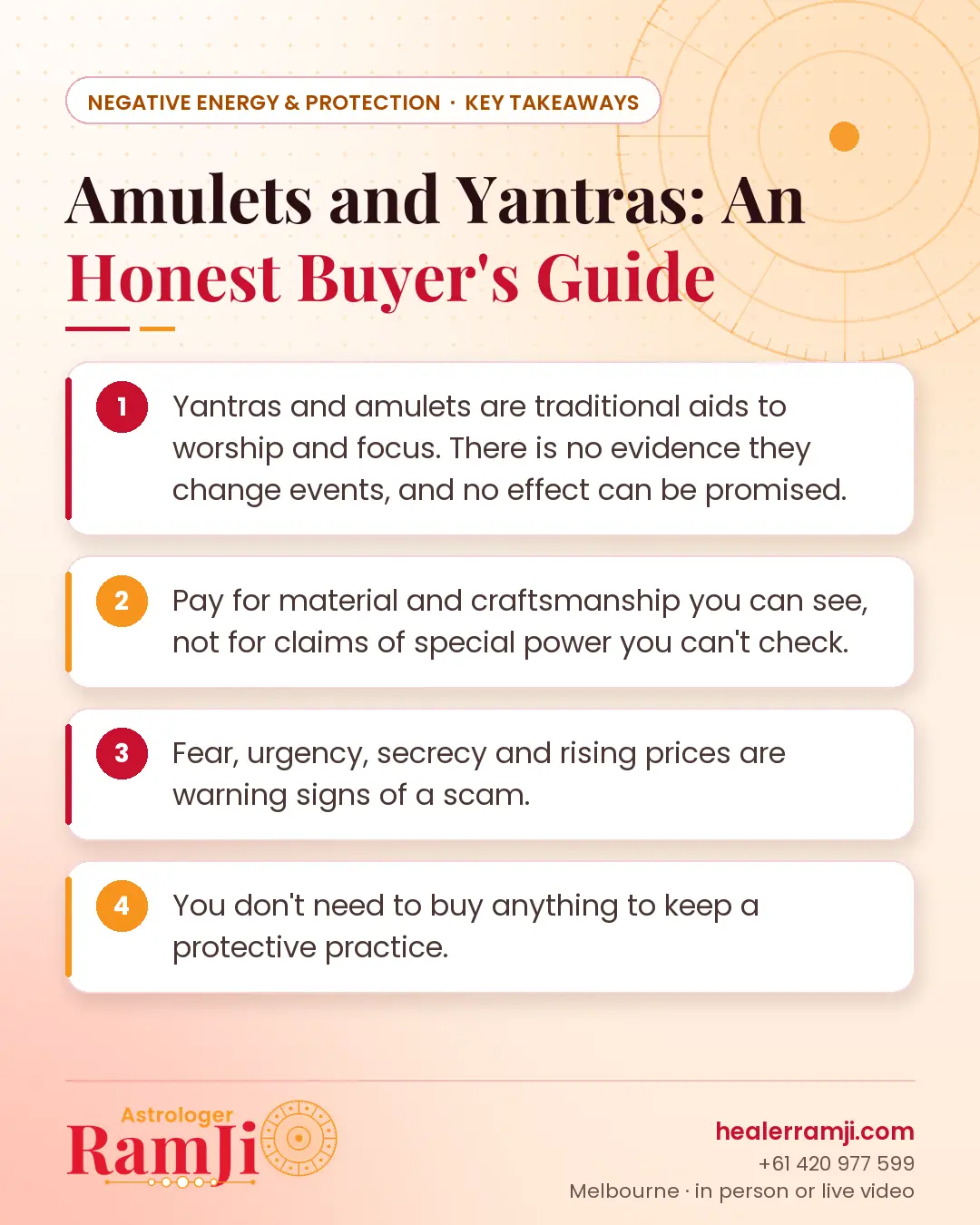
- Yantras and amulets are traditional aids to worship and focus. There is no evidence they change events, and no effect can be promised.
- Pay for material and craftsmanship you can see, not for claims of special power you can't check.
- Fear, urgency, secrecy and rising prices are warning signs of a scam.
- You don't need to buy anything to keep a protective practice.
What is a yantra, and what is an amulet?
A yantra is a geometric diagram, mainly from the Tantric traditions of Indian religions. Yantras are used in the worship of deities at home or in temples, as an aid to meditation, and for benefits that believers attribute to them through astrology and tantric texts. A typical design radiates from a central point, with triangles, circles and lotus petals inside a square. Yantras are usually linked with a particular deity, and are sometimes worn as a talisman.
An amulet is a broader word for any object kept or worn for protection. In South Asian homes that might be a taveez, a kavach locket, a rudraksha bead, a nazar charm or a sacred thread. Each tradition has its own customs about how these are made, blessed and cared for. On babies and young children, anything tied around the neck, wrist or ankle can be a choking or strangling risk, especially during sleep. Our guide to protecting children from nazar safely covers safer options.
What are they meant to do?
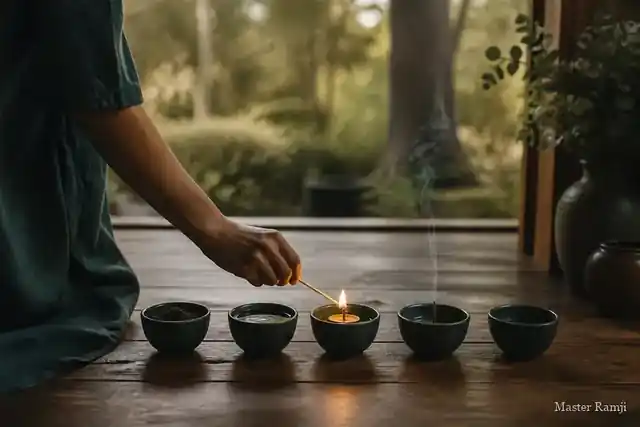
Within the traditions, a yantra or amulet is mainly a focus. It gives a prayer somewhere to rest, reminds the wearer of their faith, and stands for the protection of a deity or a family. Many people find that keeping one brings a sense of calm, especially in an anxious period.
What an object can't do is change your luck, your health, your exam marks or another person's feelings. Nobody has shown that any yantra or amulet affects events, and an honest seller won't suggest otherwise. If you value one, value it for what it means to you.
Do amulets and yantras work if they are "energised"?
Many sellers charge more for items described as energised, siddh or consecrated by a priest. In tradition, consecration is a real rite, and some families care about it. The problem is that you can't check whether it happened, or what difference it made. The same plain brass yantra can be sold at very different prices depending on the story told about it.
If consecration matters to you, consider asking your own temple or family priest, whom you already know and trust. Be cautious of any seller who says only their items carry real power, or that a cheaper one will fail.
What is a fair price?
There is no set price, but you can judge whether a price matches what you are getting. Ask yourself:
- What is it made of? Paper, brass, copper, silver and gold differ widely in value. Ask for the metal in writing.
- How was it made? Hand engraving and fine work reasonably cost more than a stamped design.
- What does a puja shop charge? Common yantras and threads are widely sold. Compare two or three shops before paying a premium.
- What exactly is the extra charge for? If most of the price is for an unseen ritual or a "special" blessing, you are paying for a claim, not an object.
Under the Australian Consumer Law, products bought from an Australian business are automatically covered by consumer rights, including that they match their description and are of acceptable quality. If an item is sold as solid silver or pure copper and isn't, that may be a product that doesn't match its description. A promised spiritual effect is not something you can test in the same way, which is one more reason not to pay heavily for it.
What are the warning signs of a costly offer?
Walk away if a seller or reader:
- tells you something terrible will happen unless you buy today
- says you must buy from them and nobody else
- asks you to keep the purchase secret from your family
- starts small, then finds a new problem that needs a bigger, dearer piece
- asks you to hand over jewellery or cash to be "purified"
- suggests you borrow money or use credit
- links the item to winning back a partner or controlling someone
These are the same patterns seen in black magic removal scams. You can report them to Scamwatch. If you have already paid and feel frightened, our short answer on what to do when someone says you're cursed and wants money sets out the steps in order.
Do you need one at all?
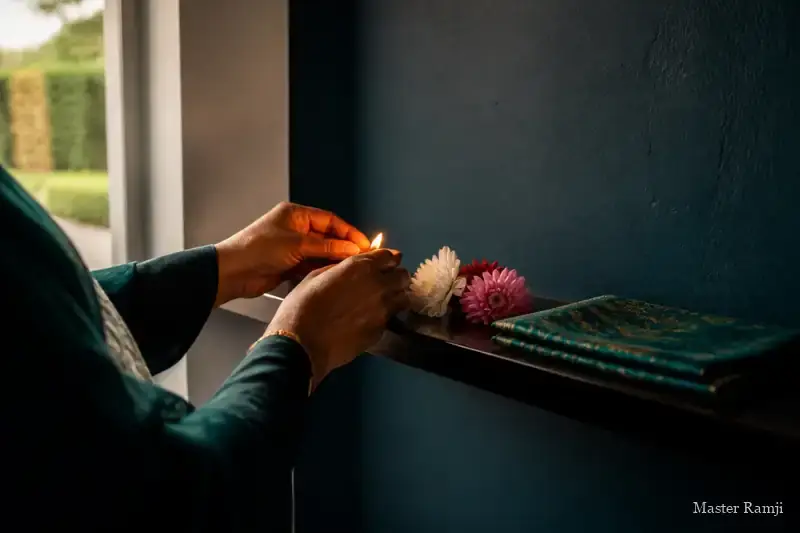
No. A protective practice can be entirely free. A short prayer at the door, a lamp in the evening or a few minutes of mantra each morning are all part of the tradition, and none requires a purchase. Our five-minute daily protection routine is an easy place to start.
If you already own a family yantra or amulet, there is no need to replace it or pay to have it "recharged". Keep it clean, keep it somewhere respectful, and let it remind you of the people and the faith behind it.
Where can you get honest guidance?
If you would like help choosing a few daily practices from your own tradition, spiritual protection practices focuses on habits you can carry on alone, and nothing in it depends on buying an object. Any fee is stated before paid work begins, and sessions can be held by phone, WhatsApp or video. If you have been offered an amulet or yantra and want a second opinion before you pay, get in touch.
Related service
Keep reading
Workplace Jealousy and Spiritual Protection
Worried about jealous coworkers? Pair a simple protection practice with practical workplace steps, know when it is really bullying, and avoid costly fear-based offers.
Read article →
Slow Trade: Is Your Shop Energy or Your Business Plan?
Shop not getting customers and thinking about remedies? Trace where customers drop away, test one change at a time, and see where a cleansing fits, if at all.
Read article →
How Often Does a Space Need Cleansing?
How often does a home need an energy cleansing? Usually only at real turning points. Why repeat bookings and open-ended courses are a warning sign.
Read article →Quick answers
What do people mean by black magic?
Black magic usually means the belief that ritual can harm someone. Here is what the term covers, what it can't show, and what to do if you're worried.
Read answer →How do I know if someone did black magic on me?
There is no reliable sign that proves black magic. Here is what to check first, why fear is a warning sign, and when to get medical help.
Read answer →Talk to Vijay Ramji
Tell us what you are facing. If a reading is unlikely to help, you will be told that plainly.