
Slow Trade: Is Your Shop Energy or Your Business Plan?

If your shop is not getting customers, look for where people drop away before reaching for remedies. Check whether they can find you, whether they walk in, whether they buy and whether they return. Test one change at a time. A cleansing can mark a fresh start for believers, but it can't replace that work.
When a shop goes quiet, the silence can feel personal. You stand behind the counter, watch people walk past, and start to wonder whether something is wrong with the place itself. In many South Asian families, the next thought is a remedy: a lemon and chillies at the door, a puja, a cleansing.
Those customs have meaning for many owners. But when your shop is not getting customers, a remedy works best when you know what you are responding to. This page offers a simple way to find out first.
Key takeaways
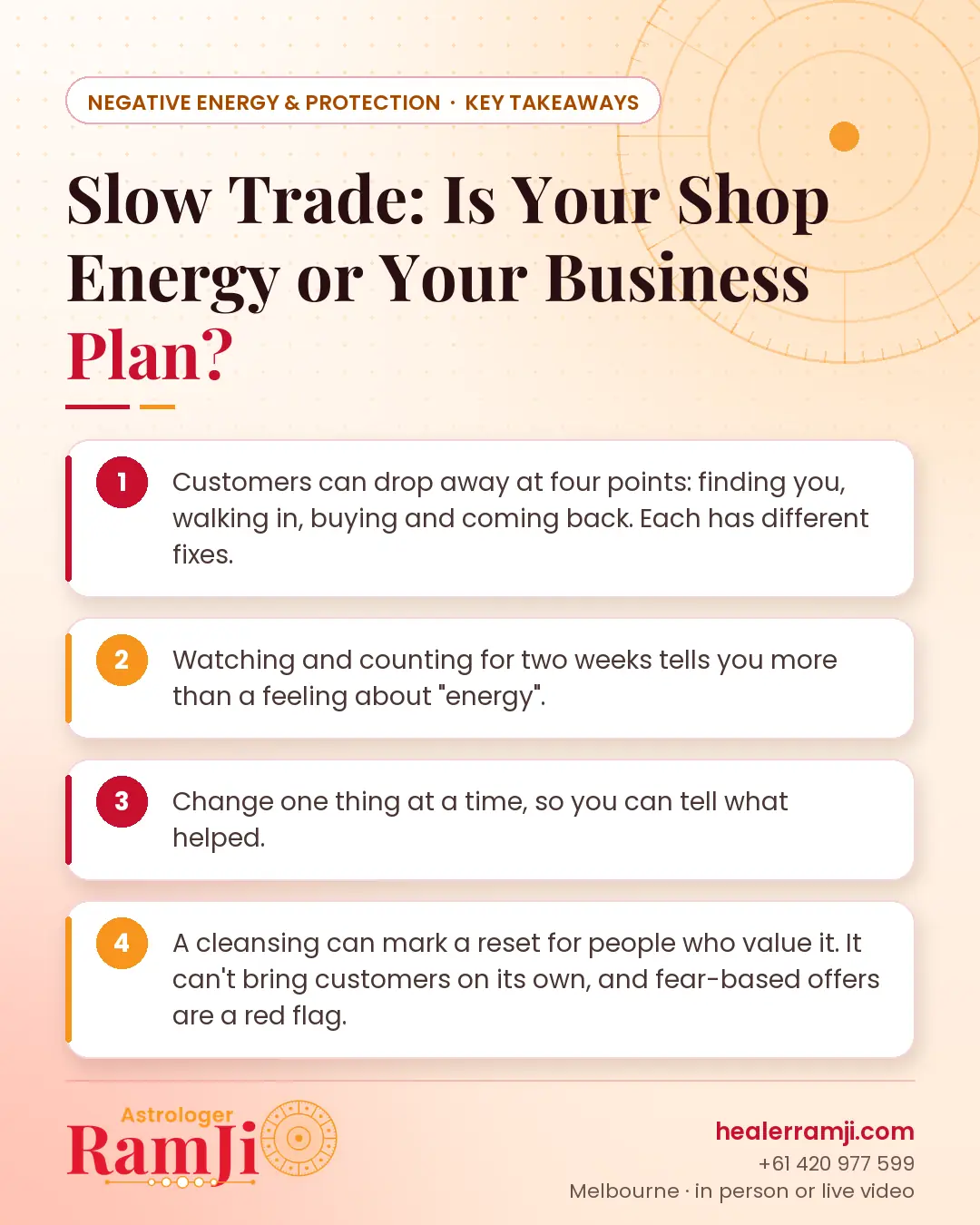
- Customers can drop away at four points: finding you, walking in, buying and coming back. Each has different fixes.
- Watching and counting for two weeks tells you more than a feeling about "energy".
- Change one thing at a time, so you can tell what helped.
- A cleansing can mark a reset for people who value it. It can't bring customers on its own, and fear-based offers are a red flag.
Where are customers dropping away?
Think of each customer passing four gates. A problem at any one of them looks the same from behind the counter: an empty shop.
- Finding you. Can people locate you online, with the right hours, address and phone number? Is your sign readable from across the road or from a passing car?
- Walking in. Does the window show what you sell? Is the door easy to open, or blocked by stock, a bin or a sandwich board? Does the shop look open?
- Buying. Once inside, do people find what they came for? Are prices clear? Does someone greet them? Can they pay the way they want to?
- Coming back. What do your reviews say? Do regulars still come in, or have some disappeared?
Many owners discover the problem sits at a gate they hadn't thought about.
How do you find out which gate is the problem?
Try a two-week watch. It costs nothing but attention.
- Count passers-by for fifteen minutes at a few set times each day. A tally on paper is enough.
- Count who walks in during the same windows.
- Count sales from your till for those windows.
- Note anything unusual, such as rain, roadworks, school holidays or a market nearby.
Plenty of foot traffic but few walk-ins points to the window, entrance or signage. Plenty of walk-ins but few sales points to range, price or service. Low foot traffic overall points to location, visibility or changes in the street. Each answer leads somewhere different.
Who else can tell you what's going on?
You are too close to the shop to see it fresh. Others can help:
- Neighbouring traders. Ask whether they are quiet too. If the whole strip is slow, the cause is probably outside your door.
- Regular customers. Ask five of them what they come in for and what would make them come more often.
- A friend as a mystery shopper. Ask them to look you up online, walk past, come in and buy something, then tell you honestly how it felt.
- Your accountant. They can show you whether the problem is fewer customers, smaller sales or rising costs.
business.gov.au has free government guidance on running and growing a small business. If rent or a lease dispute is part of the strain, the Victorian Small Business Commission helps small businesses with disputes, including retail leases.
What practical remedies should you try first?
Pick the one that matches what you found, and give it a few weeks before judging it:
- Fix your online listing, opening hours and photos.
- Clear the entrance and refresh the window.
- Greet everyone who walks in.
- Bring your best sellers to the front.
- Reply politely to reviews, including the unkind ones.
- Ask a regular what's missing from your range.
Changing one thing at a time matters. If you change five things in a week, you won't know which helped.

Could the problem be you being worn out?
This is worth asking gently. Long hours, money worries and a quiet shop can wear anyone down. Customers notice an owner who looks anxious or doesn't look up from the phone, even if the owner doesn't. If stress is affecting your sleep or mood, see your GP. Taking a day off may do more for the shop than any remedy.
So where does a cleansing fit?
For owners who share the belief, a business premises cleansing can mark a deliberate fresh start. It tends to mean most after you have made practical changes, as a way of saying "this is a new chapter". It is a matter of faith. Nobody can measure a shop's energy, and no rite can be shown to bring in trade.
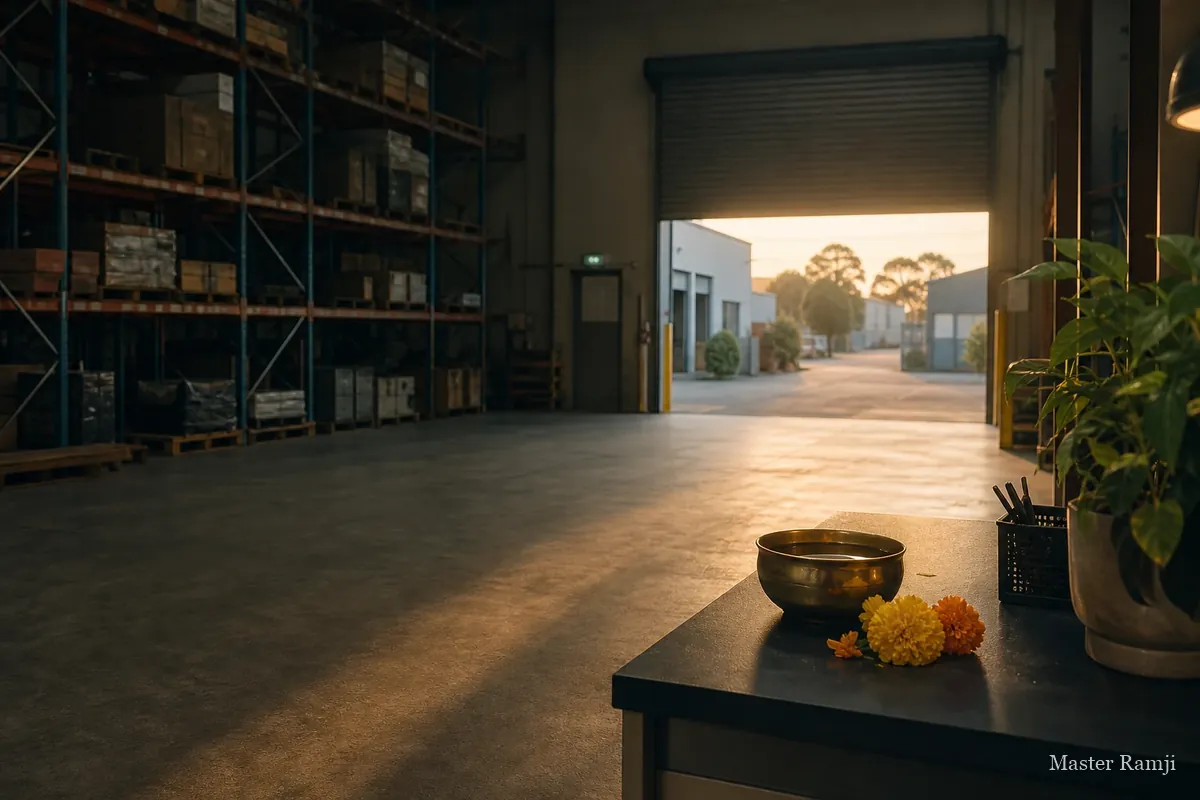
If you choose one, keep it workable in a commercial building. Fire Rescue Victoria lists smoke from candles and incense among common causes of false alarms, and the owner of an alarm system may be charged a fee for one. Check your lease and centre rules before lighting anything, keep staff participation voluntary, and do it outside trading hours. Some owners prefer a deep clean and a short prayer, which needs no flame at all.
If layout is your question, vastu for shops and offices looks at what you can realistically change in a leased space. For a worked example of putting figures first, see quiet trade at a Ringwood shop.
What should make you wary?
Hard times make owners easy targets. Be cautious if anyone tells you a rival has cursed your shop, that you must pay for an urgent ritual, or that trade will collapse unless you buy more rites. Accusing a competitor can also cause serious legal and personal trouble. An ethical practitioner will ask what you have already checked, explain any fee before work starts, and tell you plainly what a rite can't do.
Vijay Ramji is based in Ascot Vale. Appointments are arranged in advance, sessions can be held by phone, WhatsApp or video, and what you share about your business is confidential. Once you've done your two-week watch, get in touch if you would like to talk it through.
Related service
Keep reading

How Often Does a Space Need Cleansing?
How often does a home need an energy cleansing? Usually only at real turning points. Why repeat bookings and open-ended courses are a warning sign.
Read article →
Keeping Your Faith and Seeing a Doctor
Your faith and mental health care don't compete. Why seeing a GP or psychologist comes first, how to talk about your beliefs, and where prayer can sit alongside care.
Read article →
Spiritual Scams Aimed at New Migrants in Dandenong
How spiritual scams use language gaps and fear to pressure new migrants in Dandenong, and where to get help in your own language if you have already paid.
Read article →Quick answers
What do people mean by black magic?
Black magic usually means the belief that ritual can harm someone. Here is what the term covers, what it can't show, and what to do if you're worried.
Read answer →How do I know if someone did black magic on me?
There is no reliable sign that proves black magic. Here is what to check first, why fear is a warning sign, and when to get medical help.
Read answer →Talk to Vijay Ramji
Tell us what you are facing. If a reading is unlikely to help, you will be told that plainly.