
Choosing a Wedding Muhurat in Australia
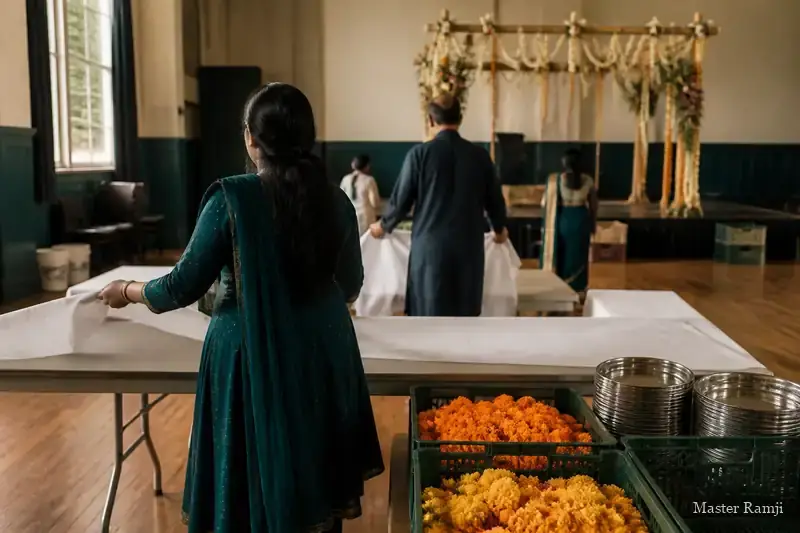
To choose a wedding muhurat in Australia, first agree on the months your family can travel and your venue can offer. Then ask for several auspicious windows in that range, calculated for local sunrise and time. Lodge your Notice of Intended Marriage at least one month ahead, and keep one backup date.
Families often start with the same request: "Find us the best date." In India, that might be simple. In Australia, the best date has to survive venue calendars that fill up early, a southern hemisphere season that runs opposite to India's, school holidays, flights, and a legal notice period. The muhurat is still important. It just has to share the table.
This page looks at where traditional wedding timing and Australian life tend to collide, and how to find a date that respects both.
Key takeaways
- Ask for a range of auspicious windows, not one perfect date.
- Traditional "no wedding" periods can overlap with the Australian summer break and spring, so check early.
- A muhurat must be calculated for local sunrise and Australian time, including daylight saving.
- The religious ceremony and the legal marriage have separate rules. Plan both.
What makes a wedding muhurat in Australia different?
A muhurta is a traditional unit of time, and in everyday use a muhurat means an auspicious moment to begin. For a wedding, astrologers usually look at the panchang, the couple's Moon signs and birth stars, and the key moment of the ceremony, such as the pheras or the tying of the mangalsutra.
Australia changes three things. Sunrise and local time are different, so a time worked out for Delhi or Chennai won't carry over. The seasons run the other way, which affects outdoor plans and fire rules. And the calendar people actually live by, with its long summer break, public holidays and school terms, is Australian.
Which traditional periods can clash with the Australian calendar?
Many families avoid weddings at certain times of year. Customs differ by region and community, so check with your own elders or priest. Common examples include:
- Chaturmas. Many families avoid weddings in the roughly four months between Devshayani Ekadashi and Prabodhini Ekadashi, which usually run from late June or July to October or November. In Melbourne, that covers winter and much of spring.
- Kharmas. Many North Indian families also avoid the months when the Sun is in Sagittarius or Pisces, roughly mid-December to mid-January and mid-March to mid-April. The first of these sits right across the Australian Christmas and summer holidays, when relatives most easily get leave.
- Venus or Jupiter close to the Sun. When either planet is combust, many astrologers avoid wedding dates. These periods move from year to year.
- Regional months. South Indian families often have their own months to avoid, such as Aadi in Tamil tradition or Ashada in parts of Karnataka and Andhra Pradesh.
Put together, these can leave fewer windows than you expect, and some of the remaining windows fall in Melbourne's colder months. Find out which rules your family follows before you fall in love with a venue's only free Saturday.

How do you balance the date with the venue?
Popular halls and function centres can book out well ahead, and Saturdays usually go first. A practical order looks like this:
- Agree on which customs your family follows, so everyone uses the same rules.
- List the months that work for travel, leave and exams.
- Ask for every suitable muhurat window across those months, not just the top one.
- Take that list to venues and see which dates they can actually offer.
- Choose the best match, then lock in a backup.
Be open to a Friday or Sunday. A strong muhurat on a Sunday morning may suit your family better than a weaker one on a Saturday night, and the venue may be easier to get. If the hall also needs to allow a sacred fire, read our guide to questions to ask a hall about the wedding fire.
What about family flying in from overseas?
When parents and grandparents are travelling, their availability often matters more than any single date. Visas, leave, health and flight costs all play a part. Our article on planning a wedding date around family in India sets out the order of decisions in detail, so it isn't repeated here.
One extra point for Australia: if older relatives are coming from India's winter into a Melbourne summer, or from India's summer into a Melbourne winter, the weather change can be hard on them. Factor that into the months you consider.

Does the season matter for a havan or outdoor ceremony?
Yes. Many Hindu weddings include a sacred fire. If any part of the ceremony is outdoors in the warmer months, fire restrictions and Total Fire Ban days may apply on the day itself, and they can't be known when you book. Have an indoor plan, or a version of the rite your priest is comfortable with, in case the fire can't be lit outside.
Daylight saving matters too. A muhurat given in Indian Standard Time, or in Australian time without daylight saving, can be an hour out. Our guide on why a muhurat from India may not work in Melbourne explains the calculation.
What does the law require for the wedding itself?
The legal side runs on its own timetable, and no muhurat changes it. In Victoria:
- You must lodge a Notice of Intended Marriage with the person performing your marriage at least one month, and up to 18 months, before the wedding. Shortening the notice is only possible in limited, exceptional circumstances.
- The marriage must be performed by an authorised celebrant, such as a registered civil celebrant or a minister of a recognised religious denomination, with two witnesses present, as Births, Deaths and Marriages Victoria explains.
Some couples hold the legal ceremony separately from the religious rites, on a different day or at a different time. Others have a priest who is also authorised. Ask your priest and celebrant early how they will handle it, and check the rules in your own state if you are marrying outside Victoria.
What if the ideal muhurat is impossible?
It happens often. When no date meets every rule, a careful astrologer explains which factors your family's tradition treats as essential and which are preferences. Many families focus on the timing of the central rite and accept a less ideal date around it. A muhurat is an expression of care and intention. It can't promise a happy marriage, and missing a window doesn't doom one.
How can a consultation help?
For a full date search, muhurat date selection works through windows calculated for your city. If you would also like to talk through both charts and the year ahead as a couple, a pre-marriage consultation can include the timing question. Sessions can be held by phone, WhatsApp or video, and fees are stated first. When you have your list of possible months, get in touch.
Related service

Keep reading

Questions Every Engaged Couple Should Discuss
The questions to discuss before marriage that a horoscope leaves out: money, children, family, faith, health and conflict, with plain prompts for engaged couples.
Read article →
Arranged Introductions for NRIs in Australia
Arranged marriage for NRIs in Australia: how family introductions across two countries can work with informed consent, honest checks and no pressure.
Read article →
A Guide for Parents of an Intercaste Couple
Your child wants to marry outside your caste or community. Gentle advice for parents on handling your own worries while keeping your relationship with your child.
Read article →Quick answers
What is Mangal dosha?
Mangal dosha is a traditional marriage concern linked to the placement of Mars in a birth chart. Here is what it means and why it is rarely a reason to panic.
Read answer →What is Guna Milan?
Guna Milan is a traditional 36-point comparison of two people for marriage. See the eight factors it scores, what it leaves out, and how to read the result.
Read answer →Talk to Vijay Ramji
Tell us what you are facing. If a reading is unlikely to help, you will be told that plainly.