
Setting Up a Home Office With Vastu
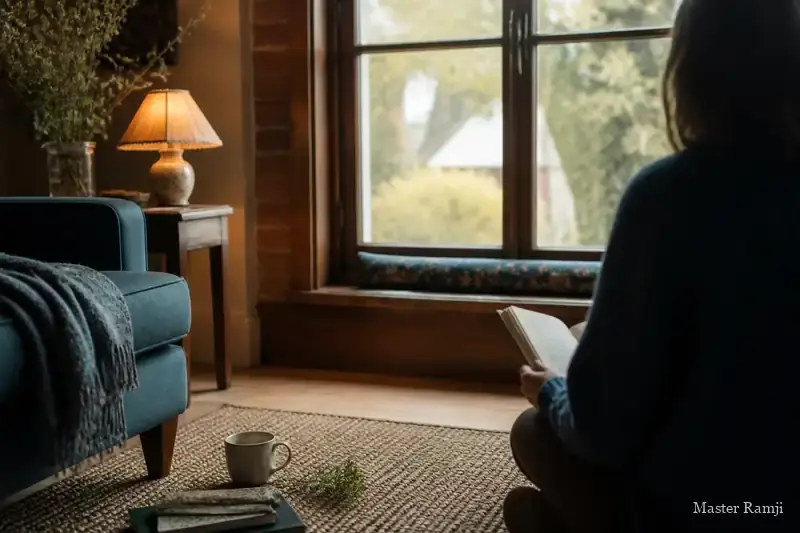
For a vastu home office, the common guidance is to face north or east while you work, with a solid wall behind you. Find direction with a calibrated compass and allow for the gap between magnetic and true north. Where tradition clashes with glare, cables or comfort, choose comfort, because a desk you can't work at helps nobody.
Many people now work from home for at least part of the week, and plenty of them set up a desk in a hurry and never revisited it. If you would like a vastu home office, the desk is one of the easiest places to start, because a desk can move in an afternoon and a wall can't.
This guide focuses on one decision: which way you face while you work. It covers how to find direction properly, what tradition suggests for different kinds of work, and what to do when vastu and practicality pull in different directions.
Key takeaways
- Facing north or east is the most common vastu advice for work, though writers differ on details.
- Measure direction carefully. A compass shows magnetic north, which in Melbourne sits more than ten degrees from true north.
- In Australia, a north-facing window brings strong sun, so glare often decides where the desk can go.
- Comfort, light and safety come first. Vastu is a tradition, not a productivity guarantee.
How do you find north accurately?
Most direction mistakes happen here. A few steps help:
- Calibrate your phone compass. Follow the phone's prompt, then stand in the middle of the room, away from speakers, steel desks and the fridge on the other side of the wall.
- Know which north it shows. Many phone compasses show magnetic north by default, and some can switch to true north in settings. NOAA's magnetic declination calculator shows the current gap for your location. In Melbourne it is more than ten degrees.
- Cross-check with a map. Look at your street on a satellite map. Blocks are often set at an angle, so "the front of the house" may face north-east rather than north.
Vastu writers don't all agree on whether magnetic or true north should be used. Ask any consultant which one they work from. A few degrees rarely matters for a desk, but it can matter when a room sits near the boundary between two directions.
Which direction suits which kind of work?
Vastu shastra links each direction with different qualities. For desk work, the advice you will hear most often goes like this:
- Facing north. Many writers link north with Kubera, the guardian of wealth, and with opportunity. It is often suggested for sales, finance, business and client work.
- Facing east. Linked with the rising sun and fresh starts. Often suggested for study, writing, planning and creative work.
- Facing west. Treated as acceptable by some writers and avoided by others. Opinions vary more here.
- Facing south. Usually the least favoured direction for desk work in traditional advice.
Some writers add that the owner or most senior person should sit in the south-west part of the room, facing north or east. Treat all of this as tradition. It is a set of beliefs many families value, not something that has been tested.

Does the southern hemisphere change anything?
It might. The classical texts were written in India, where the midday sun is in the south. In Australia it is in the north. Some consultants keep the traditional directions exactly, some reverse north and south, and others mix the two. Our article on whether vastu changes in the southern hemisphere sets out each view. Choose one approach and stick to it, rather than mixing advice from different sources.
What if facing north means facing the window?
This is the most common clash in Australian homes. A north window gets plenty of sun for much of the year. Sitting straight towards it means squinting at a screen against bright light. Sitting with it behind you puts glare on the screen.
The usual fix is to place the desk side-on to the window, so daylight falls across the room. You can then turn your chair slightly towards north or east, which many people feel keeps the spirit of the advice. Blinds or a sheer curtain help too. If none of this works, light wins. Eye strain all day undoes any benefit the direction was meant to offer.
What about video calls?
Working from home brings a question the old texts never faced: what is behind you on screen. The vastu preference for a solid wall at your back helps here, because a plain wall makes a calm background. A door behind you invites interruptions on camera as well.
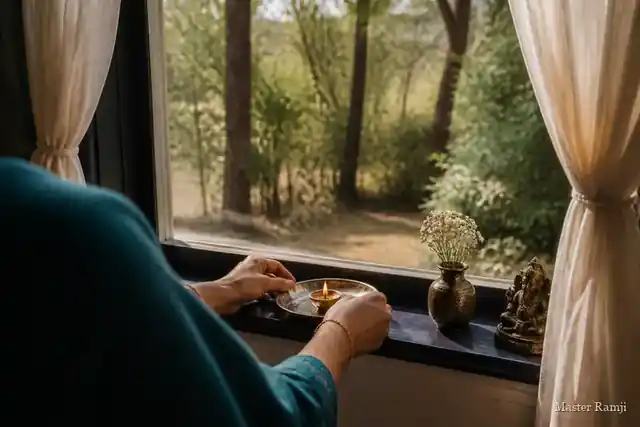
Put your main light in front of you, not behind. If your mandir or prayer images are in the room, you may prefer to keep them out of frame. Our guide to setting up a small home mandir covers placement if you are rearranging anyway.
Where should the equipment go?
Many vastu writers link the south-east with fire and suggest placing electrical equipment, such as a printer or router, in that part of the room. That is easy to try if your power points allow it. Safety matters more than the zone, though. Don't overload power boards, keep cords out of walkways, and let equipment breathe.
Heavy storage, such as filing cabinets and bookshelves, is traditionally placed towards the south or west. Keeping the north-east corner light and uncluttered is common advice as well.
What if two of you work from home?
Couples often share a room or a dining table. One option is to give the north or east-facing seat to whoever spends more of the day on calls. Another is to place the desks so one person faces north and the other east. Either way, agree how you will handle noise. A good set of headphones has saved more home offices than any rearrangement.
If the room was decided for you by a builder and can't change, applying home office vastu to a fixed floor plan focuses on working within the space you have.
What can vastu not do for your work?
A desk direction can't secure a promotion, protect your job or make a business succeed. Those depend on your work, your employer and the economy. Vastu can't replace a comfortable chair and a screen at the right height either. If your back, neck or wrists hurt, sort out the set-up first, and see a GP or physiotherapist if pain continues.
What vastu can offer is a reason to set up your space with care. A clear desk, good light and a steady place to sit often make work feel calmer, whatever the reason. If you would like your own floor plan looked at, a home vastu consultation works from plans and photos, and sessions can be held by phone, WhatsApp or video. To ask a question first, get in touch.
Related service

Keep reading
Vastu for a Leased Shop
Vastu for shop layout when you lease: where tradition places the counter and entry, what a lease usually lets you change, and how to plan for make good costs.
Read article →
Griha Pravesh in Australia: A Practical Guide
A griha pravesh guide for Australia: a samagri checklist, the usual order of steps, and how to time the ceremony around settlement day without stress.
Read article →
Should You Do Griha Pravesh for a Rental?
Thinking about griha pravesh for a rented house? Why customs differ, a ladder of simpler rites for tenants, and how to fit one around Victorian renting rules.
Read article →Quick answers
What is vastu shastra?
Vastu shastra is a traditional Hindu system of home and building design based on direction and layout. Here is what it covers and what it can't claim.
Read answer →Can vastu be applied in a rental?
Yes, vastu can be applied in a rental if you stick to reversible changes. Here is what to try first and what Victorian renters should check.
Read answer →Talk to Vijay Ramji
Tell us what you are facing. If a reading is unlikely to help, you will be told that plainly.