
Does Vastu Change in the Southern Hemisphere?
Vastu was written for India, where the midday sun mostly sits in the south. In Melbourne it sits in the north. Some practitioners keep the traditional directions, some swap north and south, and others blend the two. No classical rule or evidence settles it, so ask any consultant which approach they use and why.
Most vastu books assume a home in India. Open one in Melbourne and something feels off. The advice about sunlight on the north and south sides doesn't match what you see from your own kitchen window.
This is a fair thing to question. Here is what actually changes when you move south of the equator, what stays the same, and why practitioners in Australia don't all agree.
Key takeaways
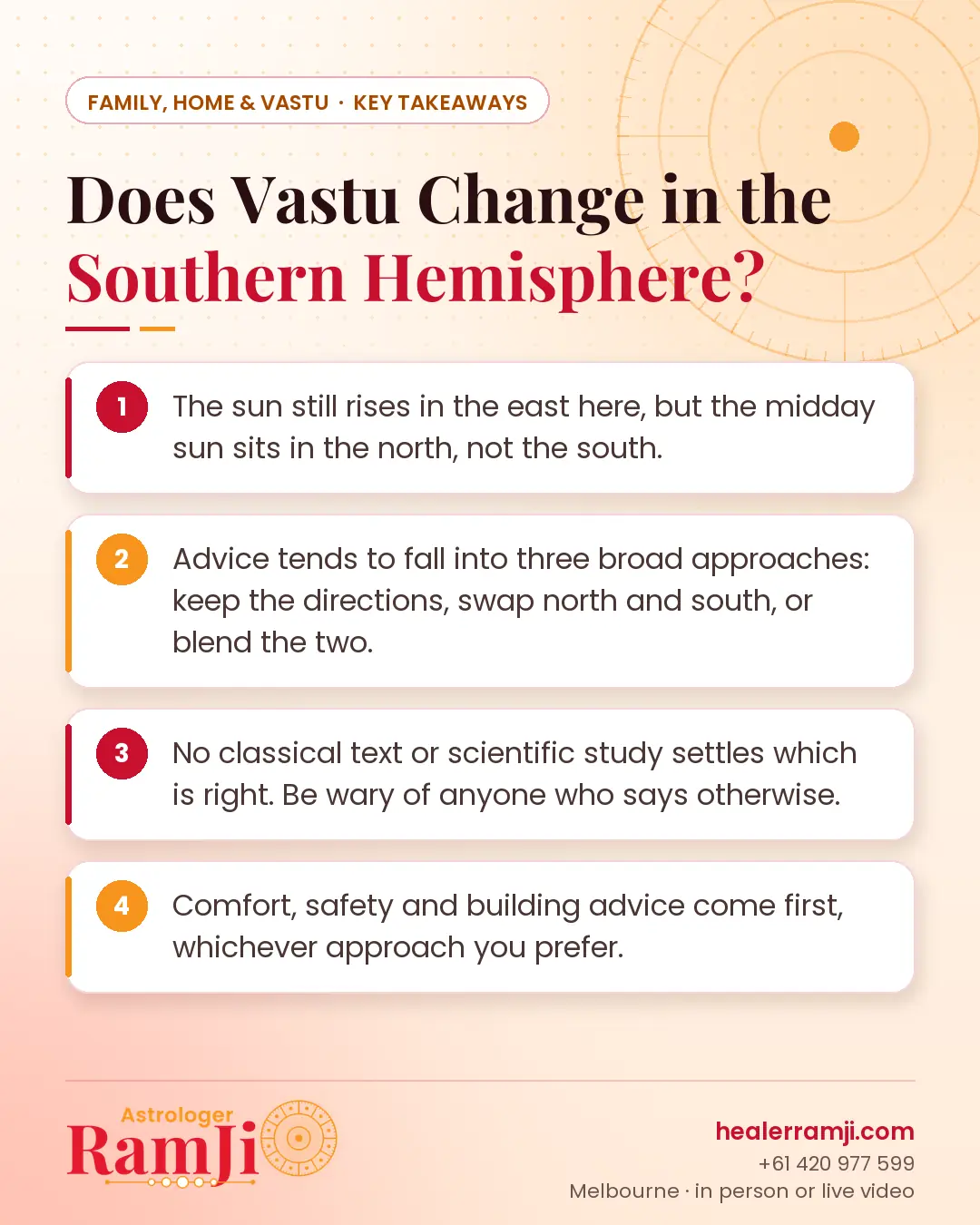
- The sun still rises in the east here, but the midday sun sits in the north, not the south.
- Advice tends to fall into three broad approaches: keep the directions, swap north and south, or blend the two.
- No classical text or scientific study settles which is right. Be wary of anyone who says otherwise.
- Comfort, safety and building advice come first, whichever approach you prefer.
Where is the sun in Melbourne, and why does it matter?
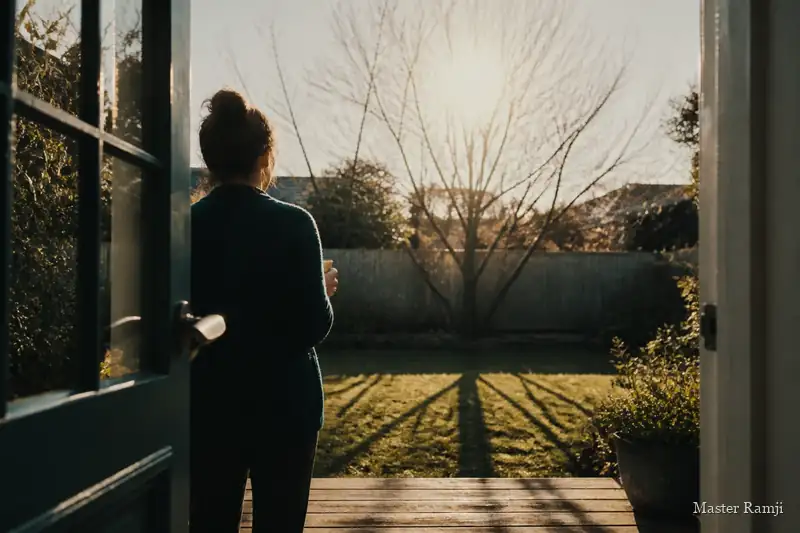
In Melbourne, the midday sun is always in the northern sky. A north-facing room gets the most winter sun, which is why Australian home design guides, such as the Australian Government's YourHome, favour north-facing living areas. South-facing rooms stay cooler and darker through winter.
Across much of India, the picture is close to the reverse for most of the year. The midday sun usually sits to the south, so the south side takes the heat. The far south of India is more mixed around the middle of the year, but the classical works were not written with a Victorian winter in mind.
Some things don't flip. The sun still comes up in the east and goes down in the west, although in summer it rises and sets south of those points, and in winter north of them. East is still the side of the morning light.
Why were the traditional directions chosen?
People give two kinds of explanation, and this is where the disagreement starts.
- The sacred explanation. Vastu shastra lays a home over a mandala, with deities and qualities linked to each direction. North-east is Ishanya, south-east is Agni's corner, south-west is Nairutya and north-west is Vayu's. On this view, the directions are part of the teaching itself, and they don't depend on your latitude.
- The climate explanation. Many modern writers say the rules grew from sun and wind in India. Keep the north-east open for gentle morning light, and put heavy walls on the south-west to block harsh afternoon heat. On this view, the logic should shift when the sun does.
Both are ways of reading a tradition. Neither has been shown to be correct, and critics of vastu regard its claimed effects as unscientific.
What do practitioners actually do in Australia?
We couldn't find a survey of what consultants in Australia do, so take this as a rough map. Advice tends to fall into three approaches:
- Keep the directions as written. North-east remains the place for prayer and openness, and south-east remains the place for the kitchen. Supporters say the compass points have not moved, only the sun's path has.
- Swap north and south. East and west stay put, but north-east trades with south-east, and south-west trades with north-west. A prayer space might then go in the south-east, and the heavier rooms in the north-west. Supporters say this follows the reasoning behind the rules.
- Blend the two. Keep the east and the centre as the tradition describes them, then use local sun and weather to decide the rest. A reader might still value the morning side while accepting that north-facing living rooms suit Melbourne.
Each camp has its reasons. If you have consulted two people and heard opposite advice, this is usually why.
So which approach is correct?
Nobody can honestly prove it. The classical works, such as the Mayamata and Manasara, came from India, so they don't address a home at nearly 38 degrees south. We also know of no reliable study showing that one layout changes your health, money or relationships, in either hemisphere.
That doesn't make the question pointless. Many families value vastu as a way of bringing care and meaning into a home. It simply means you should hold the advice loosely, and treat a confident answer with some suspicion. A careful consultant will say which approach they use, explain why, and accept that others differ.
What stays the same either way?
Whichever view you take, much of the practical advice holds up:
- Keep the centre of the home uncluttered.
- Let in morning light where you can.
- Keep entrances clean, well lit and easy to reach.
- Give rooms enough air and daylight.
- Make a calm, tidy place for prayer, if that is part of your life.
None of this requires knocking down a wall. It is also the part most people find easiest to keep up, which may be why it matters most in daily life. For more on this, see whether you need to renovate for vastu.
What about a south-facing home in Melbourne?
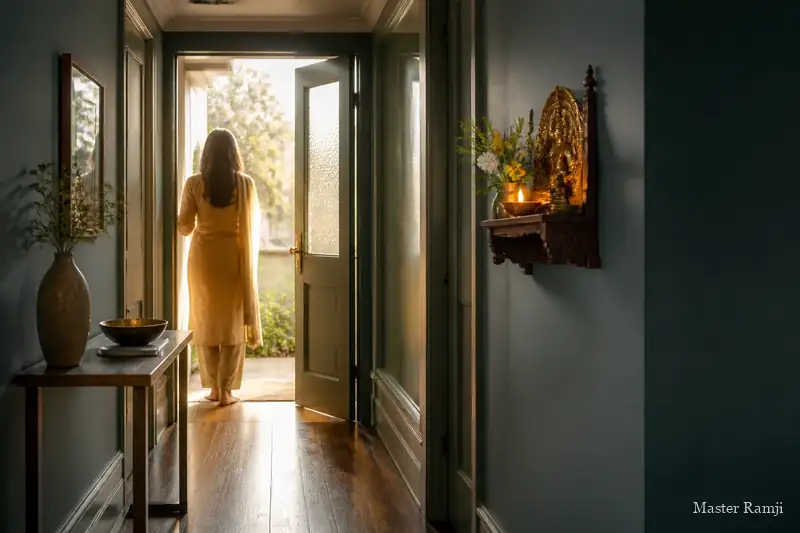
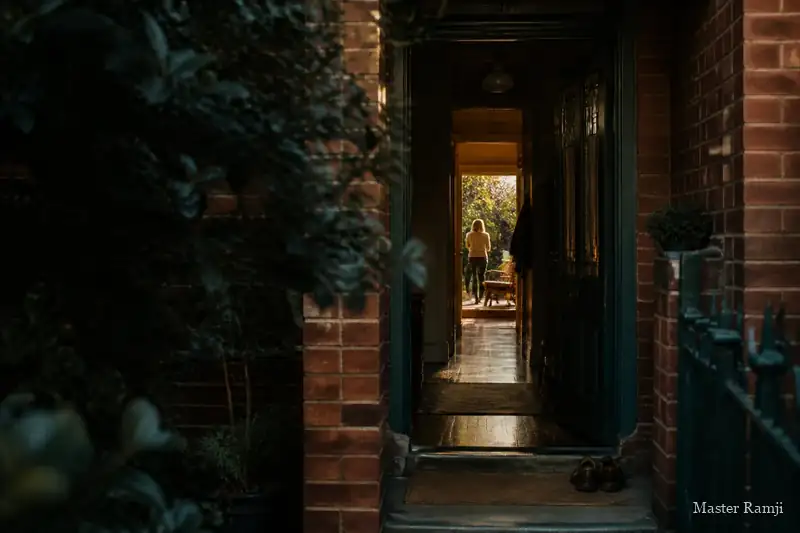
This is where the hemisphere question becomes practical. In many vastu books, a south-facing entrance gets a bad name. In Melbourne, a house with its front door to the south often has its back rooms and garden to the north, which is a layout many people here actively look for because of the winter sun.
So a rule copied straight from an Indian guide could steer you away from a home that suits this climate well. It is one good reason not to panic over a single detail. There is a short explanation in is a south-facing home bad in vastu?
How do you find the directions accurately?
This step gets skipped surprisingly often, and it matters under all three approaches.
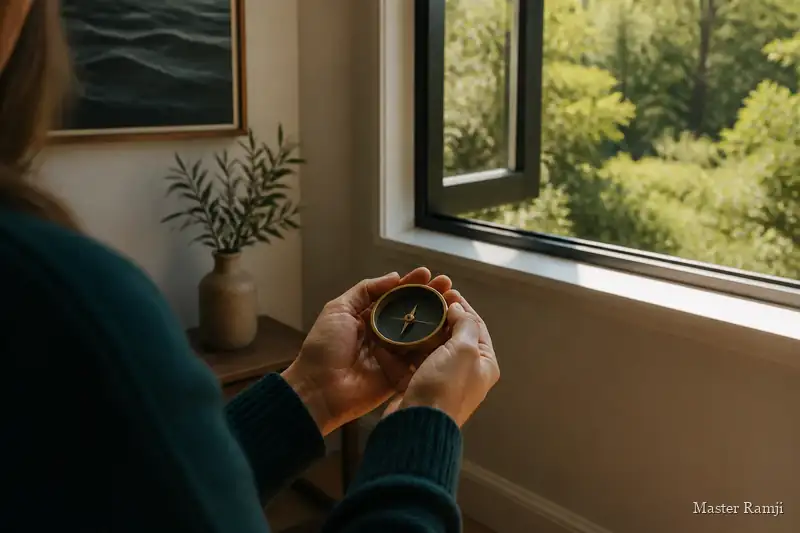
A magnetic compass points to magnetic north, not true north. In Melbourne the gap is more than ten degrees, and it shifts slowly over time. You can check the current figure with NOAA's declination calculator. Many phone compass apps have a true north setting, so check yours. Steel, appliances and concrete can also throw a reading out, so take it in more than one spot and compare it with a satellite map.
Melbourne blocks often don't sit square to the compass either, which means a home that seems to face north may really face north-east. Before you draw any conclusions, get the direction right.
How can you work with a vastu consultant here?
A few simple questions will tell you a lot:
- Do you change the directions for the southern hemisphere? Why or why not?
- How do you measure true north?
- What can I do without renovating?
- What will this cost, and is anything optional?
Walk away from anyone who warns of disaster unless you pay for costly work. Building, plumbing and safety decisions belong with licensed professionals, whatever a vastu reading suggests. If you are looking at a property now, take our vastu checklist for open inspections, and start with what vastu shastra is if the subject is new to you.
Our vastu for homes service looks at adjustments that don't involve demolition, and sessions can be held by phone, WhatsApp or video. Fees are stated before any paid work, and you remain free to ignore any of it. If you would like to talk it through, please get in touch.
Related service
Keep reading
Vastu for a Melbourne Apartment
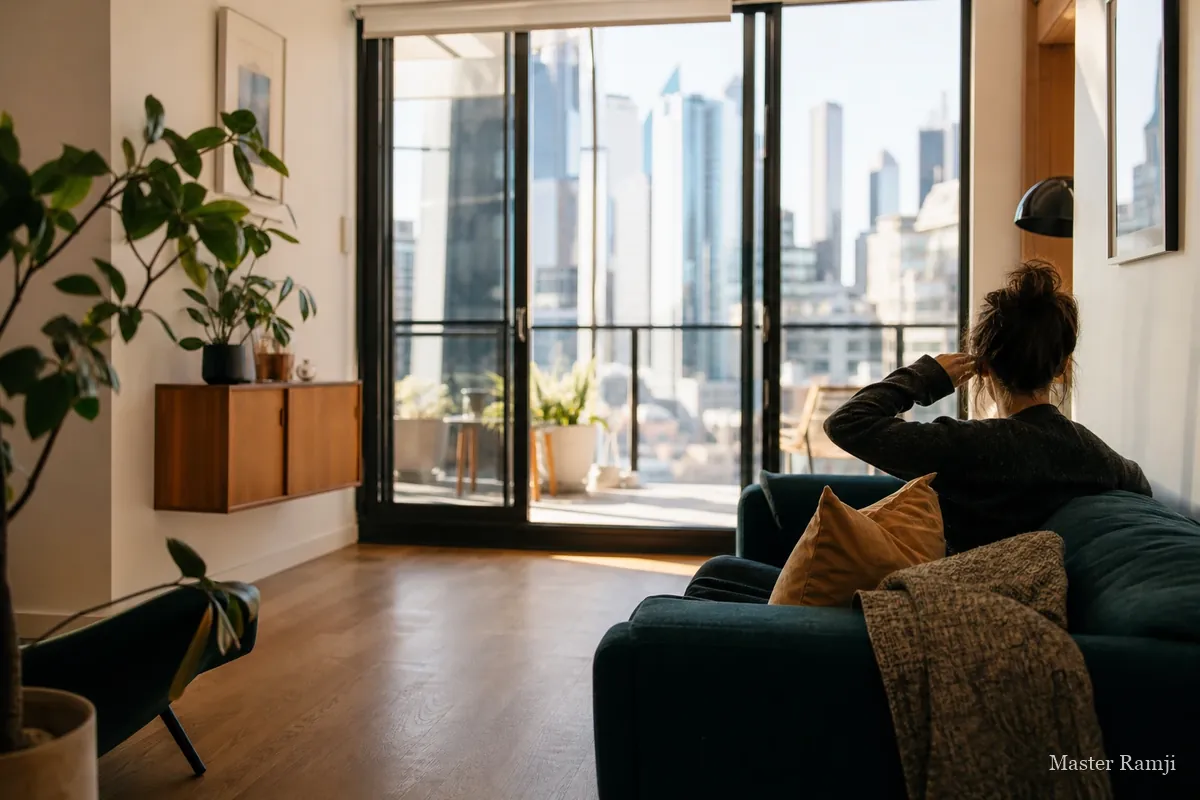
You can't move the kitchen or front door in a strata apartment. Here is what vastu for apartments can realistically involve within owners corporation rules.
Read article →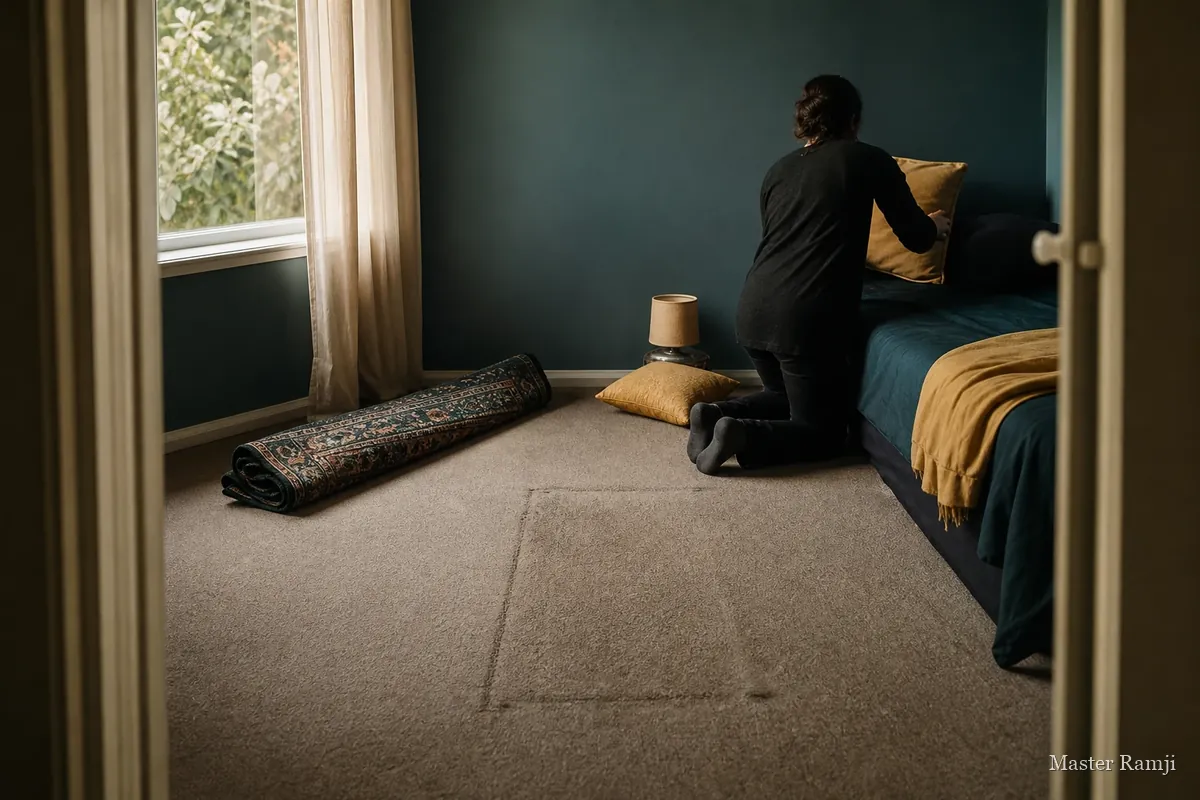
Vastu Fixes That Work in a Rental
Vastu tips for a rental home in Victoria: what you can move, what renters may install without permission, what needs consent, and what to leave alone.
Read article →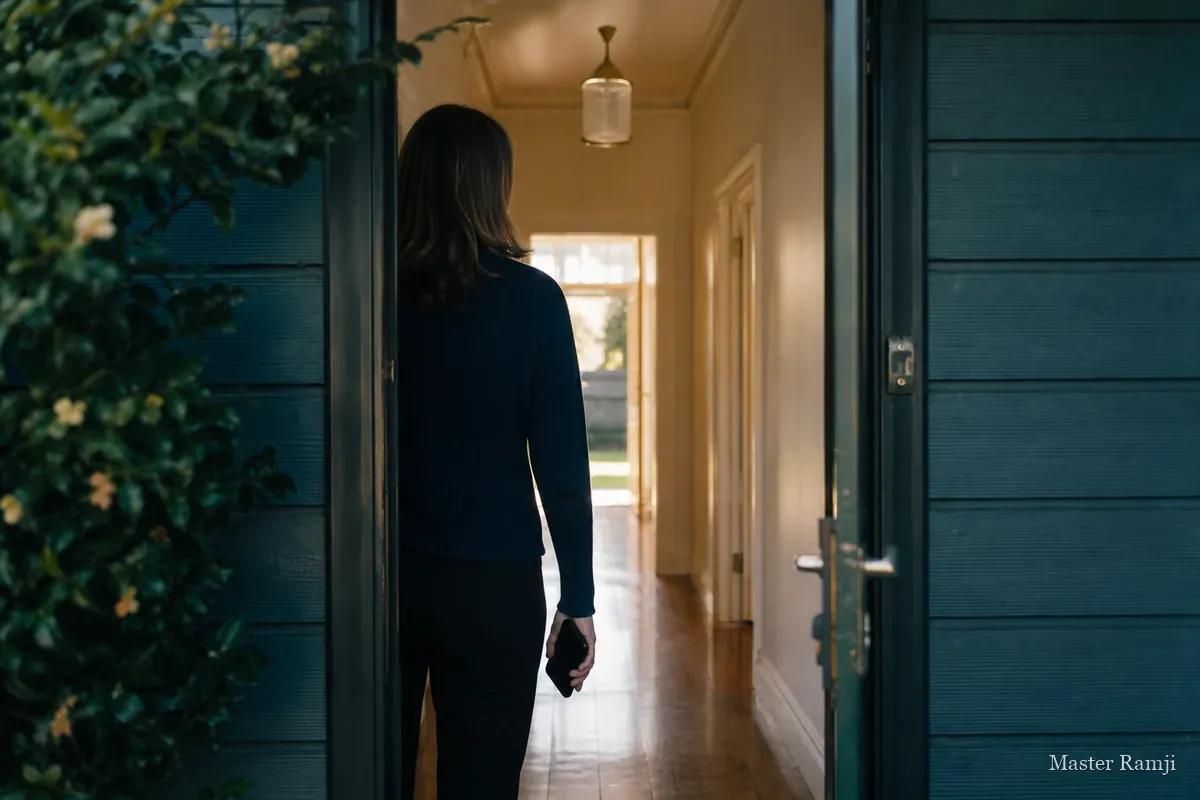
A Vastu Checklist for Open Inspections
A simple vastu checklist for buying a house at an open inspection in Melbourne, and why building reports, your conveyancer and safety always come first.
Read article →Quick answers
What is vastu shastra?
Vastu shastra is a traditional Hindu system of home and building design based on direction and layout. Here is what it covers and what it can't claim.
Read answer →Can vastu be applied in a rental?
Yes, vastu can be applied in a rental if you stick to reversible changes. Here is what to try first and what Victorian renters should check.
Read answer →Talk to Vijay Ramji
Tell us what you are facing. If a reading is unlikely to help, you will be told that plainly.