
Vastu for a Leased Shop
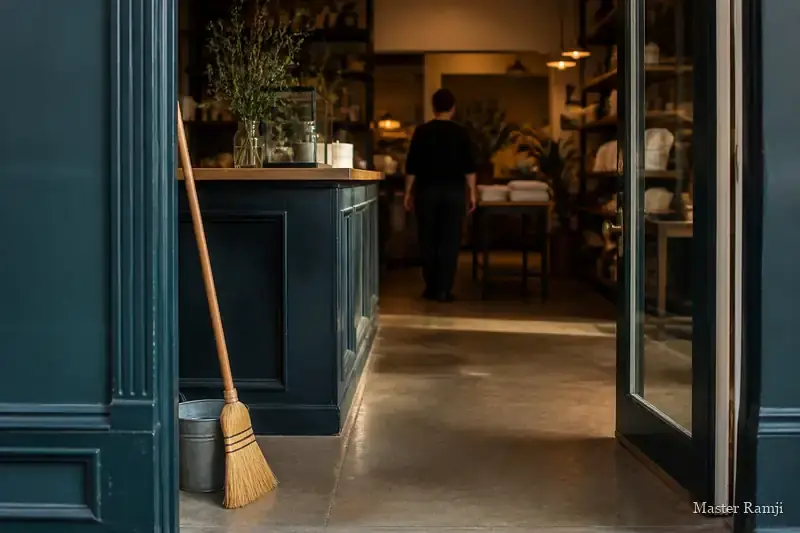
Vastu for shop layout traditionally favours an entry on the north or east side, a cash counter towards the south or west with the owner facing north or east, and a clear north-east. In a leased shop, start with what you can move: the counter, displays and seating. Get landlord consent before changing anything fixed.
You have found the shop. The rent works, the foot traffic looks good, and then someone in the family asks which way the door faces. In a leased shop, the honest answer is often "whichever way the landlord built it". The door, the shopfront and the plumbing are fixed. The counter, the displays and where you sit are usually not.
This guide focuses on the two things most shop owners ask about, the counter and the entry, and on how to apply traditional ideas without breaking your lease or your budget.
Key takeaways
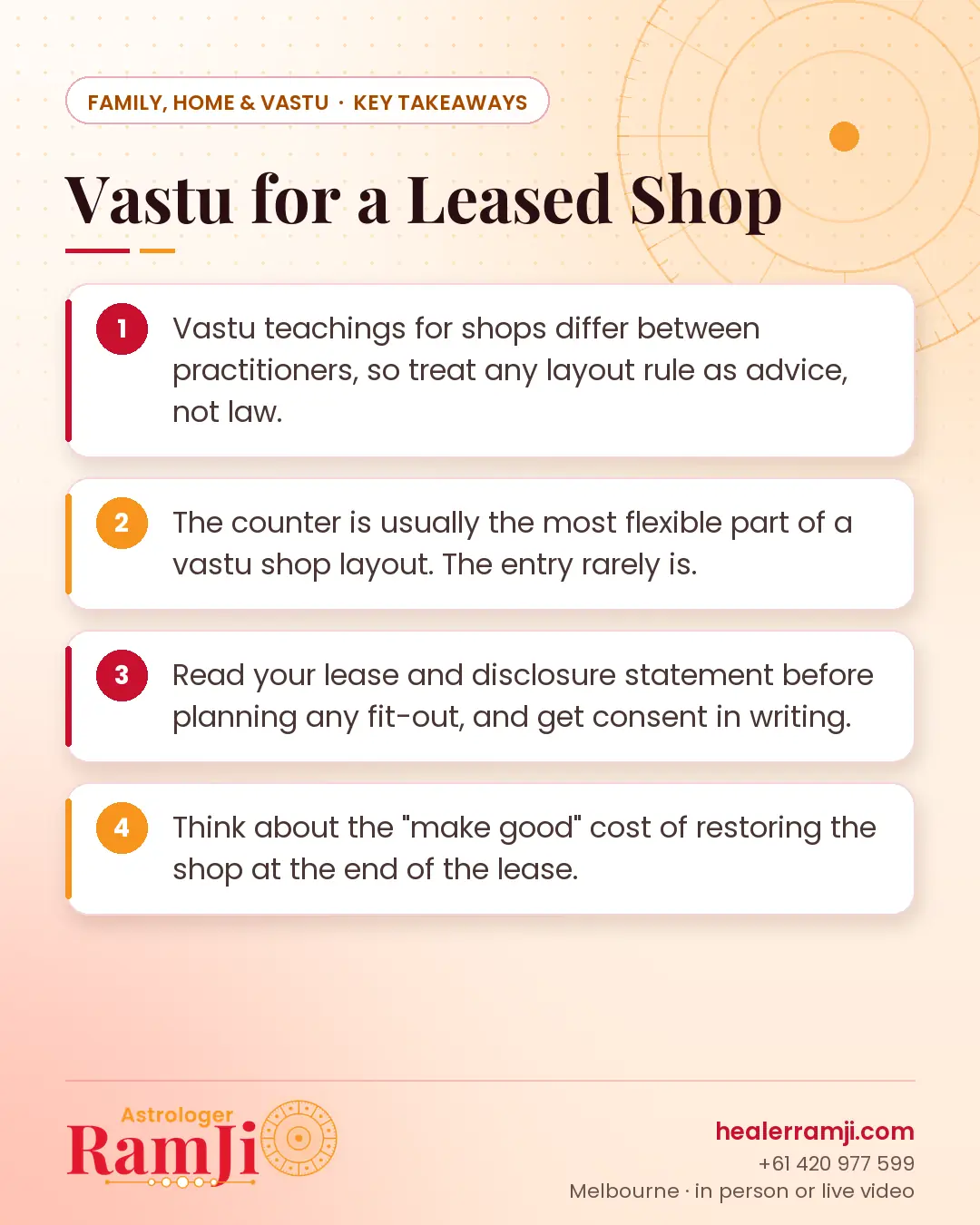
- Vastu teachings for shops differ between practitioners, so treat any layout rule as advice, not law.
- The counter is usually the most flexible part of a vastu shop layout. The entry rarely is.
- Read your lease and disclosure statement before planning any fit-out, and get consent in writing.
- Think about the "make good" cost of restoring the shop at the end of the lease.
What does vastu say about a shop entrance?
Vastu shastra is a traditional Indian system of architecture and layout. Many practitioners prefer a business entrance on the north, east or north-east side, as these directions are linked with growth and light. Others put more weight on the exact position of the door along a wall than on the direction alone. Australian practitioners also differ on whether to adjust directions for the southern hemisphere, which our article on vastu in the southern hemisphere explains.
In a leased shop, the door almost never moves. So the useful question is what you can do around it:
- Keep the entry clear, clean and well lit, inside and out.
- Don't block the first few steps inside with stock or stands.
- Fix anything broken at the threshold, such as a sticking door or a blown light.
- Make the way in easy to see from the street.
These steps suit the tradition's emphasis on a welcoming entrance, and they also make ordinary business sense.
Where should the cash counter go?
Common vastu guidance for the counter includes:
- Placing the counter towards the south or west of the shop
- Seating the owner or cashier facing north or east
- Opening the cash drawer or till towards the north, which is linked with Kubera, the deity of wealth
- Keeping the counter solid and uncluttered, with no broken equipment on it
Some teachers also advise against a counter directly in line with the door. Others don't mention it. When advice conflicts, ask the practitioner to explain their reasoning and the tradition behind it.
Then check it against the practical side. Staff at the counter usually need a clear view of the door for safety and service. Customers need room to queue without blocking the entry or an exit. If the "ideal" spot means the cashier has their back to the door, the practical answer may be the better one.

What can you change in a leased shop?
Every lease is different, so read yours closely. As a rough guide:
- Usually yours to move: freestanding counters, display stands, racks, chairs, plug-in lighting and decorations.
- Usually needs landlord consent: fixed or built-in counters, partitions, signage, wiring, plumbing and anything screwed into walls or floors.
- Usually out of reach: the shopfront, the door position, structural walls and common areas in a shopping centre.
The Victorian Small Business Commission's guide for tenants explains that a disclosure statement should cover works, fit-out, refurbishment and alterations. It also warns tenants to budget for fit-out costs and for the "make good" obligation to restore the premises at the end of the lease. A built-in counter in a new position may look affordable now, but you may have to pay to remove it later.
Shopping centres often have their own fit-out rules and approval steps. Ask for them before you order anything.
What if the counter is fixed in the "wrong" place?
This is common, and there is usually still room to work:
- Change the seat, not the counter. Turning the chair or the till so the cashier faces north or east is often possible.
- Move the cash drawer. A separate cash box can sit on the side of the counter your tradition prefers.
- Lighten the north-east. If that corner holds heavy shelving, try swapping it with lighter displays.
- Put heavy stock towards the south-west. Many practitioners suggest this for storage and back-of-house areas.
- Ask at the next refit. If a refit or lease renewal is coming, request the change then, in writing.

What should never be compromised?
Some things matter more than any layout rule. Keep exits, exit signs, fire extinguishers and paths of travel clear. Don't move fixed fire safety equipment. Keep the way in usable for people with prams, wheelchairs and walking frames. If you are unsure what your building requires, ask your landlord, building manager or a building surveyor before you rearrange.
Can vastu improve sales?
That can't be promised, and there is no scientific evidence that it does. A clear entry and a comfortable path through the shop may help customers for everyday reasons, but location, stock, price and service matter far more. If trade is slow, look at the numbers first and speak to your accountant. Our article on slow trade and your business plan looks at that honestly.
For many owners, vastu is about starting with care and intention, much like an opening puja. If that matters to your family, our guide to holding an opening puja at your shop covers the practical side. Some owners also choose business premises cleansing before trading begins, which is a separate and entirely optional practice.
How does a shop consultation work?
Vastu for shops and offices usually works from your floor plan, photos and the direction of the entry. The aim is a short list of changes your lease allows, explained plainly, with fixed items left alone unless your landlord agrees. Sessions can be held by phone, WhatsApp or video, and fees are stated before any paid work. Have your floor plan ready, then get in touch.
Related service
Keep reading

Griha Pravesh in Australia: A Practical Guide
A griha pravesh guide for Australia: a samagri checklist, the usual order of steps, and how to time the ceremony around settlement day without stress.
Read article →
Should You Do Griha Pravesh for a Rental?
Thinking about griha pravesh for a rented house? Why customs differ, a ladder of simpler rites for tenants, and how to fit one around Victorian renting rules.
Read article →
Timing a Home Purchase
Wondering whether astrology can time a house purchase? How the fourth house and muhurat are used, and why your broker, conveyancer and budget come first.
Read article →Quick answers
What is vastu shastra?
Vastu shastra is a traditional Hindu system of home and building design based on direction and layout. Here is what it covers and what it can't claim.
Read answer →Can vastu be applied in a rental?
Yes, vastu can be applied in a rental if you stick to reversible changes. Here is what to try first and what Victorian renters should check.
Read answer →Talk to Vijay Ramji
Tell us what you are facing. If a reading is unlikely to help, you will be told that plainly.