
Should You Do Griha Pravesh for a Rental?

Griha pravesh for a rented house is a family choice, not a duty. Some priests keep the full rite for a home you own, while others bless any home you live in. Many tenants choose a simpler rite sized to the lease, the building and how long they plan to stay, and they leave the property as they found it.
When you sign a lease, the move-in date is set for you, the walls belong to someone else, and you may only stay a year or two. Yet many families still feel that walking into a new home deserves some kind of blessing. So should a renter hold a griha pravesh, and if so, how much of one?
Our short answer on griha pravesh for rented homes covers the basics. This article goes further: why customs differ, how to choose the right size of rite for your situation, and how to fit it around the rules that come with renting in Victoria.
Key takeaways
- Traditions disagree on whether the full rite belongs to owned homes. Your family's custom is a good guide.
- You can pick from a range of rites, from a lamp on the first night to a priest-led puja.
- Do your condition report photos before you set up anything for the rite.
- Keep everything removable, keep smoke alarms working, and check building rules before inviting guests.
Why do priests and families disagree?
Many traditions describe three kinds of entry: into a newly built home, back into a home after a long absence, and back into a home after major repairs. Some priests also use the second kind for moving into an existing home, and that is how a rental is usually treated, though definitions vary. The disagreement is about what the full ceremony is for.
Some priests see the complete rite, especially vastu shanti, as tied to the land and the structure. On that view, it makes most sense for a home you have built or bought and will care for over many years. Others see griha pravesh as a blessing for the household, so it applies wherever the family lives. Many families land in between. They keep the full rite for a home they own and hold something smaller for each rental along the way. None of these views is wrong. If it matters to you, ask your elders or family priest which custom you follow.
How much of a rite suits your situation?
Think of it as a ladder. You can stop at whichever step fits:
- First-night lamp. Carry in a kalash of water and a lamp, say a family prayer at the door, and boil milk if that is your custom.
- Short family puja. A Ganesha prayer and a Lakshmi prayer at a temporary altar, led by a family member, with sweets afterwards.
- Priest-led puja. A fuller rite at home without fire, perhaps with a few guests.
- Havan. Few rentals can host an open fire safely. Families who want one often hold it at a temple or hall, or arrange a havan performed on their behalf, and keep a lamp puja at home.
A few questions help you choose. How long do you expect to stay? A five-year family home may deserve more than a short student lease. Who else lives there? In a share house, ask flatmates before holding a rite in shared rooms. What does the building allow? And does anyone in the family, perhaps a parent overseas, have strong feelings about it?
When should a renter hold it?
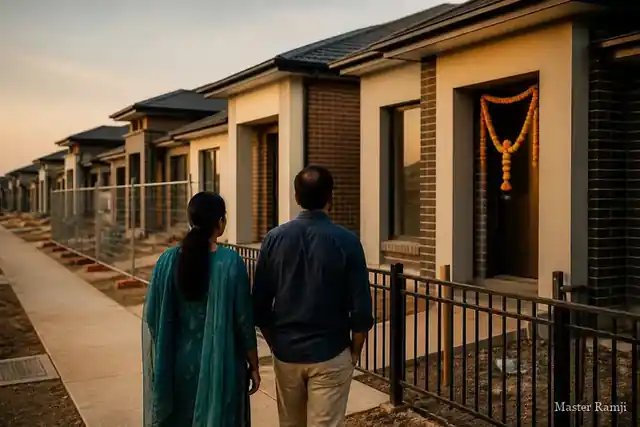
Your lease start date usually decides when you move in, not the calendar. That's fine. Many families collect the keys when they must, bring in a lamp or kalash on the first evening, and hold the main rite on a better day soon after. A muhurat can be found around a fixed move date, and our practical guide to griha pravesh in Australia explains how families fit the ceremony around removalists and work.
One practical point comes first. In Victoria, the condition report records the state of the property at the start of the agreement. Consumer Affairs Victoria says renters must return a signed copy within five business days of moving in, can add their own comments, and should date and label photos. The report may later be used in a bond claim. So walk through and photograph everything before you set up an altar, lay a rangoli or boil milk on the cooktop. That way, any marks already there are on record.
How do you respect the renting rules on the day?
- Smoke alarms stay on. Consumer Affairs Victoria says renters must not deactivate or remove a smoke alarm or interfere with how it works. Light your lamp away from the alarm and open a window instead.
- No new holes without checking. Hang a toran from an existing hook or a tension rod. Renters can make some minor changes without permission, but not on every surface, so check before you drill or nail.
- Protect surfaces. Turmeric, kumkum and ghee stain. Use a tray or old cloth under the altar and around the kalash.
- Common areas have rules. In an apartment block, the entrance, corridors and garden are usually common property. Owners corporations can make rules about matters such as the use of common property and noise, so check them before decorating a shared entry or welcoming a crowd.
A private prayer inside your own rented home doesn't usually need anyone's permission. Changes to the property, risks to the building and disruption to neighbours are what bring the rules into play.
What about guests?
A small rental fills quickly. Keep the guest list short, tell close neighbours if cars or shoes will crowd the entrance, and finish at a reasonable hour. If many relatives want to come, consider a small rite at home for the household and a larger gathering later at a temple, hall or a relative's place.
Is there a custom for moving out?
There isn't one fixed rite, but many families like to close the circle. Clean the home well, light a lamp one last time if you wish, and give thanks for the shelter it gave you. Returning a rental in good condition can be part of that gratitude, and it helps your bond too. When you later buy or build a home of your own, you can hold the full griha pravesh then.
What can a rental blessing not do?
It's an act of faith. It can't fix mould, a leaking roof or a dispute with your agent. Those belong with your rental provider, Consumer Affairs Victoria or a tenancy advice service. It also doesn't make a home lucky or unlucky. Skipping it isn't a risk, and no honest reader will say otherwise. If a place feels unsettled, vastu fixes that work in a rental suggests changes you can make without renovating.
Would help with timing be useful?
If you'd like a date that fits your lease and your family, a griha pravesh timing consultation can suggest workable windows around your move. Fees are stated before any paid work, and sessions can be held by phone, WhatsApp or video. You're welcome to get in touch.
Related service
Keep reading
Timing a Home Purchase
Wondering whether astrology can time a house purchase? How the fourth house and muhurat are used, and why your broker, conveyancer and budget come first.
Read article →
Sharing a Home With Three Generations
Practical multigenerational living tips for families sharing one home: space, routines, money, raising children and protecting everyone's independence.
Read article →
When Your Parents Visit From India for Months
Tips for when parents visit from India for months: preparing the house, sharing routines and roles, keeping them from getting lonely, and handling the goodbye.
Read article →Quick answers
What is griha pravesh?
Griha pravesh is a Hindu housewarming ceremony held when moving into a home. Here is what usually happens and how families fit it around a move in Australia.
Read answer →Is griha pravesh needed for a rented home?
A griha pravesh isn't strictly needed for a rented home, though many families choose a simple version. Here is what a short ceremony can look like.
Read answer →Talk to Vijay Ramji
Tell us what you are facing. If a reading is unlikely to help, you will be told that plainly.