
Loneliness After Migrating to Australia
Loneliness after migrating to Australia is common, because moving to a new place removes the everyday network you grew up with. It helps to combine two kinds of connection: a spiritual or cultural community, and practical local links such as a neighbourhood house, a club or volunteering. Start small. If low mood lasts, see a GP or call Beyond Blue.
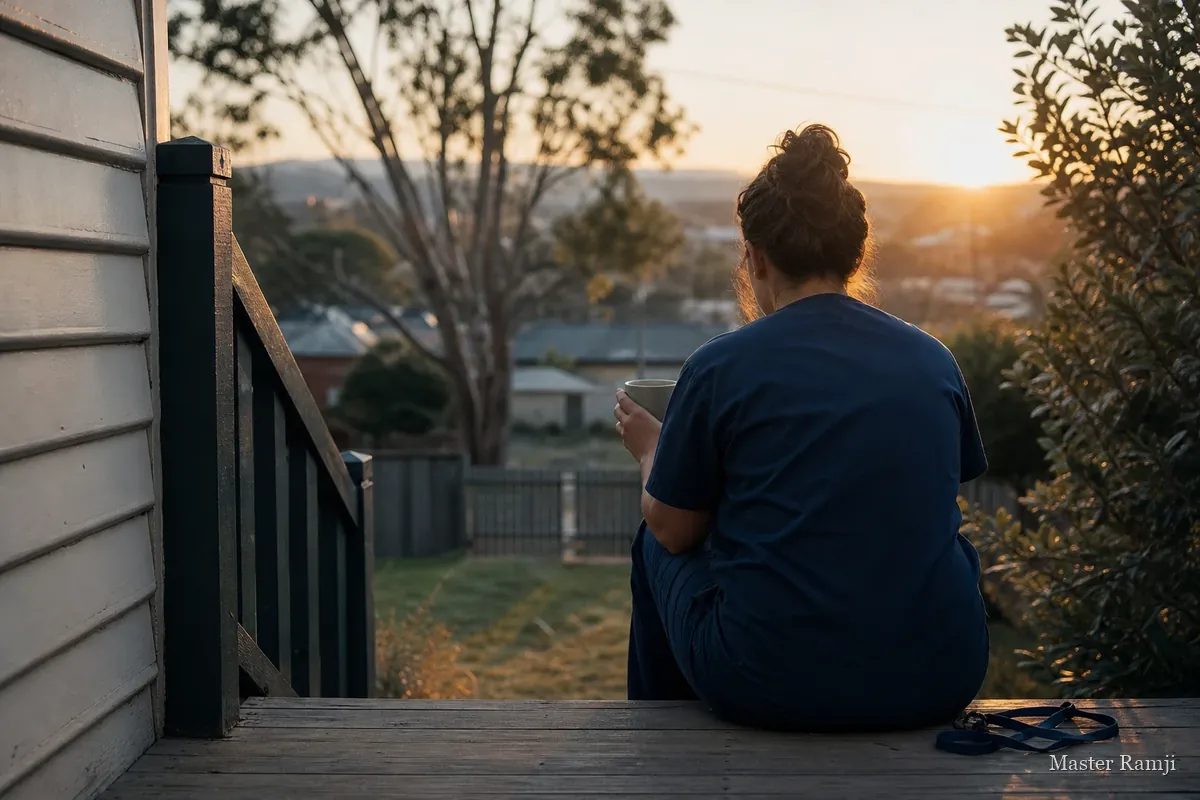
At home, you probably never had to try to have people around. Neighbours dropped in, relatives lived nearby, and the temple or the market meant seeing familiar faces without arranging anything. After a move to Australia, all of that can disappear overnight. You may be busy every day and still go weeks without a real conversation.
This article looks at why migrating can feel so lonely, and how faith and practical connection can work together to ease it.
Key takeaways
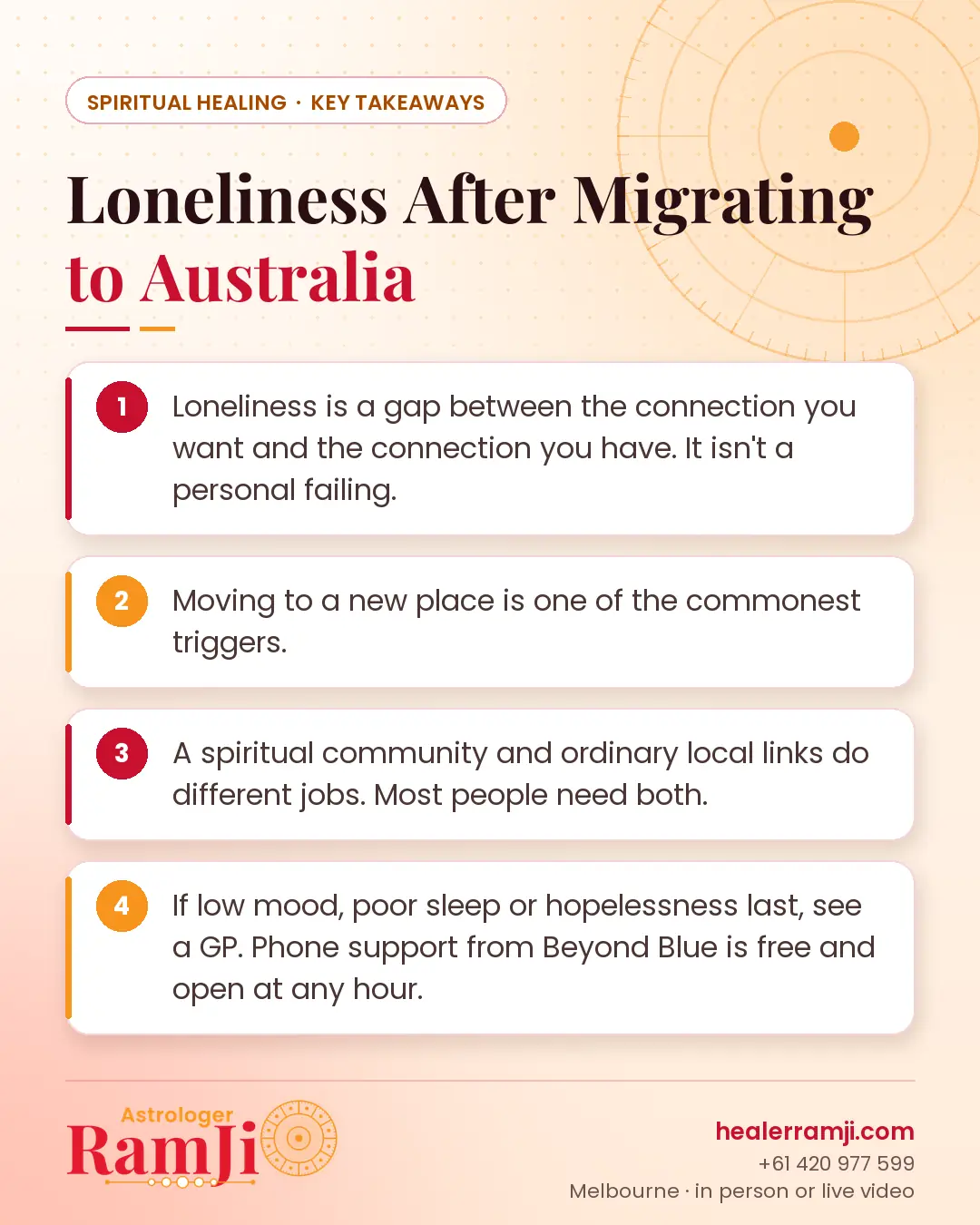
- Loneliness is a gap between the connection you want and the connection you have. It isn't a personal failing.
- Moving to a new place is one of the commonest triggers.
- A spiritual community and ordinary local links do different jobs. Most people need both.
- If low mood, poor sleep or hopelessness last, see a GP. Phone support from Beyond Blue is free and open at any hour.
Why does migrating feel so lonely?
Beyond Blue describes loneliness as a gap between wanting to connect with people and being able to. It names big life changes, such as moving to a new place, among the common causes, along with feeling excluded because of culture or language.
Migration often brings several of these at once. You may be working below your skills, which is isolating on its own. Our article on restarting your career after migrating covers that side. A partner on a dependent visa may be home alone all day. International students may live with strangers. Parents who moved to help with grandchildren may have no friends of their own age nearby. And the time difference means family calls happen late at night or early in the morning, when everyone is tired.
There is also a quieter grief. You may miss festivals, weddings and funerals at home, and feel guilty for enjoying a life your parents can't share. If you have lost someone overseas, our guide to grieving a parent from the other side of the world may help.
How can a spiritual community help?
For many migrants, a temple, gurdwara, mosque or church is the first place that feels familiar. The prayers, the food and the language need no explaining. Spiritual community can offer:
- Rhythm. A weekly satsang, bhajan evening or prayer service gives the week a fixed point.
- Belonging without performance. You can turn up, sit quietly and still be part of something.
- Ways to help. Many places of worship rely on volunteers for kitchens, festivals and cleaning. Seva is one of the easiest ways to get to know people, because you work side by side.
- Elders and mentors. People who arrived years ago often know how things work here and are glad to share.
One caution. A healthy community welcomes you without asking for large sums of money, secrecy or cutting ties with others. If a group or a reader tells you that your loneliness is caused by a curse, and only a paid ritual will lift it, step back.
What practical connections help alongside faith?
A spiritual community can feel like home, but it can also keep your world small. Local links help you feel part of the place you actually live:
- Neighbourhood houses. Neighbourhood Houses Victoria represents close to 400 community-based organisations across the state. They run social, learning and recreational activities, and its site has a search to find one near you.
- Volunteering. Volunteering Victoria, the state's peak body for volunteering, has information on how to start. Regular volunteering builds friendships slowly but steadily.
- Libraries and councils. Check your local library and council for multicultural programs, groups and events.
- Sport and movement. A walking group, a park cricket match or a gym class gets you out of the house and around the same faces each week.
- Work and study. Say yes to one lunch or after-work invitation. It can feel awkward, but it often gets easier.
How do you take the first step when you feel low?
Beyond Blue suggests starting small, such as saying hi to a neighbour or a shopkeeper, and then, when you're ready, joining a club or volunteering. It also notes that connecting is a skill you can practise, and that meaningful connection takes time.
One way to make it concrete is to plan a simple week:
- One devotional thing. A visit to your place of worship, a group prayer or a short practice at home.
- One local thing. A class, a volunteer shift, a sport or a neighbourhood house activity.
- One call home. Keep these, but don't let them be your only contact. Calls with family are precious, yet they can't replace people you can see in person.
Don't judge it by the first attempt. Beyond Blue points out that it may take a few goes before a connection feels right.
When is it more than loneliness?
Beyond Blue notes that long-term loneliness has been linked to depression, anxiety and physical problems, and that it can affect sleep. If you feel low or numb most days, have stopped enjoying things or can't sleep, please see a GP. You can call Beyond Blue on 1300 22 4636 at any hour. If you have thoughts of ending your life, call Lifeline on 13 11 14, or 000 in an emergency.
Speaking to a doctor does not mean giving up your faith. Prayer and professional help can sit side by side.
Can spiritual support help?
Some people find it easier to talk first with someone who shares their background and beliefs. Spiritual support in hard times offers a calm conversation and one or two small practices, such as a morning prayer or an evening reflection, to steady you while you build connections here. It won't replace friendship, counselling or medical care. If you would rather learn a daily practice on its own, mantra and meditation guidance covers that. Sessions can be held by phone, WhatsApp or video, and what you share is confidential. When you're ready, get in touch.
Related service
Keep reading
When Your Life Feels Stuck
Life feels stuck? How to tell a hard season from something that needs real help, small steps to try this week, and where prayer or astrology can and can't fit.
Read article →
Prayer and Anxiety: What Helps
Looking for a Hindu prayer for anxiety? How prayer and mantra can offer comfort, how to keep it gentle, and why it belongs beside proper care, never instead.
Read article →
A Simple Daily Gratitude Practice
A five-step evening gratitude practice drawn from Hindu devotional habits: a lamp at dusk, offering the day, naming what went well and letting go before sleep.
Read article →Quick answers
What is energy healing?
Energy healing rests on the belief in a life force that can be guided. Here is what a session involves, and what the evidence does and doesn't show.
Read answer →Can spiritual healing replace a doctor?
Spiritual healing can't replace a doctor or prescribed treatment. Here is how to keep your faith alongside medical care, and which warning signs to watch for.
Read answer →Talk to Vijay Ramji
Tell us what you are facing. If a reading is unlikely to help, you will be told that plainly.