
A Simple Daily Gratitude Practice
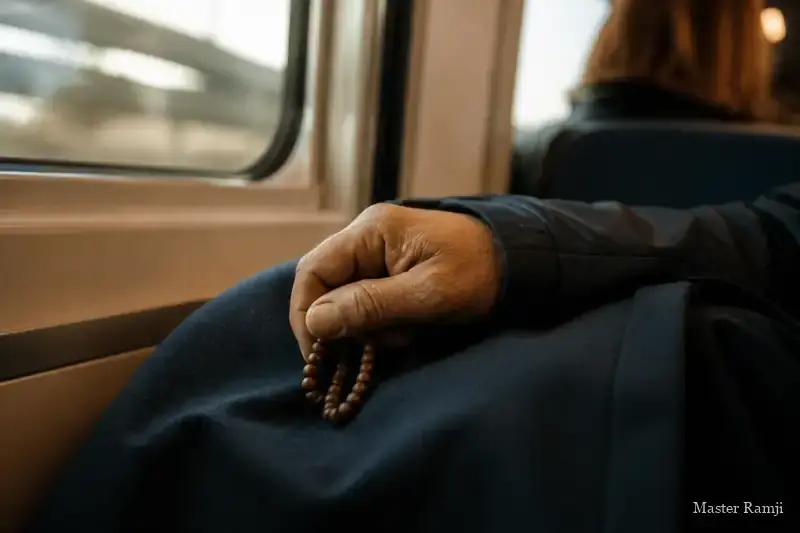
A simple Hindu daily gratitude practice can fit into a few minutes each evening. Light a lamp at dusk, offer the day in prayer, name three things you are thankful for, ask forgiveness for the day's faults, and close with a short verse or silence. It is a devotional habit for reflection, not a fix for hard problems.
Gratitude is often sold as a modern wellness habit, with a special notebook and an app. Yet many Hindu homes have kept something similar for generations without calling it that. The lamp lit at dusk, the food offered before it is eaten, the quiet verse before sleep: each one is a small act of noticing and giving thanks.
This article draws those habits into one short evening practice. It takes about five minutes, costs nothing and needs no special knowledge.
Key takeaways
- Evening is a natural time for reflection in many Hindu traditions, beginning with the lamp at dusk.
- The practice has five steps: light, offer, name, release and close.
- Research links gratitude with wellbeing, but it can't prove cause and effect, and results are mixed.
- Gratitude should never be forced on someone who is grieving or struggling. It sits beside help, not in place of it.
Where does evening gratitude come from in Hindu practice?
Many households light a lamp at sandhya, the meeting of day and night. In some homes it is a single diya before the family shrine. In others, there is an aarti, a song, or simply a moment when everyone stops what they are doing.
A related idea runs through devotional teaching. In the Bhagavad Gita (9.27), Krishna asks that whatever a person does, eats, offers or gives be done as an offering. Many families take this to heart in ordinary ways, such as offering a meal before eating it. Offering the whole day at dusk is a gentle extension of the same thought.
There is also a long custom of a bedtime prayer that asks forgiveness for faults committed that day, by hand, foot, speech, body or mind, whether knowingly or not. One well-known verse of this kind begins "Karacharana kritam vaa" and is traditionally attributed to Adi Shankaracharya. Gratitude and humility sit side by side in it.
What does the five-minute practice look like?
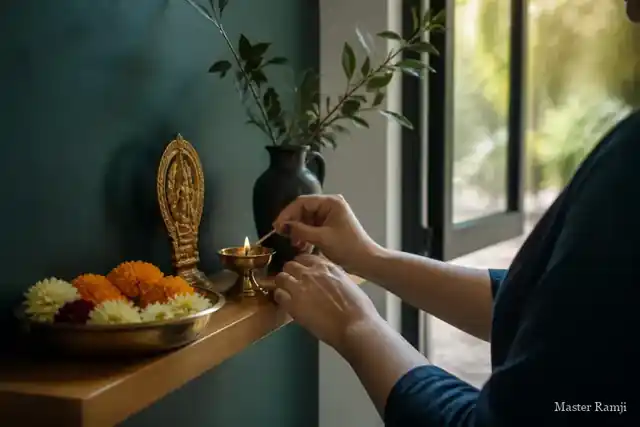
- Light. At dusk or whenever your evening begins, light a lamp or a battery candle. If you use a flame, place it on a stable surface and stay in the room.
- Offer. Sit for a breath or two. Silently offer the day as it was, the good parts and the poor ones, to your deity or simply to something larger than yourself.
- Name. Say or write three specific things that went well or that someone did for you. "My neighbour took in the parcel" works better than "my family".
- Release. Name one thing you regret from the day, and ask forgiveness in prayer or quietly resolve to do better. Then let it go for the night.
- Close. Say a short verse you know, chant Om a few times, or sit in silence for a minute. Put the lamp out before you leave the room.
On a busy night, steps three and five are enough. On a calm night, you might sit longer.
Does it matter what you write in a gratitude journal?
A journal is optional, but it helps some people notice patterns over time. If you keep one, a few tips make it more useful:
- Be specific. Small, concrete moments are easier to recall and more honest.
- Include people. Writing down who helped you often leads to thanking them.
- Don't fake it. If nothing felt good today, write "I got through it". That counts.
- Keep it short. Three lines a night is plenty.
Once a week, you might act on one entry. Call the person, cook something for them or simply tell them. Many traditions count seva, or service, as a form of thanks.
What does research say about gratitude?
A summary from Harvard Health Publishing describes gratitude as strongly and consistently associated with greater happiness. In one study, people who wrote weekly about things they were grateful for felt more optimistic after ten weeks. The same summary notes that studies like these can't prove cause and effect, and that not every group benefited.
That is a fair way to hold it. A gratitude habit may lift your mood a little and make you kinder to the people around you. It won't fix a debt, an illness or a broken relationship.
How can families do this together?
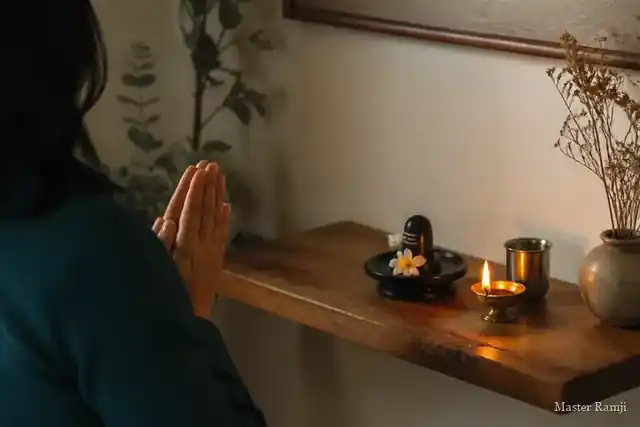
Evening practice can become a short family ritual. Children can light a battery lamp, ring a small bell or take a turn naming one good thing. Keep it brief and keep it light. If a child doesn't want to share, let them listen.
For a family with different beliefs, the naming step works for everyone, whether or not they pray. Our guide to a calming evening routine for better rest has more ideas for winding down a household.
What if you don't feel grateful?
Some evenings, gratitude will feel forced or even insulting. That is especially true after a loss, during illness, or when life is genuinely unfair. Don't push it. On those nights, skip straight to the release and the close, or just light the lamp and sit.
Gratitude is not a duty to feel good. If low mood has lasted weeks, or you have lost interest in most things, please see your GP. Beyond Blue is available on 1300 22 4636, and Lifeline on 13 11 14 at any hour.
How can you make it last?
Tie it to something you already do, such as clearing the dinner table or switching off the TV. Keep the lamp and your notebook in one place. If you miss a night, start again the next evening without making up for it.
If you want something to say in the closing step, a single short mantra is a good choice. Our article on starting a mantra practice that lasts explains how to choose one. healthdirect notes that meditation takes time, patience and practice, and the same is true here. For days with little spare time, meditation for people with no spare time offers one-minute versions.
Would personal guidance help?
If life feels heavy and you would like help shaping a small daily practice, spiritual support in hard times offers a calm conversation and steadying practices alongside practical and medical help. Sessions can be held by phone, WhatsApp or video, and fees are stated before paid work begins. When you are ready, get in touch.
Related service
Keep reading
A Calming Evening Routine for Better Rest
A simple spiritual bedtime routine built from a lamp, a prayer and quiet reflection, with healthdirect's sleep basics and clear signs it's time to see a GP.
Read article →
How to Choose a Spiritual Healer Safely
Questions to ask a spiritual healer before, during and after a session, the red flags that mean walk away, and where to take a concern in Victoria.
Read article →
Finding Your Spiritual Community in Wyndham
Living in Tarneit, Point Cook or Werribee? How to find a Hindu spiritual community in Wyndham, keep up your practice, and get support when you feel alone.
Read article →Quick answers
What is energy healing?
Energy healing rests on the belief in a life force that can be guided. Here is what a session involves, and what the evidence does and doesn't show.
Read answer →Can spiritual healing replace a doctor?
Spiritual healing can't replace a doctor or prescribed treatment. Here is how to keep your faith alongside medical care, and which warning signs to watch for.
Read answer →Talk to Vijay Ramji
Tell us what you are facing. If a reading is unlikely to help, you will be told that plainly.