
Prayer and Anxiety: What Helps
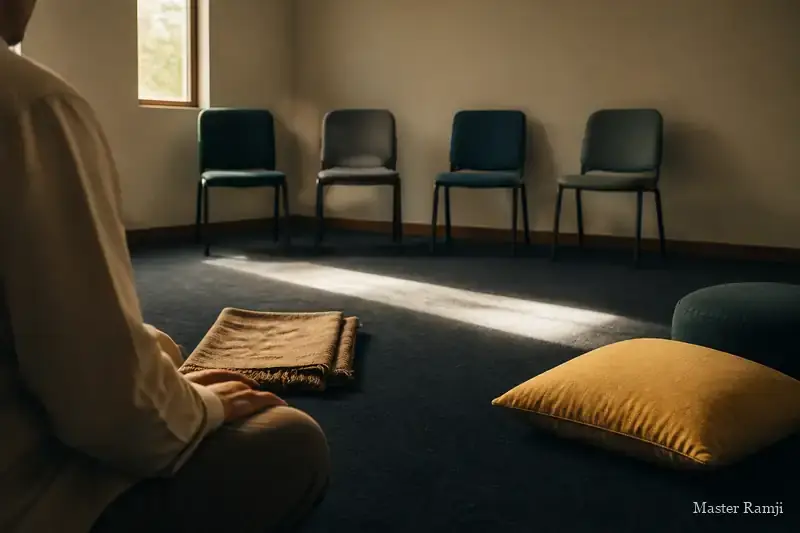
Many Hindus turn to prayer for anxiety, such as the Hanuman Chalisa, Gayatri mantra or a family deity's name, and find it comforting. Prayer can steady a routine and ease loneliness, but it is not a treatment. Ongoing anxiety deserves a GP's help, and prayer works best alongside that care, never instead of it.
When worry sits in your chest at three in the morning, many people reach for what they learned as children: a prayer, a mantra, the name of a deity said over and over. For a lot of Hindu families, that is the first comfort they know.
This page looks at what a Hindu prayer for anxiety can offer, how to keep it gentle, and why it should sit beside proper care rather than replace it.
Key takeaways
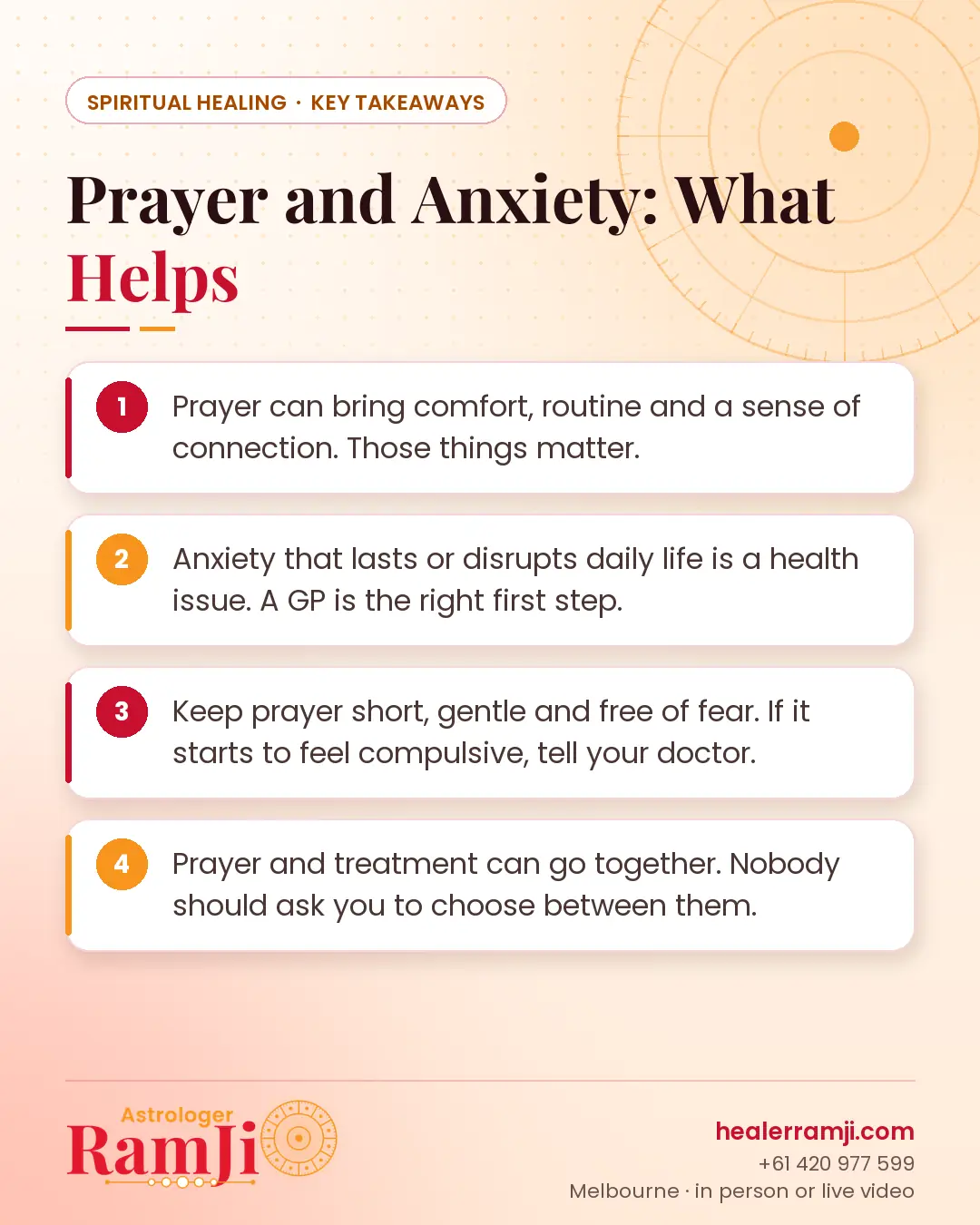
- Prayer can bring comfort, routine and a sense of connection. Those things matter.
- Anxiety that lasts or disrupts daily life is a health issue. A GP is the right first step.
- Keep prayer short, gentle and free of fear. If it starts to feel compulsive, tell your doctor.
- Prayer and treatment can go together. Nobody should ask you to choose between them.
Is anxiety something prayer can fix?
No, and it's kinder to say so plainly. healthdirect describes anxiety disorders as the most common group of mental health conditions in Australia. It says to see a doctor or mental health professional if anxiety is affecting your daily life, and it lists psychological therapies such as cognitive behaviour therapy, medicines, and lifestyle changes among the treatments.
Beyond Blue notes that there are many evidence-based treatments for anxiety, and that your GP can be a good place to start the conversation. Feeling anxious isn't a sign of weak faith, and needing help isn't a failure of devotion.
What can prayer offer?
Prayer can't be shown to treat illness. A Cochrane review of studies on praying for people who were unwell found no clear difference in recovery, and the authors made no recommendation either way. That research looked at others praying for the sick, not at how personal prayer feels, but it is a fair reminder of the limits.
What many people describe is something more modest and still real:
- A pause. A few minutes when you stop rehearsing what might go wrong.
- A rhythm. Repetition and slow speech can settle the breath.
- A sense of not being alone. With a deity, with family who pray the same words, or with a temple community.
- Meaning. A way to hold fear inside a larger story you trust.

Which Hindu prayers do people turn to?
Families differ, and your own tradition comes first. Some commonly used ones:
- The Hanuman Chalisa. Hanuman is widely associated with courage and fearlessness, and many people recite it when afraid.
- The Gayatri mantra. A short prayer many families learn early, often said at dawn or dusk.
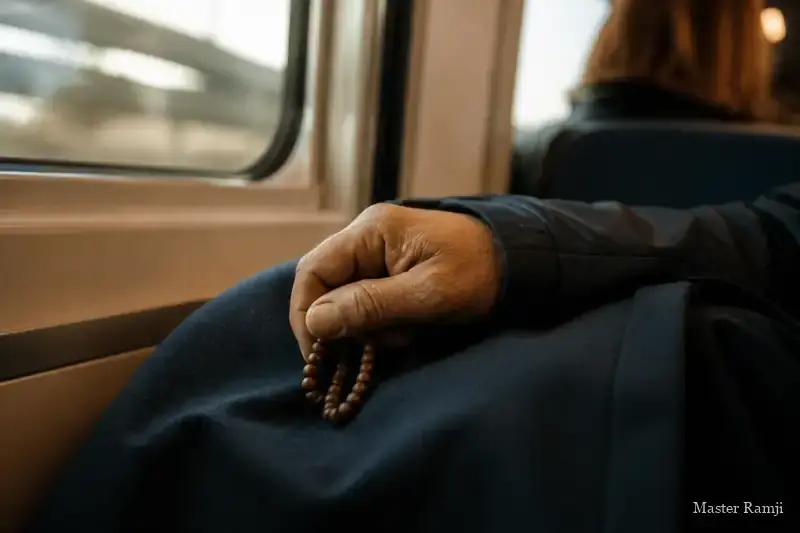
- Om, or the name of your chosen deity. Simple repetition, aloud or silently, sometimes counted on a mala.
- Prayers to Durga. Some turn to the protective mother goddess in times of fear.
Meaning and devotion matter more than perfect pronunciation. If you would like to learn a mantra properly, our guide to starting a mantra practice that lasts is a gentle place to begin.
How can you pray when you're anxious?
When anxiety is high, long rituals can feel like one more task. Keep it small:
- Sit somewhere quiet, with your feet on the floor.
- Let your breath slow before you begin. healthdirect notes that controlled breathing can help with the physical symptoms of anxiety.
- Say one short prayer or name slowly, matching it to the out-breath.
- Repeat it for a few minutes, then stop. There is no target to reach.
- Return to your day, or to sleep, without checking whether it "worked".
Some people find a short recorded aarti or bhajan easier than speaking. That counts too.
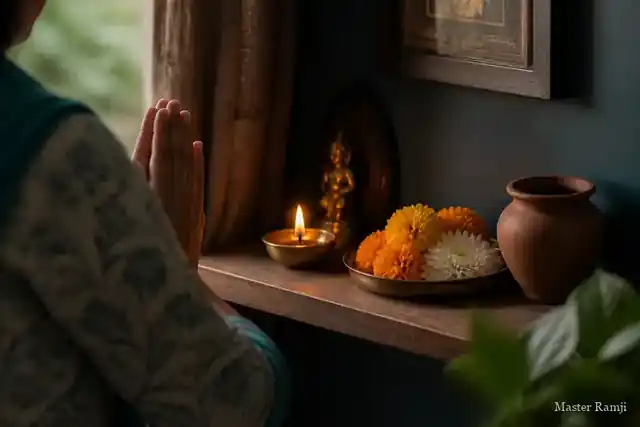
It can also help to pray at the same time each day, not only when anxiety spikes. A short morning prayer before you pick up your phone gives the day a steady start, and it means prayer is linked with calm rather than only with panic. If you share a small home, a corner of a shelf with one image and a lamp, never left burning unattended, is plenty.
When can religious practice add to anxiety?
Faith should feel like a refuge, not a threat. Be careful if:
- Prayers start to feel compulsive. If you feel you must repeat a ritual a set number of times, or something bad will happen, mention it to your GP. healthdirect lists obsessive-compulsive disorder among anxiety-related conditions, and it is treatable.
- Someone tells you your anxiety is a curse, a dosha or punishment. That kind of message tends to deepen fear, especially when it comes with a price for a remedy.
- Fasting or night vigils cost you sleep and food. Rest and regular meals support your health. Check with your GP before fasting if you take medicine or have a health condition.
When should you get more help?
See your GP if worry is constant, if you are avoiding places or people, if panic attacks are happening, or if sleep and concentration are suffering. Writing down your symptoms beforehand can make the appointment easier. You can ask for a clinician who respects your faith. Prayer and therapy often sit together well.
Please keep taking any prescribed medicine, and don't change a dose without your doctor. Our short answer on why spiritual healing can't replace a doctor explains why this matters.
If you are in crisis, call Lifeline on 13 11 14 at any hour, or 000 if you are in immediate danger. Beyond Blue is on 1300 22 4636, and healthdirect's nurse line is on 1800 022 222.
Can a spiritual conversation help alongside care?
For some people, yes. Spiritual support in hard times offers a calm conversation and one or two small practices drawn from devotional tradition, sized for the energy you actually have. If you'd like help with a mantra's meaning and pronunciation, there is also one-to-one mantra guidance. Neither is counselling or medical care, and neither should delay seeing your GP.
Vijay Ramji is based in Ascot Vale, appointments are arranged in advance, and sessions can be held by phone, WhatsApp or video. What you share is confidential. Once you have your medical support in place, get in touch if a spiritual conversation would help too.
Related service

Keep reading
A Simple Daily Gratitude Practice
A five-step evening gratitude practice drawn from Hindu devotional habits: a lamp at dusk, offering the day, naming what went well and letting go before sleep.
Read article →
A Calming Evening Routine for Better Rest
A simple spiritual bedtime routine built from a lamp, a prayer and quiet reflection, with healthdirect's sleep basics and clear signs it's time to see a GP.
Read article →
How to Choose a Spiritual Healer Safely
Questions to ask a spiritual healer before, during and after a session, the red flags that mean walk away, and where to take a concern in Victoria.
Read article →Quick answers
What is energy healing?
Energy healing rests on the belief in a life force that can be guided. Here is what a session involves, and what the evidence does and doesn't show.
Read answer →Can spiritual healing replace a doctor?
Spiritual healing can't replace a doctor or prescribed treatment. Here is how to keep your faith alongside medical care, and which warning signs to watch for.
Read answer →Talk to Vijay Ramji
Tell us what you are facing. If a reading is unlikely to help, you will be told that plainly.