
When Your Life Feels Stuck
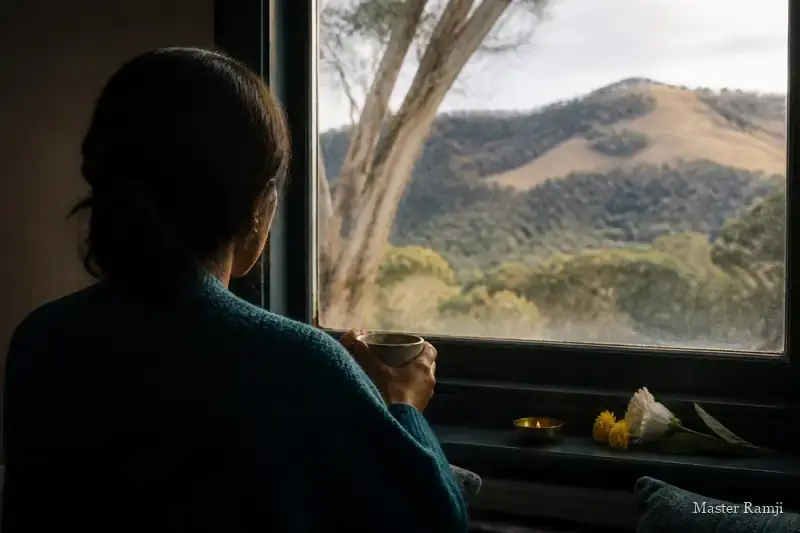
When life feels stuck, first ask whether it is a hard season or something that needs help. A season usually has a clear cause and still allows small steps. Feeling low most days for over two weeks, losing interest or struggling to cope needs a GP. Then choose one small, practical step within your control.
Nothing dramatic has happened. You get up, go to work or study, come home and do it again. Yet everything feels heavy, and the future looks like a long corridor with no doors. Or perhaps a lot has happened, a lost job, a visa still pending, a relationship ended, and you can't seem to move on from it.
Both are common ways of feeling stuck. This article helps you work out which kind you are dealing with, and what to do next.
Key takeaways
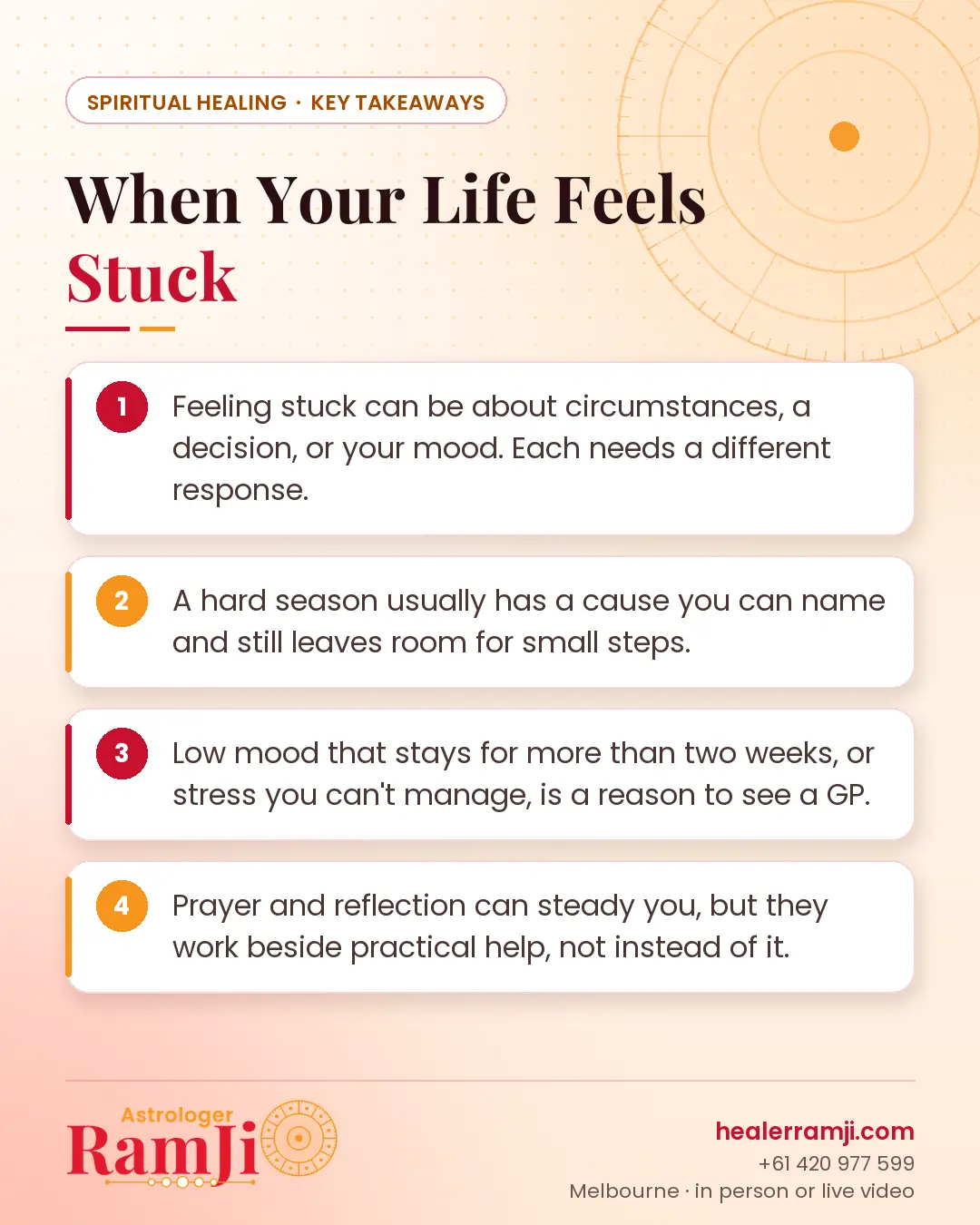
- Feeling stuck can be about circumstances, a decision, or your mood. Each needs a different response.
- A hard season usually has a cause you can name and still leaves room for small steps.
- Low mood that stays for more than two weeks, or stress you can't manage, is a reason to see a GP.
- Prayer and reflection can steady you, but they work beside practical help, not instead of it.
What kind of stuck is it?
It helps to name the type, because "stuck" covers very different experiences:
- Stuck in circumstances. Something outside you is on hold, such as a job search, a visa, a court matter or a family situation.
- Stuck at a decision. You know a choice is coming, such as leaving a job or a relationship, and you keep putting it off.
- Stuck in yourself. Nothing in particular is wrong, but you feel flat, tired or empty, and things you used to enjoy don't reach you.
Many people have a mix. Still, the third kind deserves the most attention, because it can be a sign of something health-related rather than a life problem.
Is it a hard season, or does it need help?
There is no perfect test, but these differences are a useful guide.
Signs of a hard season
- You can point to a reason, such as a loss, a move or a long wait.
- Your mood goes up and down, and some days are better.
- You can still enjoy some things, even briefly.
- You can manage small tasks, even if big ones feel impossible.
Signs that it needs more help
- You have felt low, numb or hopeless most of the time for more than two weeks. Beyond Blue says feelings like these, if they come and stay that long, might be a sign of depression.
- You have lost interest in things you usually enjoy, or pulled away from friends and family.
- Your sleep or appetite has changed, or you feel tired all the time.
- You still feel overwhelmed after trying to relax and talking to someone you trust. healthdirect advises seeking help in that case, and also if stress is disrupting your daily routine.
- You are relying on alcohol, gambling or other habits to get through.
If several of these fit, please see your GP. That isn't a failure of faith or of willpower. It is the same as seeing a doctor for a pain that won't go away. Beyond Blue can also be reached on 1300 22 4636.
If you are having thoughts of ending your life, call Lifeline on 13 11 14 now, or 000 if you are in immediate danger.

What can you do this week?
When everything feels stuck, big plans tend to make it worse. Aim smaller:
- Write down what is stuck. One line for each thing. Seeing it on paper often makes it look more manageable than it feels in your head.
- Circle what you can influence. You can't make a visa office move faster. You can update a document, ring a migration agent or ask for a status check.
- Pick one small action. Something you can finish in under an hour, such as one job application, one phone call or one walk.
- Look after the basics. Regular sleep, food and daylight won't solve the problem, but running on empty makes everything feel more fixed than it is.
- Tell one person. A friend, a sibling or a colleague. Saying "I feel stuck" aloud often loosens something.
- Change one routine. A different route home, a new class, a morning without your phone. Small changes remind you that things can move.
What if you're stuck at a decision?
Avoiding a decision can be exhausting. Try setting a date by which you will decide, and gather only the information you actually need before then. Ask what you would advise a friend in your position. If the decision involves money, law or a visa, speak to a qualified professional first, as they can often make the options clearer.
If your stuckness is mainly about work that moves slowly, our article on slow career progress and Saturn covers how to tell slow from stuck in a job.

Where does the spiritual side fit?
For many people, faith is part of how they get through. A short morning prayer, a few minutes of quiet chanting, or helping at a temple or community kitchen can give a heavy week some shape. Acts of service are especially useful when you feel stuck, because they get you out of the house and among people.
A practice should feel like support, not another task you are failing at. If evenings are the hardest time, a calming evening routine may help you wind down.
What if someone says it's your stars?
You may have been told that sade sati, a difficult dasha or a dosha is behind it all. Astrology can offer a way to think about a season, and some people find that comforting. It isn't proof of a cause, and it doesn't mean you have to wait years for life to improve. Our guide to coping with a difficult dasha treats a heavy period as something to plan around, not something to fear.
Be wary of anyone who says only an expensive ritual will unblock your life. Hard times make people easy to exploit, and a remedy that costs more doesn't work better.
Would talking it through help?
If you would like someone outside the family to listen, spiritual support in hard times offers a calm conversation and one or two steadying practices sized to the energy you have. It asks first whether a GP, financial counsellor or crisis line should come before it, and it isn't counselling or medical care. When you are ready, get in touch.
Related service

Keep reading
Prayer and Anxiety: What Helps
Looking for a Hindu prayer for anxiety? How prayer and mantra can offer comfort, how to keep it gentle, and why it belongs beside proper care, never instead.
Read article →
A Simple Daily Gratitude Practice
A five-step evening gratitude practice drawn from Hindu devotional habits: a lamp at dusk, offering the day, naming what went well and letting go before sleep.
Read article →
A Calming Evening Routine for Better Rest
A simple spiritual bedtime routine built from a lamp, a prayer and quiet reflection, with healthdirect's sleep basics and clear signs it's time to see a GP.
Read article →Quick answers
What is energy healing?
Energy healing rests on the belief in a life force that can be guided. Here is what a session involves, and what the evidence does and doesn't show.
Read answer →Can spiritual healing replace a doctor?
Spiritual healing can't replace a doctor or prescribed treatment. Here is how to keep your faith alongside medical care, and which warning signs to watch for.
Read answer →Talk to Vijay Ramji
Tell us what you are facing. If a reading is unlikely to help, you will be told that plainly.