
What Happens in a Black Magic Removal Session
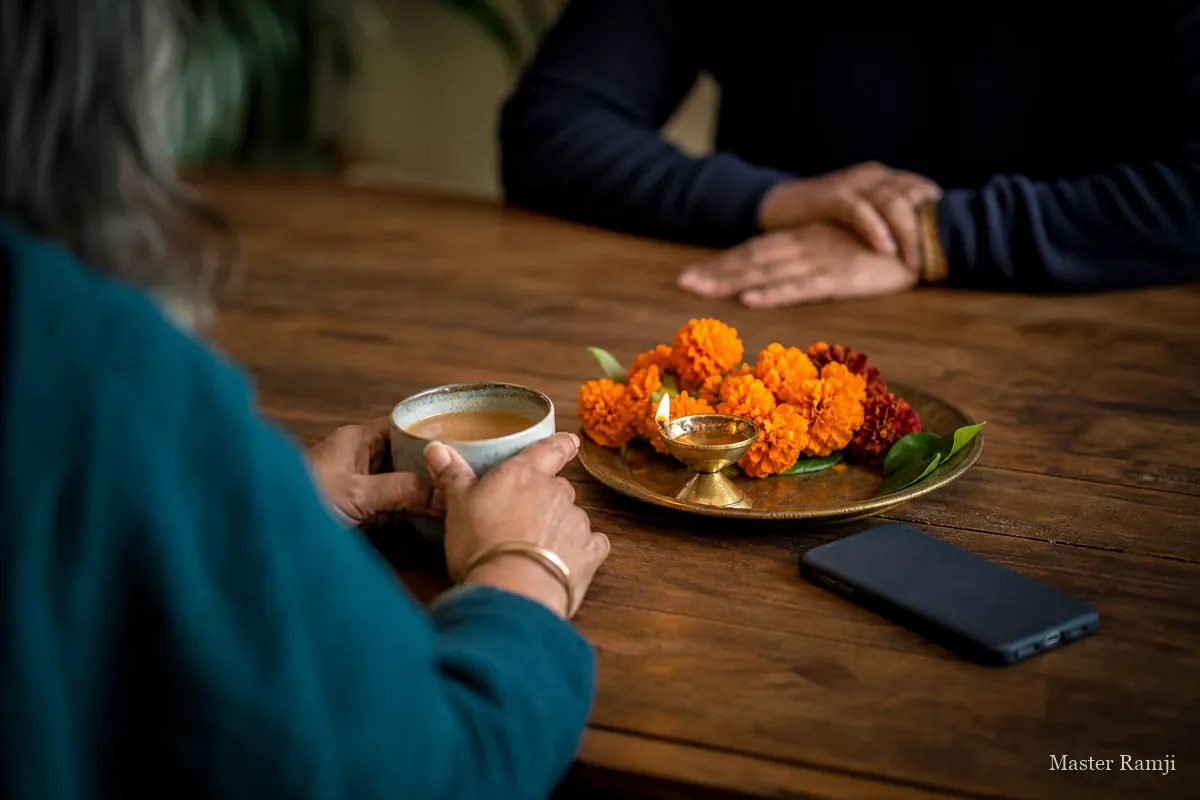
A black magic removal session should begin with a conversation about your life, health and beliefs, not a ritual. If cleansing still seems right, the rite and fee are explained first. It may involve prayers, mantras or a havan on your behalf. It is a spiritual practice, not medical care, and no outcome is promised.
If you've never done this before, the unknown can be the scariest part. Films and social media make these sessions look dramatic, with shaking, screaming and strange objects pulled from nowhere. That picture puts many people off asking for help, and it leaves others open to anyone willing to put on a show.
So here's how a careful black magic removal session should run, step by step, including the points where you can stop. Use it to judge any practitioner, including us.
Key takeaways
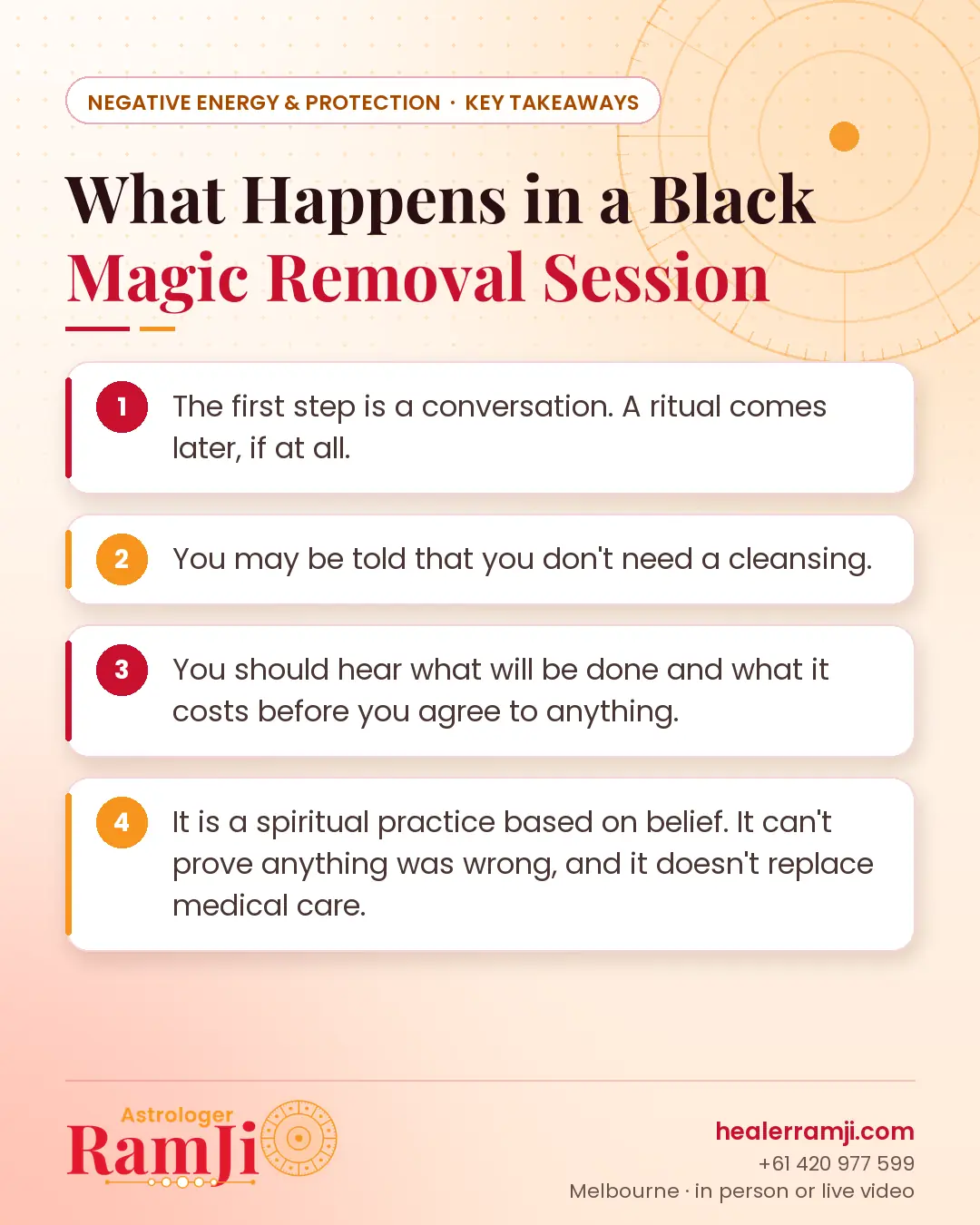
- The first step is a conversation. A ritual comes later, if at all.
- You may be told that you don't need a cleansing.
- You should hear what will be done and what it costs before you agree to anything.
- It is a spiritual practice based on belief. It can't prove anything was wrong, and it doesn't replace medical care.
Step 1: How do you arrange it?
You call, send a WhatsApp message or use the contact form. Appointments are arranged in advance, and sessions can be held by phone, WhatsApp or video. Whatever you share stays confidential. You don't need to describe everything in your first message. "I'm worried about something and would like to talk" is enough.
It can help to jot down a few notes beforehand. What began, when it began, and what else was changing at that time are all useful. If someone told you this was black magic, write down what they said and whether they asked for money.

Step 2: What happens in the assessment?
This is the heart of the process, and it should not be rushed. Expect questions such as:
- What has been happening, and how has it changed over time?
- How are you sleeping and eating, and have you seen a doctor?
- What has been going on at home, at work and with money?
- Has anyone told you this is spiritual, and did they charge you?
- What do you and your family believe, and what practices do you already keep?
You may also be asked for your birth details, if you would like your chart considered. That's optional, and the chart is only one part of the picture.
These questions aren't a formality. No test exists that can confirm black magic, so an honest assessment is mostly careful listening. It also helps to spot, as far as a non-medical conversation can, the things that need another kind of help.

Step 3: What might you be told?
There are several possible outcomes, and a ritual is only one of them. You may hear that:
- This sounds like a health matter. You should be encouraged to see a GP, or to call healthdirect on 1800 022 222 for free advice. Please do this before anything else.
- This sounds like stress or a practical problem. Debts, conflict and exhaustion can feel like an attack. Our guide to telling black magic from stress goes into this.
- It may be a matter of safety. If you describe being threatened or controlled, the conversation should turn to real support and not to a rite.
- A simple practice may be enough. You may find that daily protection practices that you do yourself are all you want.
- A traditional cleansing may suit you. If it fits your beliefs and you still want it, the next step explains how it would work.
A careful practitioner won't name a person who "did this" to you. That can't be proven, and it can tear families apart. Nor should you be offered anything to send harm back to someone, or to control them.
Step 4: What gets explained before you agree?
Before any paid work starts, you should know:
- Which rite is being suggested, and why it suits your situation
- What will be done, and what you'd be shown or told afterwards
- What you need to do yourself, if anything
- The fee, stated in full before you commit
- What the rite can't do
Then the decision is yours. You can take time, talk to your family, or say no. Nobody should tell you that something bad will happen if you decline.
Step 5: What happens during the rite?
Rites differ between traditions and situations, so the details depend on what was agreed. Common elements include:
- Sankalpa. A statement of purpose that names the person and the intention of the rite. It's a standard part of many Hindu ceremonies.
- Prayers and mantras. These are recited with your name and intention in mind.
- A small fire offering. A havan, related to the wider yajna tradition, may be performed on your behalf. This suits many apartments and rentals, where a fire indoors isn't practical.
- A focus on the home. If your worry centres on where you live, a home cleansing may be discussed.
Nothing about this should be frightening or humiliating. You shouldn't be asked to undress, be touched, take any substance, or hand over jewellery or savings. No "evil object" should be produced as proof. Those are reasons to end a session with anyone, and our guide to black magic removal scams explains why.

Step 6: How might you feel afterwards?
Experiences vary. Some people say that they feel calmer or lighter, perhaps because something has been done and a long worry has been given some attention. Others notice little or no change. Neither result tells you whether black magic was ever present. There are no fixed timeframes, and there's no point at which you should expect a problem to vanish.
Sleep, appetite and mood are worth watching. If symptoms continue or get worse, that's a reason to go back to your doctor, not to pay for another ritual. Please keep taking any medication as prescribed, because a cleansing doesn't replace it.
Step 7: What happens after the session?
You should finish knowing what was done and why. You may also be given a short daily routine, such as a prayer or mantra that you can keep up at no further cost. The aim is for you to carry on without depending on anybody, including us.
No one should contact you later with news of a new curse. If you decide you'd like more support, that's a conversation you start, and any new fee is stated first, just as before.
How should you decide whether to go ahead?
Ask yourself whether you've seen a doctor about any symptoms, whether you can afford this without borrowing, and whether you'd still want it if you weren't scared. If the answer to any of those is no, it's fine to wait.
The fuller black magic removal service page sets out our approach. If you have questions, you're welcome to ask before you commit to anything. Please get in touch.
Related service
Keep reading
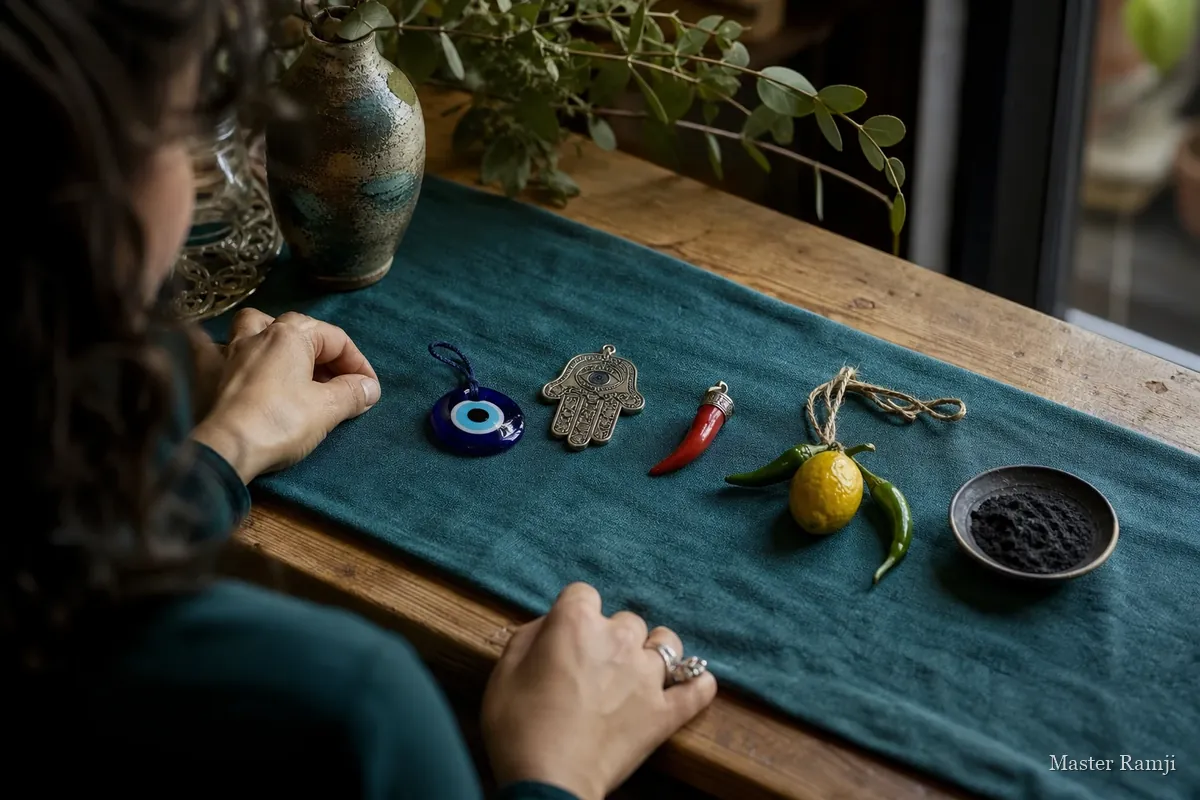
Evil Eye Beliefs Across Cultures
From nazar and drishti in South Asia to malocchio, mal de ojo and blue glass charms, see how evil eye beliefs developed and what they have in common.
Read article →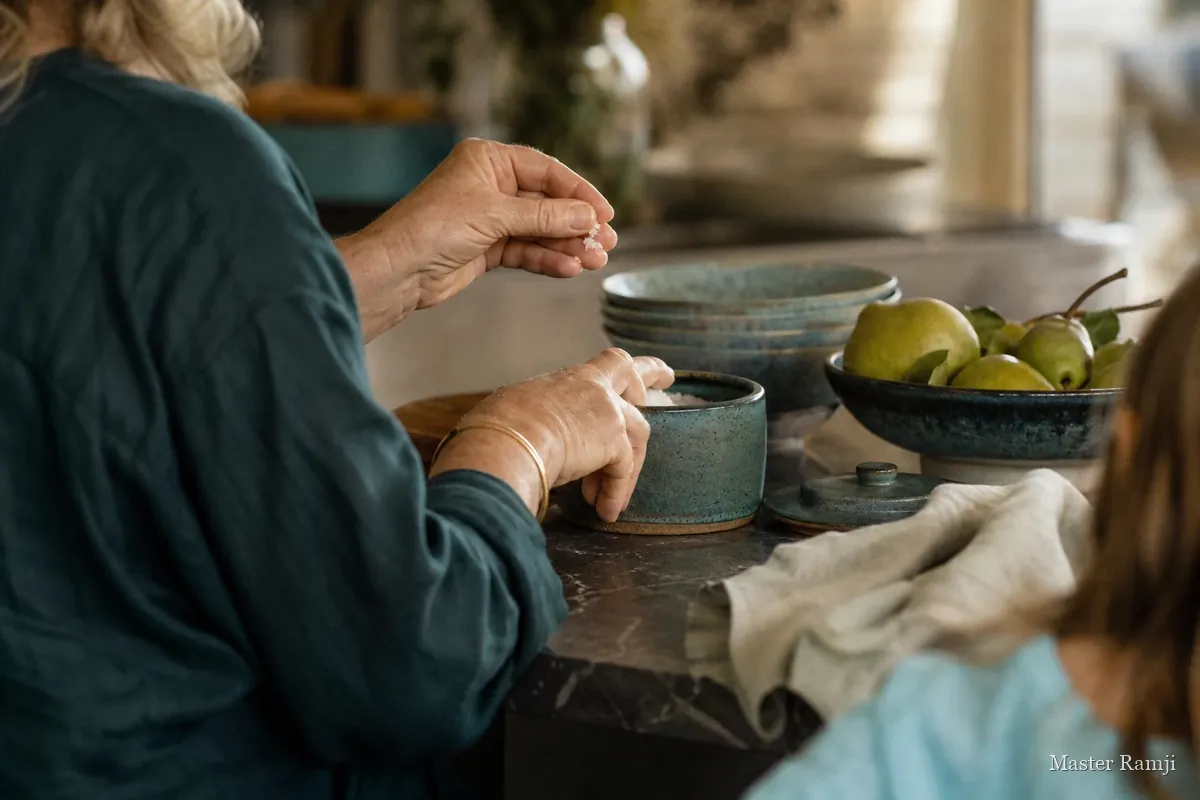
Simple Nazar Practices for Your Home
Simple nazar customs you can do at home with salt, lemons, chillies and prayer, how to do them safely in an Australian house, and which ones to skip.
Read article →
Nazar and Children: Family Traditions Explained
Nazar traditions for babies and children, explained with health first: when to see a doctor, why to avoid kajal and surma, and gentle ways to keep the custom.
Read article →Quick answers
What do people mean by black magic?
Black magic usually means the belief that ritual can harm someone. Here is what the term covers, what it can't show, and what to do if you're worried.
Read answer →How do I know if someone did black magic on me?
There is no reliable sign that proves black magic. Here is what to check first, why fear is a warning sign, and when to get medical help.
Read answer →Talk to Vijay Ramji
Tell us what you are facing. If a reading is unlikely to help, you will be told that plainly.