
Black Magic Removal Scams and How to Avoid Them
A black magic removal scam uses fear to extract money. It often starts with a small fee, then new curses, rising costs and threats against your family. If this is happening, stop paying, contact your bank straight away, keep your messages and report it to Scamwatch. Being targeted is nothing to be ashamed of.
Most people don't go looking for a scam. They go looking for help, usually during a frightening stretch of their lives. They may have had a run of illness or money trouble, or someone may have told them a relative is working against them. That's what makes this kind of exploitation so cruel.
Official warnings describe this pattern. WA ScamNet's page on psychic and clairvoyant scams says scammers may offer to remove a curse for a fee, then threaten a curse if you refuse to pay. This guide shows how a black magic removal scam tends to play out, how fees and threats give it away, and what to do if you've already paid.
Key takeaways
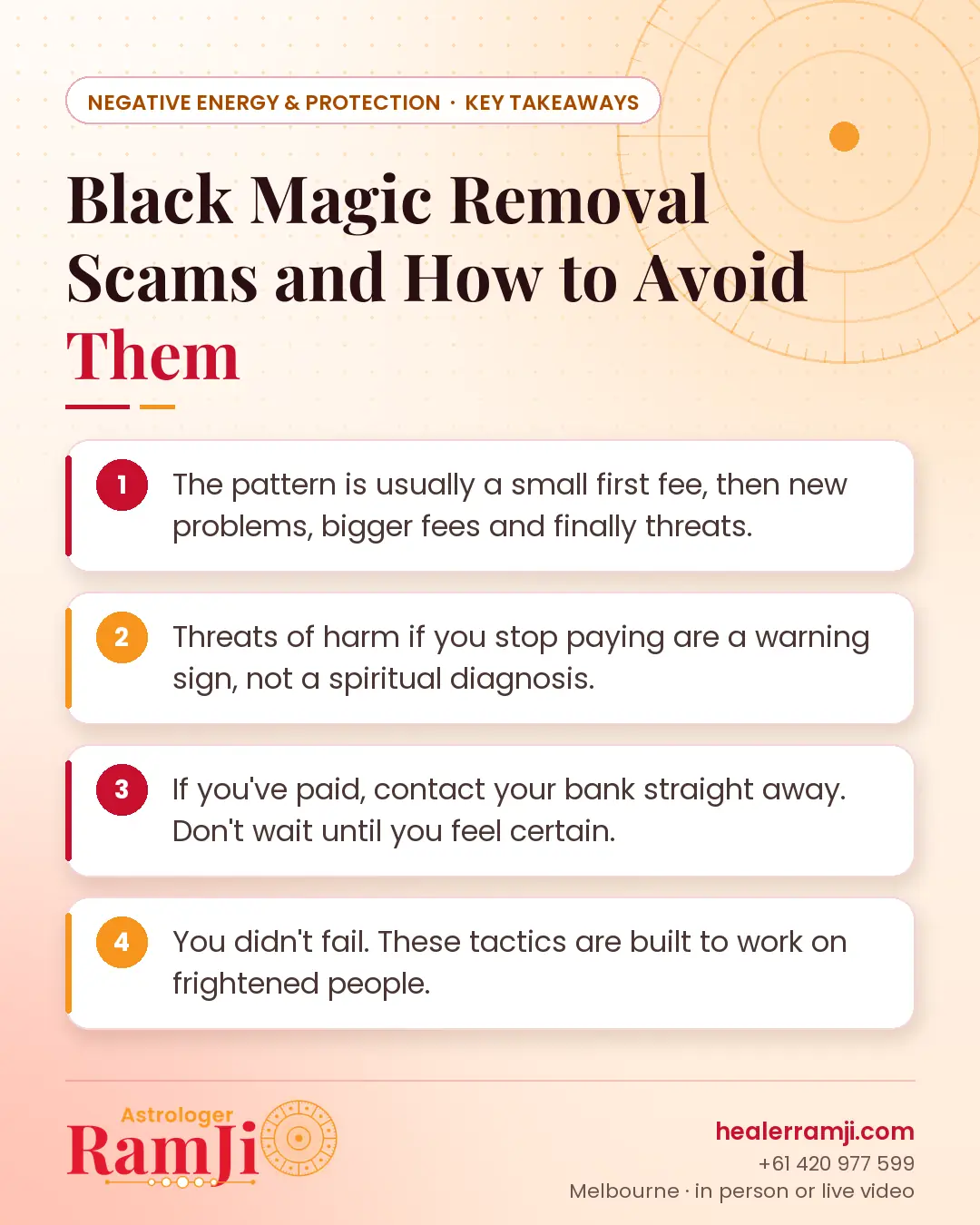
- The pattern is usually a small first fee, then new problems, bigger fees and finally threats.
- Threats of harm if you stop paying are a warning sign, not a spiritual diagnosis.
- If you've paid, contact your bank straight away. Don't wait until you feel certain.
- You didn't fail. These tactics are built to work on frightened people.
How does the scam usually unfold?
The details vary, but the stages are remarkably similar. It helps to see them in order, because each one feels reasonable when you're inside it.
- The hook. There's an ad, a social media message or a recommendation, often offering a free reading or a low price.
- The diagnosis. Within minutes, you're told that someone has done something to you, and that it's serious. Few questions are asked about your health or your life. Often it's someone close, jealous and unnamed.
- The small fee. The first payment seems modest, so you pay it. Now you've started, and stopping feels like wasting what you've spent.
- The complication. The work "revealed" something stronger. A second rite is needed, with more materials and a higher fee.
- The threat. When you hesitate, the tone changes. If you stop now, the curse will come back worse, or fall on your children.
- The isolation. You're told not to discuss this with family, because that would break the rite.
- The big ask. They ask for jewellery or cash to be "purified", or suggest that you borrow money. Some people will never see these items or funds again.

What do escalating fees look like?
A fair fee has a clear shape. You know what it covers and when it ends. A scam fee has no end, and the warning signs are usually these:
- No total is given, only the next step
- The price rises as soon as you say you're frightened, or once you've mentioned your savings
- Each payment brings bad news that requires another payment
- The cost is blamed on rare materials, far-off priests or a closing window of time
- You're pushed toward gift cards, crypto, cash, or payment into a personal account in another name
- You're encouraged to take out a loan or use a credit card
Moneysmart has plain advice on checking and reporting scams if you're not sure about a payment.
What do the threats sound like?
Whatever you believe about curses, someone who threatens harm to get paid isn't acting as a healer. Be alert to phrases like these:
- "Your child will fall ill if you don't finish this."
- "If you tell your husband, the rite will turn against you."
- "You have until tonight."
- "I'm the only one who can stop this."
- "I know your details, so don't think of leaving."
The last one is worth treating as a real-world threat, particularly if you've shared photos or private information. That's a matter for the police, and no ritual is needed. Call 000 if you feel in immediate danger.
What else should make you walk away?
Some warning signs have nothing to do with money:
- You're told to stop your medication or skip a doctor's appointment
- You're asked to be alone with someone, or to undress, or to send intimate photos
- You're given the name of the person "responsible", which can split a family for no provable reason
- You're offered a way to harm or control another person. Be wary of anyone selling vashikaran. It's something we refuse, because it isn't ethical to try to take away someone's free will
- You're promised guaranteed results or removal by a set date
What questions can you ask before you pay anyone?
A legitimate practitioner will welcome these. That includes us, so please ask us too.
- What's the total cost, and what does it include?
- What exactly will you do, and can you explain why?
- Can I discuss this with my family first?
- What happens if I say no?
- What can this not do?
- Should I see a doctor about my symptoms?
Listen to the answer to the fourth question most closely. "Nothing happens, it's your choice" is what you want to hear. If you also want to see how a straightforward process should look, read what happens in a session.

What should you do if you have already paid?
- Stop paying. You don't owe anyone a final instalment to end this. Stop replying as well, once you've saved your records.
- Call your bank or card provider straight away. Tell them you think you've been scammed, and ask them to stop any transactions. Recovery may not be possible, but quick contact gives you the best chance.
- Save the evidence. Keep messages, phone numbers, screenshots, receipts and account details.
- Secure your details. If you handed over ID or banking information, change your passwords and contact IDCARE, a free identity and cyber support service.
- Report it. Report to Scamwatch, and to police if you've been threatened or have lost money. Consumer Affairs Victoria can tell you about your rights as a consumer.
- Tell someone you trust. Secrecy helps the scammer. One sensible friend or relative can make a real difference.
Be careful of what comes next. Scammers may return with a second approach, and someone may offer to win your money back or undo the first person's "damage" for a fee. Treat that as a new scam.
What if you are still frightened after you stop?
This is very common. Even when you know you were conned, the words can stay with you, particularly if they involved your children. That fear doesn't mean the threat is real. It means it was aimed well.
Give it time, and don't deal with it alone. Our guide on what to do after being told you're cursed has practical steps, and a GP can help if your sleep or mood has suffered. You can call Lifeline on 13 11 14 at any hour.
Is real help still possible?
Yes, if you still want it, and you don't owe anyone a spiritual explanation. Plenty of people simply want to return to their own prayer or temple, at no cost. Others want a calm second opinion. A careful black magic removal assessment starts by asking about your health and your circumstances, states any fee up front, and accepts the answer no. It can't prove what was or wasn't done to you, and it can't recover your money.
If you'd like to talk it through confidentially, please get in touch.

Related service
Keep reading

What to Do If Someone Told You You Are Cursed
Told you are cursed and can't stop thinking about it? Steady yourself first, make no payments, and learn how to get a calm second opinion without more fear.
Read article →
What Happens in a Black Magic Removal Session
A step-by-step look at a black magic removal session, from the first conversation and assessment to the rite itself, the cost, and what comes afterwards.
Read article →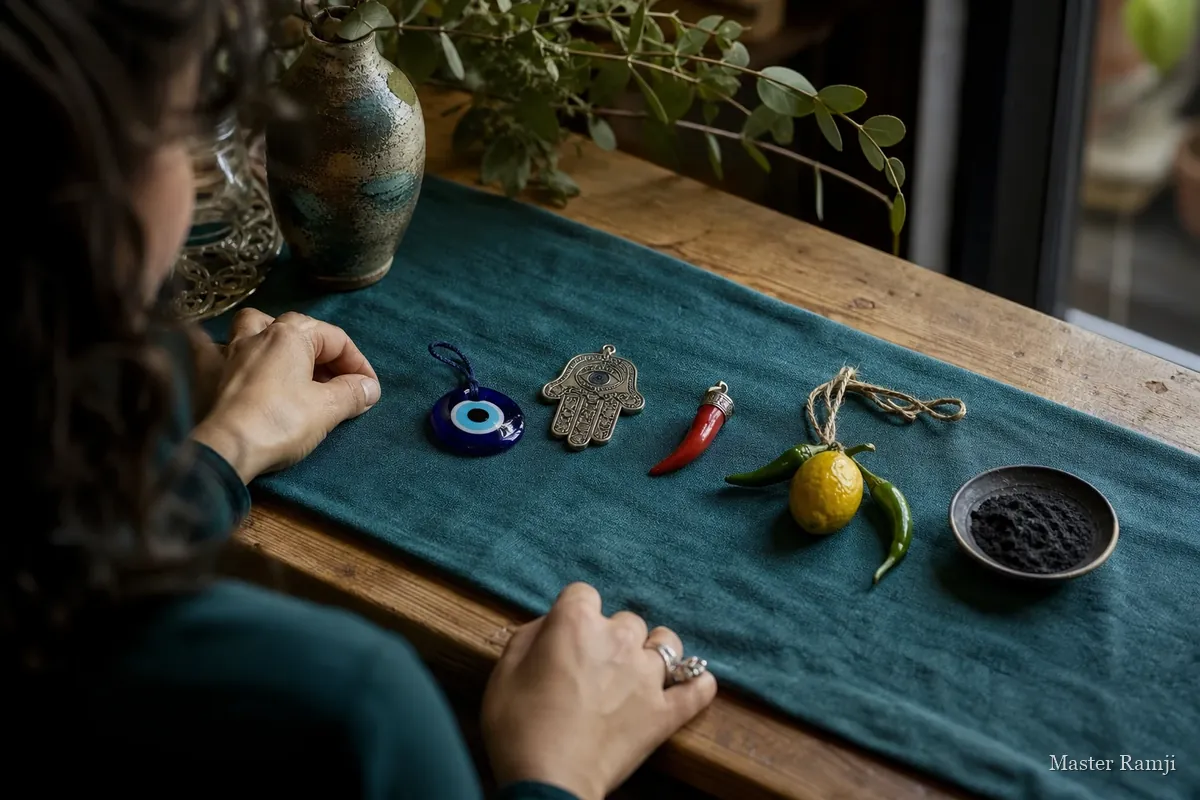
Evil Eye Beliefs Across Cultures
From nazar and drishti in South Asia to malocchio, mal de ojo and blue glass charms, see how evil eye beliefs developed and what they have in common.
Read article →Quick answers
What do people mean by black magic?
Black magic usually means the belief that ritual can harm someone. Here is what the term covers, what it can't show, and what to do if you're worried.
Read answer →How do I know if someone did black magic on me?
There is no reliable sign that proves black magic. Here is what to check first, why fear is a warning sign, and when to get medical help.
Read answer →Talk to Vijay Ramji
Tell us what you are facing. If a reading is unlikely to help, you will be told that plainly.