
Evil Eye Beliefs Across Cultures
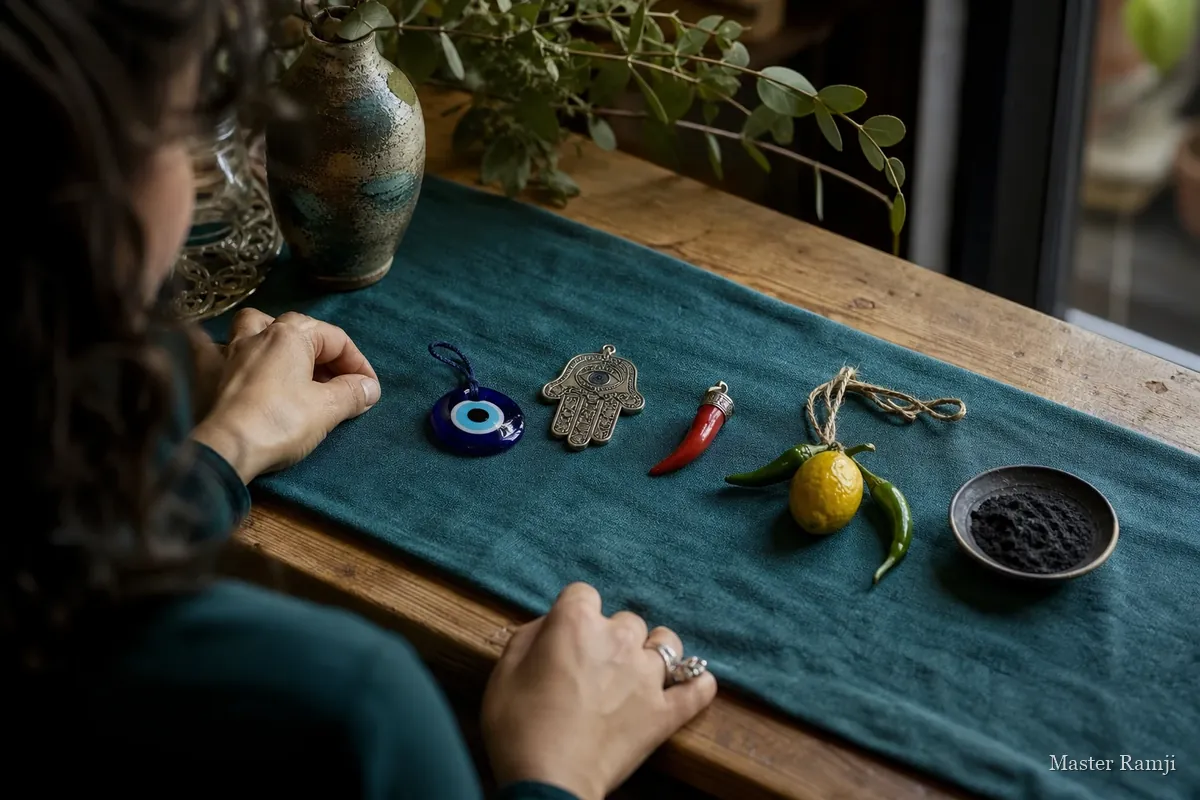
Evil eye beliefs around the world share one idea: that an envious or admiring gaze can cause harm. Versions appear in South Asia as nazar and drishti, around the Mediterranean, across the Middle East and in Latin America. Each has its own protective customs. It is a cultural belief, not a proven force.
A black dot on a baby's cheek at a family gathering in Tarneit. A blue glass bead hanging from a Greek grandmother's rear-view mirror. A quick "mashallah" after a compliment. These look like separate habits from separate worlds, but they all answer the same old worry: what if someone's admiring look brings harm?
The evil eye is one of the most widely shared ideas people have. This is a short tour of evil eye beliefs around the world: where they appear, what people do about them, and what the similarities might tell us.
Key takeaways
- The shared idea is that envy, or even excess praise, can do harm through a look.
- It has been recorded for thousands of years across South Asia, the Middle East, the Mediterranean and beyond.
- Most cultures protect children first, and many avoid praising good fortune too openly.
- It is a cultural belief and has never been shown scientifically to cause harm.
How old is the belief?
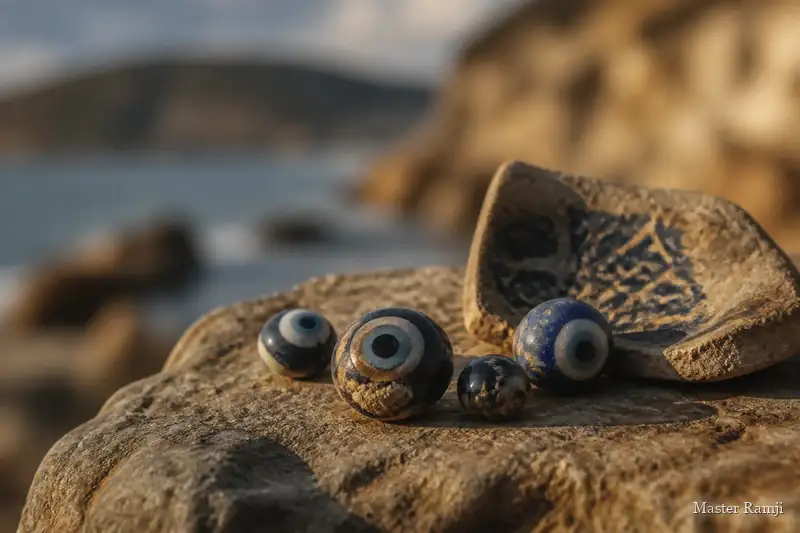
Very old, though exact origins are hard to pin down. Alabaster idols with carved eyes, found at Tell Brak in Mesopotamia, are sometimes linked with it, and texts from ancient Ugarit, in modern Syria, mention the concept. We can't be sure what the makers of those early objects had in mind, so treat the oldest examples with some caution.
By classical times, it was openly discussed. Greek and Roman writers including Plutarch and Pliny the Elder wrote about it, and Plutarch tried to explain it as harmful rays coming from the eyes. Glass eye beads spread around the Mediterranean with the growth of glassmaking, which helped carry the symbol across trade routes.
How does South Asia understand it?
In India and Pakistan, you'll hear nazar or buri nazar, while drishti and kannu are heard in parts of the south. It often comes up around babies, weddings, new homes and good news, because these are the moments when people are thought to be looking at you with envy.
The customs are familiar to many families:
- A black dot of kajal on a child's cheek or behind the ear, to spoil their perfection
- Circling chillies, rock salt or a lemon around someone, then discarding or burning them
- Fierce drishti bommai figures hung on homes and vehicles in South India
- In Muslim families in Pakistan, reciting the final chapters of the Quran
Practices differ by family, region and faith. Our guides on nazar practices for the home and nazar and children cover how some families keep these customs today.

What about the Middle East and Turkey?
The word nazar itself comes from Arabic, meaning sight or attention. In Turkey, the nazar boncuğu is the well-known blue and white glass eye, seen in homes, in cars and on jewellery, and sold widely as a souvenir. In many Muslim communities, it's customary to say "mashallah" with a compliment, as a way of acknowledging God and removing any hint of envy.
The hamsa, a palm-shaped charm, is another common symbol. The word refers to the number five, for the fingers. Muslims may call it the Hand of Fatima, and some Levantine Christians call it the Hand of Mary. Not everyone accepts it, though, and some religious scholars reject such charms as superstition.
How does Jewish tradition treat it?
The Hebrew term is ayin hara. Classical rabbinic writing refers to it, and many Jewish families still say "b'li ayin hara", meaning "without an evil eye", after mentioning good news. The concern here is closely tied to envy as a moral problem, and to the idea of not flaunting your blessings. It's a pattern you'll see in many other cultures too.
What about Greece and Italy?
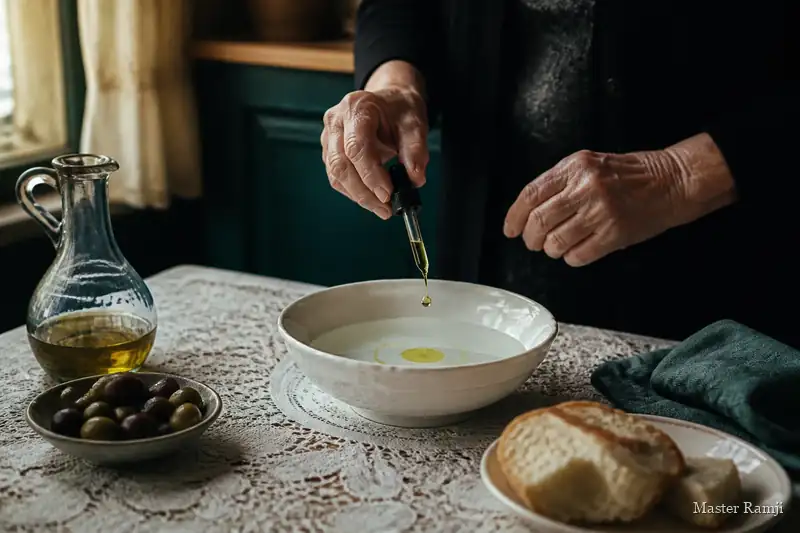
Greeks speak of mati or kako mati. Traditional removal is known as xematiasma, often a healer's private prayer. Drops of oil in a bowl of water may be used to check for the eye. Church figures have historically been wary of the idea, framing envy as a moral failing and not as a physical force.
In Italy, malocchio has its own set of protections, including the red cornicello, or little horn, and a hand gesture called the mano cornuta. Even Pope Pius IX was reputedly feared for having the eye, which shows how seriously some people took it.
Did it reach the Americas and Africa?
Yes. Mal de ojo travelled from Spain to Latin America with colonisation. In Mexico and Central America, babies may wear small amulet bracelets, and traditional healers known as curanderos may sweep a raw egg over someone as a remedy. In parts of South America, a red ribbon may be tied on a child to draw the gaze away.
In Ethiopia, a related belief called buda is widespread. It's often pinned on people from certain social groups, such as metalworkers. That's a useful warning. When a belief starts naming who is responsible, it can feed prejudice against real people, and that is one reason an ethical reader won't tell anyone who "gave" them the eye.
Why might so many cultures share the idea?
No one knows for certain, and anyone who offers a single answer is guessing. These are some common suggestions, none of them proven:
- Eyes feel powerful. Being stared at really can make us uneasy, so it's easy to imagine a look doing harm.
- Envy is universal. Most societies have rules about not boasting. The belief gives a reason to be modest.
- Children were vulnerable. In eras when many infants died without explanation, people looked for a reason and a form of protection.
- Trade and migration spread it. Traders, conquerors and settlers carried the customs with them.
How can you keep the custom and stay sensible?
Melbourne is home to Indian, Sri Lankan, Pakistani, Greek, Italian, Turkish and Lebanese families, so you may well share this belief with your neighbours under a different name. For many people, it's a comforting and affectionate way of saying "I want you to be safe".
Enjoying a charm or a family custom does no harm, but a few cautions apply:
- Keep small children away from loose beads, and from smoke or burning materials
- Take a sick or unsettled baby to a doctor, whatever else you do
- Be careful of anyone who says only a costly ritual can lift the eye
- Don't let the belief turn into suspicion of a relative or neighbour
If you'd like a plain definition, see what the evil eye is. If a family custom has started to feel like a real worry, traditional evil eye removal is explained in plain language, with its limits made clear. It's a matter of belief, and it can't diagnose or treat anything. To ask a question, please get in touch.

Related service

Keep reading
Simple Nazar Practices for Your Home
Simple nazar customs you can do at home with salt, lemons, chillies and prayer, how to do them safely in an Australian house, and which ones to skip.
Read article →
Nazar and Children: Family Traditions Explained
Nazar traditions for babies and children, explained with health first: when to see a doctor, why to avoid kajal and surma, and gentle ways to keep the custom.
Read article →
Feeling Drained? What Negative Energy Does and Does Not Mean
Feeling drained, heavy or flat? A sensible checklist that starts with sleep, health and mood, then explains what negative energy does and does not mean.
Read article →Quick answers
What is the evil eye?
The evil eye is the belief that an envious look can bring harm. Here is where the belief is found, how people respond to it, and what it can't show.
Read answer →What is nazar utarna?
Nazar utarna is a household custom for removing the evil eye, usually with salt or chillies. Here is how it is done, and what to watch out for.
Read answer →Talk to Vijay Ramji
Tell us what you are facing. If a reading is unlikely to help, you will be told that plainly.