
Indian and Chinese Family Traditions in Box Hill Couples
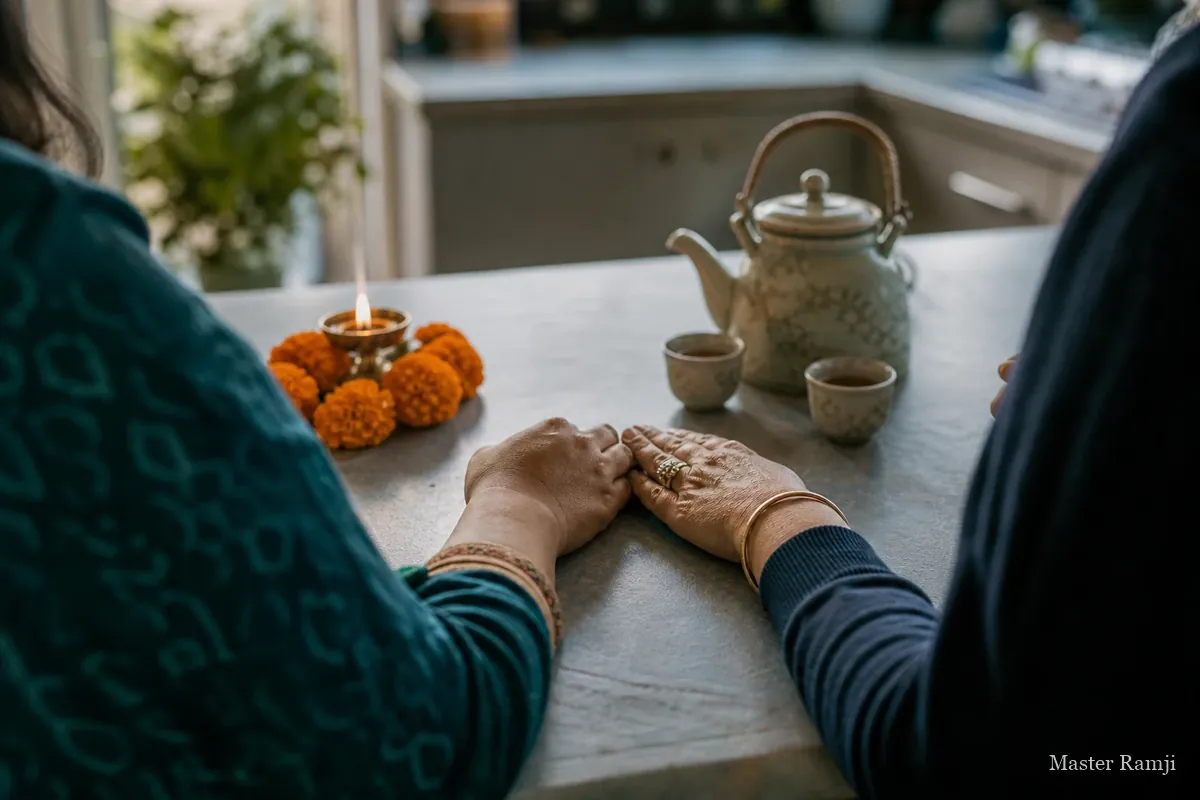
Cross-cultural couples in Box Hill can treat Vedic charts and Chinese Bazi or zodiac readings as two separate family traditions, not rival tests. Ask each family what it actually follows, don't convert one system's result into the other, and decide together what any reading can change. Many families follow neither.
Box Hill is one of the places in Melbourne where a cross-cultural couple might not stand out at all. At the 2021 census, 46.6 per cent of the suburb's residents reported Chinese ancestry and 4.5 per cent reported Indian ancestry. Whitehorse City Council lists China and India as the top two overseas birthplaces in the municipality, based on the 2016 census, and it notes the students who come to Box Hill Institute and Deakin. So people meet here at work, in class, or along Whitehorse Road.
Then the families come in, and an intercultural marriage brings two sets of expectations. One side might ask for a birth time. The other might ask about a birth year. This guide is about having those conversations well, with respect for both traditions, and without letting either one decide things for you.
Key takeaways
- Don't assume. Neither "Indian" nor "Chinese" tells you what a particular family believes.
- Vedic astrology and Chinese astrology use different methods, so their results can't be converted or scored against each other.
- Agree as a couple what a reading can and can't change, before anyone reads anything.
- Wedding dates can usually be worked out, even if it means holding more than one ceremony.
What should you ask first?
Ask what your partner's family actually does. Chinese Australian families may have roots in mainland China, Hong Kong, Malaysia, Taiwan or elsewhere. They may be Buddhist, Christian, Taoist or not religious at all. Indian Australian families may be Hindu, Sikh, Muslim, Christian or Jain, and customs differ widely between regions. Plenty of families on both sides have never consulted an astrologer, while others wouldn't plan a wedding without one.
So start with simple questions. "Does anyone in your family use astrology?" "Who would they ask?" "Would it change anything, or is it more of a custom?" You may find that the strongest views belong to one grandparent, or that nobody minds much.

What does each tradition look at?
Here's a brief, respectful outline. Practice varies, and a knowledgeable person from each tradition will explain far more.
The Vedic side
Vedic astrology, or Jyotish, draws a birth chart from your date, time and place of birth. For marriage, many North Indian families use Guna Milan, an eight-part comparison of the two Moon positions scored out of 36. Many South Indian families use a system called porutham. Some also check for Mangal dosha.
The Chinese side
The zodiac most people know assigns one of twelve animals to each year of a repeating cycle, based on the Chinese calendar. If you were born in January or early February, check which animal year applies. Some people look at traditional pairings between the animals.
A more detailed system is the Four Pillars of Destiny, also called BaZi. It uses the year, month, day and hour of birth, giving eight characters in all, and a practitioner compares two people's charts. Many families also consult an almanac such as the Tung Shing when picking dates.
What they share
Both are old, carefully built systems, and both care about timing. Both are also matters of tradition and belief. Neither has been shown by science to predict how a marriage will go.
Can you compare a Guna score with a zodiac result?
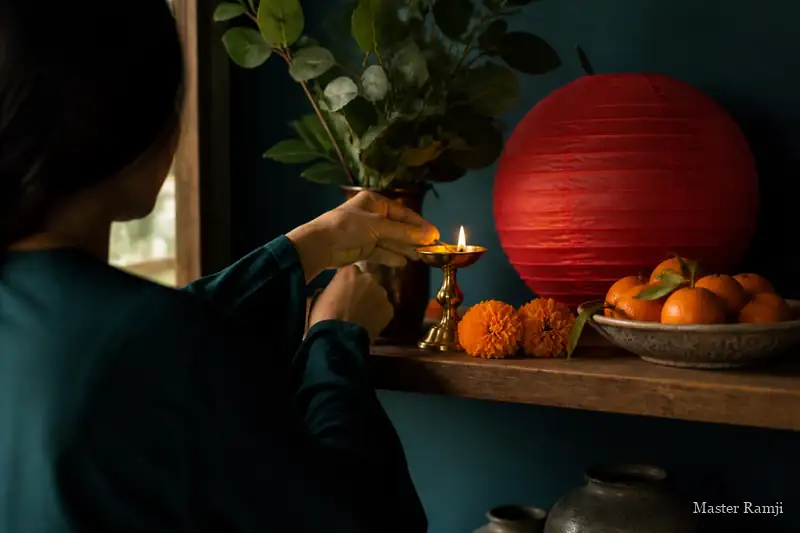
No. A score of 24 out of 36 and a pairing of two zodiac animals aren't measuring the same thing, and there's no honest way to convert one into the other. A Vedic reader isn't qualified to interpret your BaZi chart simply because it also uses a birth time, and the reverse applies too. If your family wants a Chinese reading, ask a practitioner of that tradition, or an elder your family trusts.
So what happens if one reading sounds encouraging and the other doesn't? It can happen. Try not to treat it as a contest where one family's system wins. Ask each family what their reading raises as a concern, and whether there's a real-life question underneath it.
How do you raise it with both families?
- Talk as a couple first. List what each of you believes, and separately what your parents believe. They may be different lists.
- Decide what a reading can change. Could it change a date? Could it change whether you marry? Answer this together before anyone gets a result.
- Each person leads with their own parents. This tends to go better, and our guide to telling your parents can help.
- Be careful with translation. If grandparents speak Mandarin, Cantonese, Hindi or Tamil, a reading can lose nuance when it passes through several people. Keep the message short and clear.
- Show interest in the other tradition. Ask to learn about it, and try not to joke about it, even if you don't follow it yourself.
Shared occasions help as well. The council lists an annual Lunar New Year Festival in central Box Hill, with food, music and a parade, which can be a relaxed first outing for parents. If your family marks Diwali, you could return the invitation, or visit the Ganesh temple at The Basin if that suits everyone. Check dates with the council or temple first.
What about wedding dates and rites?
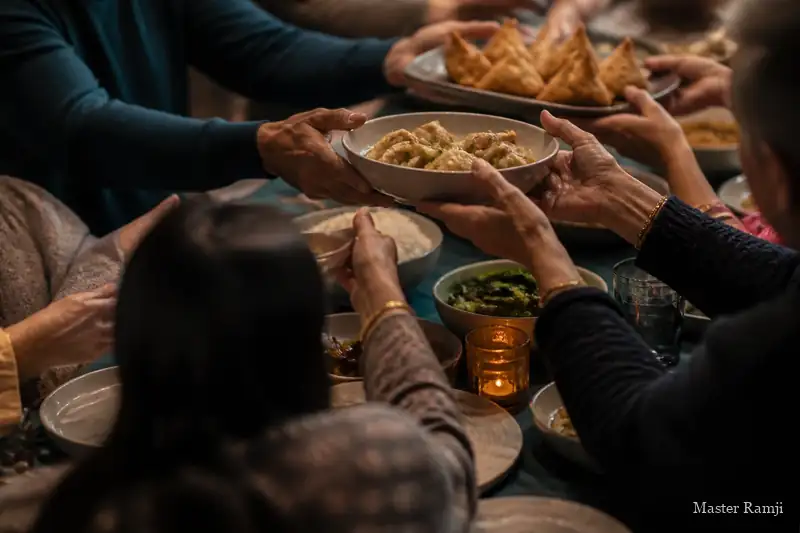
Dates are often the first real test. An Indian family might ask a priest for a wedding muhurat, while a Chinese family might check an almanac. Some families on each side also prefer to avoid certain times of year, so ask early. If a good date for one family suits the other too, that's lovely. If not, you have options:
- Hold separate events. A tea ceremony with elders on one day and a Hindu ceremony on another is one way to honour both.
- Separate the legal and the traditional. Your legal marriage with an authorised celebrant needn't be the same event as a family rite. Ask your celebrant about the legal requirements.
- Ask what can flex. A priest or elder may know more options than you expect. Some families care about a time of day, others only about the date.
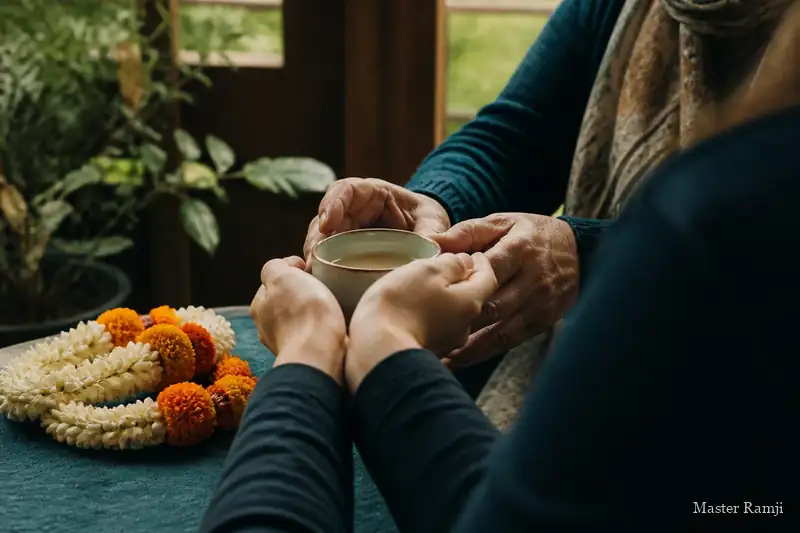
Rites carry meaning, so learn what they mean before you adapt them. In many Chinese families, serving tea honours elders and welcomes each partner into the family. In many Hindu weddings, the couple's seven steps or rounds around the sacred fire are central. Our guide to blending rituals in an interfaith wedding has more ideas. Ask too about food, colours and gifts, as some guests may be vegetarian or have views on particular colours. It's better to ask than to guess.
What if a family objects?
An objection framed around astrology is often about something else, such as language, faith, grandchildren or care for ageing parents. Ask what they're worried about, and listen properly. You could also look at guidance when family opposes a relationship. Relationships Australia Victoria offers counselling and has multicultural programs if you'd prefer professional support.
You are both adults, and you can respect a tradition without obeying it. If anyone uses threats, or tries to control who you see, take it seriously and seek help.
Where can a compatibility reading fit?
With both partners' agreement, a love compatibility reading looks at two charts from the Vedic side only. It can give you topics to talk about and help an Indian family feel heard. It can't tell you whether to marry, and it doesn't speak for your partner's tradition. Sessions can be held by phone, WhatsApp or video, and fees are stated before paid work.
If you'd like to know more, visit our eastern suburbs page or get in touch.
Related service

Keep reading

Students in Clayton: Love, Family and Expectations
An international student in love in Clayton, with family pressure from home? How to think it through, what to share, and where to get real support.
Read article →
Is a Relationship Reading Right for Essendon Couples?
Thinking about a relationship reading in Essendon? Who it may suit, who should see a counsellor first, and what to do if you don't feel safe at home.
Read article →
Long-Distance Love From a Carlton Student Room
Long-distance love from a Carlton student room: working out time zones with India, planning around study deadlines, and knowing what a reading can't do.
Read article →More from Melbourne's Eastern Suburbs
Moving for a School Zone in Glen Waverley
Thinking of moving to Glen Waverley for a school zone? What to check on Find My School first, and how to time griha pravesh around settlement and enrolment.
Read article →
Selective School Pressure in Glen Waverley Families
Is the selective entry exam weighing on your Glen Waverley home? What a child's chart can't tell you, and how to protect your child's wellbeing above any result.
Read article →
Midlife Career Questions in Ringwood
Thinking about a midlife career change in Ringwood? How a dasha reading can support reflection, and the free advice and money checks to do first.
Read article →Local pages
Quick answers
How accurate is love compatibility astrology?
Love compatibility astrology isn't accurate in any measurable sense. Here is what the evidence says, and how to use a compatibility reading sensibly.
Read answer →Can astrology bring my ex back?
No, astrology can't make your ex come back, and nobody can honestly promise it. Here is what a reading can help with, and how to avoid costly promises.
Read answer →Talk to Vijay Ramji
Tell us what you are facing. If a reading is unlikely to help, you will be told that plainly.